|
Of all the marvelous structures built by the Romans, their public baths were arguably the grandest, and the Baths of Diocletian were the grandest of them all. These baths sprawled over 10 acres—roughly twice the area of the entire Forum—and could cleanse 3,000 Romans at once.
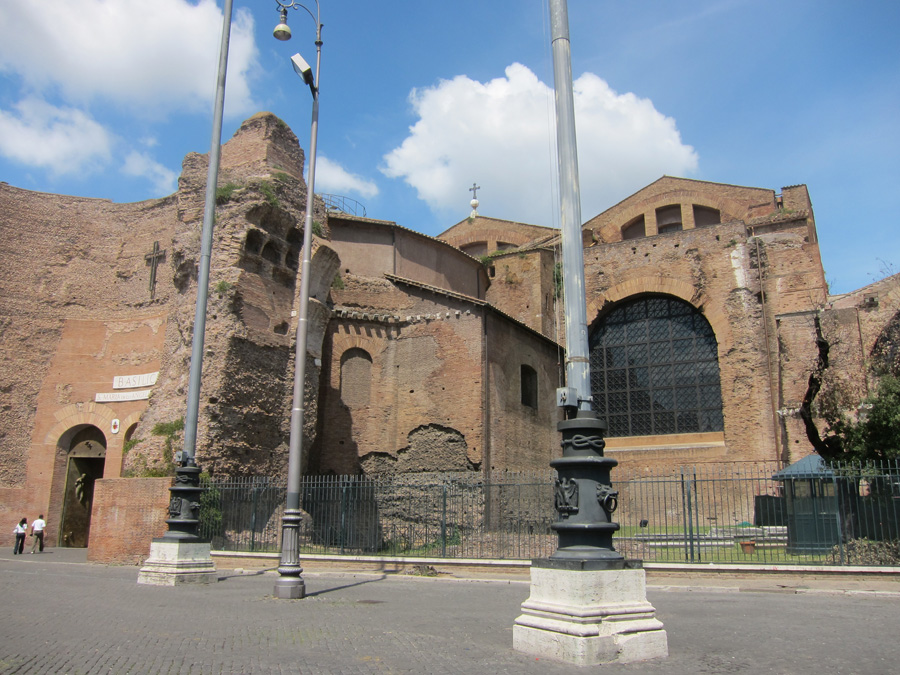
he curved brick facade of today's church was once part of the caldarium, or steam room of the ancient baths. This huge complex was built in just 10 years (around A.D. 300). This is rather amazing when you think of the centuries it took builders of puny medieval cathedrals, such as Paris' Notre-Dame. The baths were more than wash rooms. They were health clubs with exercising areas equipment, and swimming pools.
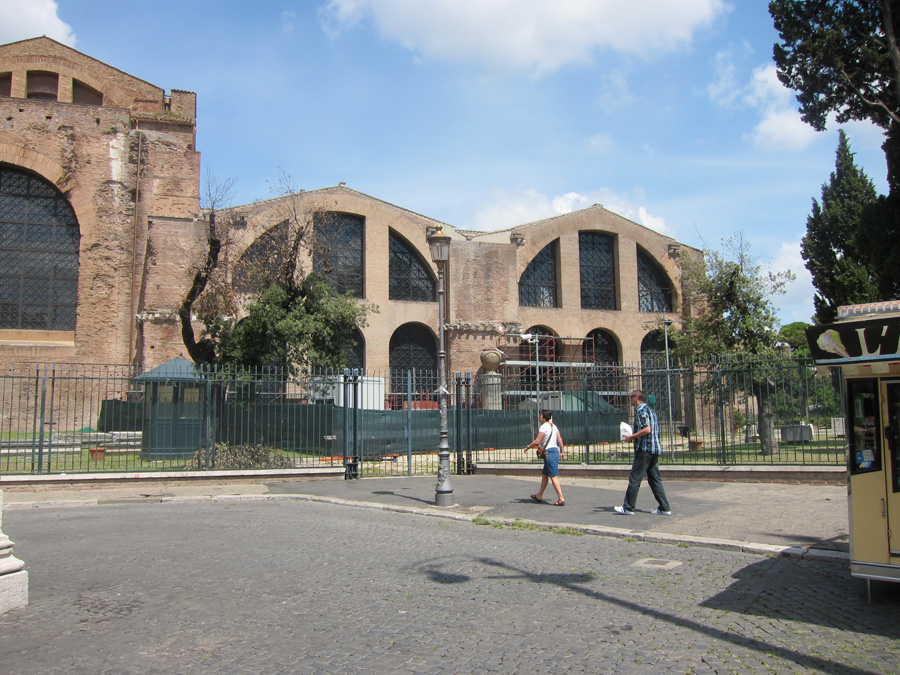
Romans loved to sweat out last night's indulgences. After entering the main lobby (located where Piazza della Repubblica is today),
they'd strip in the locker rooms, then enter the steam room. The caldarium had wood furnaces under the raised floors.
Stoked by slaves, these furnaces were used to heat the floors and hot tubs.
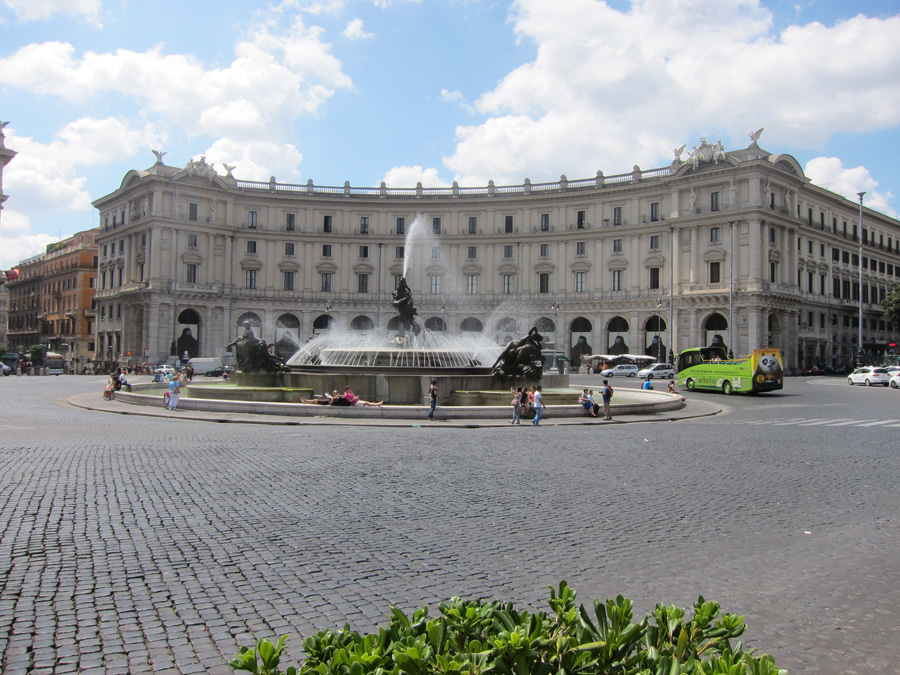
This is the Piazza della Repubblica. It is shaped like an exedra (curved recess), and it echos the wall of the stadium
adjoining the original baths. It was called Piazza Esedra until Italian unification. The Art Nouveau fountain of the
four water nymphs created quite a stir when unveiled in 1911. The nymphs were modeled after a set of twins, who
kept coming to visit as late as the 1960s to remind themselves of their nubile youth.
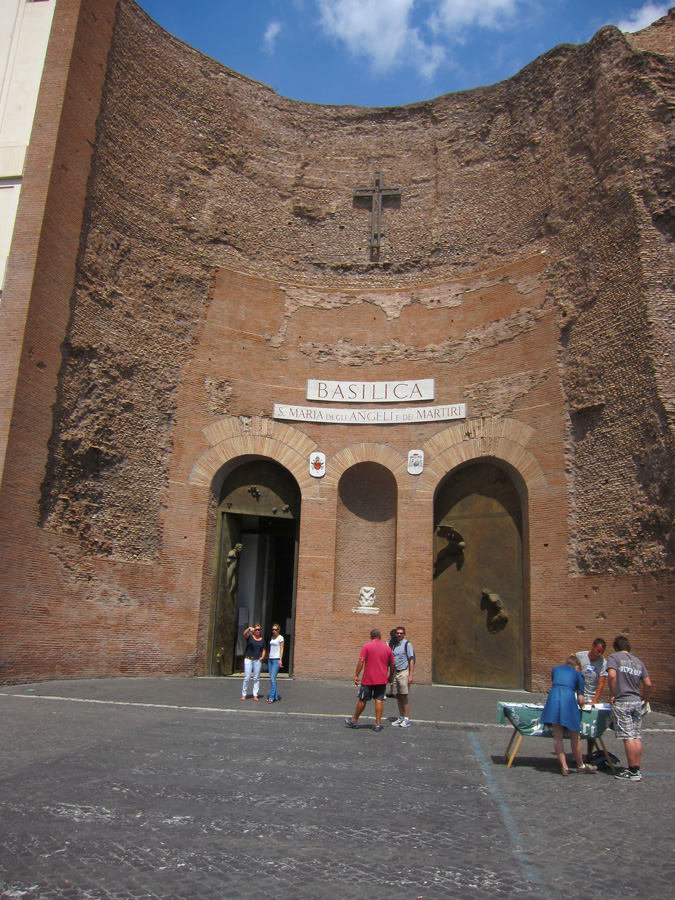
The Church's Entry Hall—The Baths' Tepidarium.
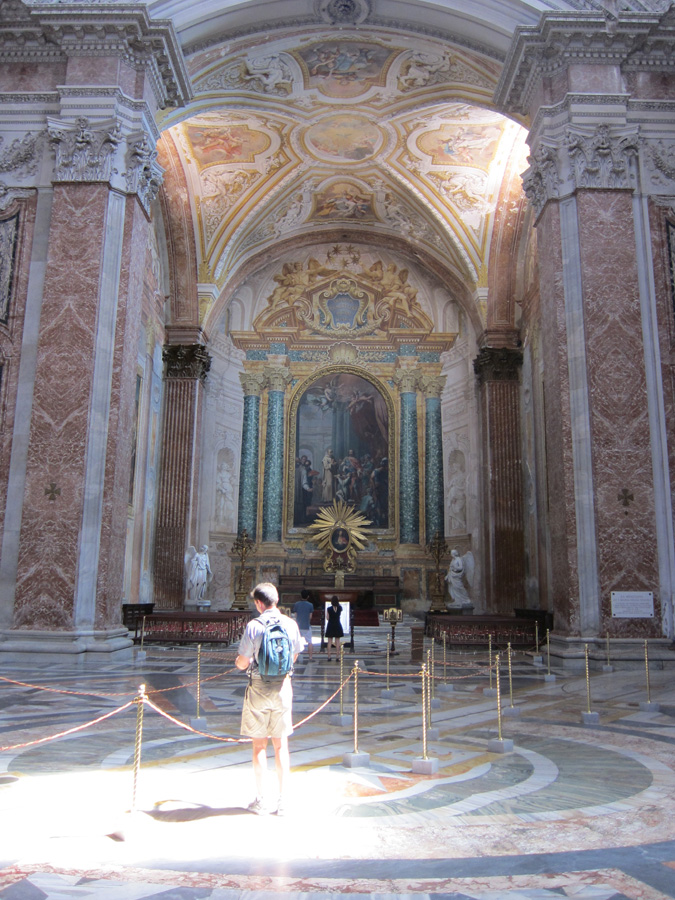
The round-domed room with an oculus (open skylight, now with modern stained glass) was once the tepidarium—the cooling-off room of the baths, where medium, "tepid" temperatures were maintained. This is where masseuses would rub you down and scrape you off with a stick (Roman's didn't use soap). Pete is standing in the center of the lightstreaming down from the oculus in the center of the dome.
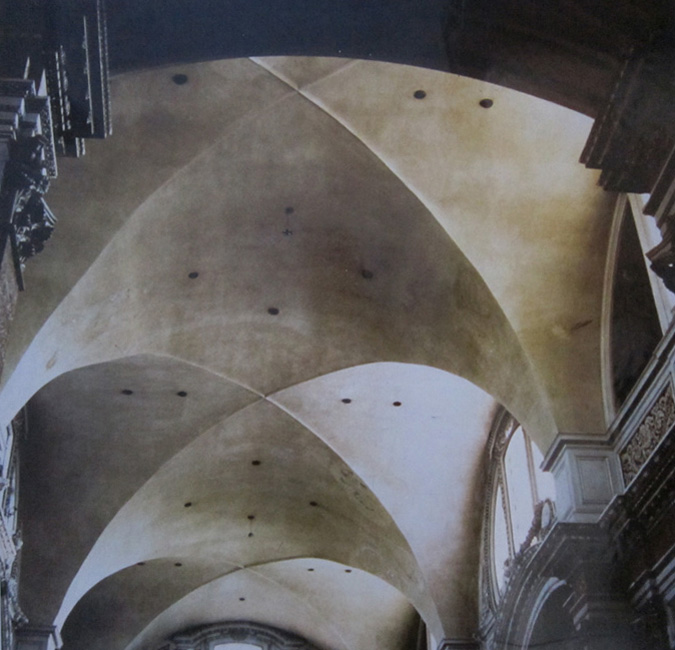
The ceiling's crisscross arches were an architectural feat unmatched for a thousand years.
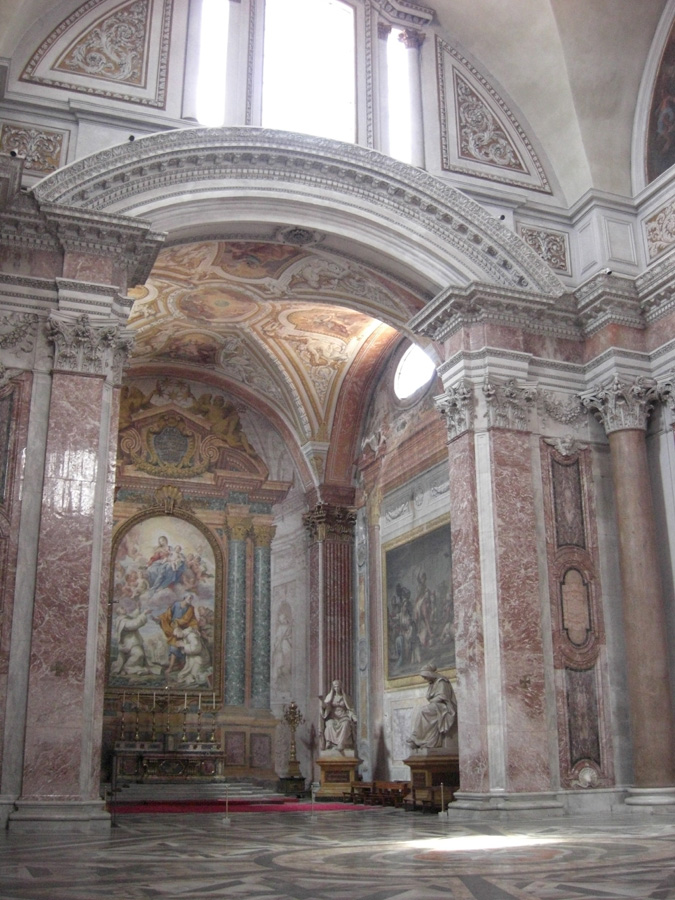
The columns with their magnificent capitals, the marble pillars and paintings are exquisite.
The inside of the church is such an unexpected stark contrast to what is seen on the outside.
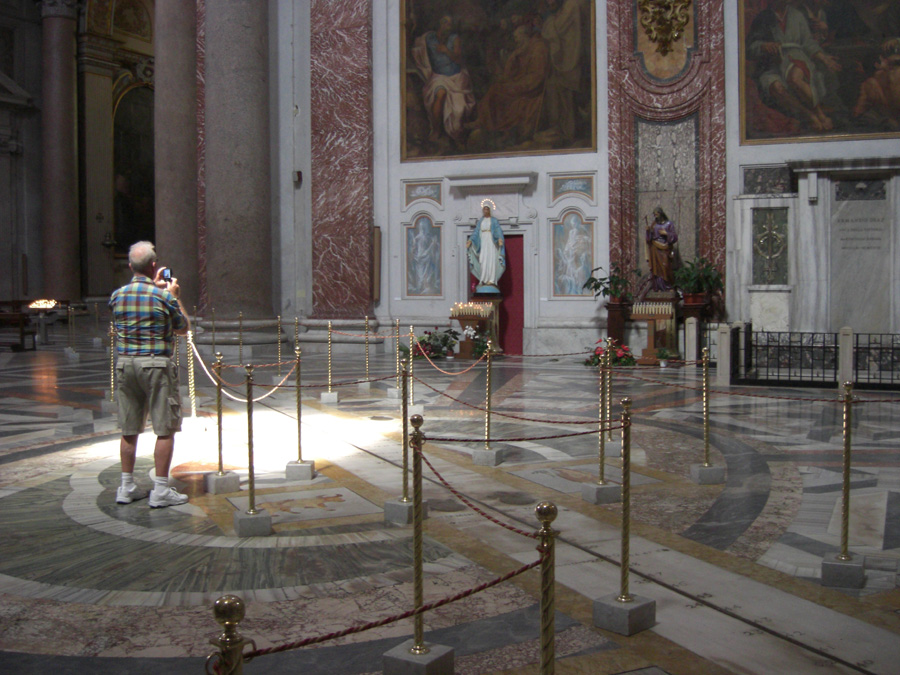
This large central hall retains the grandeur of the ancient baths. It is the size of a football field and seven stories high
—once even higher, since the original ancient floor was about 15 feet below its present level.
La Meridiana, seen on the floor in front of me, is a meridian, pointing due north. It acts as a sundial. As the sun arcs across the southern sky,
a ray of light beams into the church through a tiny hole high in the wall and a cut in the cornice of the right transept.
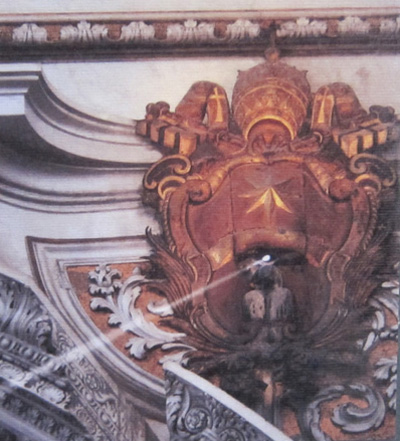
This pin hole is 65 feet up. The sunbeam that passes through it sweeps across the church floor, crossing the meridian rod at exactly noon.
This celestial clock is also a calendar. In summer, when the sun is high over head, the sunbeam strikes the southern end of the rod.
With each passing day, the sun travels up the rod (toward the apse), passing through the signs of the zodiac
(the 28-day months of the moon's phases) marked along side the rod.
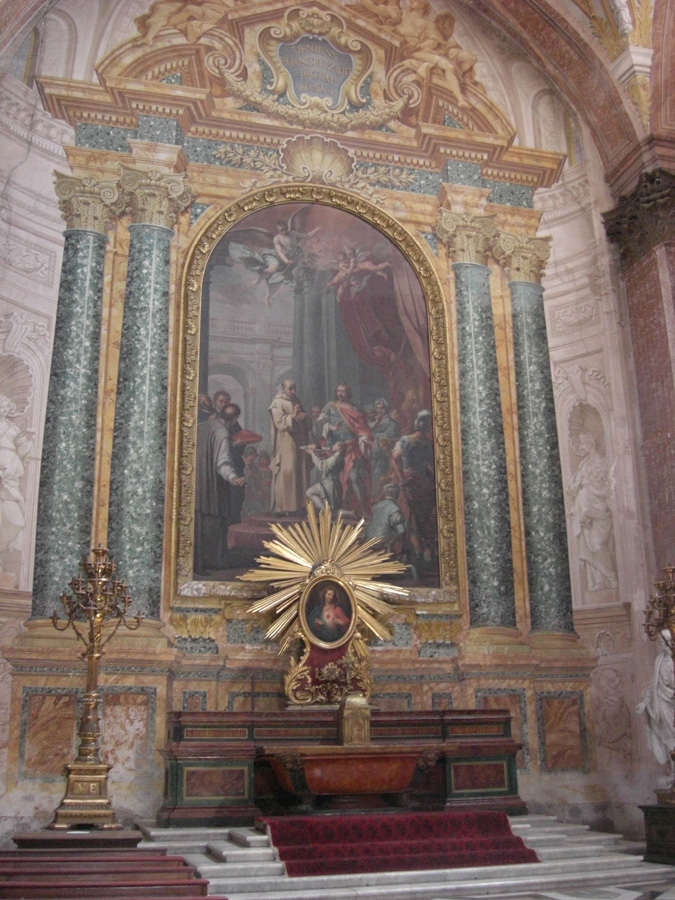
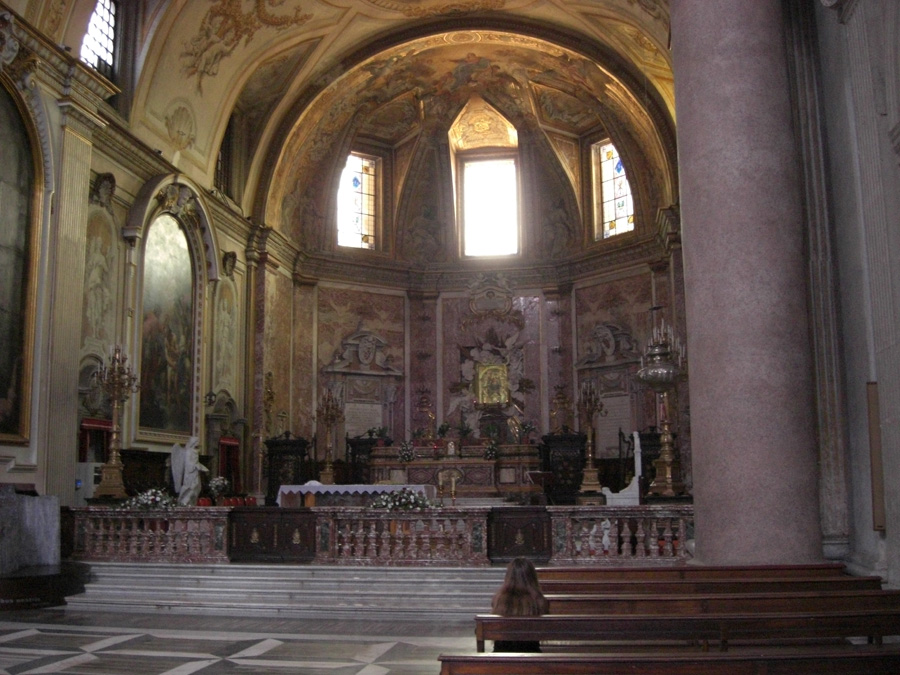
The church we see today was at least partly designed by Michelangelo (1561), who used the baths' main hall as the nave.
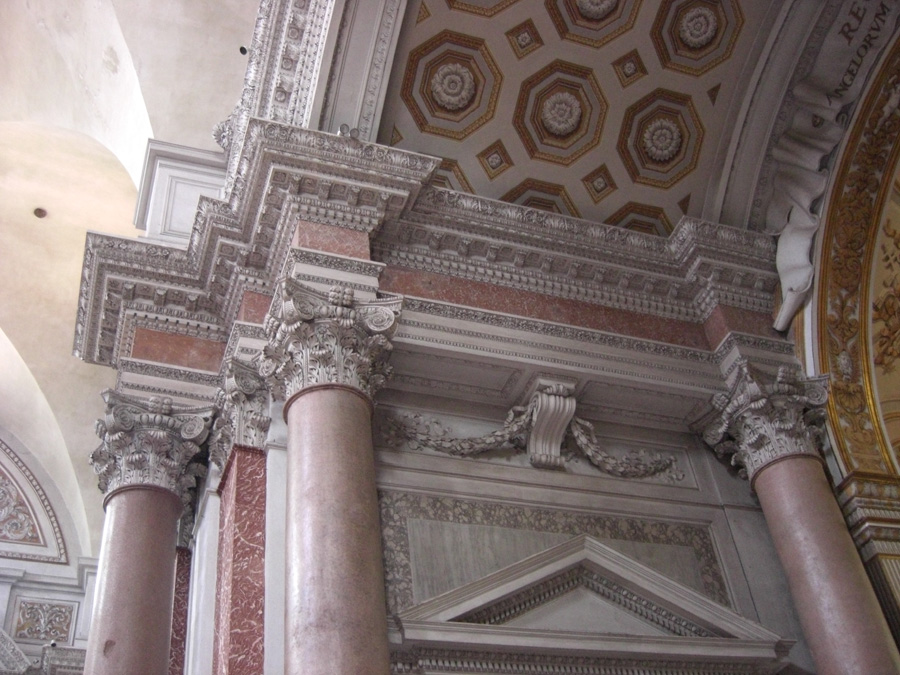
The eight red granite columns are original, from ancient Rome. They have a 5 foot girth.
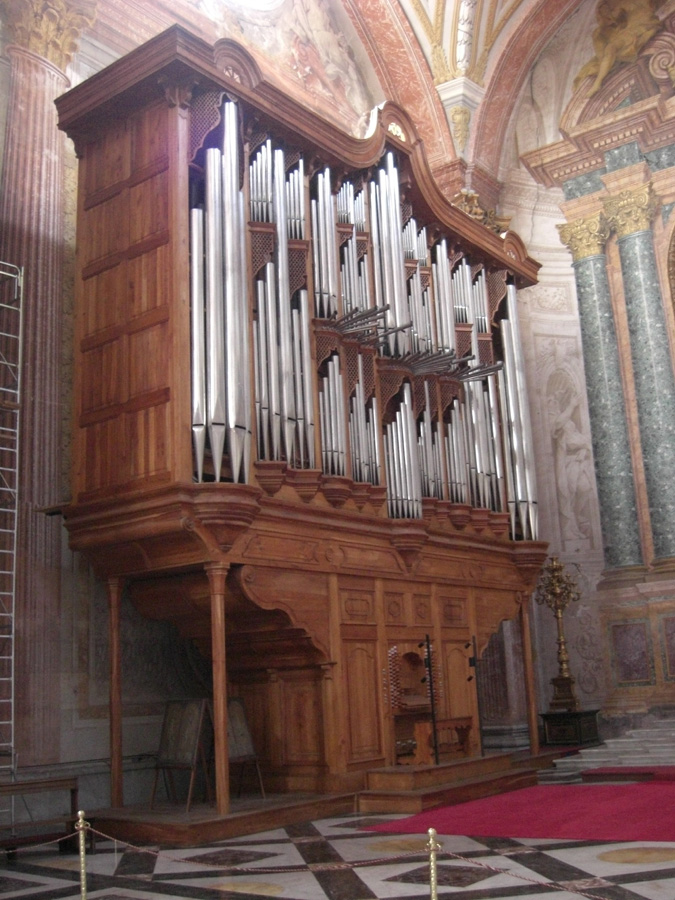
This monumental organ was build for the Jubilee Year of 2000. Free concerts are held regularly
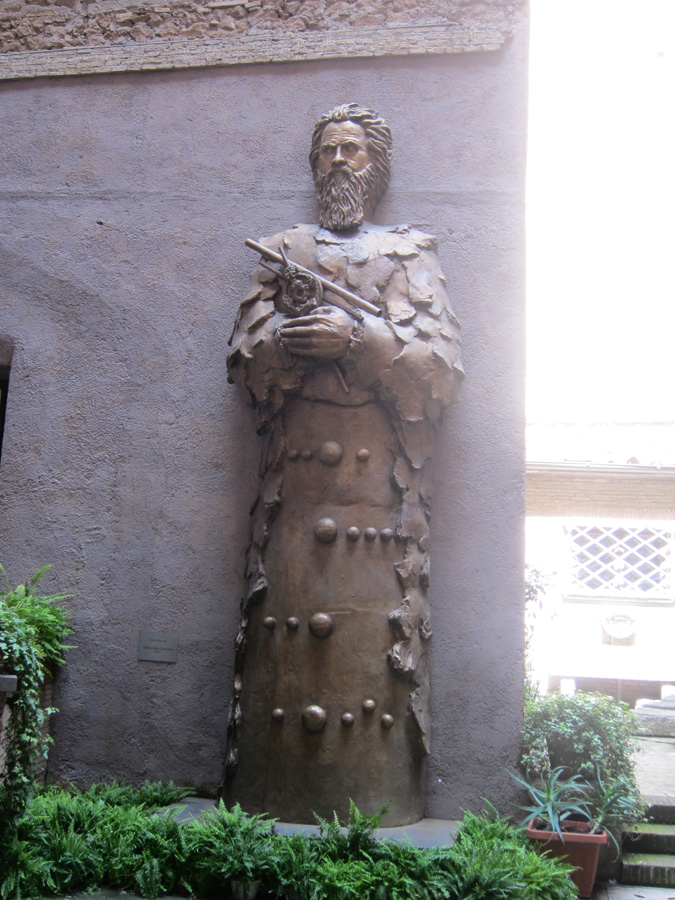
There is a beautiful garden in this small court yard, and this statue of Galileo Galilei,
who made some great discoveries. He was the first person in the world to conceive of the principle of relativity.
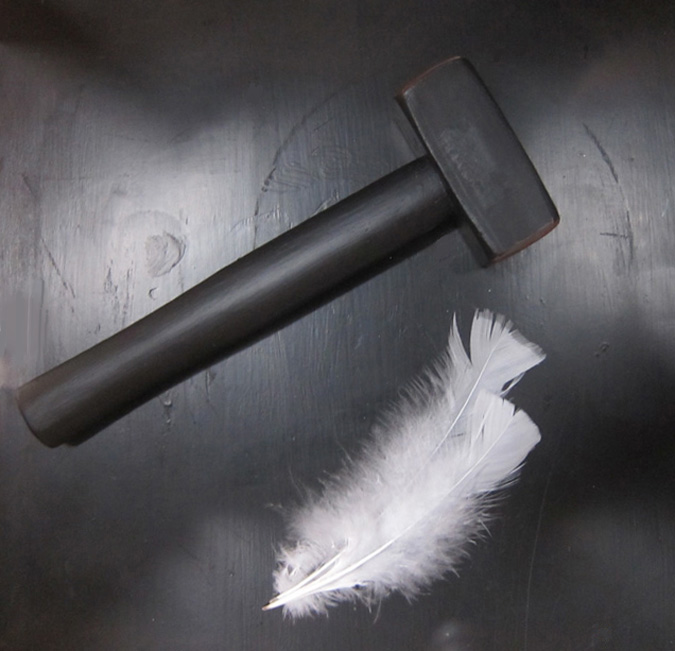
The astronaut of the Apollo 15, David Scott, exclaimed: "Galilei was right". When he
dropped a feather and a hammer, they touched the surface of the moon at the same instant.
The moon has no atmosphere, and so a feather falls exactly like a hammer. Without ever
setting foot on the Moon, Galilei discovered, here on Earth, that the fall of a light or heavy
object occurs in the same way. To understand the origin of this incredible truth required
three hundred years of Galileon science. Mass is curvature of space-time.
Well, I actually thought this would be my last chapter in Rome, but there is yet another few photos to share, and then we will definitely be on our way to the ship.
|