|
|
|
|
|
|
|
|
|
|
|
||||||||
|
||||||||||||||||||
|
Email us at: |
||||||||||||||||||
 |
||||||||||||||||||
 |
 |
|||||||||||||||||
|
Click the sun to see the |
||||||||||||||||||


 |
||||||||||||
|
|
|
|
|
|
|
||||||
|
||||||||||||
|
||||||||||||
|
||||||||||||
|
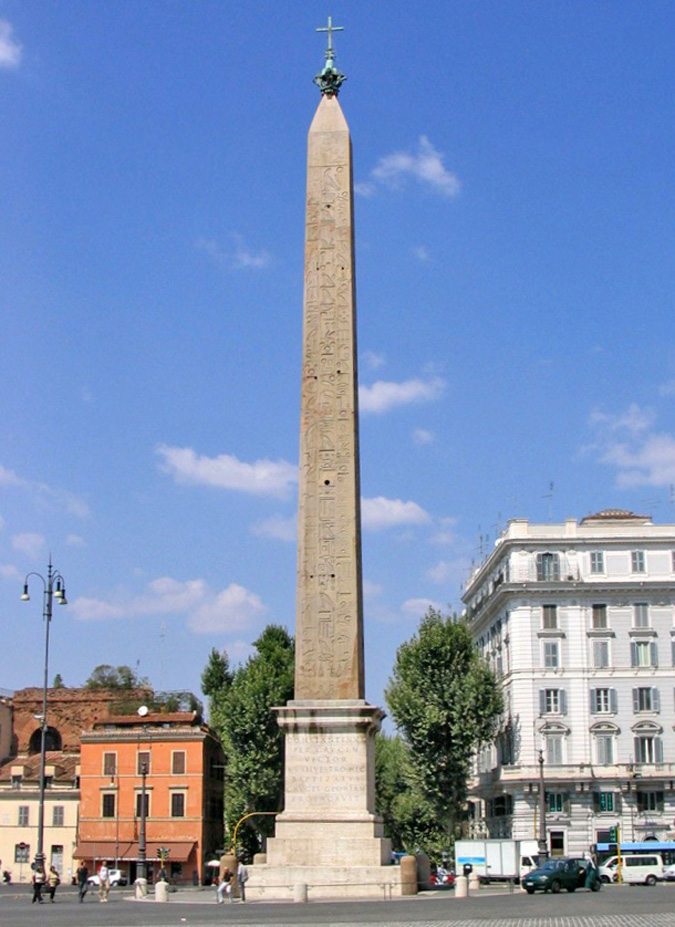
I'll start this chapter off with a little historical information about Egyptian Obelisks. Rome has 13 obelisks, more than any other city in the world. In Egypt they were connected with the sun god Ra (like stone sun rays) and the power of the pharaohs. The ancient Romans, keen on exotic novelty and sheer size, brought the obelisks here to Rome and set them up in key public places as evidence and celebration of their occupation of Egypt.
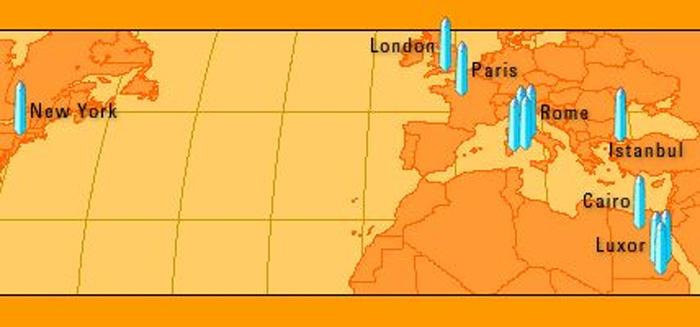
This is a map showing the locations of all of the obelisks in the world. Starting from the 1580s, Rome's new rulers―the popes―relocated the obelisks, often topping them with Christian crosses so they came to acquire yet another significance that guaranteed their survival: the triumph of Christianity over all other religions. The tallest (105 feet) and the most ancient (16th century B.C.) is the one by San Giovanni in Laterano. It once stood in the Circus Maximus next to its sister, which now marks the center of Piazza del Popolo.
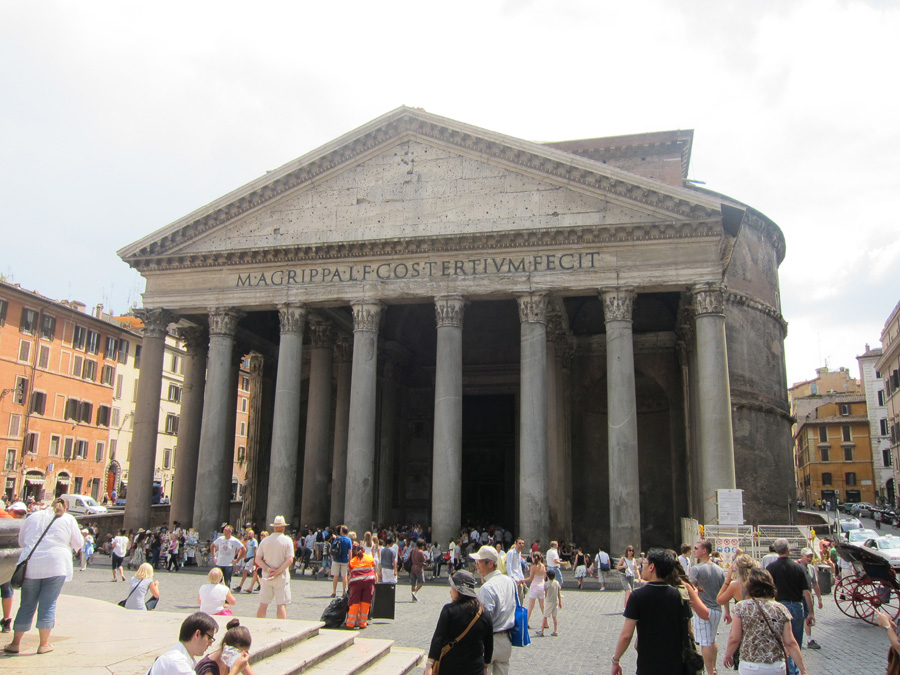
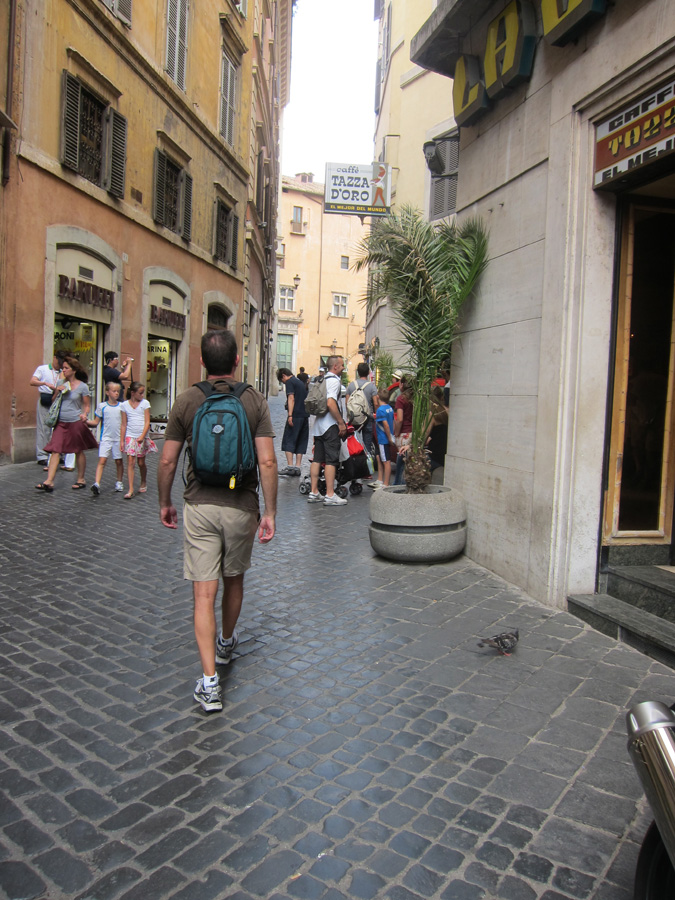
The tallest obelisk in the world was originally from the temple of Amun in Kamak. It was But getting back to the Pantheon, we were a little weary when we arrived there, so we looked for a place to sit down for a bit, and just do a little people watching before we went in.
As you can see, shade was at a premium, but we managed to find a spot next to one of the pillars on the left
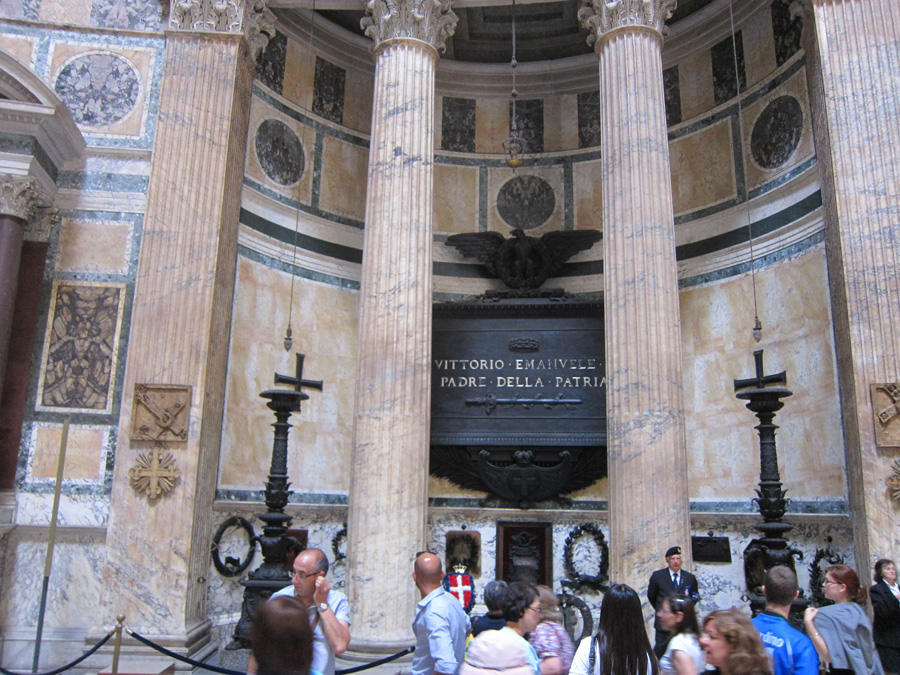
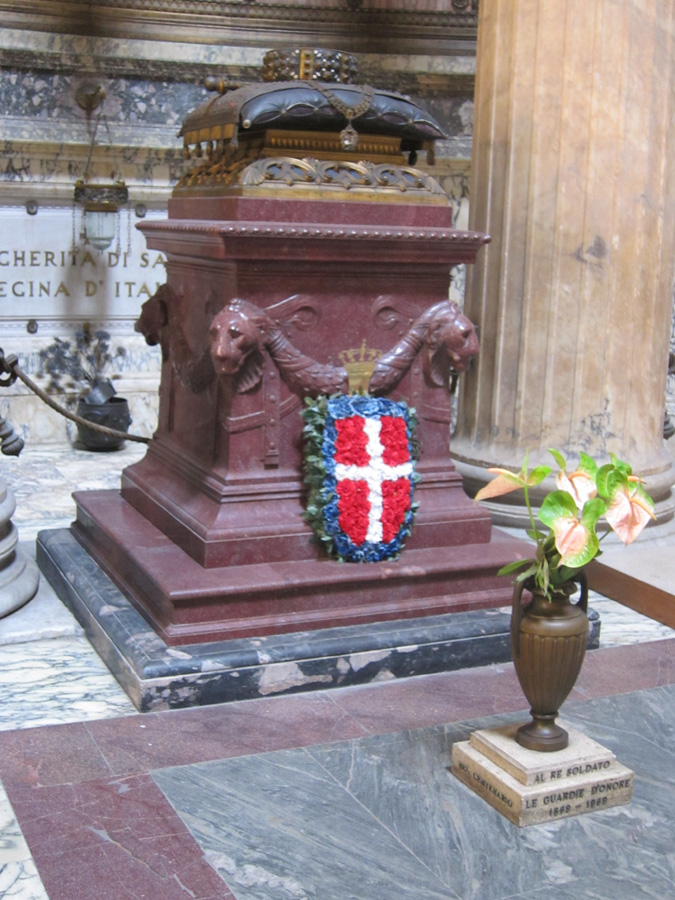
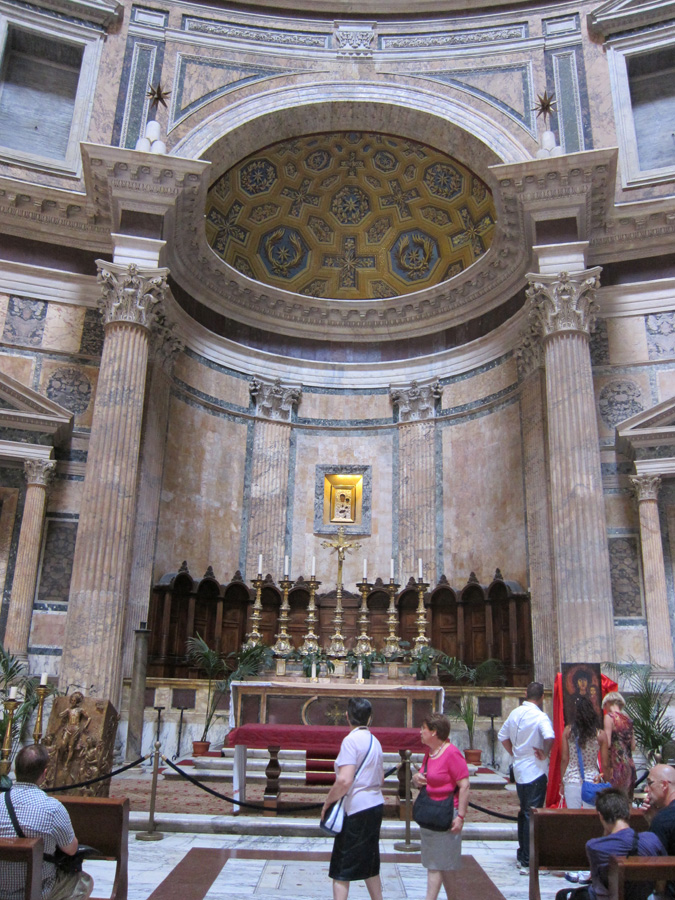
This is the tomb of Italy's first king, Victor Emmanuel II.
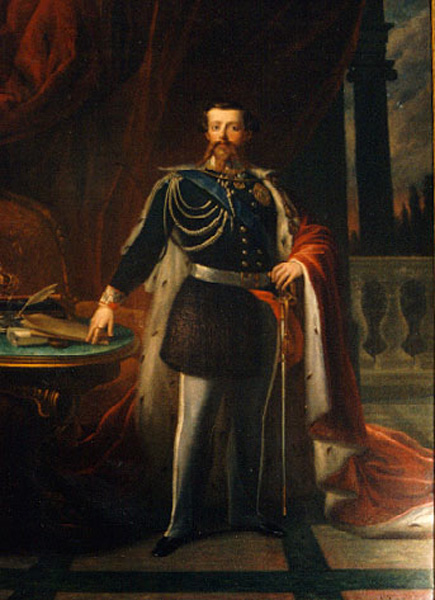
Victor Emanuel II . . . or, for his full name . . . Vittorio Emanuele Maria Alberto Eugenio Ferdinando Tommaso He became King of Piedmont in 1849 when his father abdicated the throne after a humiliating military defeat by the Austrians at Novara.
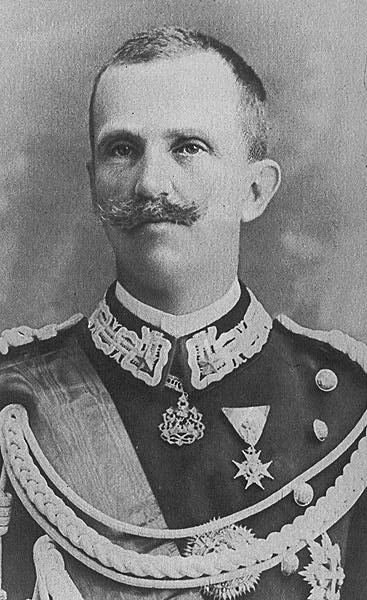
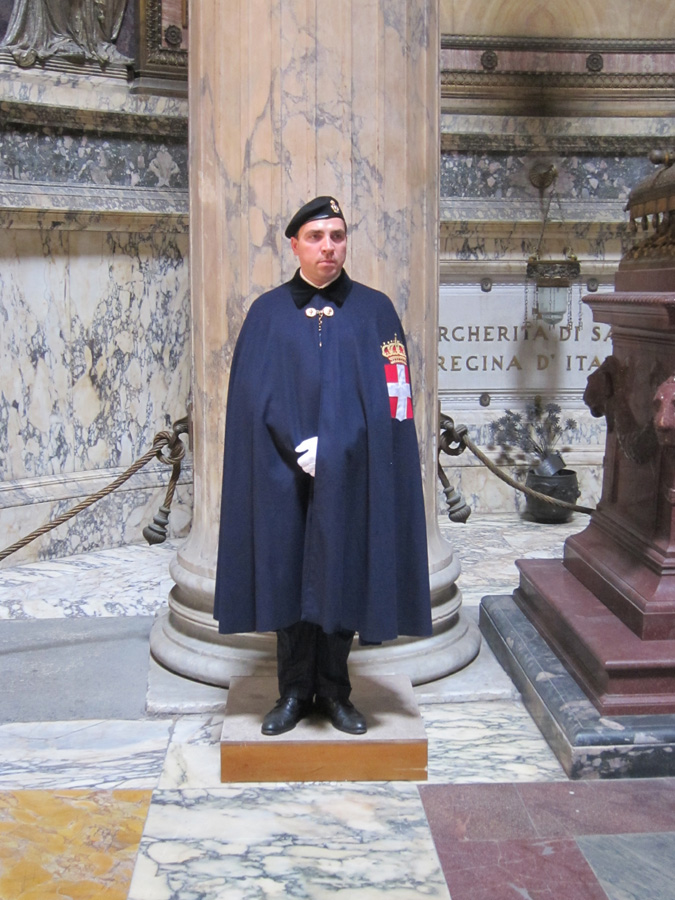
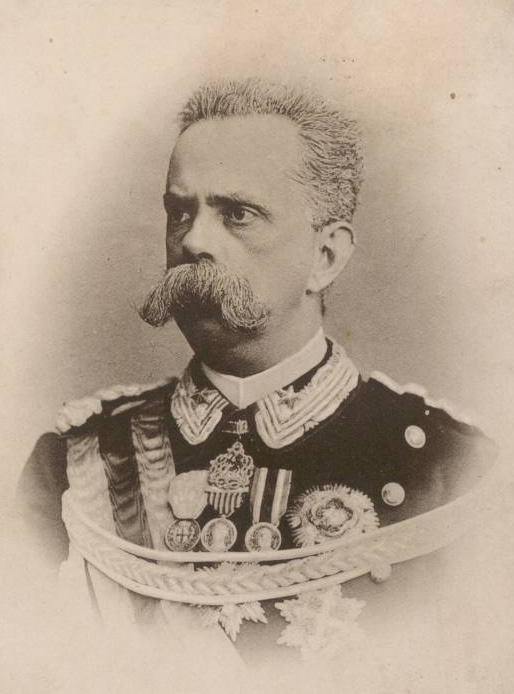
On the opposite side is the tomb of the 2nd King of Italy, Umberto I.
A member of the Royal Swiss Guard stands next to Umberto's tomb. From 1860 to 1946, Umberto carried more titles as the King of Italy than you can shake a stick at: Umberto the First, by the Grace of God, King of Italy, King of Sardinia, Cyprus, Jerusalem, Armenia, Duke of Savoy, count of Maurienne, Marquis (of the Holy Roman Empire) in Italy; and on and on, seemingly without end.
For some reason mustaches were very popular among royals. Thank heaven they went out of fashion.
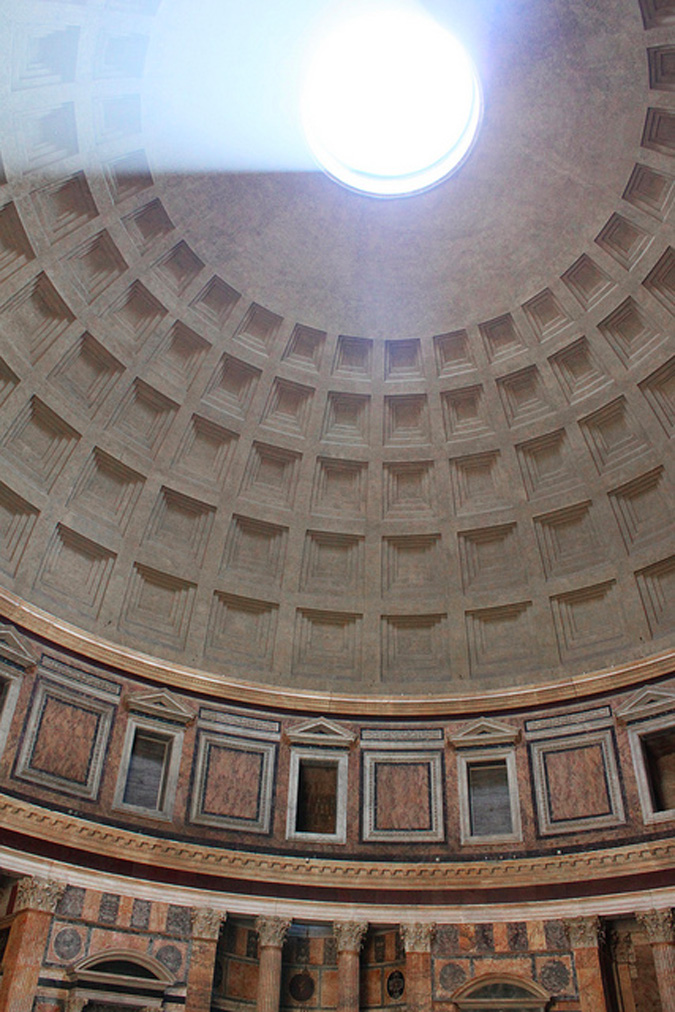
This is the tomb of the artist Raphael. Above him is a statue of the Madonna The Pantheon is the only ancient building in Rome continuously used since its construction. The Pantheon also contains the world's greatest Roman column. Spanning the entire 142 feet from heaven to earth―the pillar of light from the oculus.
The oculus, or eye-in-the-sky, is the buildings only light source and is almost 30 feet across. The dome, which was the largest made until the Renaissance, is set on a circular base, and is as high as it is wide (142 feet). The dome is made from concrete (a Roman invention) that gets lighter and thinner as it reaches the top. The base of the dome is 23 feet thick and made from heavy concrete mixed with travertine, while near the top, it's less than 5 feet thick and made with a lighter volcanic rock (pumice) mixed in. Note the square indentations in the surface of the dome. This coffered ceiling reduces the weight of the dome without compromising strength.
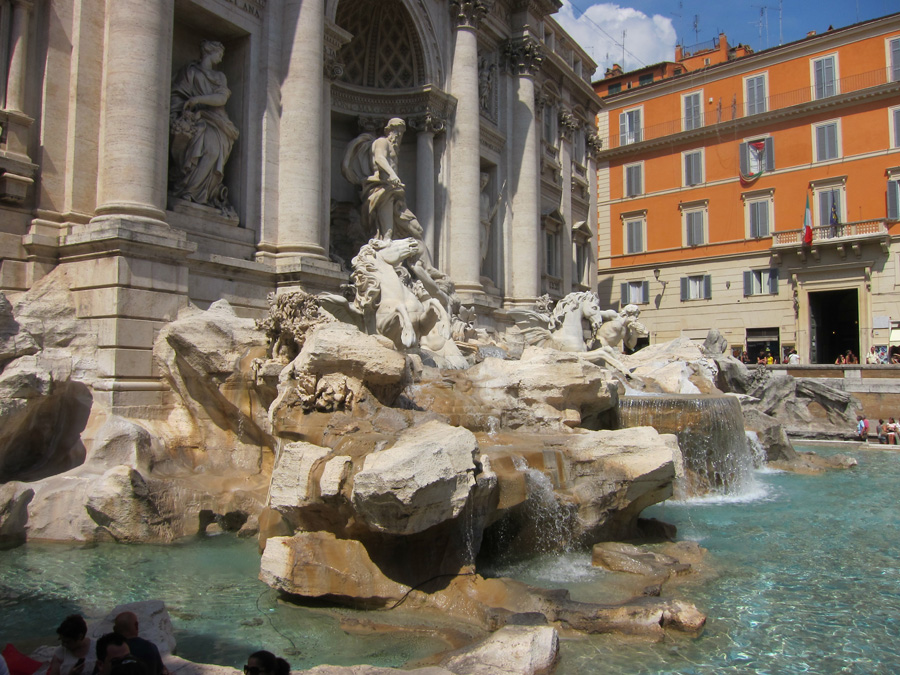
We're off again, this time heading for the Trevi Fountain, which lies at the junction of
In 19 BC, supposedly with the help of a virgin, Roman technicians located a source of pure water some 13 km from
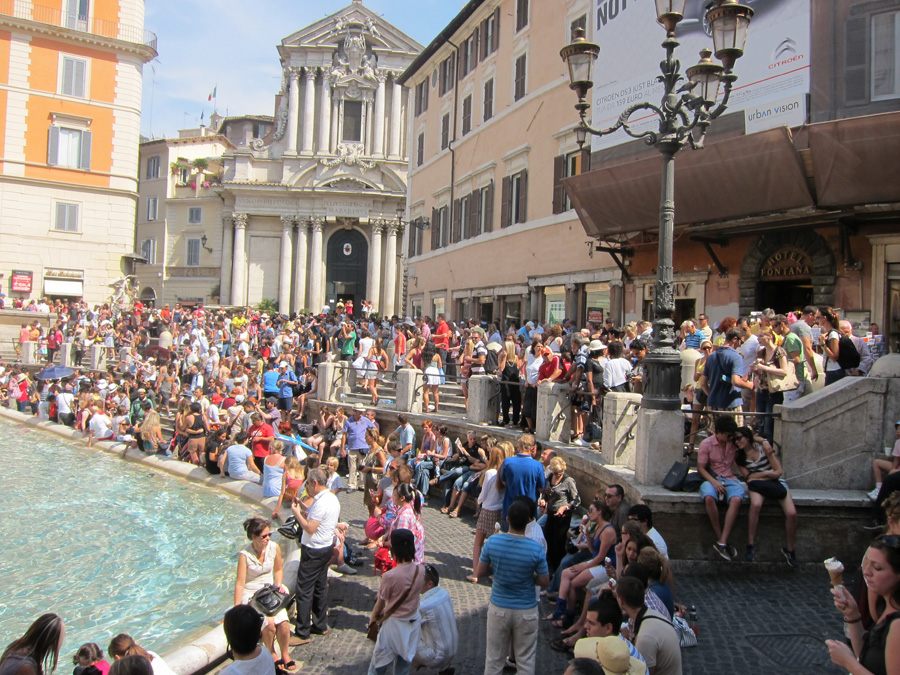
Trevi Fountain always draws a huge crowd, especially at night when it is a major gathering spot for teens on the make.
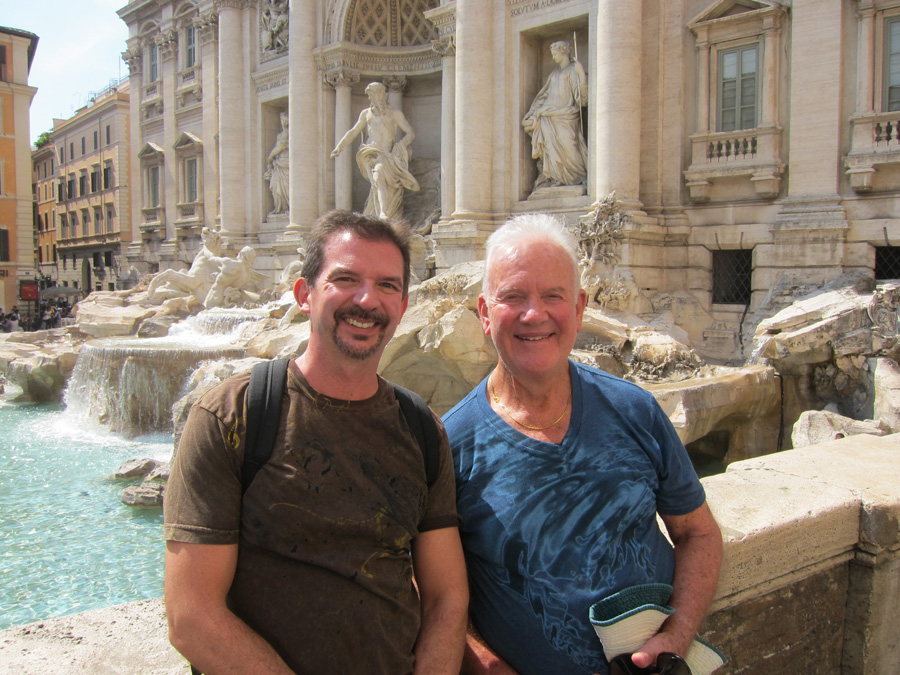
Another long and hot day, yet we are still smiling. We must be enjoying Rome a lot. But then, who wouldn't? In the next chapter I'll include some more photos of the Trevi Fountain, and then we'll be off to our last stop for the day, the Spanish Steps. |
||||||||||||
|
||||||||||||
|
||||||||||||
|
||||||||||||