|
|
|
|
|
|
|
|
|
|
|
||||||||
|
||||||||||||||||||
|
Email us at: |
||||||||||||||||||
 |
||||||||||||||||||
 |
 |
|||||||||||||||||
|
Click the sun to see the |
||||||||||||||||||


 |
||||||||||||
|
|
|
|
|
|
|
||||||
|
||||||||||||
|
||||||||||||
|
||||||||||||
|
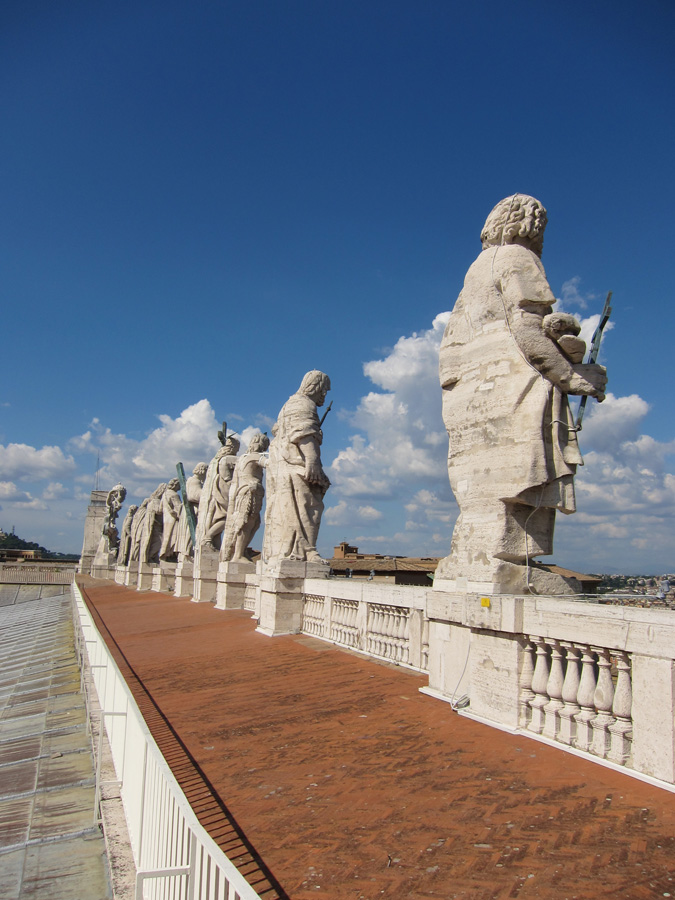
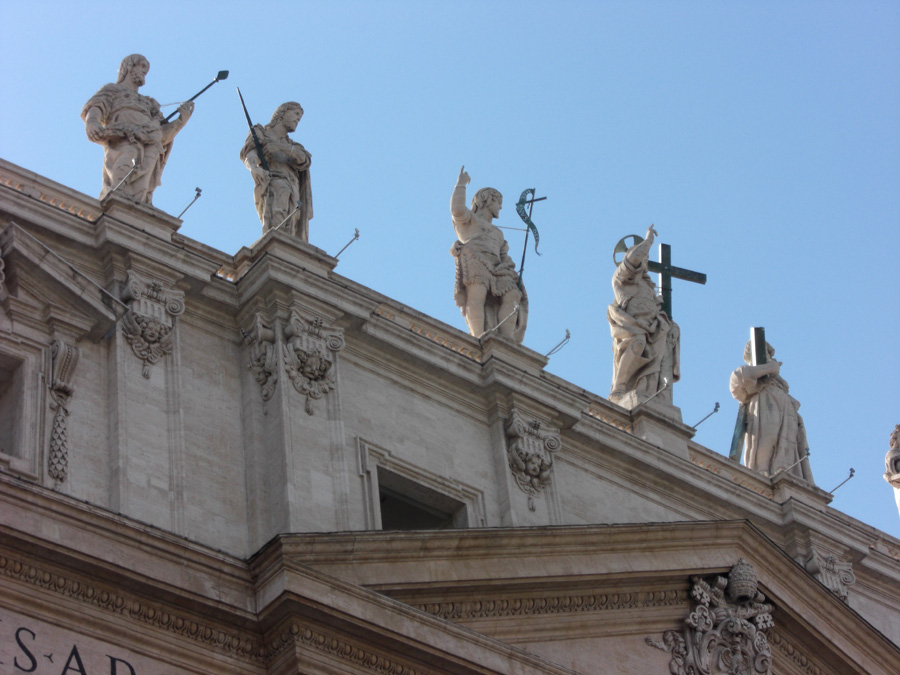
As we leave the roof of the Basilica of Saint Peter's, we take one last look at some of the 140 saints of Bernini.
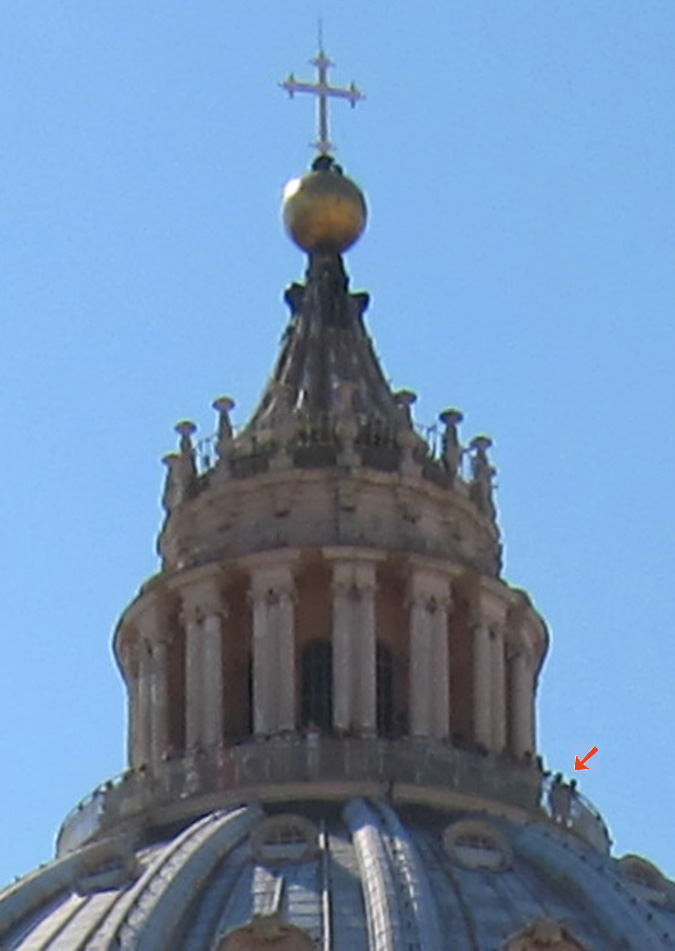
Notice how they are all leaning slightly forward. This is so that they can be In this photo you can't see the people standing on the top of the dome, but in the next photo you can.
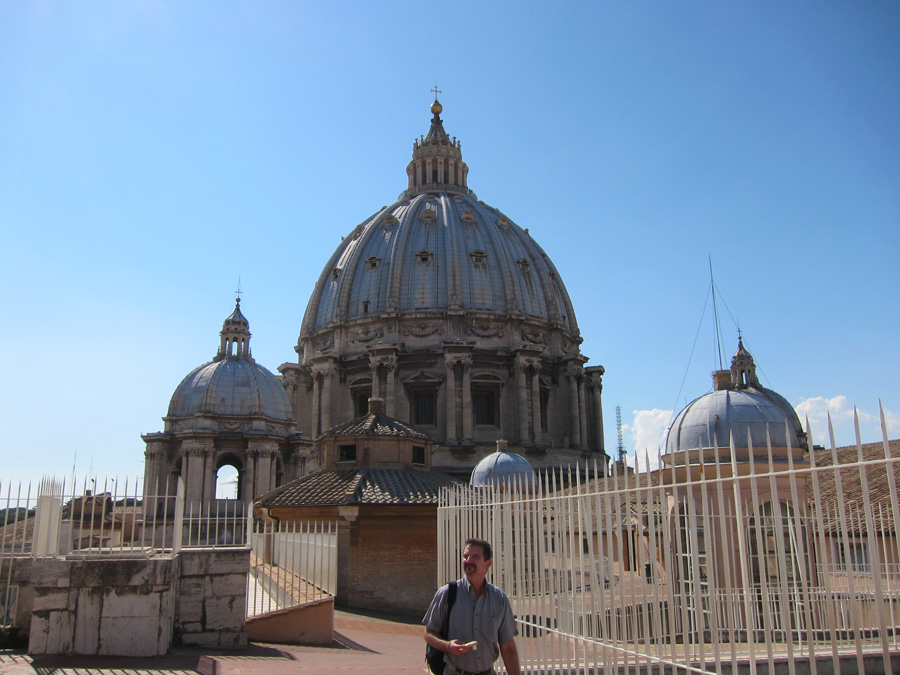
There's not a whole lot of room on the walkway around the top of the dome, but it's adequate.
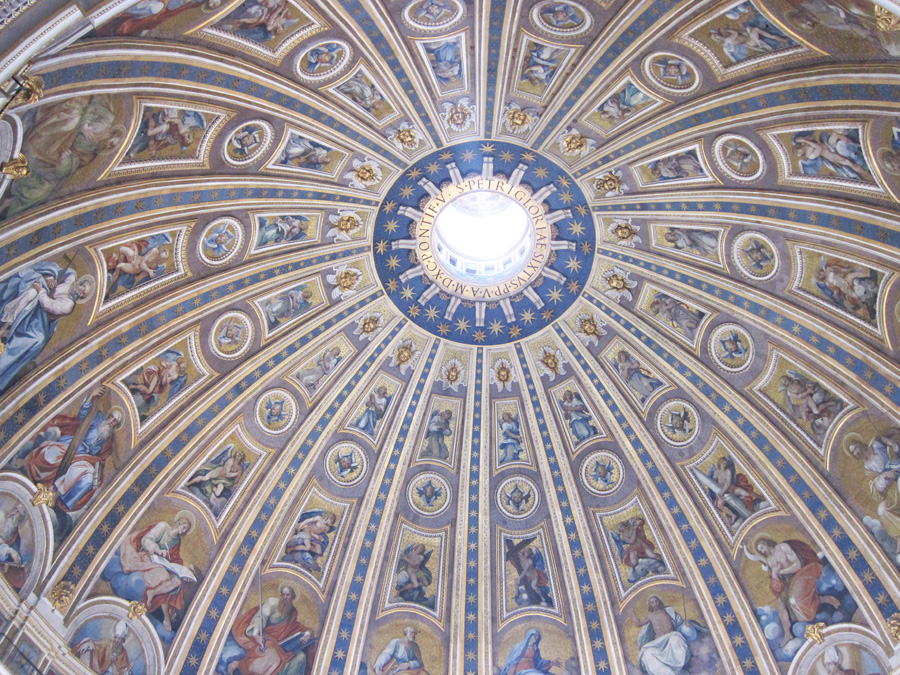
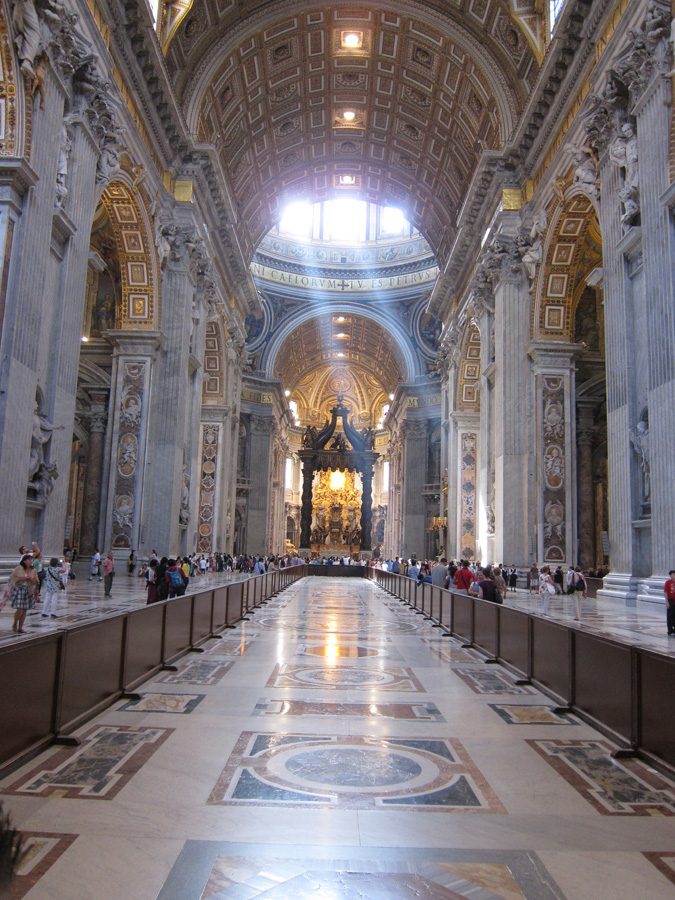
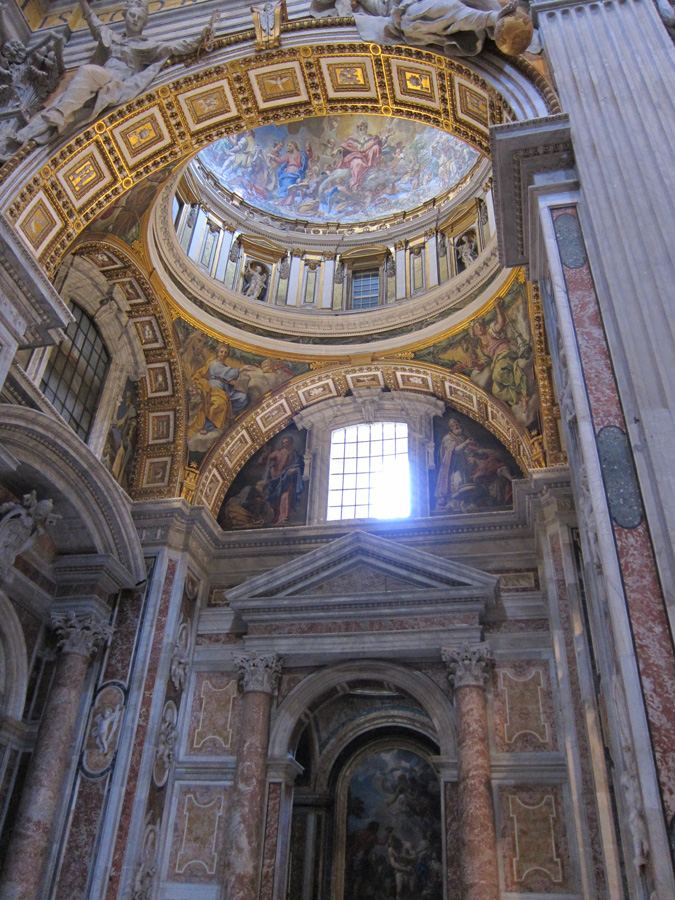
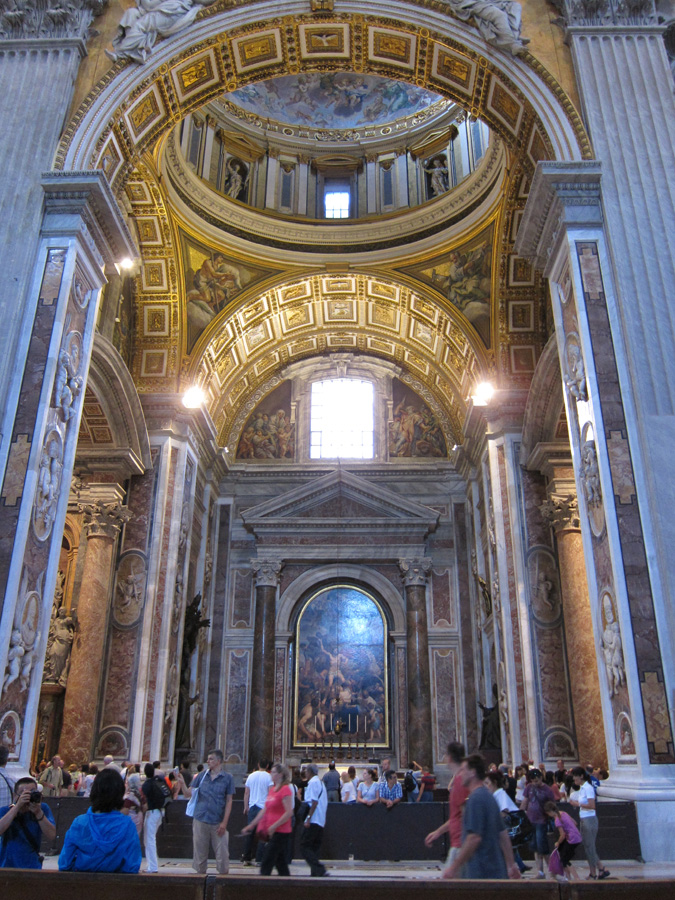
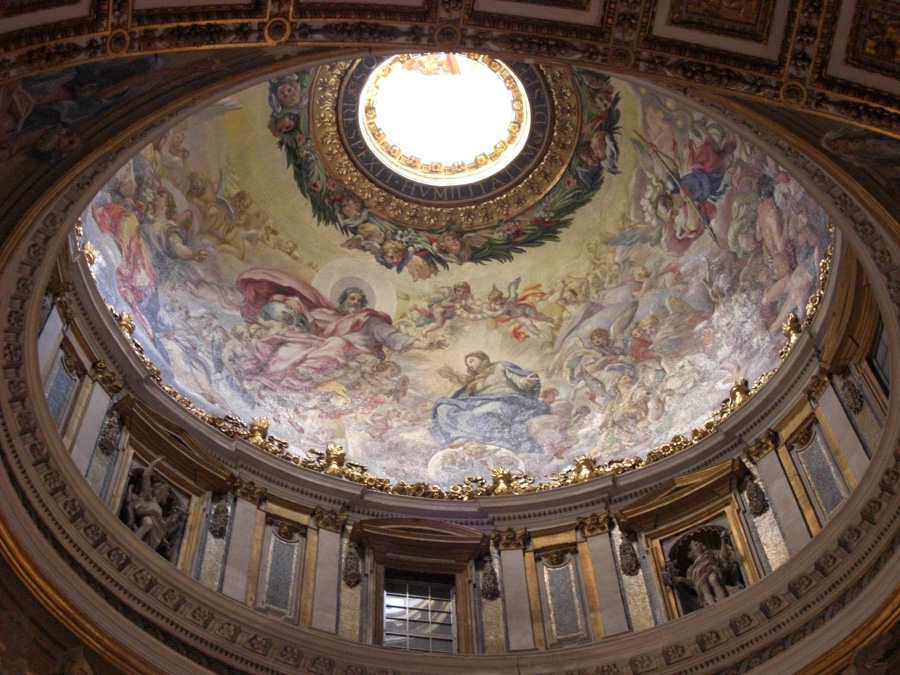
Saint Peter's was very expensive to build and decorate. The popes financed it by selling "indulgences," allowing the rich to buy forgiveness for their sins from the Church. This kind of corruption inspired an obscure German monk named Martin Luther to rebel and start the Protestant Reformation. Just to give you an idea of how big the church actually is, the Atrium alone is bigger than most churches. The church is so big that they have placed plaques on the floor to show where other smaller churches of the world would end if they were placed inside Saint Peter's: St. Paul's Cathedral in London (Londinense), Florence's Duomo, and so on. I stood against one wall and tried to envision what it must have looked like in the early 1600s when it was nearly completed, and the Old St. Peter's was still inside the church. It makes perfect sense though. Had they just knocked down the Old St. Peter's in 1506 when they began the construction of the New St. Peter's, Rome would have been without a church for 120 years. Michelangelo was 71 years old when the pope persuaded him to take over the church project and cap it with a dome. He agreed, intending to put the dome over Donato Bramante's original "Greek Cross" floor plan, with four equal arms. In optimistic Renaissance times, this symmetrical arrangement symbolized perfection―the orderliness of the created world and the goodness of man (who was created in God's image). But Michelangelo was a Renaissance man in Counter-Reformation times. The Church, struggling against Protestants and its own corruption, opted for a plan designed to impress the world with its grandeur―the Latin cross of the Crucifixion, with its nave extended to accommodate the grand religious spectacles of the Baroque period. Below, the dome glows with light from its windows, the blue and gold mosaics creating a cool, solemn atmosphere. In this majestic vision of heaven (not painted by Michelangelo), we see (above the windows) Jesus, Mary, and a ring of saints, more rings of angels above them, and, way up in the ozone, God the Father (a blur of blue and red without binoculars).
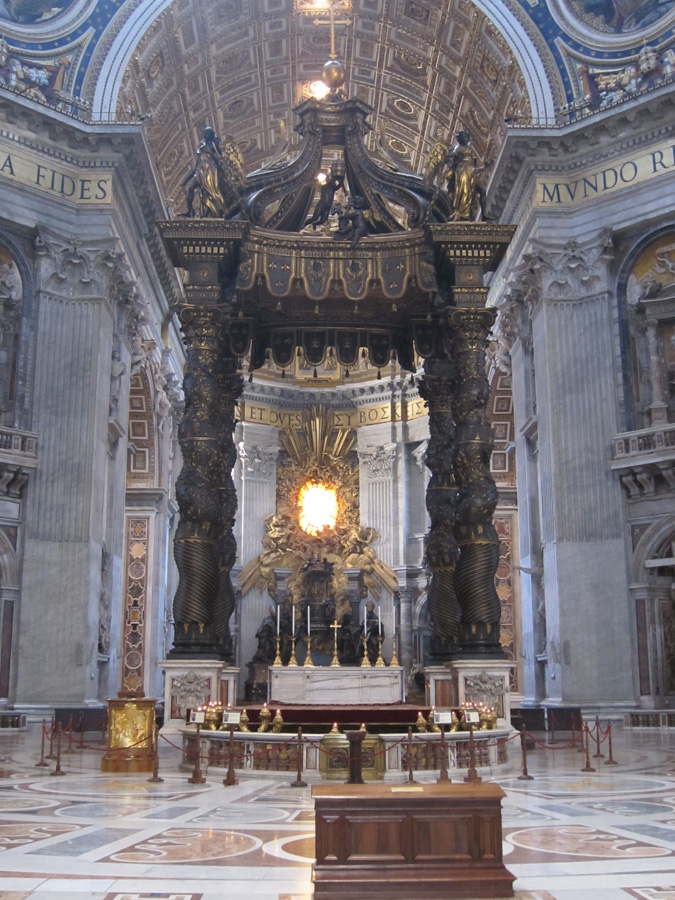
I showed this photo in Chapter 8 when we were on the catwalk and were as close to the top of the dome as we could Under the dome, under the bronze canopy, under the altar, some 23 feet under the marble floor rests the bones of St. Peter, the "rock" upon which this particular church was built. You can't see the tomb, but if you go to the railing and look down into the small, lighted niche below the altar with a box containing bishops' shawls―a symbol of how Peter's authority spread to the other churches, Peter's tomb (not visible) is just below this box. Are they really the bones of Jesus' apostle? According to a papal pronouncement: definitely maybe. The traditional site of his tomb was sealed up when Old St. Peter's was built on it in A.D. 326, and it remained sealed until 1940, when it was opened for archaeological study. Bones were found, dated from the first century, of a robust man who died in old age. His body was wrapped in expensive cloth. Various inscriptions and graffiti in the tomb indicate that second- and third-century visitors thought this was Peter's tomb. Does that mean it's really Peter? Who are we to disagree with the pope? Definitely maybe.
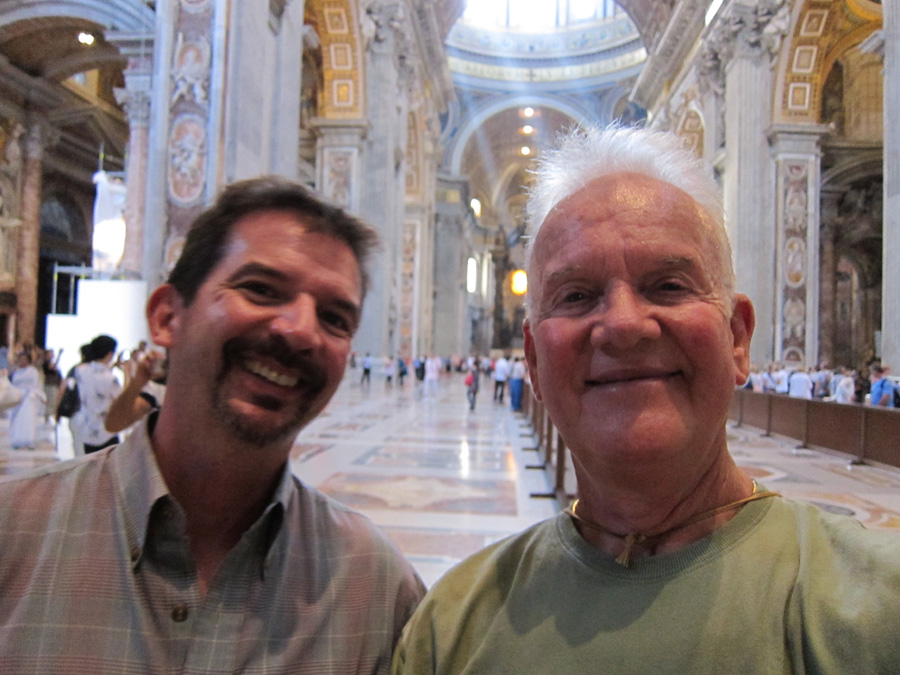
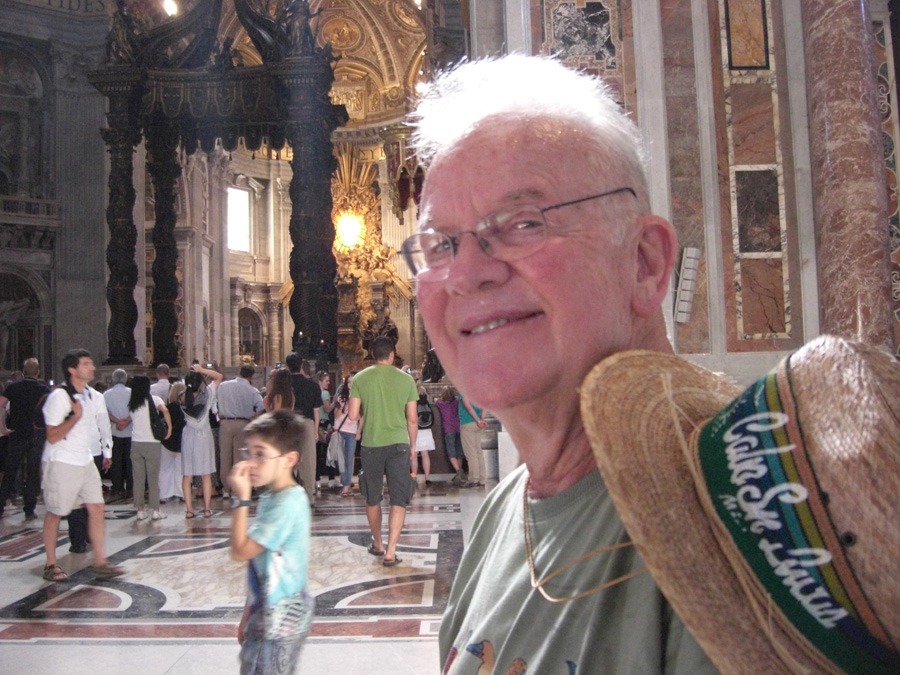
Do I look like a tourist, or WHAT! My trusty Cabo San Lucas hat really helps when the sun is beating down outside. Check out the two guys above wearing shorts. Fourteen years ago the church was VERY strict about wearing shorts in the church. Now a sign says that if they are of a certain (possibly knee) length, then it is OK. Things seem to be in a constant state of flux. Pete tells me that when he was very young and in Catholic school, he was told that if the "Host" so much as touched his teeth when the priest placed it on his tongue, he would go straight to Hell, because the "Host" was sacred. Then in the 2nd grade they came out with a change that said now he could accept the "Host" in the palm of his hand from the priest, and could then put it in his own mouth. Pete has lots of interesting stories about his Catholic upbringing, which are a constant source of wonder and amazement to me, a non-catholic.
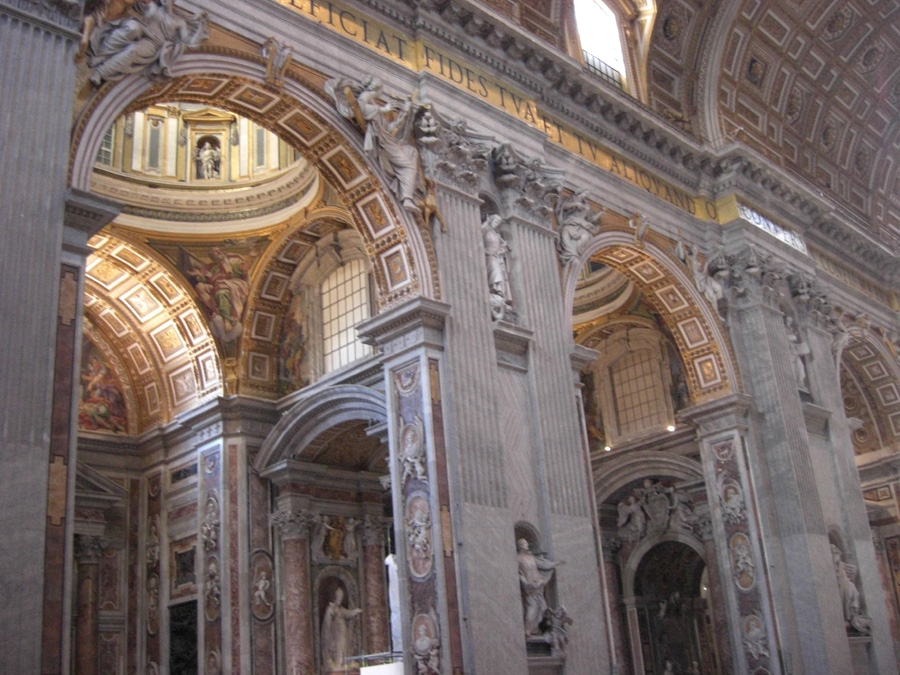
In this photo you can see the 7 foot high letters (top of photo) which run all the way around the inside of the church, According to the Bible, Peter was a fisherman who was chosen by Christ to catch sinners instead. This "fisher of men" had human weaknesses that have endeared him to Christians. He was the disciple who tried to walk on water―but failed. In another incident, he impetuously cut off a man's ear when soldiers came to arrest Jesus. And he even denied knowing Christ, to save his own skin. But Jesus chose him anyway, and gave him his nickname―Rock (in Latin: Petrus). Legends say that Peter came to the wicked city of Rome after Jesus' death to spread the gospel of love. He may have been imprisoned in the Mamertine Prison near the Roman Forum, and other stories claim he had a vision of Christ along the Appian Way. Eventually, Peter's preaching offended the Nero administration. Christ's fisherman was arrested, crucified upside-down, and buried here, where St. Peter's now stands.
Back outside we look up to see again Bernini's saints, but from ground level. They are just as impressive as from the roof.
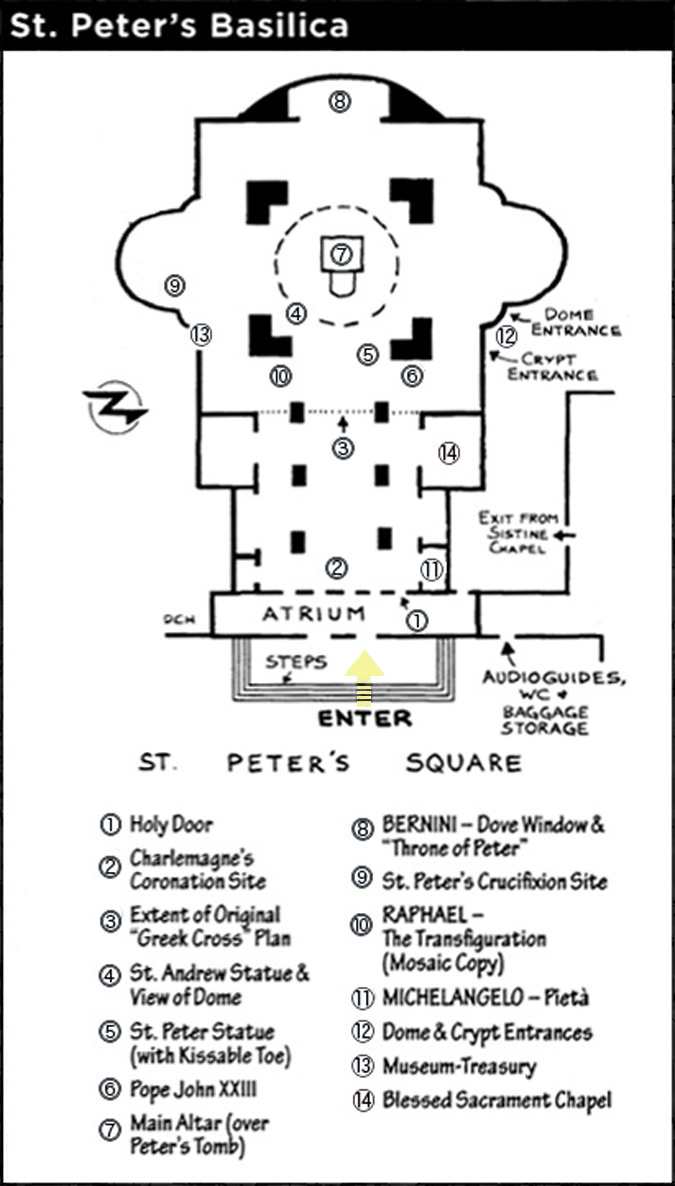
Here is a little floor plan showing the locations of things. Take it with you On the floor near the central doorway (⓶ above) is a round slab of porphyry stone in the maroon color of ancient Rome officials. This is the spot where, on Christmas night in A.D. 800, the French king Charlemagne was crowned Holy Roman Emperor. Even in the Dark Ages, when Rome was virtually abandoned and visitors reported that the city had more thieves and wolves than decent people, its imperial legacy made it a fitting place to symbolically establish a briefly united Europe. This was not made clear, but I suppose it is possible that the round slab of porphyry stone could have been imbedded in the floor of Old St. Peter's, and was one of the artifacts that were carried through to the New St. Peter's, like some columns, and Michelangelo's Pietà, etc. I still marvel at the fact that Michelangelo was only 23 years old when he created his Pietà. In the next chapter, I will have a confession to share. |
||||||||||||
|
||||||||||||
|
||||||||||||
|
||||||||||||