|
|
|
|
|
|
|
|
|
|
|
||||||||
|
||||||||||||||||||
|
Email us at: |
||||||||||||||||||
 |
||||||||||||||||||
 |
 |
|||||||||||||||||
|
Click the sun to see the |
||||||||||||||||||


 |
||||||||||||
|
|
|
|
|
|
|
||||||
|
||||||||||||
|
||||||||||||
|
||||||||||||
|
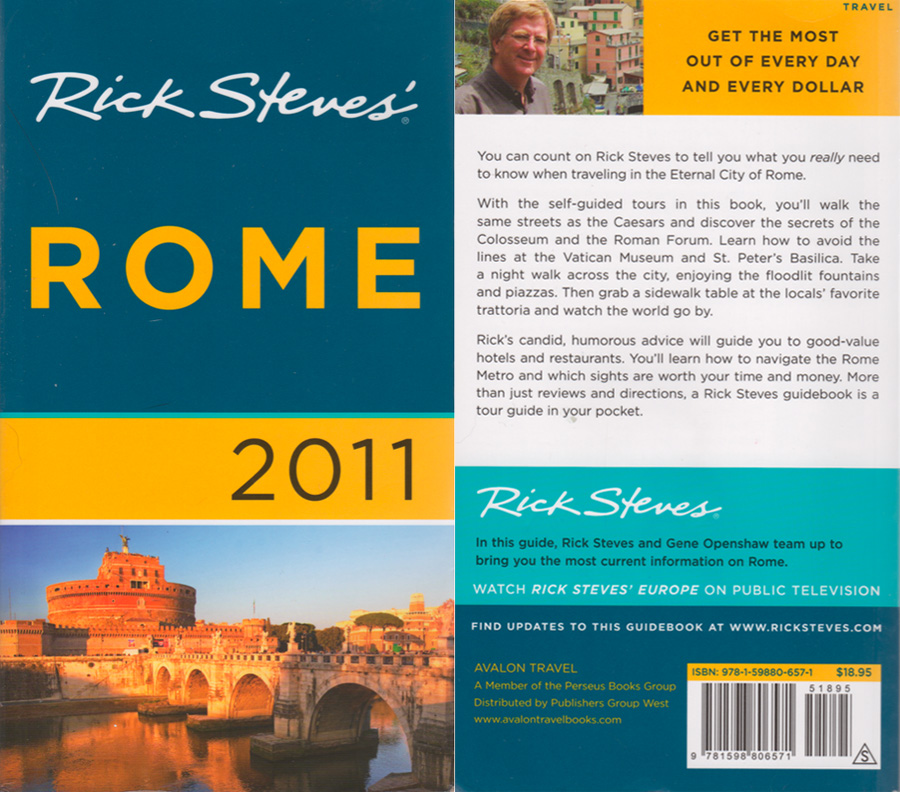
At this point I would like to tell you how I go about gathering all the information I put into these travelogues. There are several ways. When I am in a museum and I take a picture of something interesting, there is usually a plaque telling what that something is. I take a photo of that plaque also, and when I get home I simply Google the information on the plaque and voilà, all the information you'd ever want to know about that object is right there. I also take a few notes when information plaques are not available, but very few. Often times I will rely on Pete's memory, which is generally pretty good. I have also liberally extracted whole paragraphs, and sometimes just paraphrased the words from Rick Steves' fantastic book "Rome 2011". I highly recommend that anyone planning a trip to Rome, please buy this book and take it with you. You won't regret it. I apologize to Rick Steves for plagiarizing his work, but I do give him credit here, and I think it is easily recognizable where I have used his words in my own story. I hope by giving a strong recommendation to buy his book, perhaps this will help to absolve me a little for my sin. Gee, and I was so close to a confessional in St. Peter's. Perhaps I could have received a priests blessing along with the absolution. Who knows? Like I say, I'm not a catholic, so I don't know what all the rules are. Anyhow, here is the book you want to look for. I got my copy from Amazon.com.
And now, back to the Vatican.
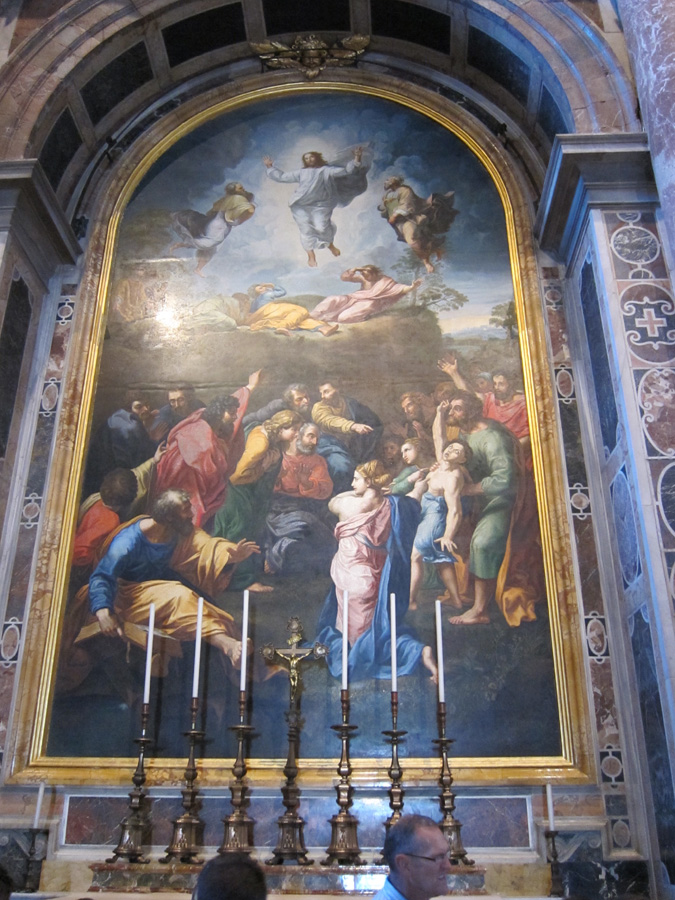
I include this painting because I think it is very powerful, and Rick Steves Christ floats above a stumpy mountaintop, visited in a vision by the prophets Moses and Elijah. Peter, James and John, who wanted visual proof that Jesus was Lord, cower in awe under their savior, "transfigured before them, his face shining as the sun, his raiment white as light" (as described by the evangelist Matthew―who can be seen taking notes in the painting's lower left). Raphael composes the scene in three descending tiers: Christ, the holiest, is on top, then Peter-James-John, and finally, the nine remaining apostles surround a boy possessed by demons. They direct him and his mother to Jesus for healing. Raphael died in 1520, leaving this final work to be finished by his pupils. The last thing Raphael painted was the beatific face of Jesus, perhaps the most beautiful Christ in existence. when Raphael was buried (in the Pantheon, at age 37) this work accompanied the funeral.
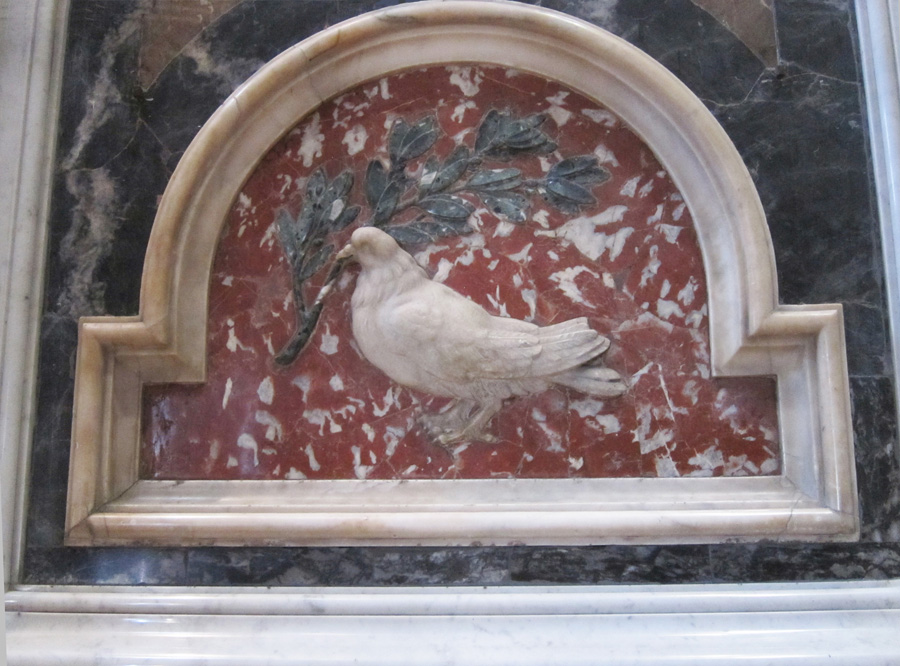
This dove with the laurel branch in its mouth was everywhere in the church, such as at the base of pillars,
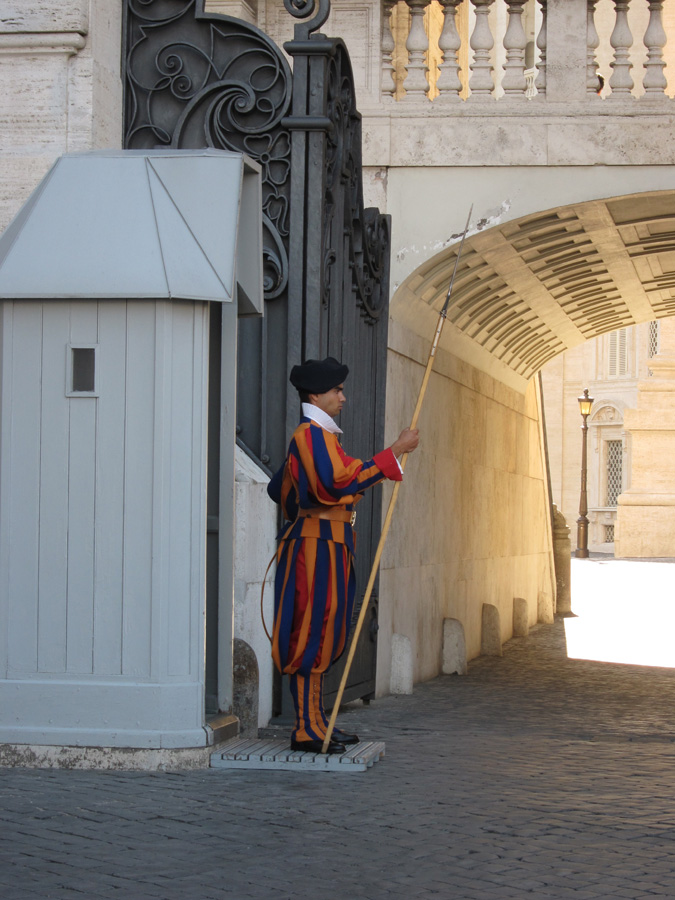
They say the uniforms for the Swiss Guard were designed by Michelangelo,
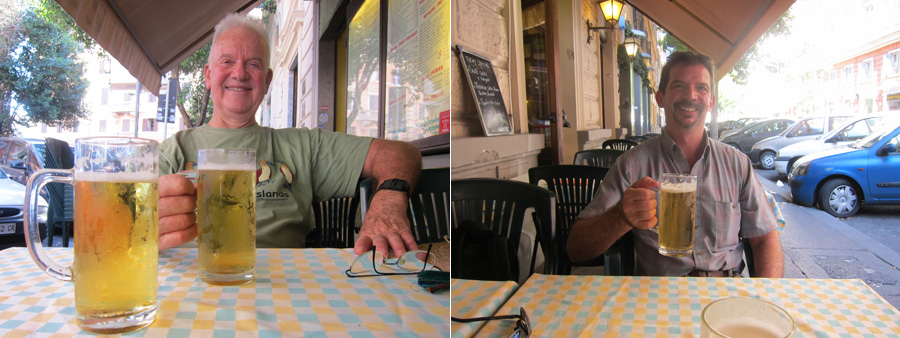
On the way home we stopped for a beer (well, actually 2, each). It was hot, and a lot of work on our day at the Vatican.
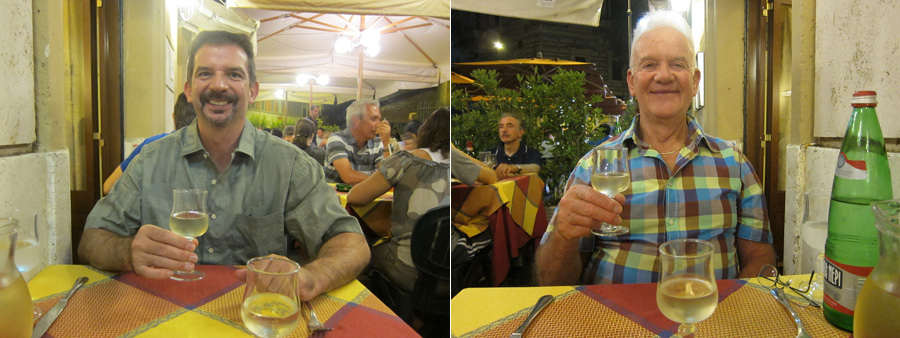
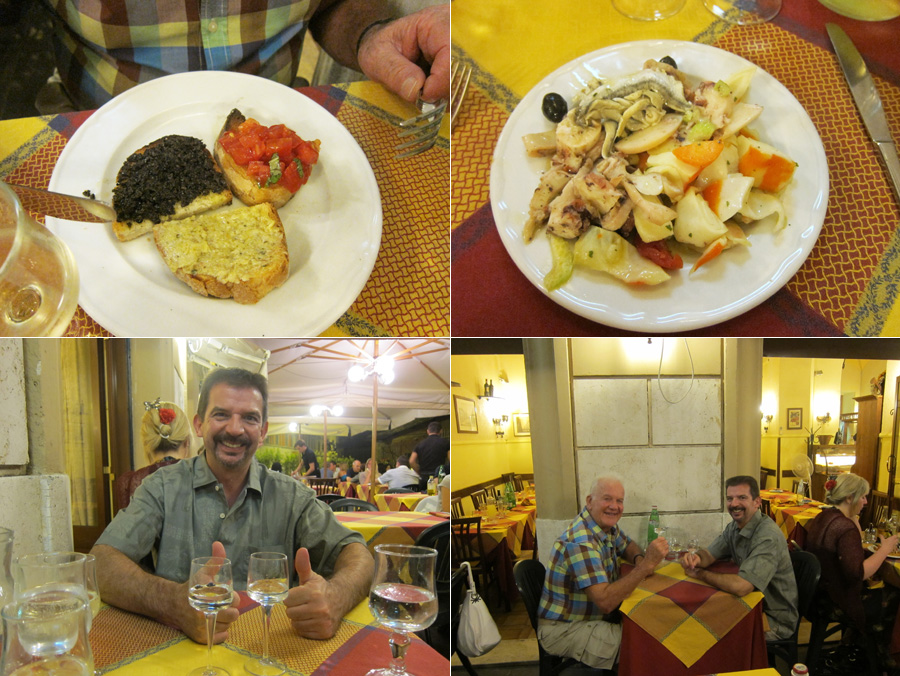
We found a really quaint little place for dinner that evening. The white wine was chilled perfectly, and excellent.
Cool stuff on toast. and the main dish was well worth having again. Pete gave the meal two thumbs up. On our FOURTH DAY in Rome, we did Rick Steves' "Night Walk Across Rome", except we did it during the day. Even by day, this walk shows Rome at its most colorful, as it meanders through narrow streets and past important monuments. But, when the sun sets, unexpected magic happens. We had experienced that unexpected magic 14 years ago, so this time we wanted to try something different. The walk begins at Campo de' Fiori and ends at the Spanish Steps. Since Pete was our navigator, I have no idea where the bus dropped us off, but Pete had the map, and I was just following along. It's nice to not have any responsibility. All I had to concentrate on was taking pictures, and not losing him in the crowd.
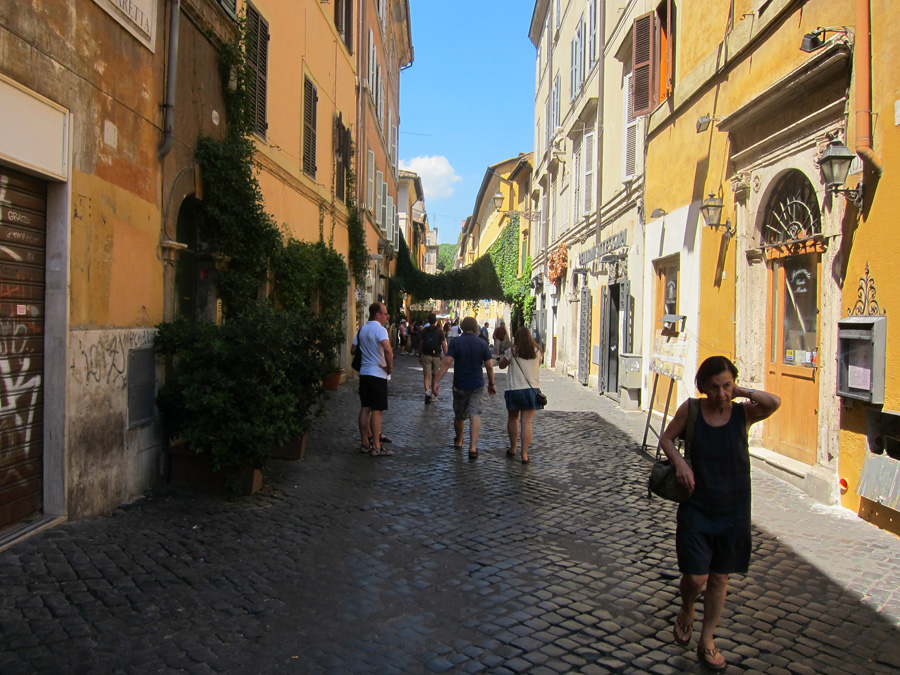
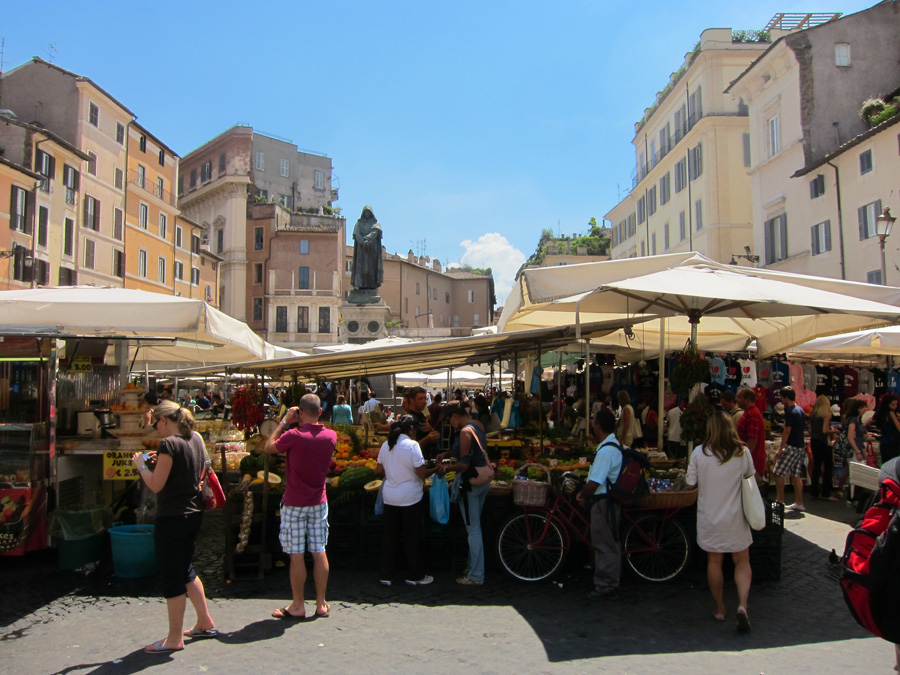
We pass through this quaint little cobblestone street heading, I hoped, in the direction of Campo de' Fiori Campo de' Fiori means Field of Flowers, and in the morning it is a busy produce market and a favorite of strollers after the sun goes down.
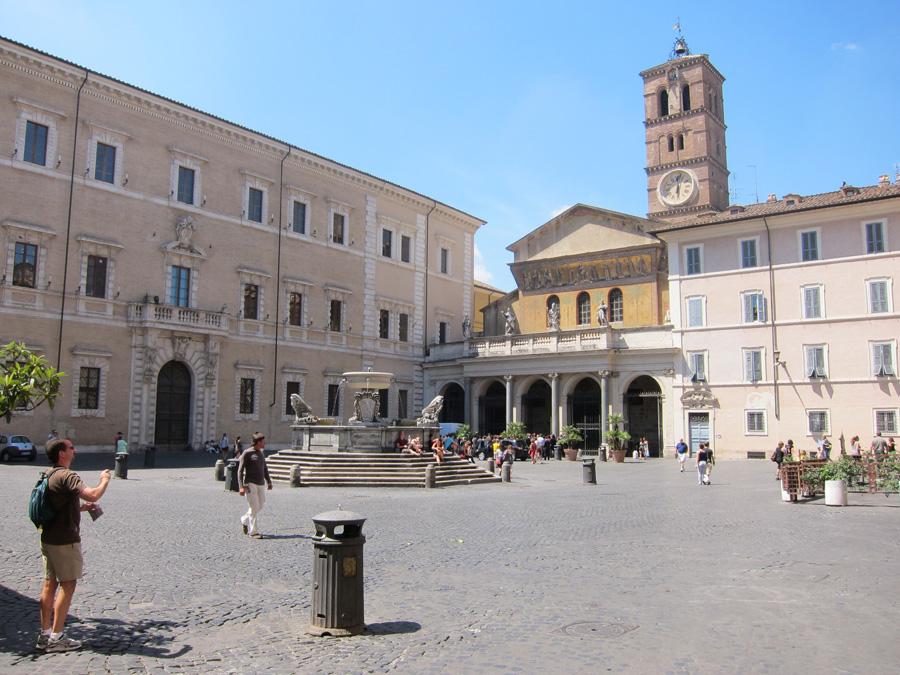
No, this is not Campo de' Fiori. This is the back side of the Palazzo Farnese (on the left). It is a magnificent
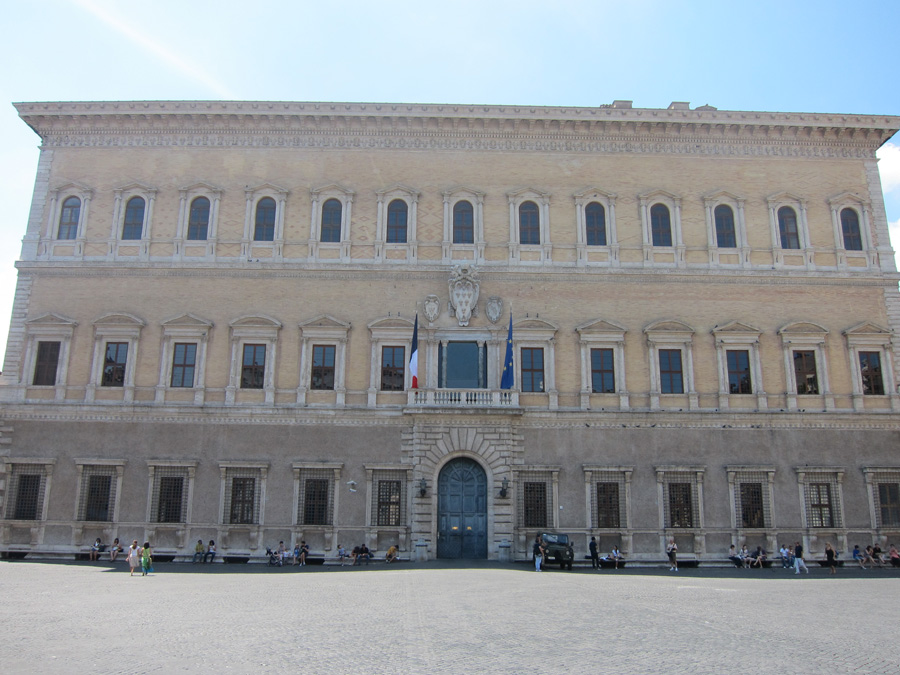
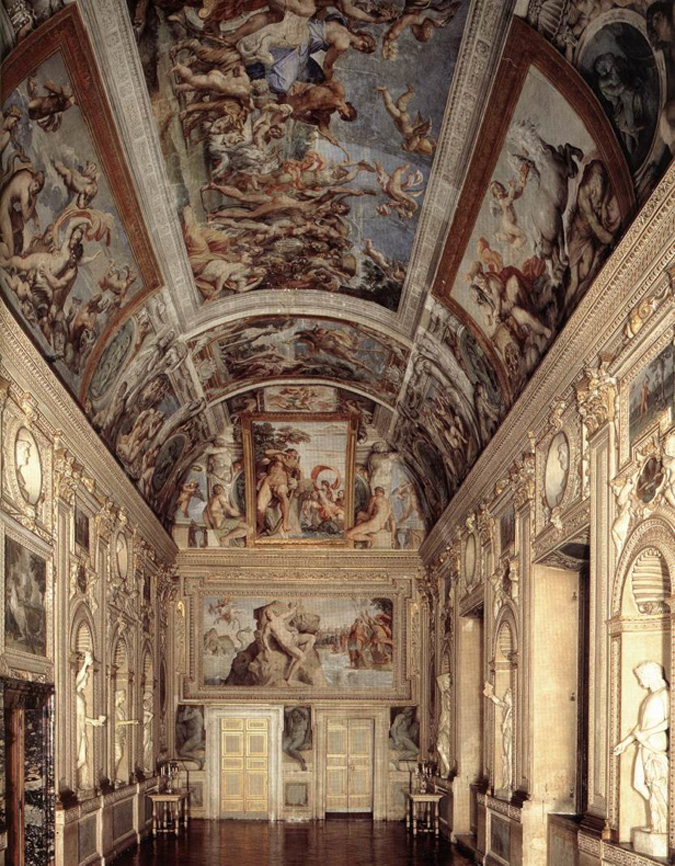
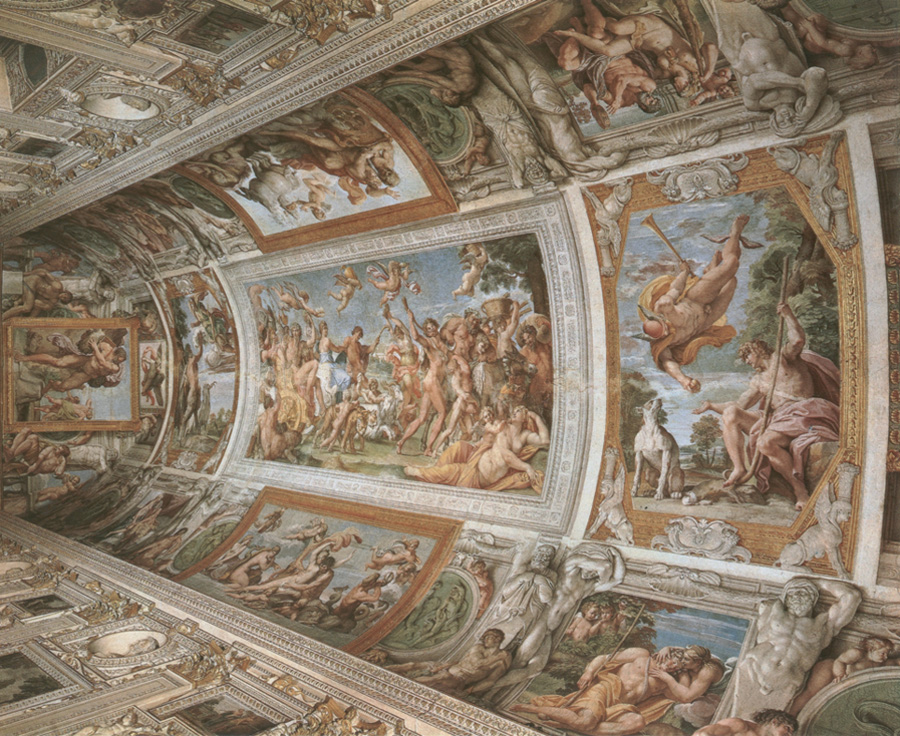
The front side of the Palazzo Farnese is much more impressive than the back side. It is a High Renaissance palace which was designed in 1517 for the Farnese family. The palace building was expanded in size and conception when Alessandro Farnese became Pope Paul III in 1534. You would never know of the great art treasures that reside inside this palace unless you were a notorious sleuth like me. The fresco known as The Loves of the Gods was commissioned by Cardinal Oboardo Farnese, Pope Paul III's nephew, of Annibale Carracci and his workshop. They were to decorate the barrel-vaulted gallery in the palace. Work was started in 1597 and was not entirely finished until 1608, one year before Annibale's death.
This is how you would see the fresco if you entered this magnificent barrel vaulted gallery
But laying it on its side like this makes it much easier to take it in, and appreciate this magnificent work.
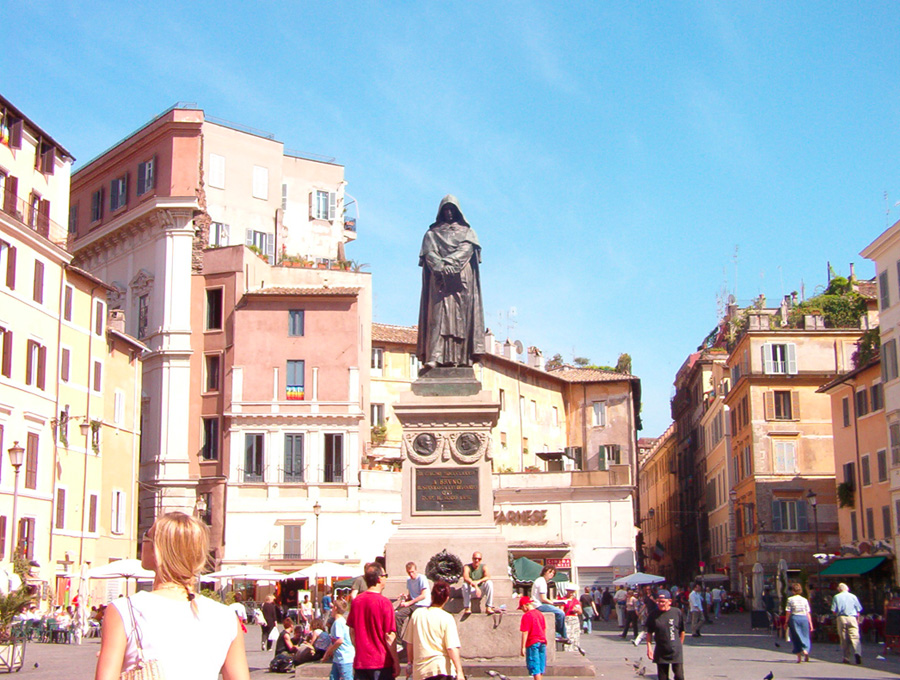
We finally arrive at Campo de' Fiori, and it is just as I remembered it from 14 years ago. We had a room in one of The statue you see in the background is that of Giordano Bruno, a philosopher who on 17 February 1600 was burnt alive here by the Roman Inquisition because his ideas (such as heliocentrism) were deemed dangerous and all of his work was placed on the Index of Forbidden Books by the Holy Office. In 1887 Ettore Ferrari dedicated a monument to him on the exact spot of his death: he stands defiantly facing the Vatican, reinterpreted in the first days of a reunited Italy as a martyr to freedom of speech.
It is truly a tragedy that one must be burned at the stake for one's advanced thinking, at the hands of Coming in the next chapter will be the Piazza Navona and the Pantheon. |
||||||||||||
|
||||||||||||
|
||||||||||||
|
||||||||||||