|
|
|
|
|
|
|
|
|
|
|
||||||||
|
||||||||||||||||||
|
Email us at: |
||||||||||||||||||
 |
||||||||||||||||||
 |
 |
|||||||||||||||||
|
Click the sun to see the |
||||||||||||||||||


 |
||||||||||
|
|
|
|
|
||||||
|
||||||||||
|
||||||||||
|
||||||||||
|
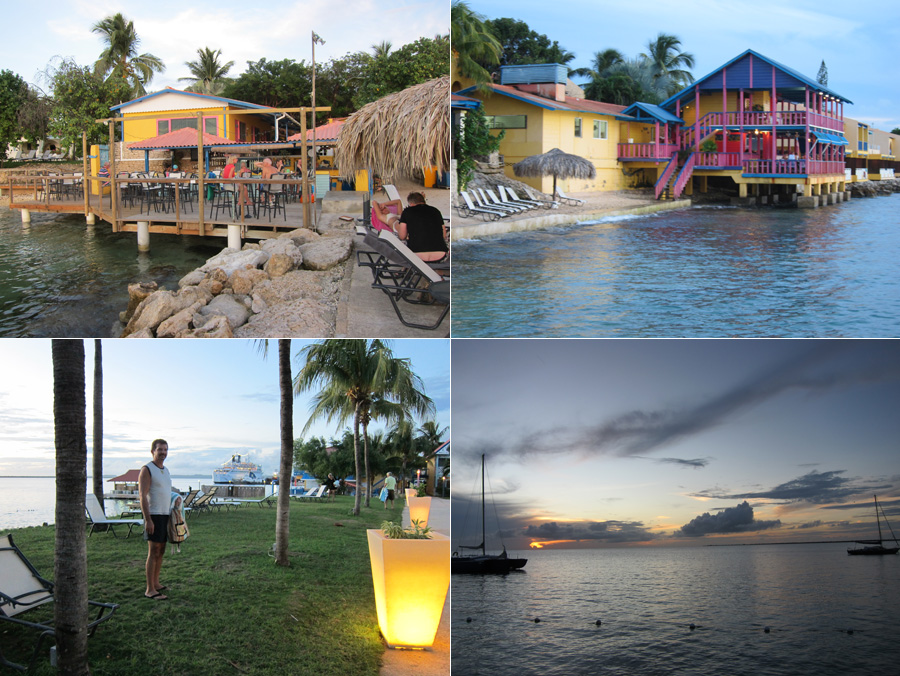
Well, I apologize for the delay in getting this chapter off the ground. We have been getting ready for Thanksgiving, and for our trip to Bonaire on the following day. We are in Bonaire now, and it is beautiful. It is our first time to visit this island, and we are staying at the Divi Flamingo Beach Resort. It is the only resort on this small island that has a casino. It's not huge, from the outside, and we have not been inside, yet.
Top left: This is the beach bar Right: The restaurant where we will be eating dinner in a couple of hours
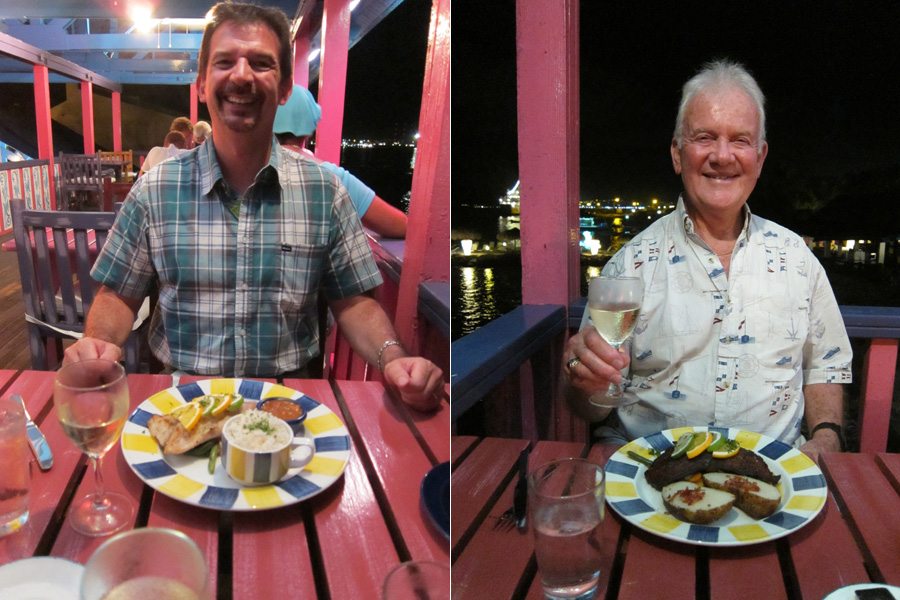
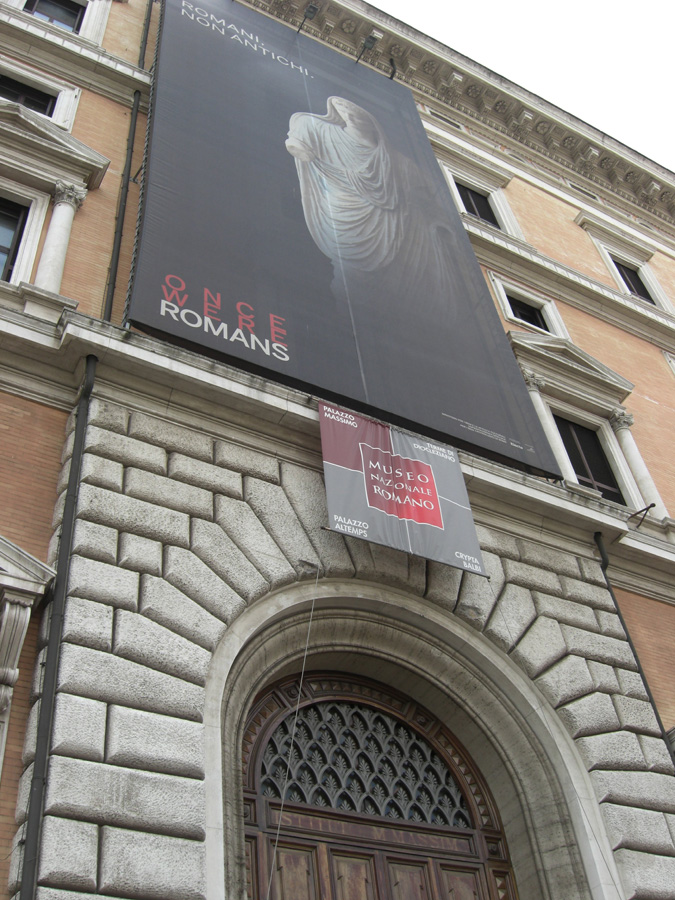
The catch of the day: Mahi Mahi, Pete's was creole style... ...and mine was blackened. Excellent! Another reason why I've had a difficult time starting this chapter is that we spent the first part of the day in the National Museum of Rome, and museums can be a bit tedious. According to Rick Steves, Rome lasted a thousand years....and so do most Roman history classes. I can vouch for that, as my world history class in high school had a section on Rome that I thought I would never get through. I did, however, find the museum fascinating, especially after visiting the Palatine Hill. The museum is only about 100 yards from the Termini Train Station, so it was an easy walk for us, as our room was only a few blocks from the Termini Train Station.
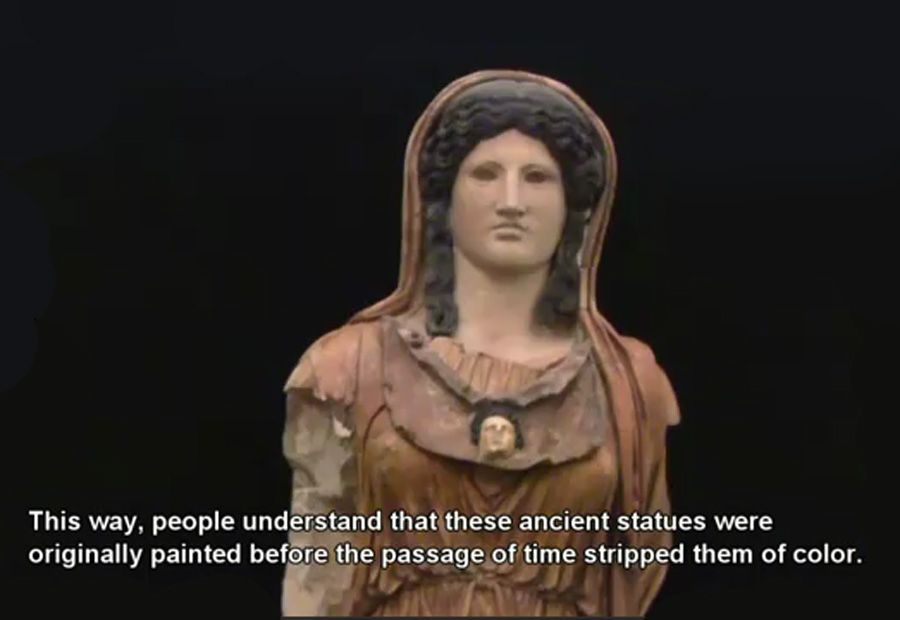
This is the outside of the museum, nothing spectacular, but functional. Much of the culture of ancient Greece we still have well preserved today, thanks to the Romans. As the Empire expanded, it swallowed up the cultures of Egypt, Greece and many others The Greeks were famous for creating statues of their gods, and the Romans carried the art to far greater heights. When you enter the museum, this statue of the goddess Minerva is the first thing to greet you.
She is big, and gaudy, and is a good reminder that all the statues in this museum—now missing limbs, scarred by erosion, or weathered down to bare stone—were once whole, and painted to look as lifelike as possible.
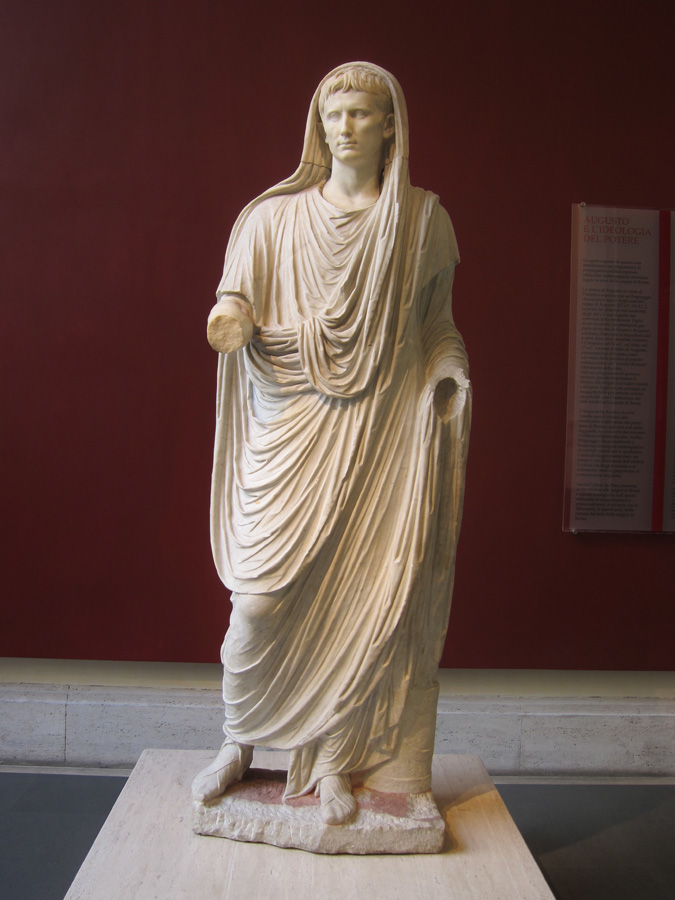
This statue of Augustus is a classic example of Roman sculpture in marble This description of Augustus by a contemporary, the historian Suetonius, is telling: "He was unusually handsome. His expression was calm and mild. He had clear, bright eyes, in which was a kind of divine power. His hair was slightly curly and somewhat golden." Julius Caesar had adopted his grandnephew, Octavian, who united Rome's warring factions and took the title "Augustus." In the statue above he is portrayed as having taken off his armor and laurel-leaf crown, and donned the simple hooded robes of a priest. For the first time in almost a century of fighting, one general reigned supreme. Augustus became the first of the emperors who would rule Rome for the next 500 years.
The Boxer at Rest, a Hellenistic and classical bronze statue An exhausted boxer sits between rounds and gasps for air. He wears brass knuckles-type Roman boxing gloves. His face is scarred, his back muscles are knotted, and he's got cauliflower ears. He's losing.
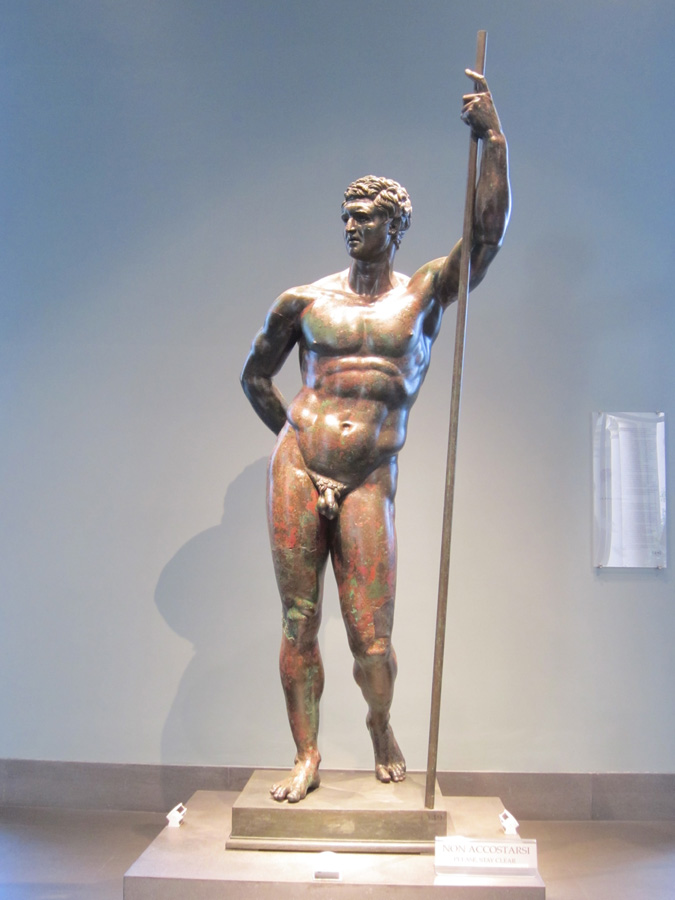
Hellenistic Prince Back then, everyone wanted to be like Alexander the Great. This restored bronze statue—naked and leaning on a spear—shows a prince (probably Attalus II of Pergamon) in the style of a famous statue of his hero from the second century B.C.
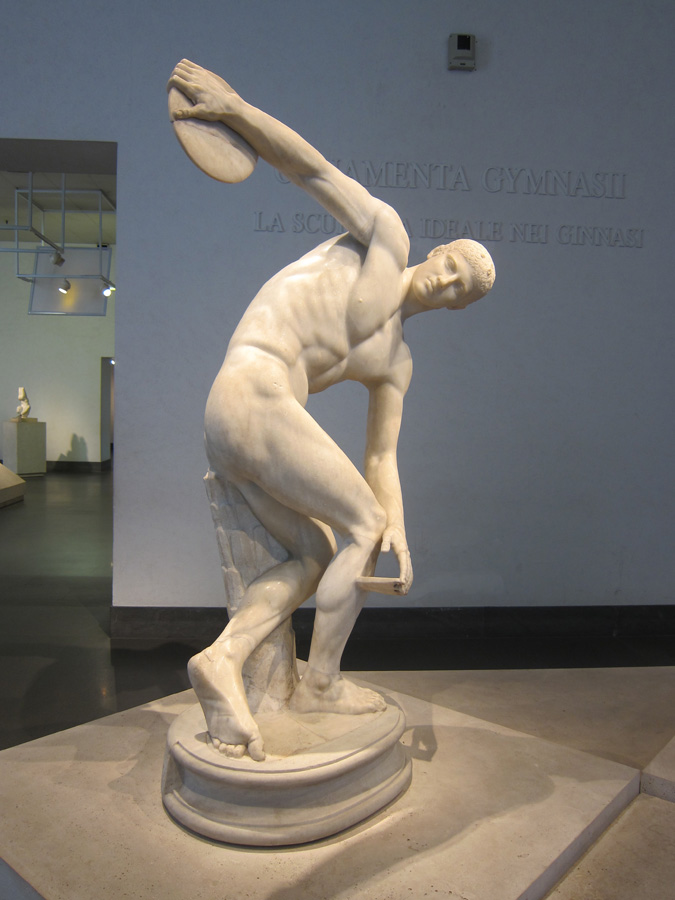
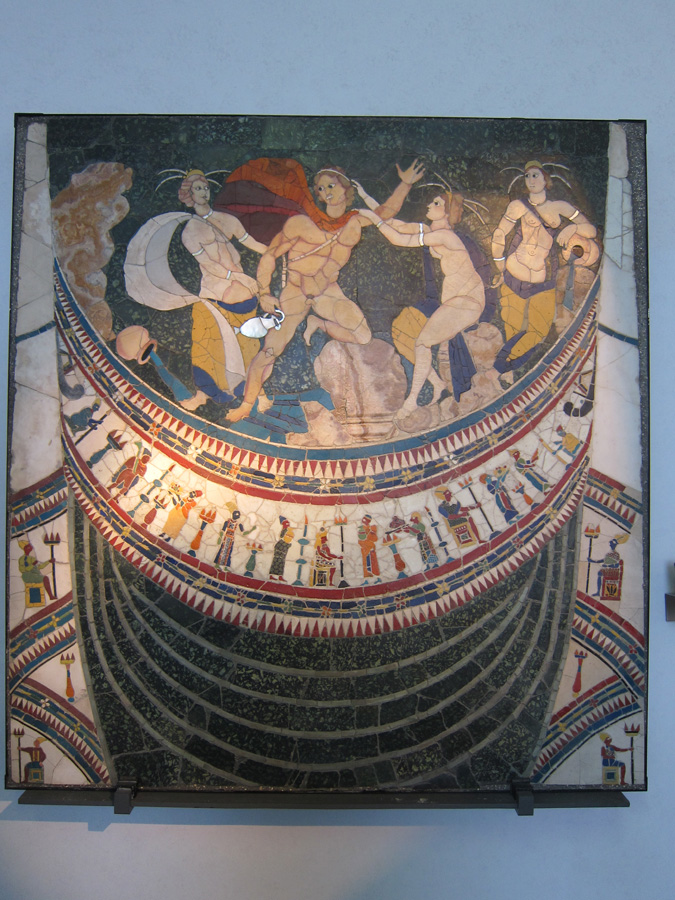
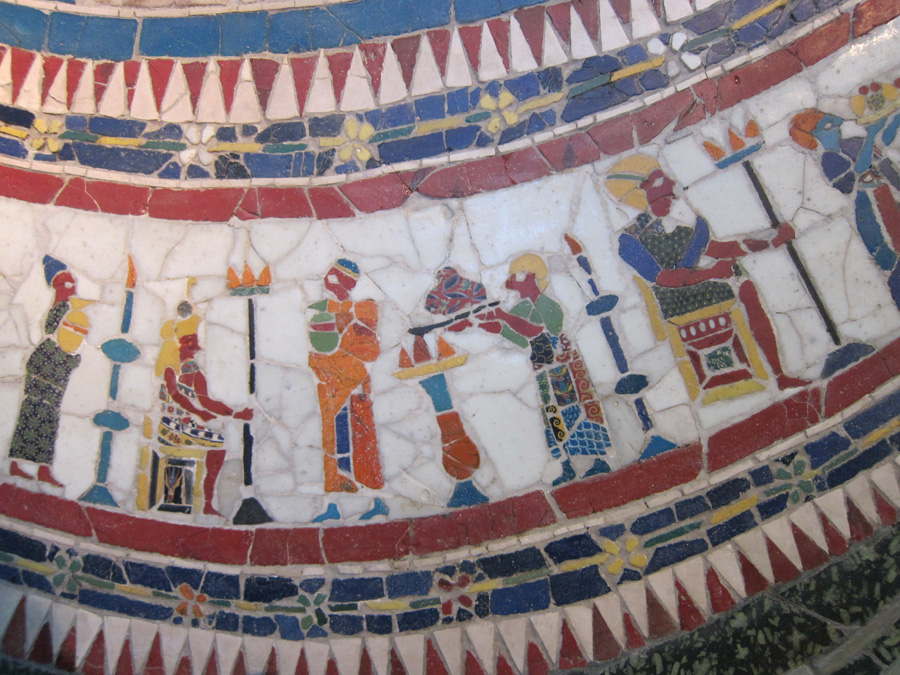
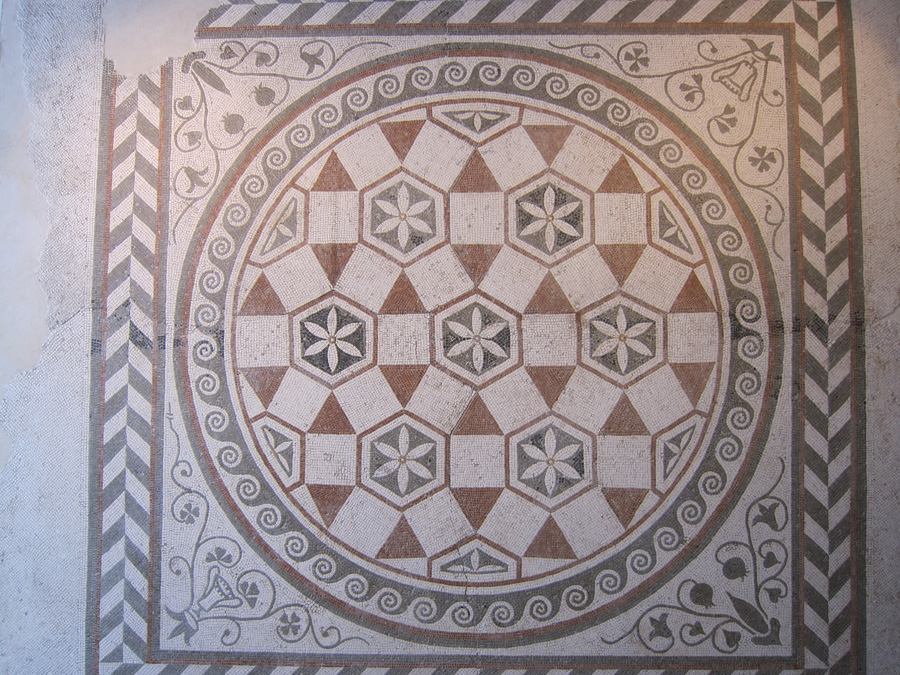
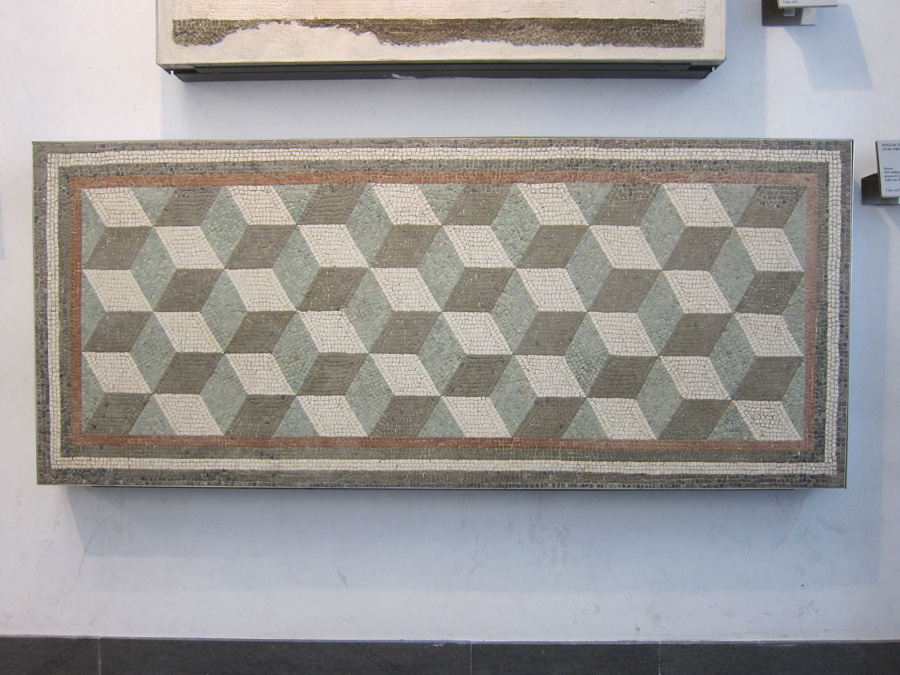
The Discus Thrower (Discobolo) An athlete winds up, about to unleash his pent-up energy and hurl the discus. The sculptor has frozen the moment for us so that we can examine the inner working of the wonder called Man. The perfect pecs and washboard abs make this human godlike. Geometrically, you could draw a perfect circle around him, with his hipbone at the center. He's natural yet ideal, twisting yet balanced, moving while at rest. For the Greeks, the universe was a rational place, and the human body was the perfect embodiment of the order found in nature. This statue is the best-preserved Roman copy of the original Greek work by Myron (450 B.C.) Statues of athletes like this commonly stood in the baths, where Romans cultivated healthy bodies, minds, and social skills, hoping to lead well-rounded lives. The Discus Thrower, with his geometrical perfection and godlike air, sums up all that is best in the classical world. The Romans mastered the process of using mosaic tiles to create beautiful works of art. The intricacies and detail they achieved were nothing short of amazing.
This piece if perfectly flat, yet it appears to the eye to have depth.
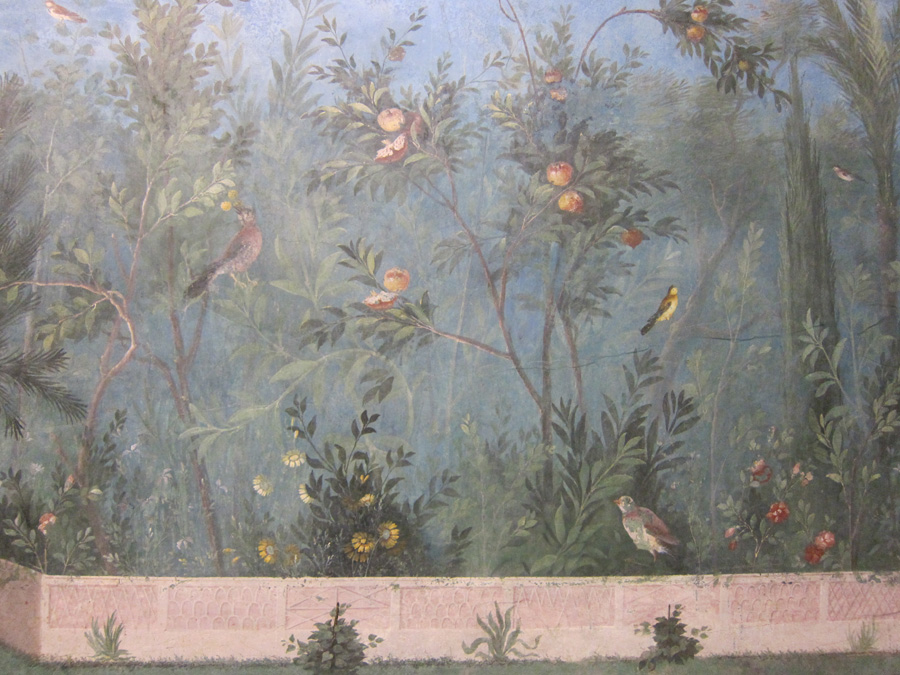
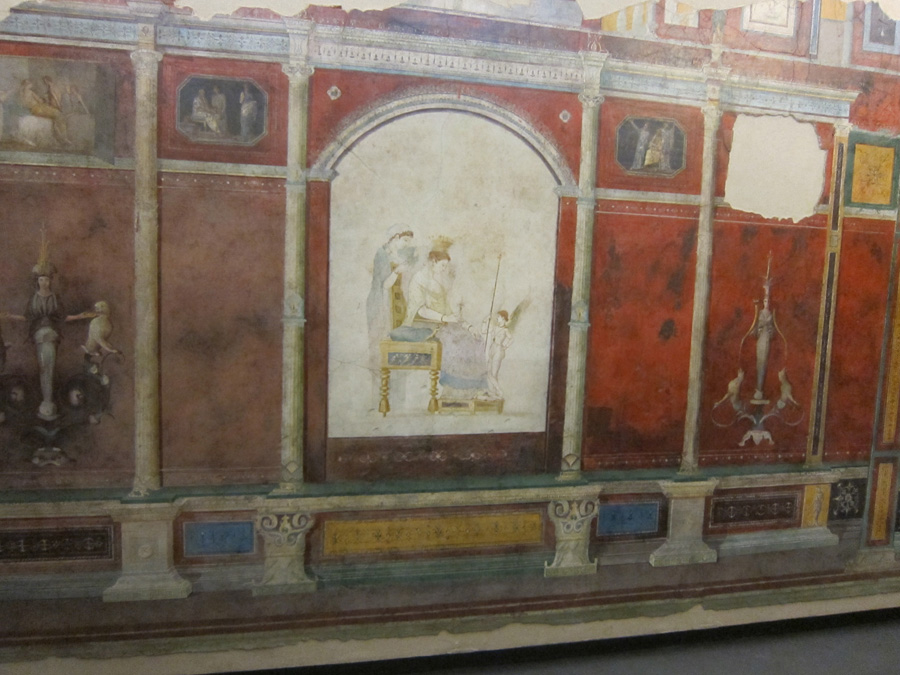
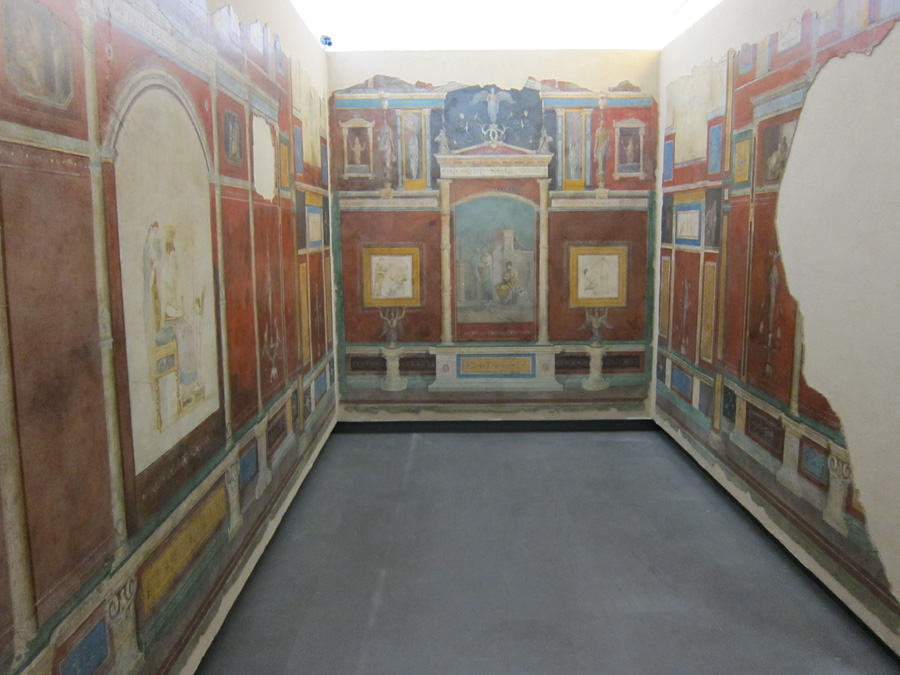
Zooming in on the lower ring to capture the detail gives you a sense of the infinite amount of patience If you will recall that in Chapter 3 when we visited the Palatine Hill, and I spoke of the House of Livia, the wife of Augustus, and how it was uncovered fairly recently, and was perfectly intact. Well, I don't know how they did it, but they managed to take the frescoes off the ceilings and walls of her house on the Palatine Hill, and to place them in this museum.
This fresco came from a windowless subterranean room in Livia's house Besides the Villa di Livia frescoes, there were the Villa Farnese frescoes.
Notice how the frescoes give the illusion of columns, friezes and garlands.
There were also many fine examples of mosaic tiles used to beautify the walls and floors of the villas.
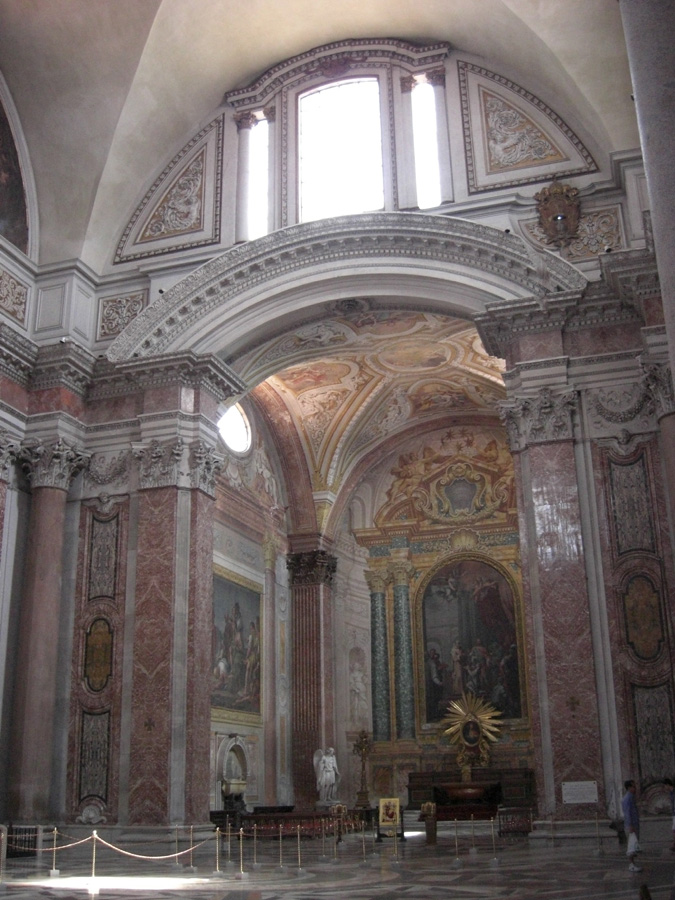
Life in Rome during this period, at least for the wealthy political class, seems to have been idilic. When I think of the Palatine Hill, with it's luxurious homes and palaces, overlooking the Roman Forum, I think of Beverly Hills and the luxurious homes of the movie stars, Rodeo Drive and its amazing shops. Enjoy it while it lasts Beverly Hills, because one thing is for certain, it won't last forever. Well, today is Tuesday, and we have seen monsoon-like weather with torrential rains. I've had to go barefoot to lunch because wearing flip flops is far too dangerous on the wet brick sidewalks. It is now half past three in the afternoon, and the sun has finally come out. We are going down by the pool to enjoy this respite, because the forecast is for more rain for the rest of the week. But even rain in paradise can be enjoyable. My last chapter in Rome will cover a church we visited after the museum. Here is a preview shot.
Santa Maria degli Angeli After that, I will move onto the Celebrity Silhouette and begin our Mediterranean cruise, with our first stop in Florence. |
||||||||||
|
||||||||||
|
||||||||||
|
||||||||||