|
|
|
|
|
|
|
|
|
|
|
||||||||
|
||||||||||||||||||
|
Email us at: |
||||||||||||||||||
 |
||||||||||||||||||
 |
 |
|||||||||||||||||
|
Click the sun to see the |
||||||||||||||||||


 |
||||||||||
|
|
|
|
|
||||||
|
||||||||||
|
||||||||||
|
||||||||||
|
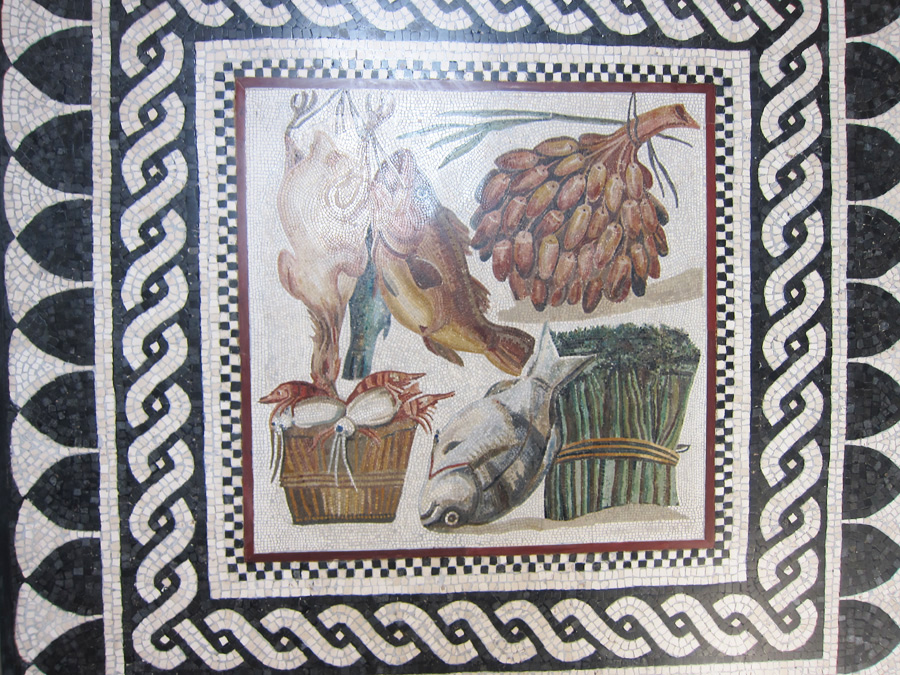
The Italians were masters at creating beautiful art of intricate design with tiny mosaic tiles. The reflected light on the photo below reveals this intricacy.
Note the shrimp and squid in the basket. It is hard to believe they are created with tiny pieces of colored tile. Getting to the Sistine Chapel from the Museum proper was a very long and arduous trek through corridors, rooms, up and down stairs, and I was beginning to wonder if we were ever going to get there. But we eventually did arrive, and it is a good thing that the art is on the ceiling, because we entered into a sea of bodies, all looking straight up. The ceiling of the chapel is very high, and it was next to impossible to see the art in detail. It is after all, six stories up. The "Creation of Adam" was much smaller than I recalled from my first visit years ago. No photography was allowed at all. You would have needed to use your telephoto lens anyway. Well, this is one thing you won't see when you visit the Sistine Chapel, the "before" and "after" the restoration.
The Creation of Adam―God and man take center stage in this Renaissance version of creation. Adam, newly formed in A little background about the Sistine Chapel is appropriate here. It is the personal chapel of the pope, and the place where new popes are elected. There is a small old-fashioned stove that burns the pope-vote ballots, and it sends out puffs of tell tail smoke. Black smoke means that a new pope has not been elected. White smoke singles that a new pope has been elected. It is not a simple matter of black and white. Sometimes the smoke is grey, as it was on October 26, 1958, and it caused confusion. Pope John Paul II requested that the Vatican will ring bells in addition to sending up white smoke to single the election of his successor. There are 115 Cardinals who assemble in the Sistine Chapel to elect a new pope.
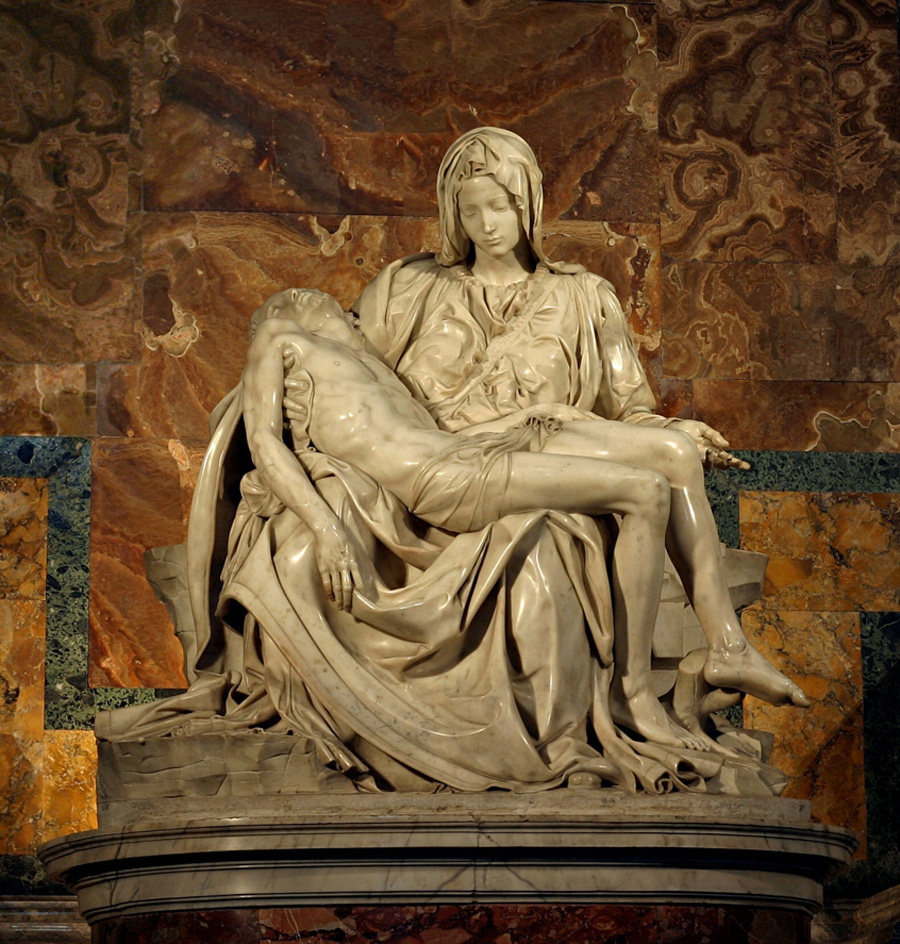
The Pietà by Michelangelo, created in 1498-1499, is a masterpiece of Renaissance sculpture. It is the first of a number The most substantial damage inflicted on the Pietà occurred on May 21, 1972 (Pentecost Sunday) when a mentally disturbed geologist named Laszio Toth walked into the chapel and attacked the sculpture with a geologist's hammer while shouting "I am Jesus Christ." Onlookers took many of the pieces of marble that flew off. Later, some pieces were returned, but many were not, including Mary's nose, which had to be reconstructed from a block cut out of her back.
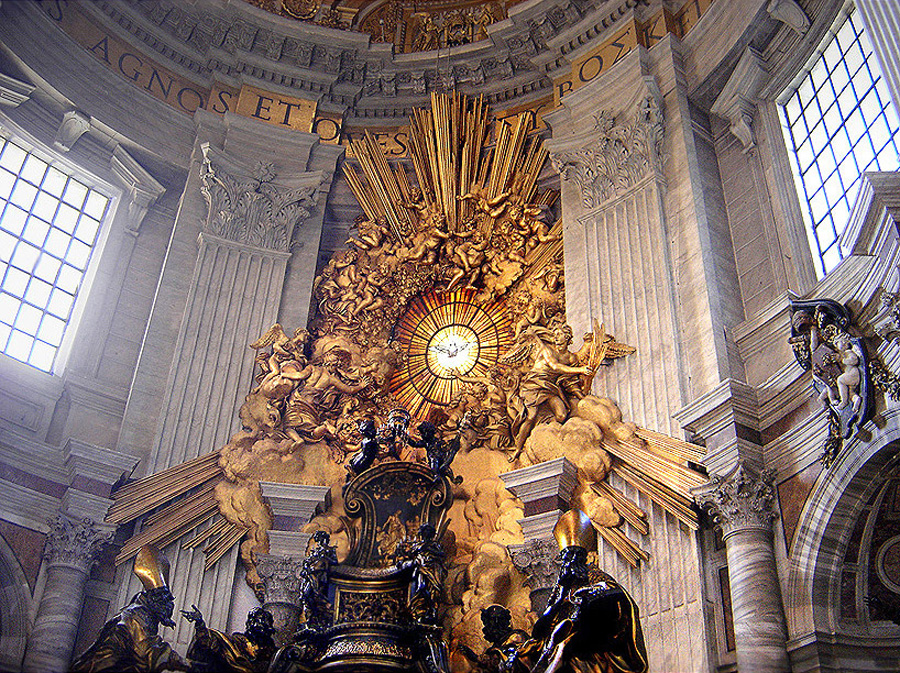
The Chair (or Throne) of Saint Peter. The chair of a bishop is a cathedra. The cathedra of St. Peter's Basilica was once used by popes. It was therefore often thought to have been used by Saint Peter himself but was in fact a gift from Charles the Bald to the Pope in 875. esus' words to Peter in Matthew 16:18-19, "You are Peter, and upon this Rock, I will build my Church and the gates of Hell shall not prevail against it. To you have I entrusted the keys of the Kingdom of Heaven and whatever you bind on earth will be bound in heaven, and whatever you loose on earth will be loosed in heaven", are inscribed in Latin in the apse, within which is placed Bernini's monument enclosing the wooden chair, both of which are seen as symbolic of the authority of the Bishop of Rome as the Vicar of Christ and successor of Saint Peter. |
||||||||||
|
||||||||||
|
||||||||||
|
||||||||||