|
|
|
|
|
|
|
|
|
|
|
||||||||
|
||||||||||||||||||
|
Email us at: |
||||||||||||||||||
 |
||||||||||||||||||
 |
 |
|||||||||||||||||
|
Click the sun to see the |
||||||||||||||||||


 |
|||||||||
|
|
|
|
|
|||||
|
|||||||||
|
|||||||||
|
|||||||||
|
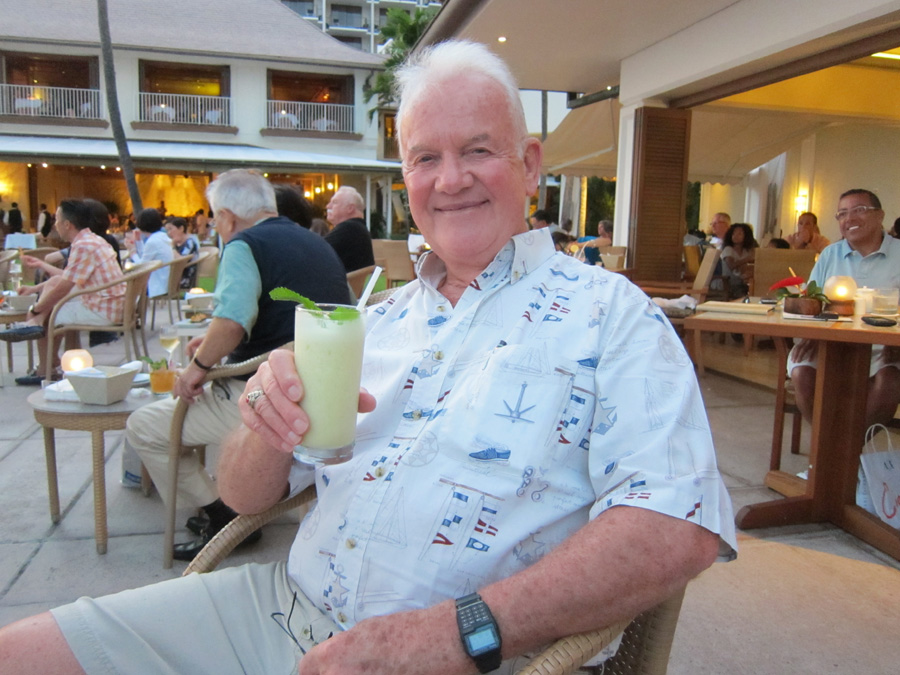
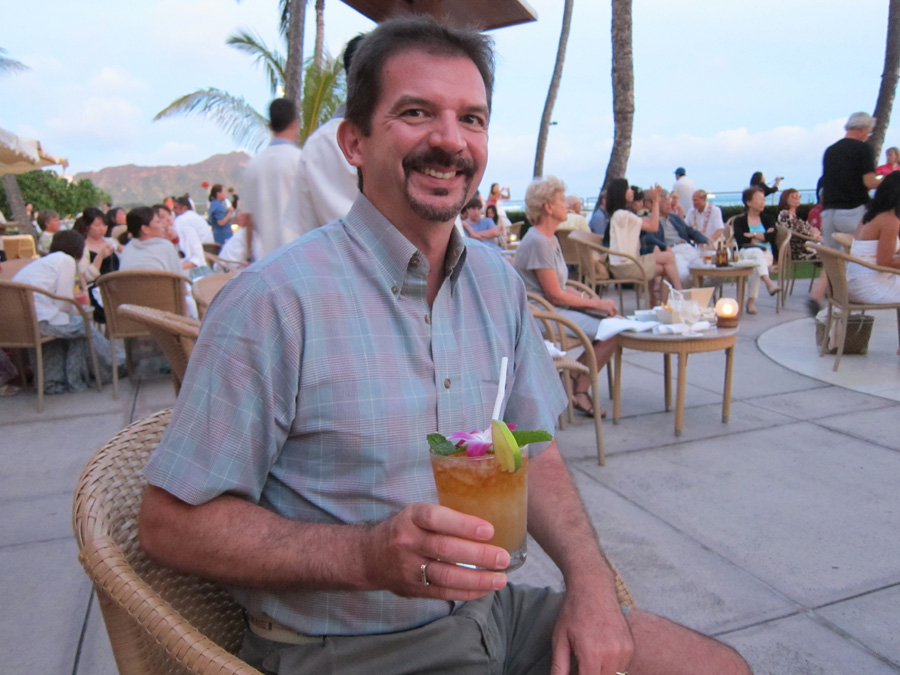
It is June 18th, and we are now on Oahu. We are staying at the Hale Koa Hotel, which is a Military hotel devoted strictly to the U. S. Armed Forces for R&R (Rest and Recreation). Pete was a little apprehensive about staying at a Military establishment, thinking that it would be little better than G.I. (Government Issue). You have to be a member of the Armed Forces to stay at the Hale Koa. I am retired from the U. S. Navy, so I qualify. Boy, was Pete pleasantly surprised. The Hale Koa is a first rate luxury hotel right on Waikiki Beach. The Royal Hawaiian is just a few short block down the beach towards Diamond Head. My cousin Suelyn said that we should go to the Halekulani for drinks, so guess what, we checked in, put our bags in the room and headed for the Halekulani Hotel. It was a short walk there from the Hale Koa. And yes, we did have a drink on their huge patio area and enjoyed the entertainment.
I thought I'd try a Piña Colada. It was a warm evening, and those are very refreshing.
Pete ordered their Mai Tai, and instead of an umbrella, they float an orchid on top.
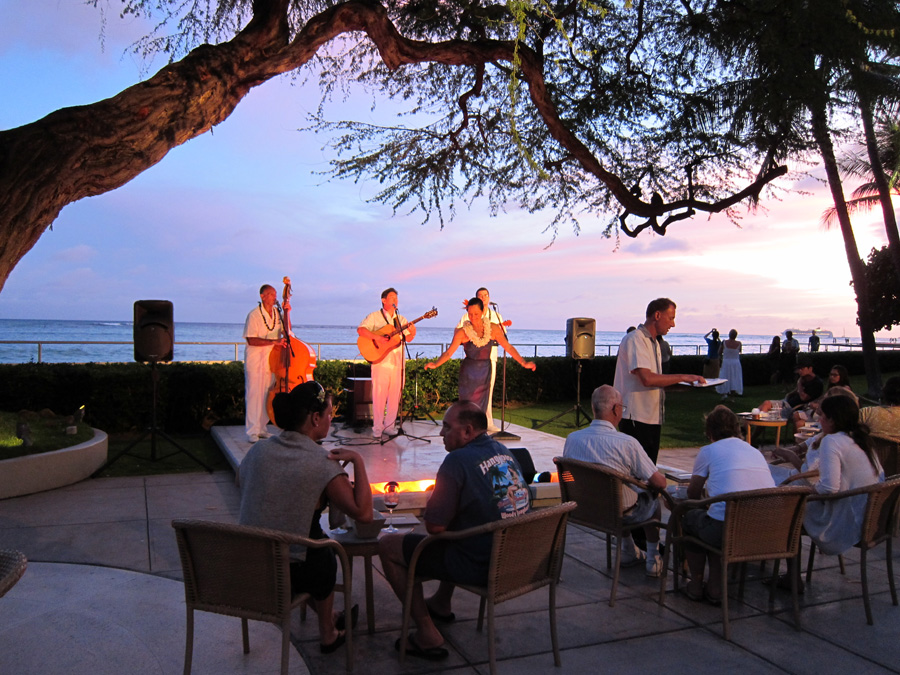
There were three guys with stringed instruments playing Hawaiian songs while this exceptionally talented
You can see Diamond Head in the background. I never tire of seeing the beautiful palm trees on tropic isles. We watched the sun set, and then left to return to our hotel and get ready to go out for dinner. On the way in from the airport we passed by a Thai restaurant not far from the Hale Koa, so we walked there, and had an excellent meal. A girl was dancing traditional Thai dances on a small stage near our table. The Hale Koa has an interesting story. I'll change the color of the font to let you skip past this and come back later when you have more time if you prefer. Fort DeRussy was established in 1906 on a 72-acre parcel of land in Waikiki that was considered very undesirable. Oh to know then what we know now. Most of it was swamp land, duck farms, and taro patches. At that time, the Moana Hotel was the only hotel in Waikiki so there was not much activity in the area. Battery Randolph at the east end of Fort DeRussy (now an Army Museum) was completed in 1911. The extremely solid structure with walls 20-feet thick anchored 20-feet below ground level proved to be a very important factor in the construction of the Hale Koa Hotel many years later. Although Fort DeRussy served as an important camp during World War I, it experienced anonymity in the years following. Most of the activities in Waikiki in the late 1920s centered around the brand-new Royal Hawaiian Hotel, and nobody paid attention to that Army post at the end of the beach on that undesirable piece of land. World War II changed all this. During this war, Fort DeRussy served as a staging area for troops going in and out of the Pacific area. The Army headquartered at Fort DeRussy, while the Navy took over the Royal Hawaiian Hotel and other properties for troop deployments. Hundreds of thousands of men traveling between the Pacific areas became acquainted with Hawaii and Fort DeRussy. Housing was erected and grounds became a beehive of activity. Quonset huts and temporary billeting facilities were built as were exchanges, officers clubs, enlisted clubs, NCO clubs, and beach activity centers. However, even with all of this usage, Fort DeRussy still was not "desirable" enough for the grand military balls and official functions. These were reserved for the more refined facilities of Fort Shafter. Fort DeRussy remained as a "back room" in the Army. Tremendous amounts of traffic continued through Fort DeRussy in the days of the Korean and Vietnam conflicts. Literally hundreds of thousands of servicemen and women passed through Hawaii on R & R. There was not enough room for everyone at Fort DeRussy, and facilities that existed were in marginal shape, but reunited loved ones still enjoyed their seven days of R & R in Hawaii. Vacationing military families comprised 25% of Hawaii's visitors at this time, so those unable to stay at Fort DeRussy were accommodated elsewhere in Waikiki. In 1967, newspapers heralded a $12-million recreation complex for Fort DeRussy. Plans called for a 12-story hotel with 416 double rooms. This facility was to have transient billeting, service clubs, an enlisted man's mess, an NCO mess, an Officers' open mess, and an enlisted men's bath house. It would also boast a bowling alley, chapel, exchange, and theater. The article cited that this recreation center was badly needed, especially during the peak travel seasons. There were approximately 158 servicemen arriving in Hawaii every day for their week of R & R. In reaction to this article, the city and county planning director stated no objection to the facility, and the hotel received endorsements from the Hotel Association, the Chamber of Commerce, and the Hawaii Visitors Bureau. Plans were prepared, but it was still undecided how this project would be funded. Meanwhile profits from the Army and Air Force Exchange Services were accumulating from recreation activities in Vietnam. These "non-appropriated funds" were earmarked for us as welfare and recreation funds, not in Vietnam, but in other areas of "need" and "high usage." In March 1969, Secretary of Defense, Melvin Liard, notified Congress of the intention to finance and refurbish Fort DeRussy with this non-appropriated fund money. In other words, no tax money or appropriated funds were to be used to develop this recreation complex. Bids for the construction of this brand-new facility on Fort DeRussy were solicited. The original site for the hotel was where the Battery Randolph still stands. Because the Battery Randolph's sturdy construction, it could not be destroyed without causing structural damage to neighboring buildings. So, it was back to the drawing board for redesign and relocation to the hotel's present site. The hotel's building contract was finally awarded in March 1973. It was then that the dramatic change to Fort DeRussy occurred. Older buildings were demolished. About seventy truckloads of coral were brought in as landfill and the beach was widened. What is now the sidewalk along the beach was once waterline. Housing units were replaced with lawn and a tropical garden with varieties of banyan, different palms, fern, and flowering plants. Fort DeRussy quickly became an oasis among the ever-growing numbers of Waikiki hotels. The Hale Koa celebrated its grand opening on Saturday, October 25, 1975. The Army's Outstanding Soldiers of the Year were flown in from all over the world to be among the first guests. A traditional Hawaiian blessing complete with a royal procession officially opened the hotel. Festivities on opening night included an elaborate cocktail reception and banquet with many island dignitaries in attendance. Entertainment was provided by the best of Hawaii's performers. A public open house was held. From this royal beginning, the Hale Koa has achieved above and beyond what was expected of it. By the time its doors opened, the concept of separate dining and sleeping areas for enlisted and officers had long vanished. The Hale Koa opened as it remains today, an all-ranks, all-services hotel bent on providing first-class services without regard to an individual's status. Its mission remains unchanged, "To provide a first class hotel and recreation facility at affordable prices for military members and their families." Today the Hale Koa Hotel, which is actually owned by the Department of the Army, is managed by Richard E. LeBrun and comes under the jurisdiction of the Family and Morale, Welfare and Recreation Command. Deemed an Armed Forces Recreation Center, this facility is totally self-supporting. Everything from employee salaries and operating expenses to capital improvement projects are pai with monies generated by the hotel's operations. A hotel expansion project started in 1991 included the development of 66 acres of Fort DeRussy, a new swimming pool complex, two snack bars, a beverage bar, and luau garden. Kalia Road, fronting the Hale Koa Hotel, was also realigned and improved. In September of 1995, the new Maile Tower was completed, doubling the number of guest rooms from 419 to 817. It is estimated that over one million military personnel and dependents use the Hale Koa's many facilities each year. The Hale Koa is truly a benefit for all military personnel to enjoy. "Space available" military flights and special airline rates, plus the Hale Koa's affordable prices, make Hawaii the perfect spot for R & R. This was actually my first time to use the facility, and I've been retired from the Navy since 1992. I actually tried to book a room there in 1991, but I didn't do it early enough, and they were fully booked. Instead, we stayed at the Outrigger Reef Hotel, which was not even close to being as nice as the Hale Koa.
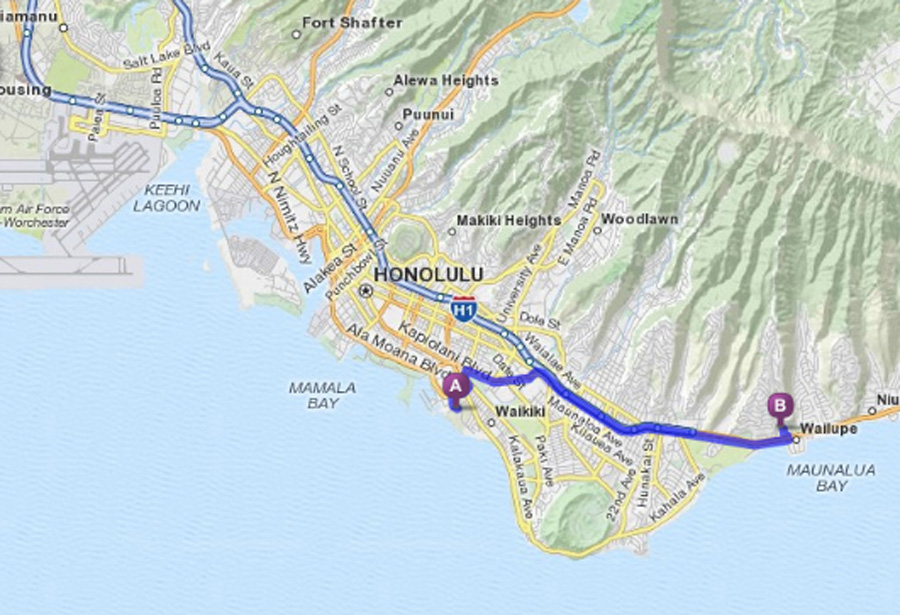
This is what you get when you book a room with a "partial ocean view" as I did. This is the view from our balcony. The next day we were picked up by Suelyn and given a short tour of the down town area before going on to her home where her son Rick had built her an apartment over the garage of his home. They live just 6 miles from where we were staying in Waikiki.
Rick's beautiful home is near Wailupe and overlooks Maunalua Bay.
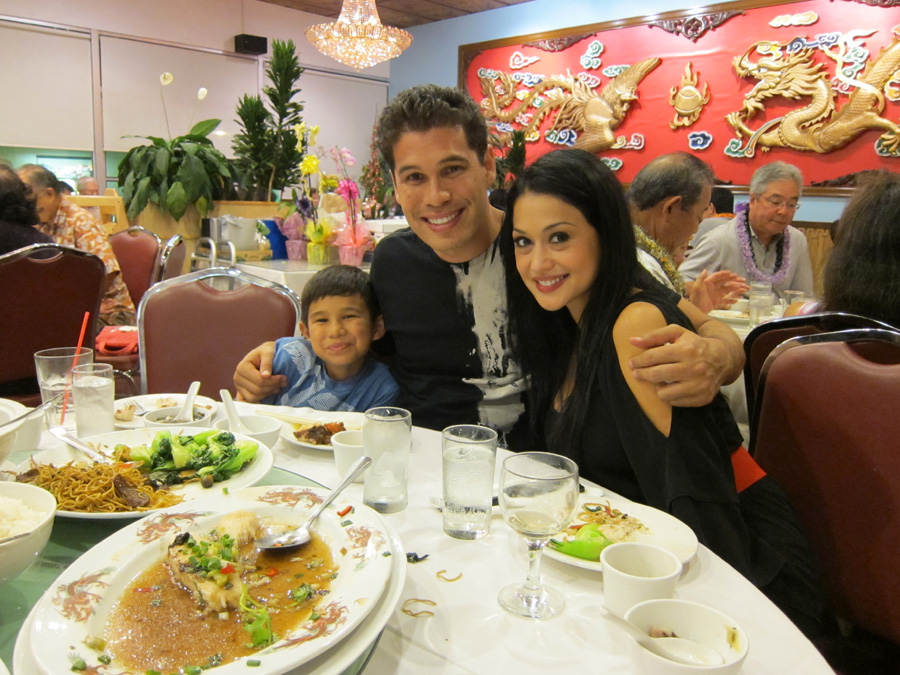
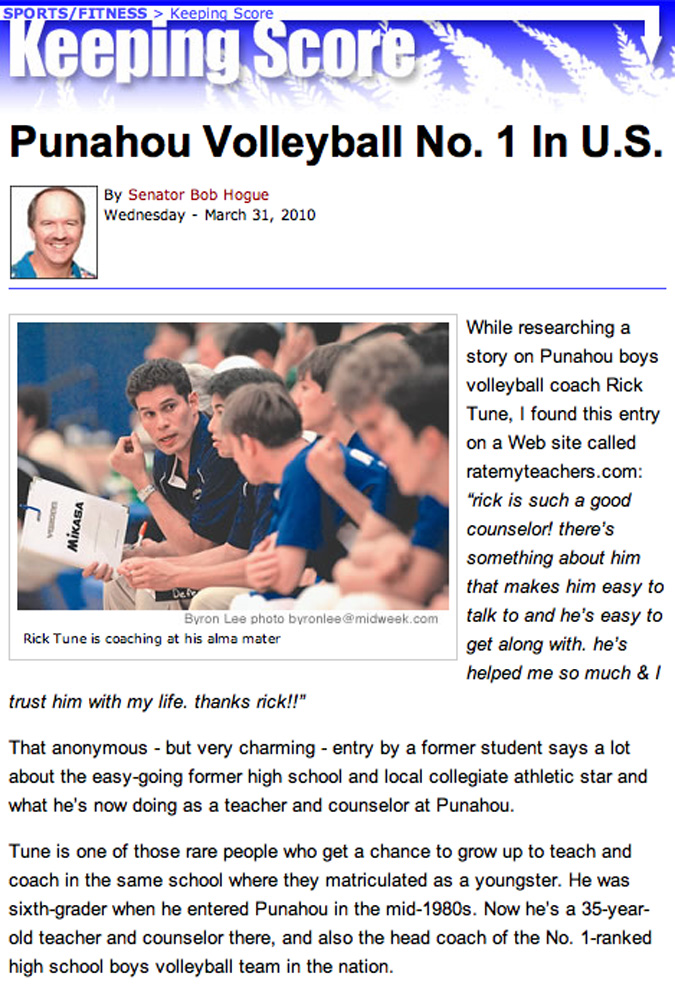
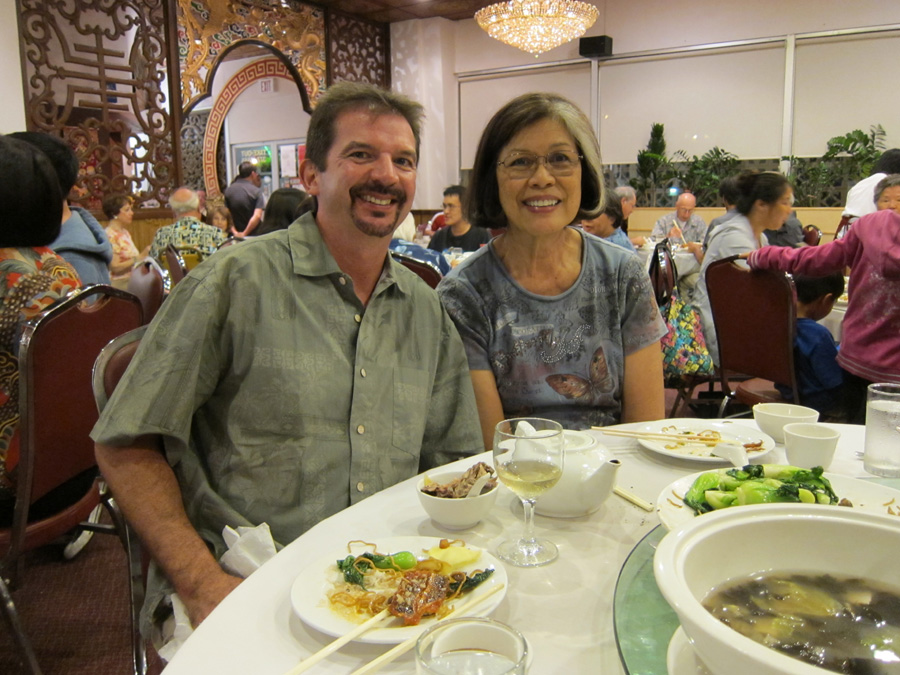
Suelyn most graciously took us out to dinner at an excellent chinese restaurant. Rick coaches the volley ball team at Punahau High School, and the team was ranked No. 1 in the U.S. last year. That tells you what a great coach he is. Here is a short article on Rick at the time. He is quite an athlete.
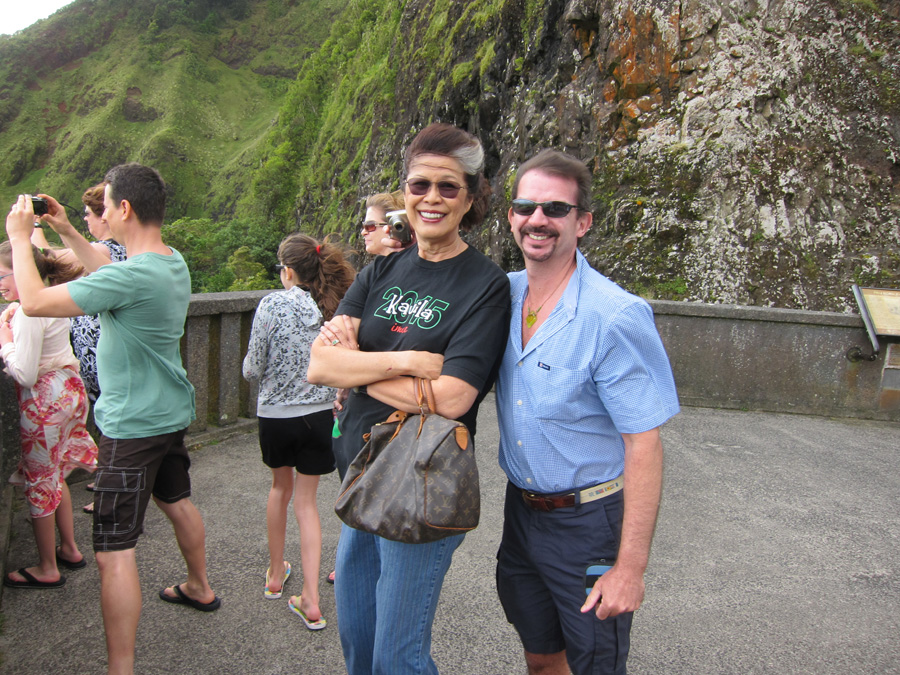
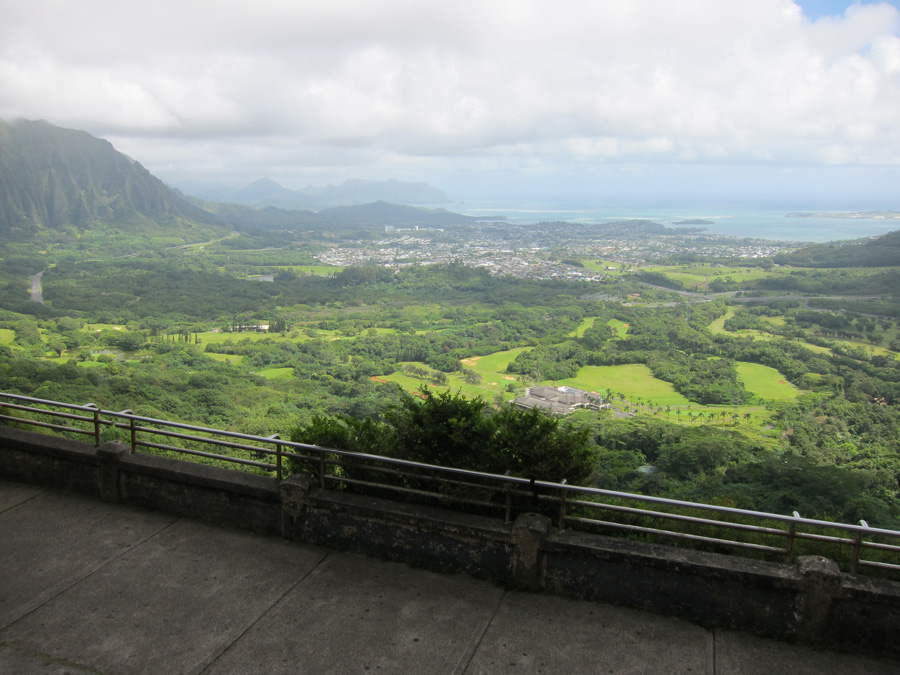
Pete and Suelyn Tune. She's my cousin by marriage, and the most wonderfully warm and loving human being. The next day Suelyn picked us up at the hotel and took us on a tour around Oahu. We toured a little bit of Honolulu, then headed up the Pali for a great vista from its lofty heights. The wind at the top can be very strong, and today it was exactly that.
It's not all that obvious in this photo, but the wind is very strong, especially if you go right up to the railing.
The views are breathtaking. It still baffles me how volcanic rock can support such lush green foliage. Eons of time?
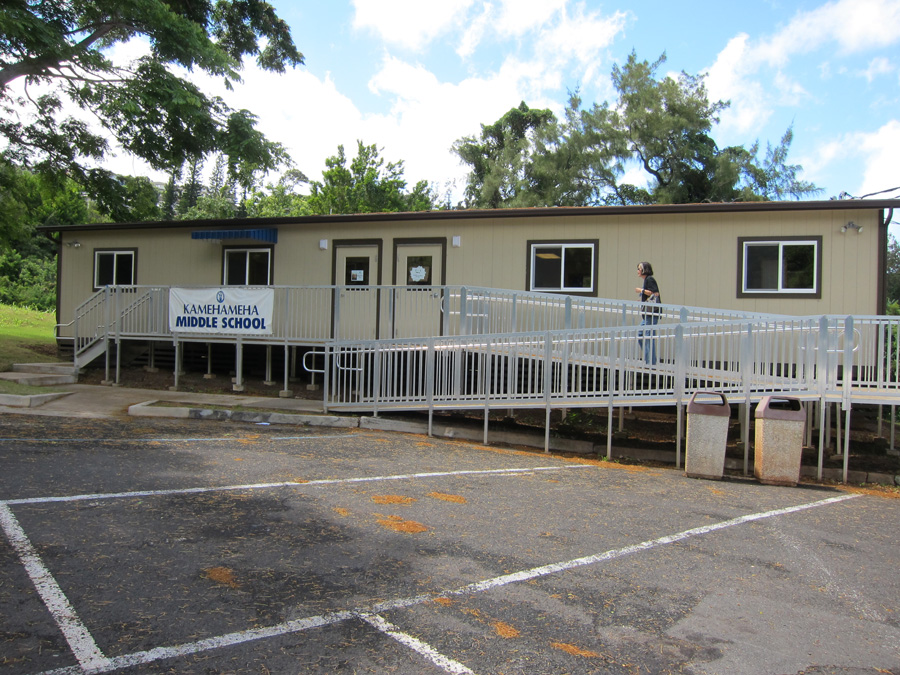
Suelyn wanted to drop by her office to get her mail, and show us the school where she teaches. Kamehameha is Here at the Middle School, the old buildings are being replaced by new construction, and while the construction work goes on, classes are held in temporary prefabricated buildings like this one.
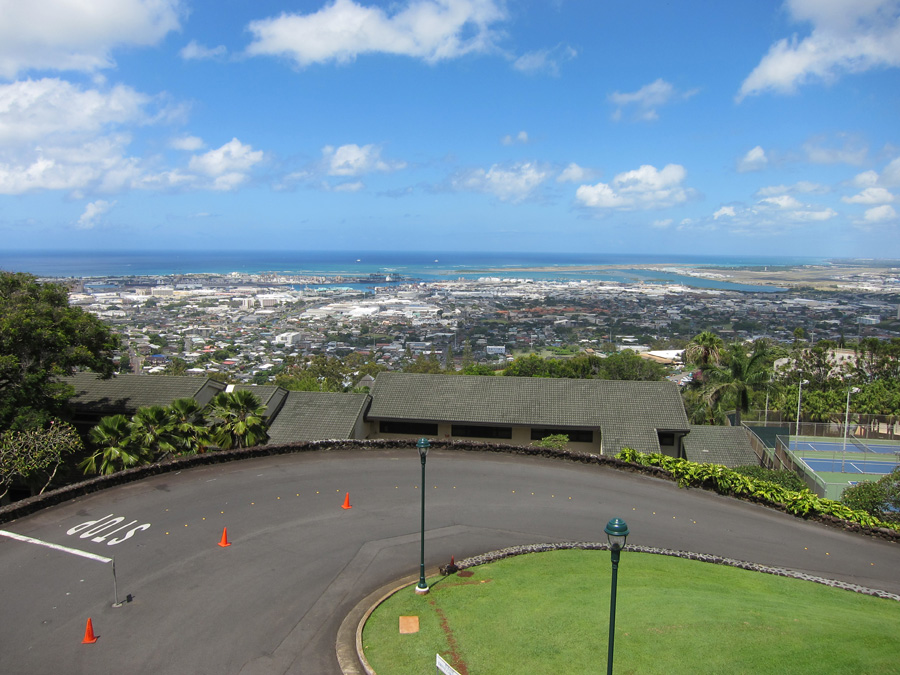
When we left Suelyn's building, she drove us up the hill to another building so we could climb I'm going to break here and continue with this amazing island tour in the next chapter. |
|||||||||
|
|||||||||
|
|||||||||
|
|||||||||