|
|
|
|
|
|
|
|
|
|
|
||||||||
|
||||||||||||||||||
|
Email us at: |
||||||||||||||||||
 |
||||||||||||||||||
 |
 |
|||||||||||||||||
|
Click the sun to see the |
||||||||||||||||||


 |
|||||||||||
|
|
|
|
|
|
|
|||||
|
|||||||||||
|
|||||||||||
|
|||||||||||
|
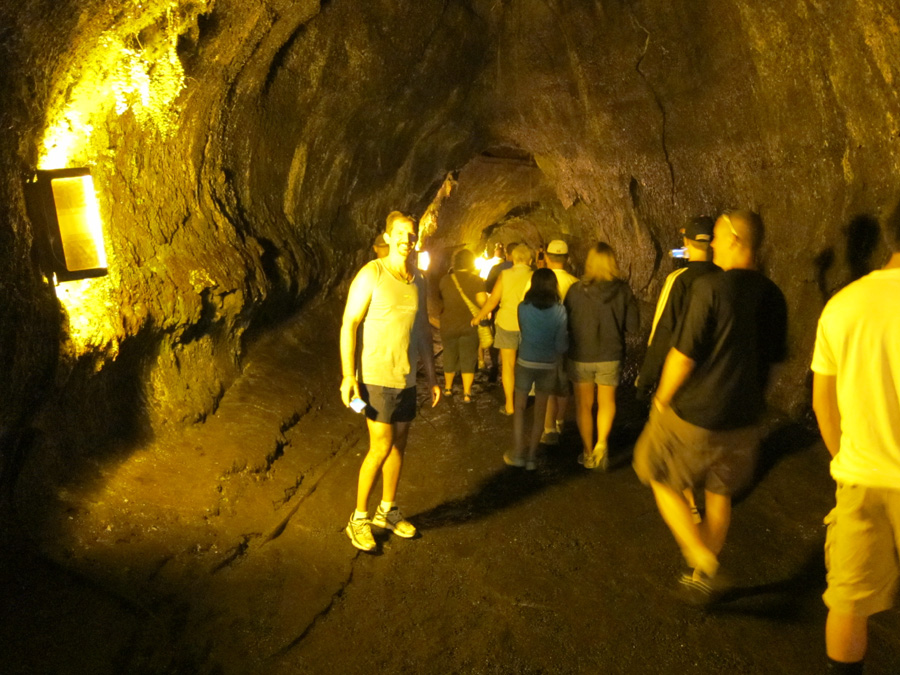
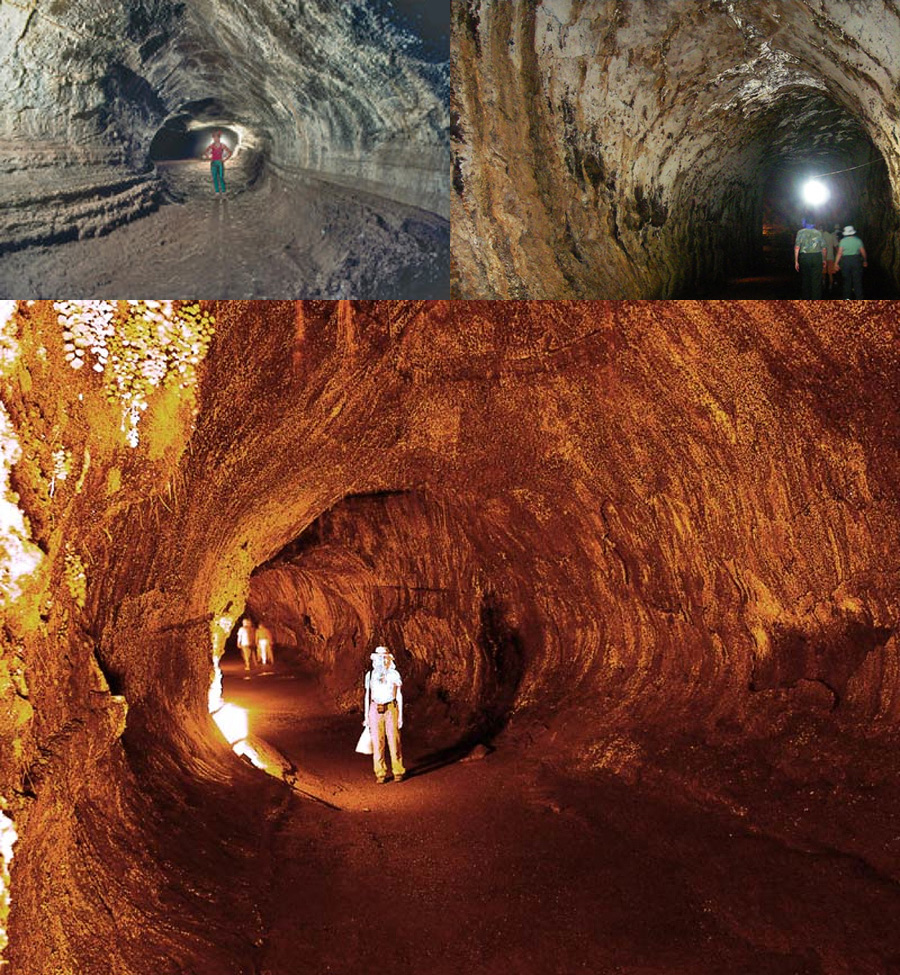
What is a lava tube? Well, it's a huge tube that molten lava had once flowed through, and the outside solidified into a straw like structure, very large in many cases, and quite amazing. When you are inside one, you tend to imagine the whole thing being filled with molten lava, and it's really quite eery. We went into one in the Galapagos, and strange as it seems, it was roughly the same diameter as the one we went into here in Hawai'i.
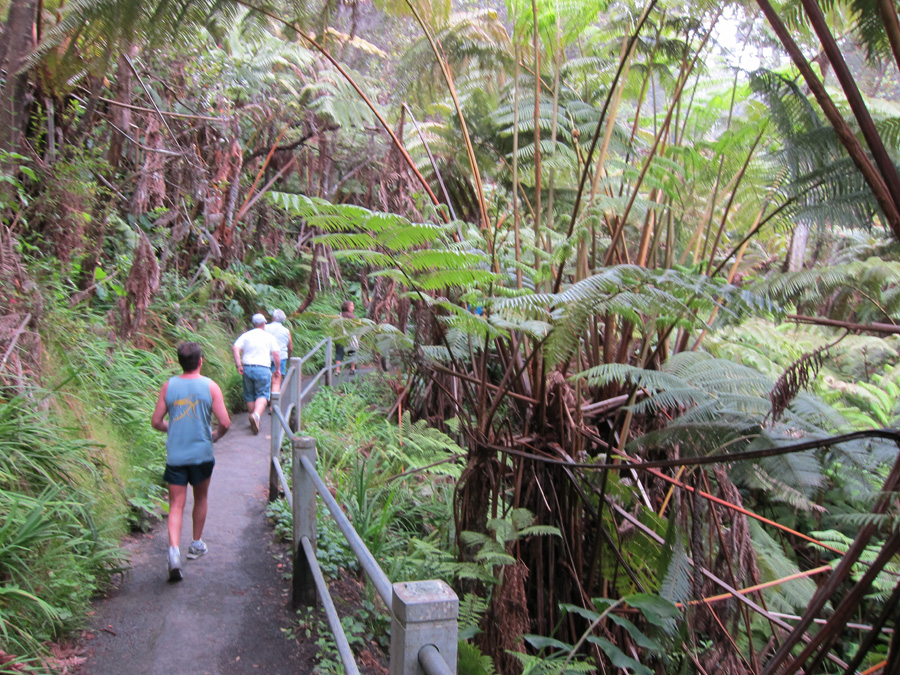
The walk to the entrance of the lava tube was through a magnificent forest of tree ferns and other lush tropical plants.
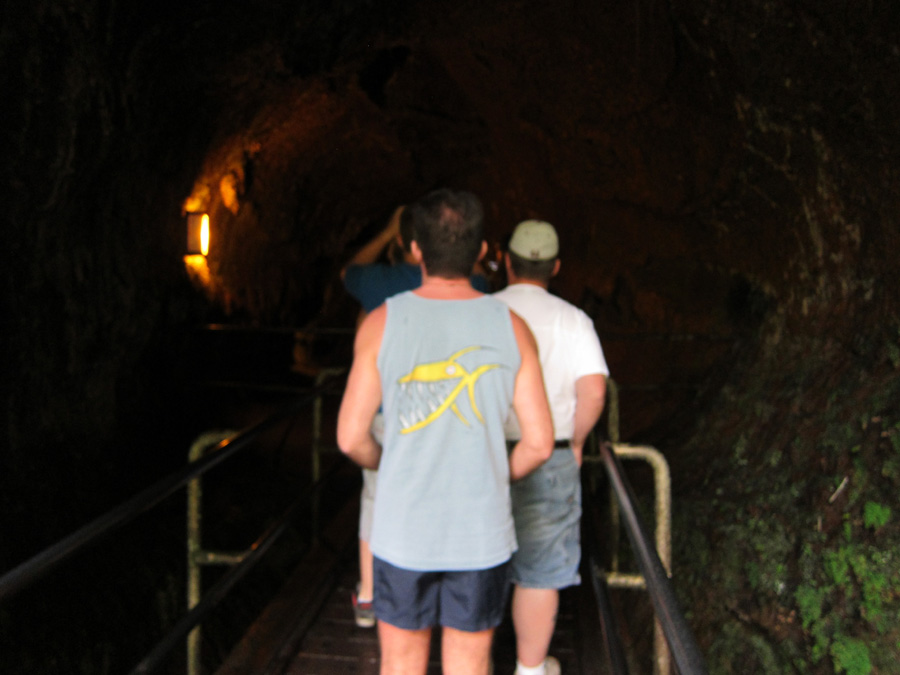
We enter the tube via a set of steep stairs, into a well of darkness. You can't see the ground where you are stepping 'til
Further in it is a little easier to see more, as our eyes become accustom to the dark. But what's that rumble I hear? LOL
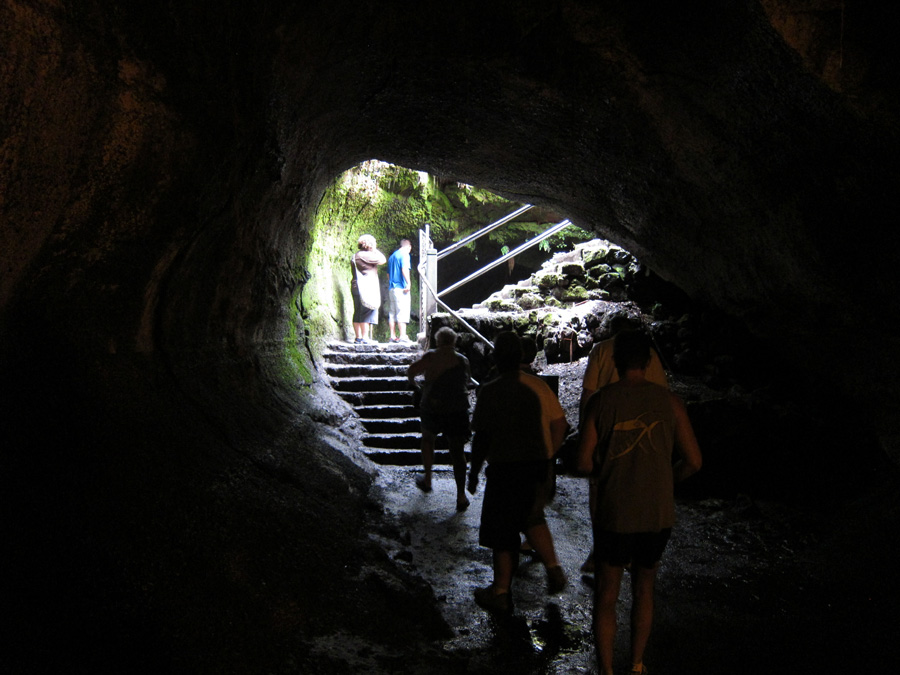
At the other end we emerge back into the light via another steep set of stairs. It's nice to be back in the lush jungle.
As you can see, lava tubes can be quite huge. I read that they have discovered evidence of lava tubes on the moon, We left the Volcanoes National Park and made the decision to continue our trip by driving the entire perimeter highway around the island, and stopping in Hilo for lunch. As we entered Hilo, I was surprised by my first impression that the city seemed to be stuck in its colonial days. Although our route through the city kept us close to the sea shore, my first impression may have been a false one. Finding a place to park was not easy, and getting around was complicated by mostly one-way streets. We finally found a place to park, and walked back a couple of blocks to a corner restaurant.
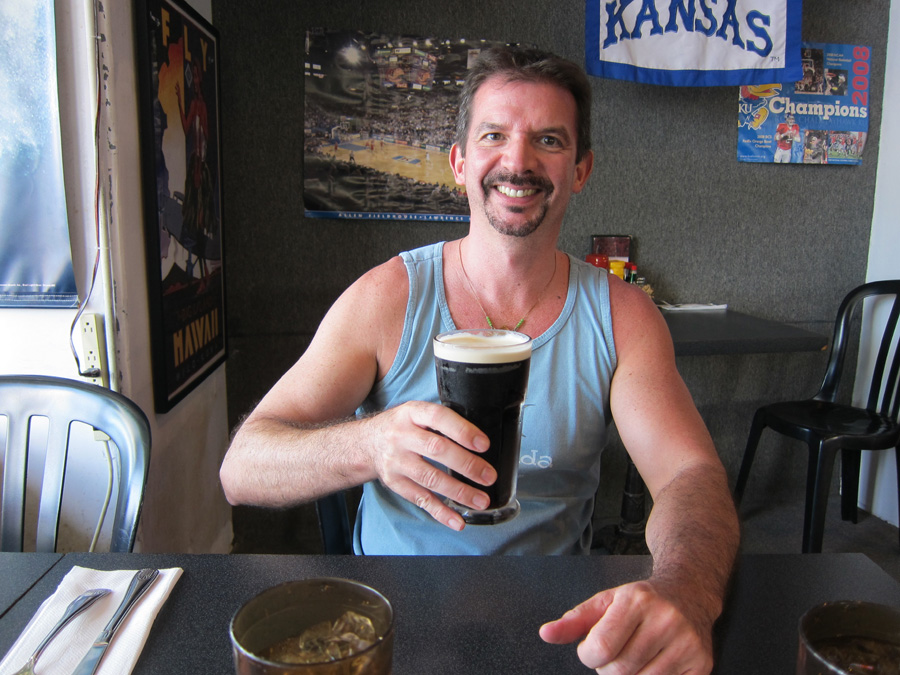
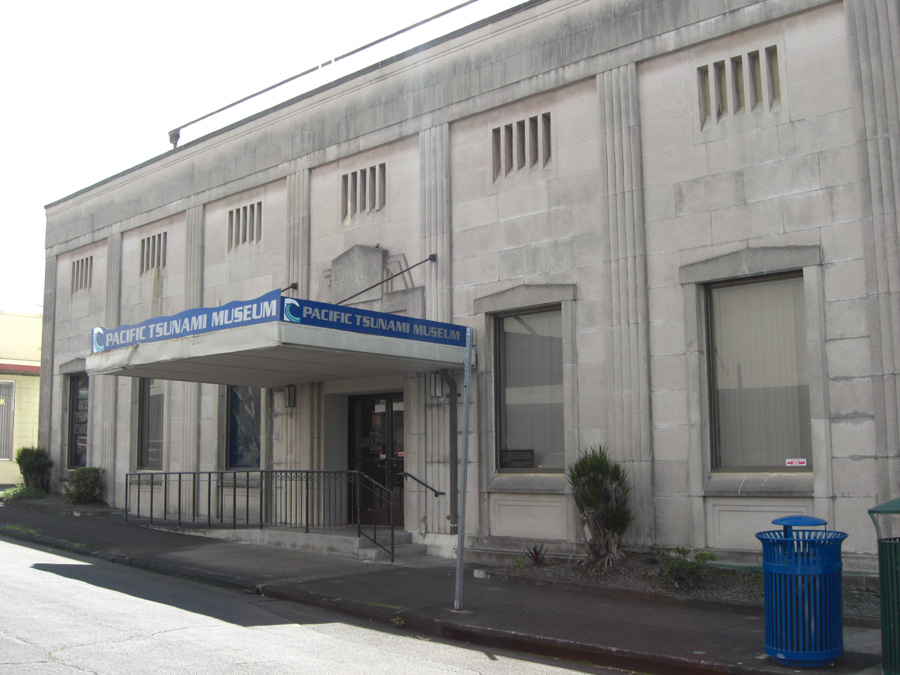
It turned out to be a sports bar, and they had Guinness on tap. The burgers were also very good, as you'd expect. We had an enjoyable lunch, and on our walk back to the car, we passed a museum, which we both thought a little strange.
Pacific Tsunami Museum? I have no idea what we might have found inside, but we continued walking to our car. Besides, we were on a long drive around the island, and we didn't want to get back after dark. The next thing on our agenda was the Akaka Falls State Park. Pete read in one of the brochures that this was one of the seven things that you must see. So we decided to see it. It was a few kilometers off the main highway. There was a pay-for-parking lot, but we decided to park on the road and walk in. Admission was a buck apiece, but you had to use this crazy ATM like machine to put it on your credit card. It took a couple of tries, but we finally figured it out. There was a line of tourists behind us waiting to do the same, so the pressure was on.
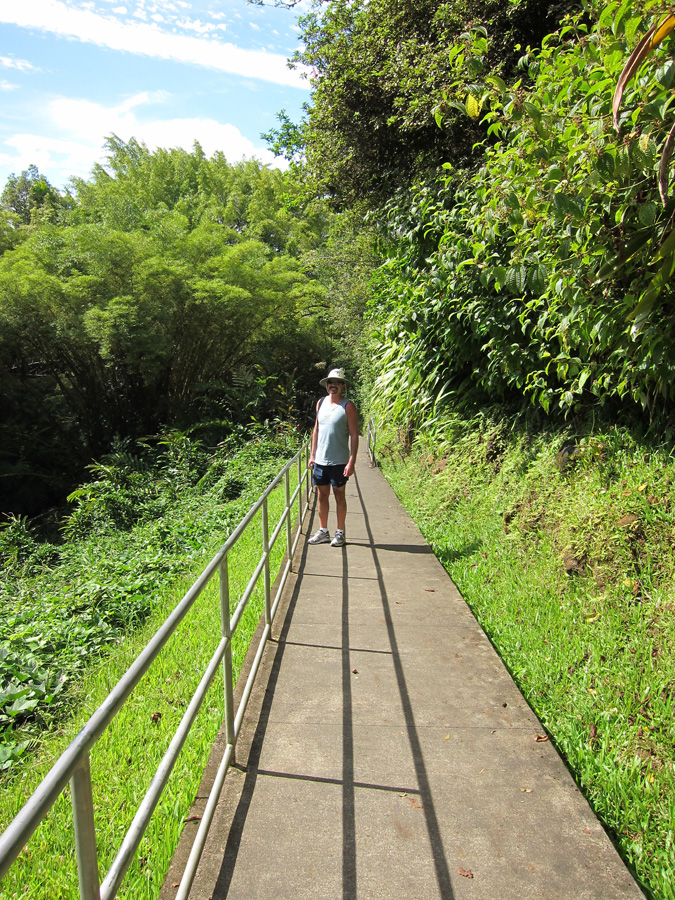
As we entered the trailhead, there was a sign that read "Scenic route, suggested". Yeah, right! We took the scenic route. It turned out to be very scenic, and very challenging. There was a lot of up and down hill climbing, with lots of stairs and steep grades. The shorter route to the left, as we discovered after leaving the falls, was flat, and very short, but still, very scenic.
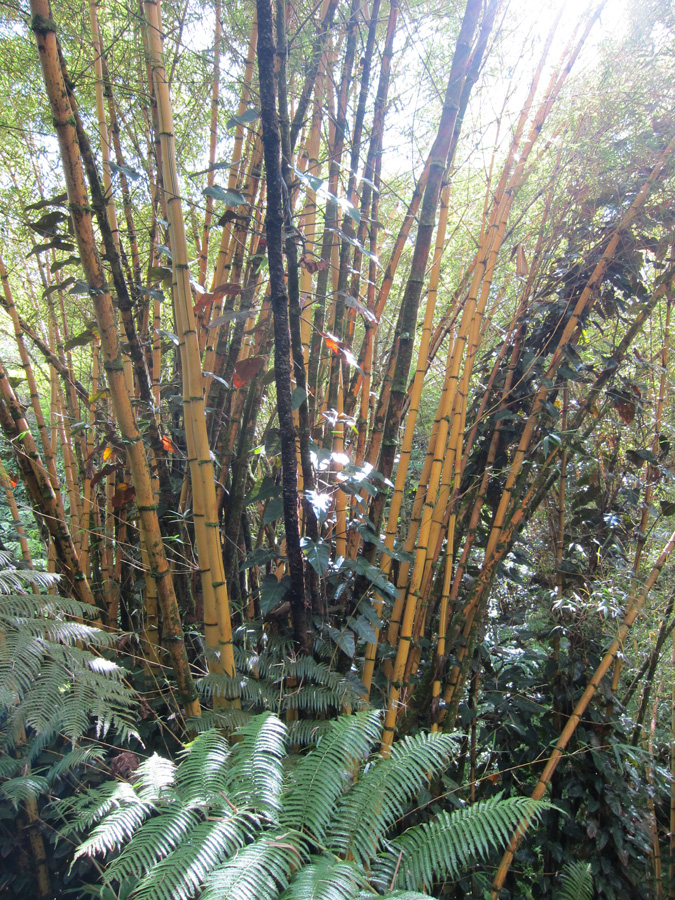
But then we would have missed this beautiful stand of Calcutta Bamboo . . .
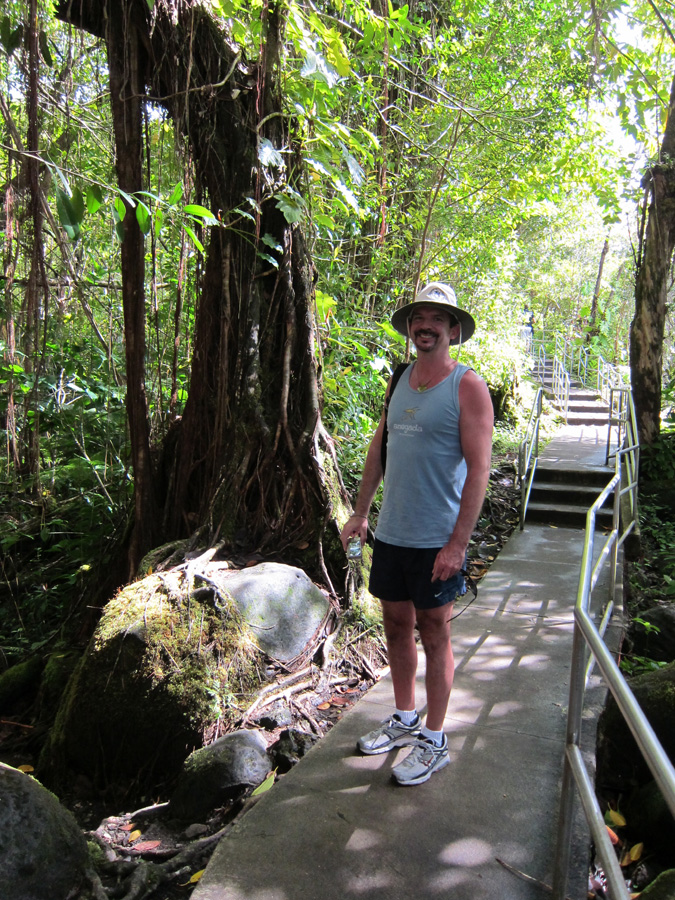
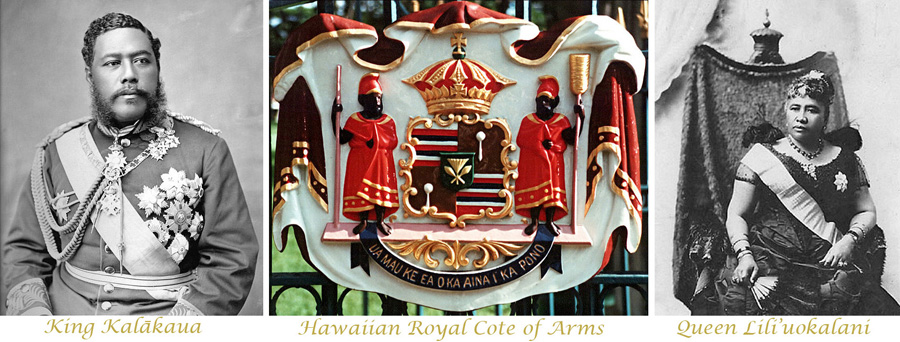
. . . or this babbling brook beneath Pete's feet. Fortunately there were no annoying bugs. It was actually a beautiful canyon loop. It took about half an hour. By the time we made it to the Akaka Falls, which you will see in the next chapter, I was ready for a siesta. So far this drive has been a very pleasant one. The Big Island is certainly that, and the flora varies a lot. It is also home of the "Merry Monarch Festival" each year in Hilo. King David Kalāakaua once said, "Hula is the language of the heart, therefore the heartbeat of the Hawaiian People". For the perpetuation, preservation, and promotion of the art of hula and the Hawaiian culture through education, this week long festival was established in 1964. The next festival will be from April 8-14, 2012. King David had a rather long handle. He was born David La'amea Kamanakapu'u Mahinulani Nalaiaehuokalani Lumialani Kalāakaua, on November 16, 1836, in Honolulu, Oahu. He reigned from February 12, 1874, until his death on January 20, 1891. He was succeeded by the last Hawaiian Monarch, Queen Lili'uokalani.
|
|||||||||||
|
|||||||||||
|
|||||||||||
|
|||||||||||