 |
|
|
|
|
|
|
|
|
|
|
||||||||
|
||||||||||||||||||
|
Email us at: |
||||||||||||||||||
 |
||||||||||||||||||
 |
 |
|||||||||||||||||
|
Click the sun to see the |
||||||||||||||||||


|
 |
|
|



|
|
|
|
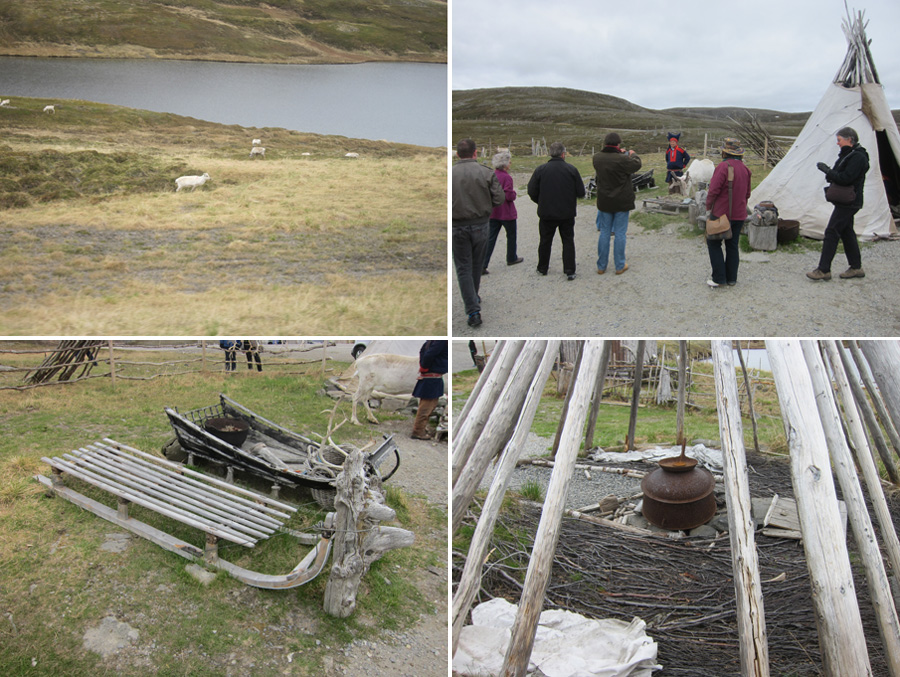
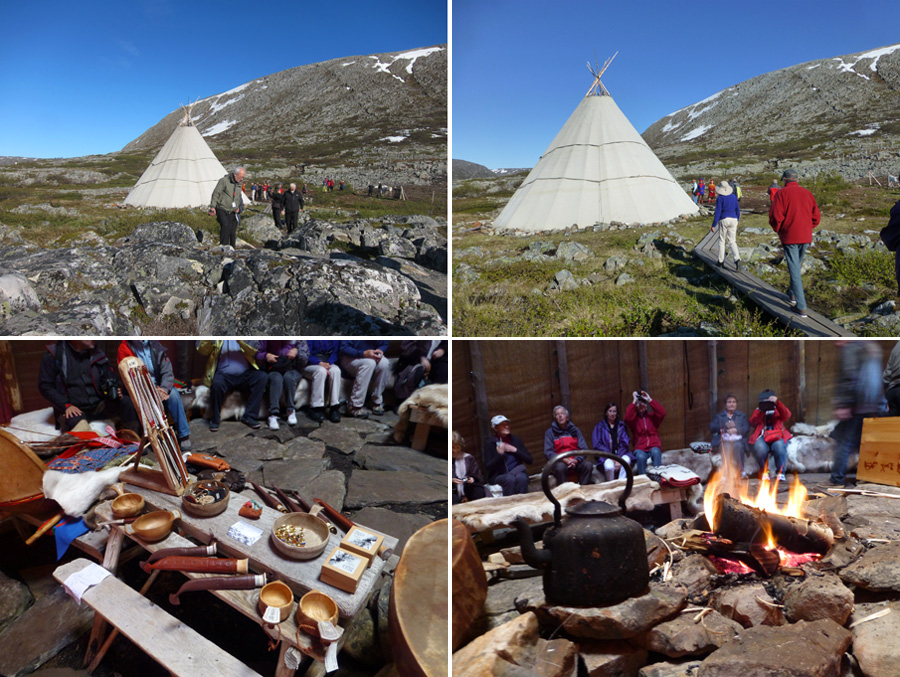
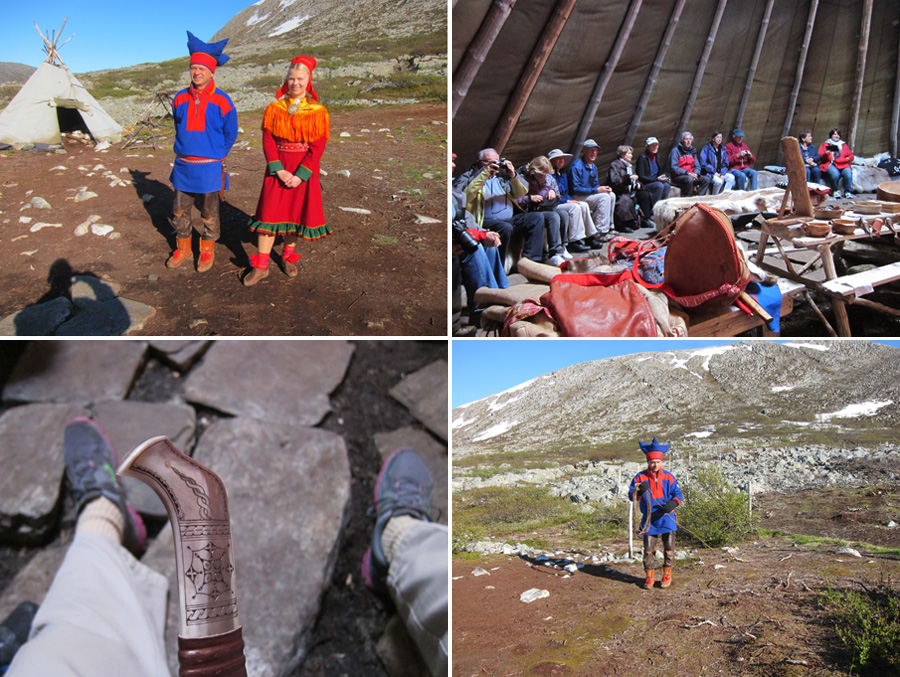
We have crossed the 71st parallel on our way to North Cape, the northernmost point on the continent. It is summer, so on our journey we come across a herd of raindeer, and stop at a small camp belonging to the Sámi people. We learn that the people who are traditionally known in English as Lapps or Laplanders, are actually Sámi, and are the indigenous Finno-Ugric people inhabiting the Arctic area of Sápmi, which today encompasses parts of far northern Norway, Sweden, Finland, the Kola Peninsula of Russia, and the border area between south and middle Sweden and Norway. The Sámi are the only indigenous people of Scandinavia recognized and protected under the international conventions of indigenous peoples, and are hence the northernmost indigenous people of Europe. To the Sámi people, the name Lapp or Laplander is considered pejorative.
Although their existence appears to be nomadic, this small camp is rather permanent, being on the route to North Cape, and subject to a constant flow of tourists.
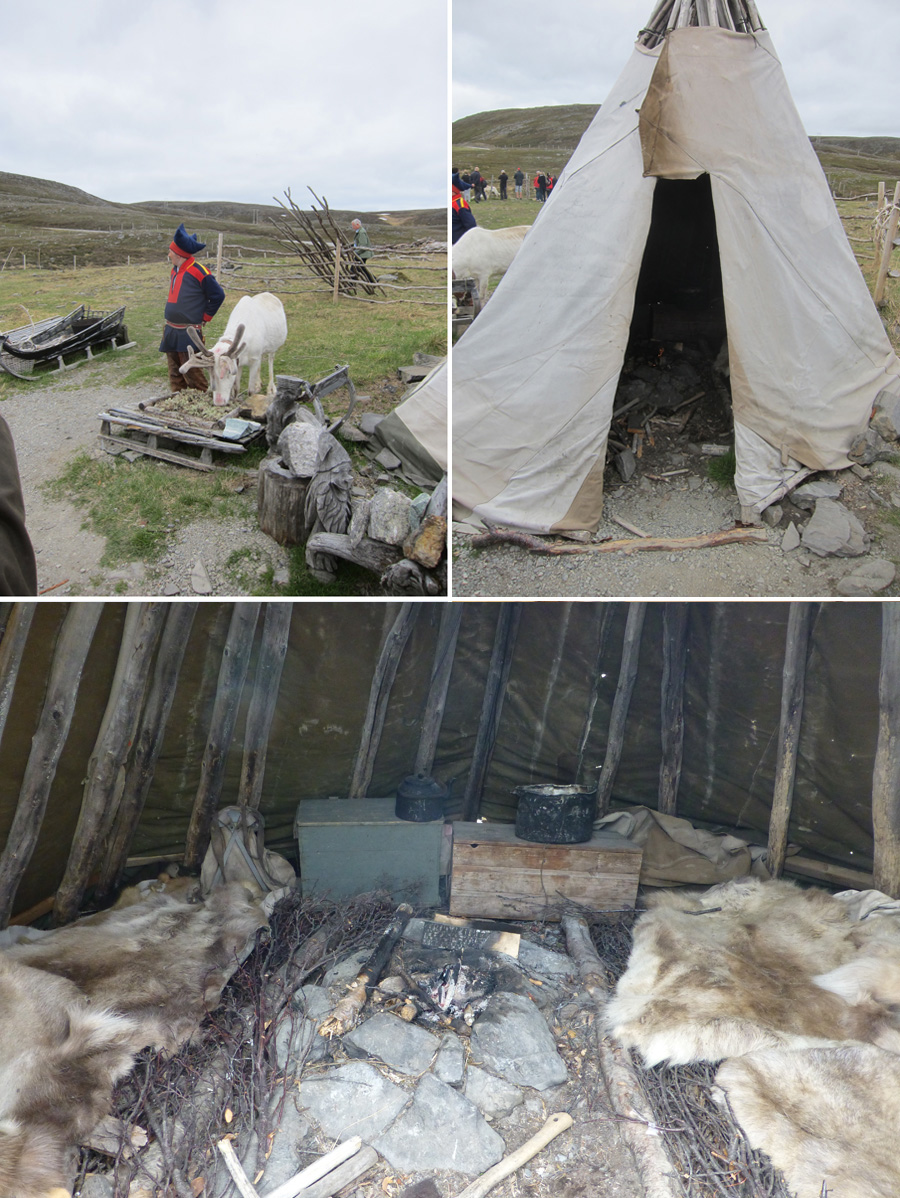
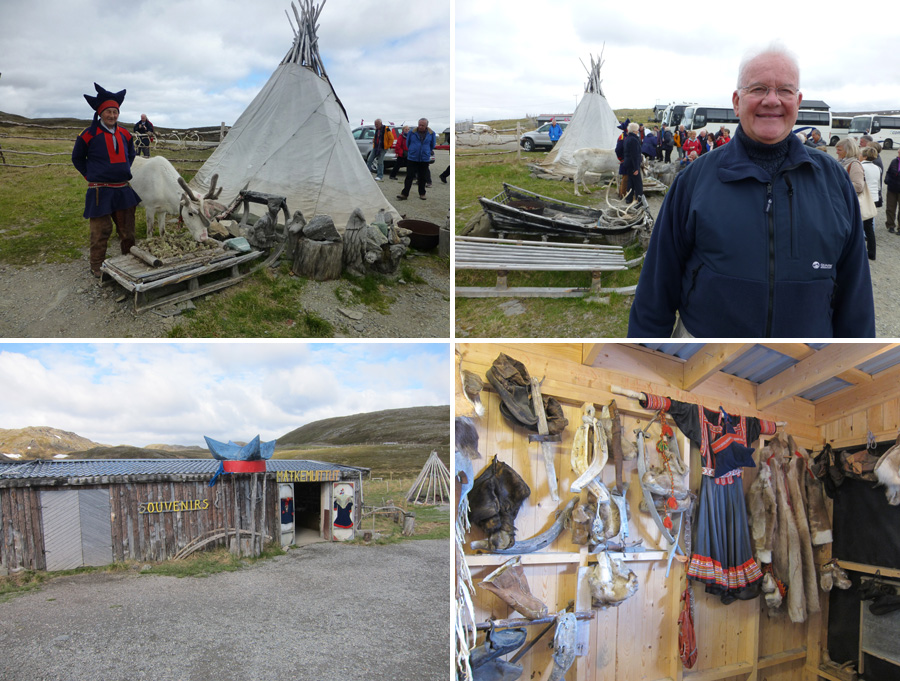
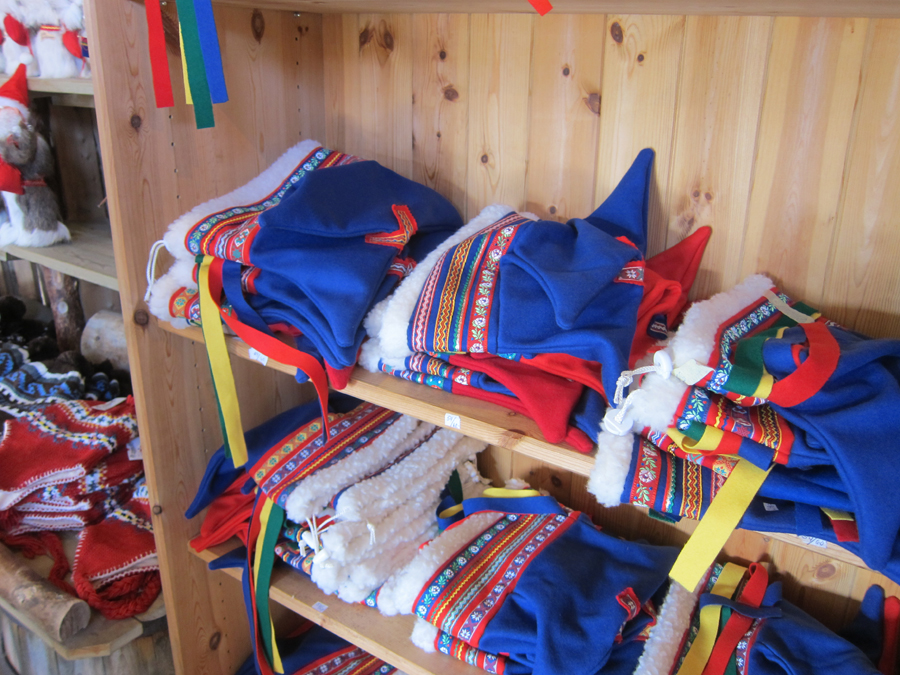
The inside of the Tee Pee type living quarters has space to build a fire for warmth, and two beds consisting of reindeer hides. I thought that their traditional costumes were quite unique, especially that odd looking hat.
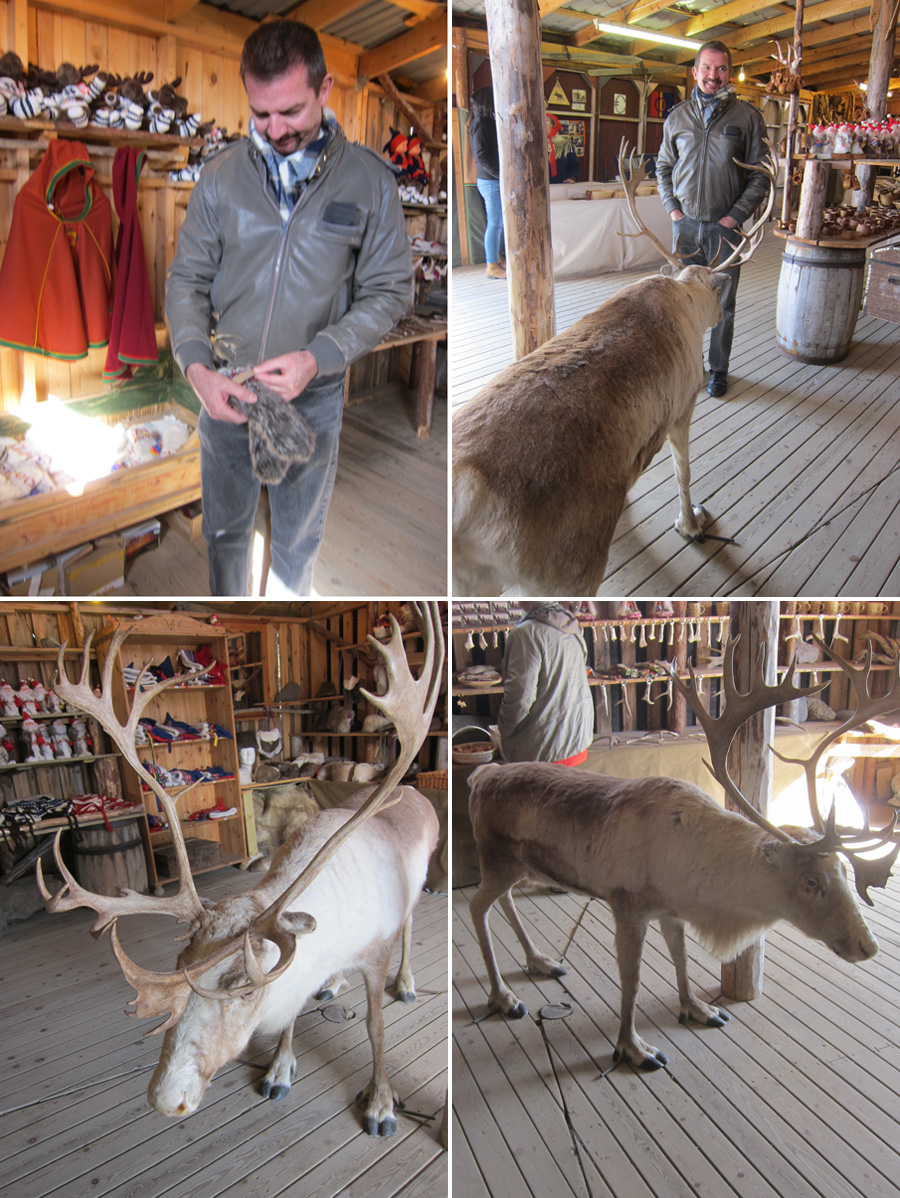
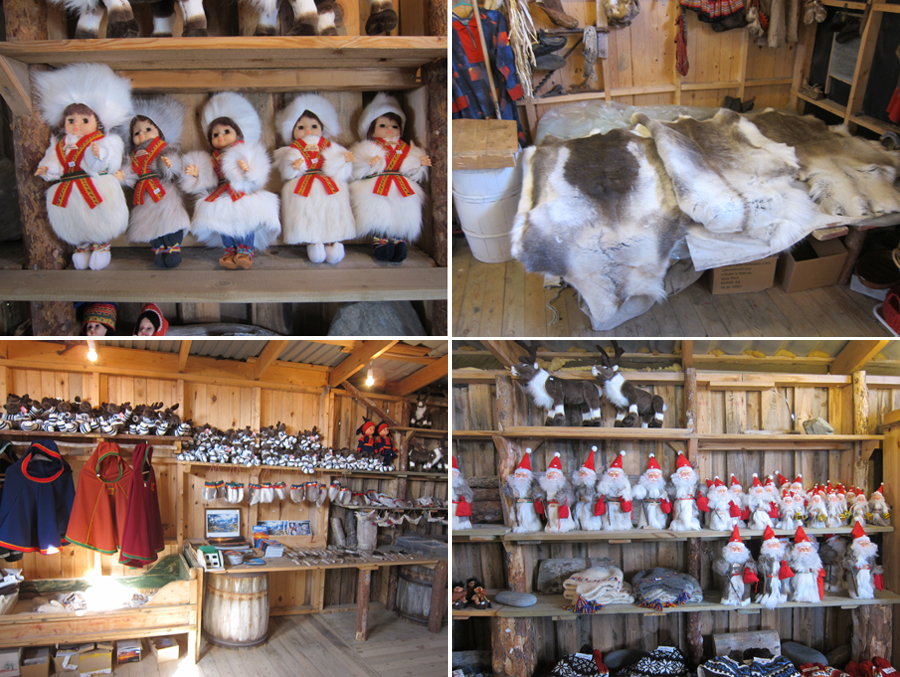
They have a souvenir shop with all sorts of things tourists love, like all sorts of dolls (Saint Nicholas was popular), as well as an assortment of Sámi clothing articles and cooking implements, all fairly crude by western standards. Pete seems to be interested in the mittens, and it appears that he may have to deal with the reindeer to pay for them.
Actually, the reindeer is stuffed, but he certainly looks alive enough to cause one to do a double take.
The craziest thing in their traditional costume was that weird hat the men wore. And to think, I could have bought one in the gift shop. Why I didn’t I’ll never know, but I’ve been kicking myself ever since. ;o)
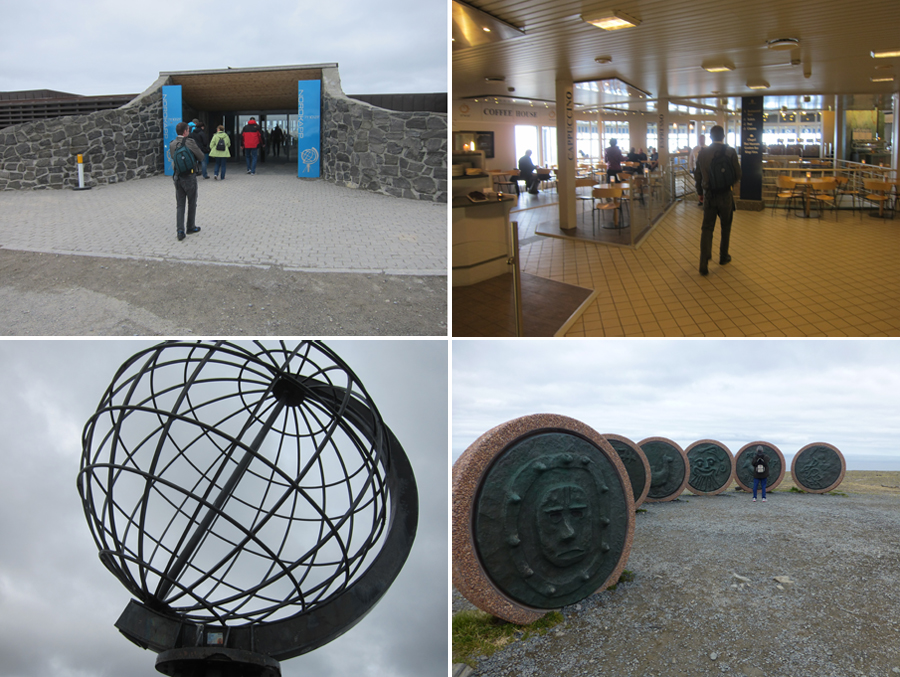
We arrive at the Visitor Center at North Cape, and discover that they have a great cafeteria and a huge gift shop. We both bought T-Shirts, and a few small gifts for family and friends.
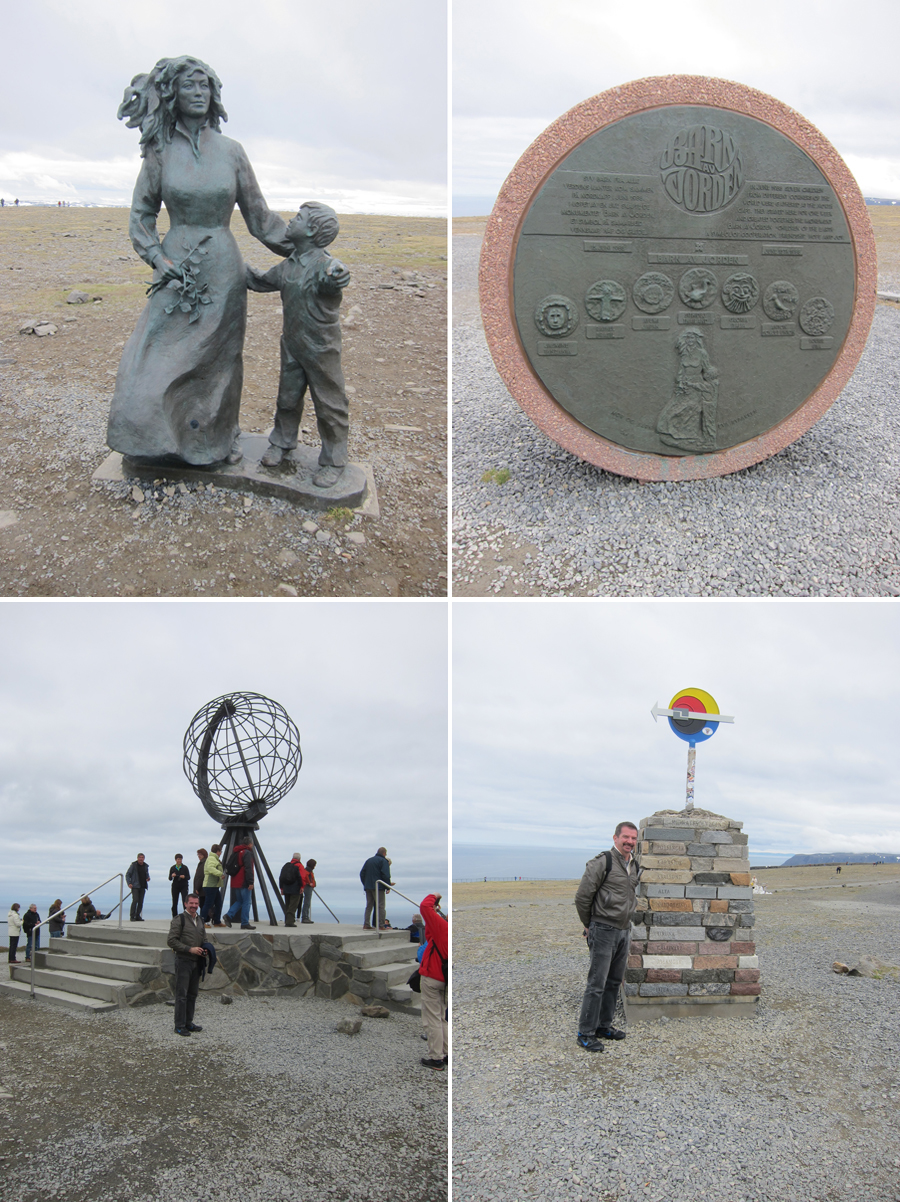
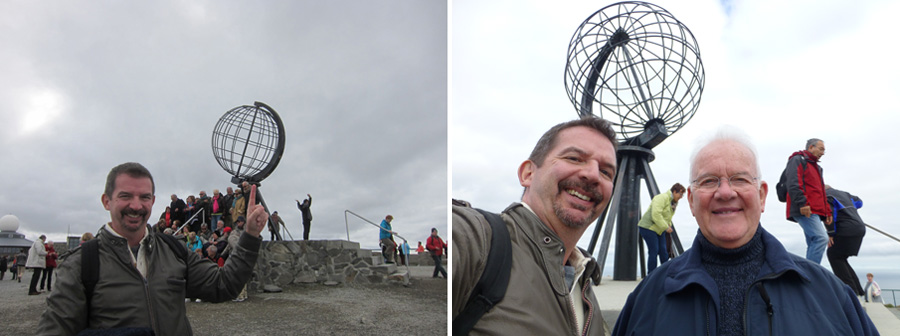
In June 1988 seven children from different corners of the world were gathered at the North Cape. They stayed here for one week and created together the monument “Barn av Jorden” or “Children of the Earth”, a symbol of cooperation, friendship, hope and joy. They each created an image, which was cast into these huge disks. The children were Jasmine ~ TANZANIA, Rafael ~ BRAZIL, Ayumi ~ JAPAN, Sithidej ~ THAILAND, Gloria ~ ITALIA, Anton ~ SOVIET UNION and Louise ~ USA.
North Cape is a pretty desolate place, on a bluff rising 307 meters (nearly 1,000 feet) above the Arctic Ocean.
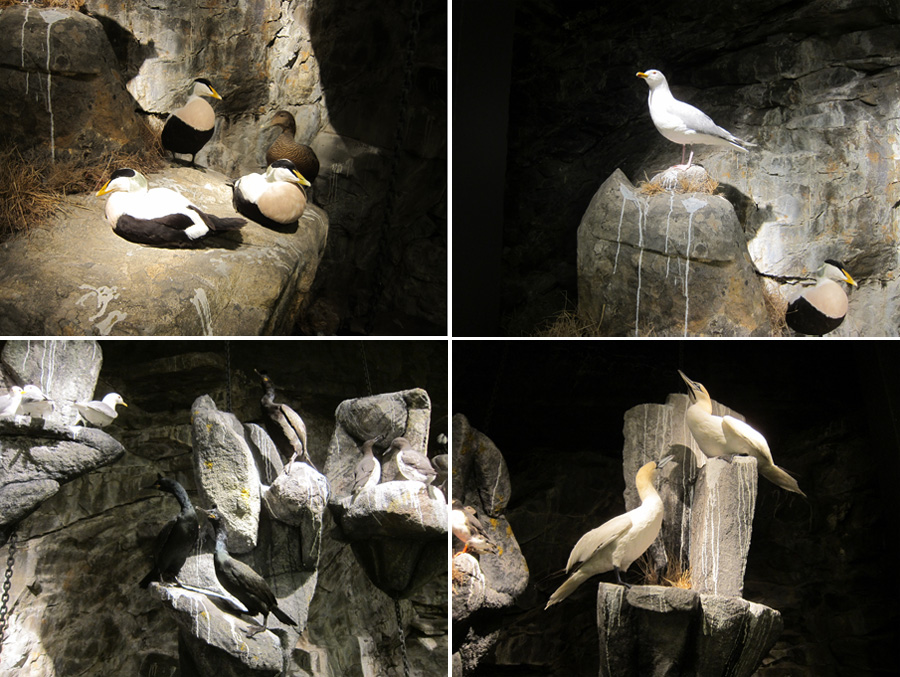
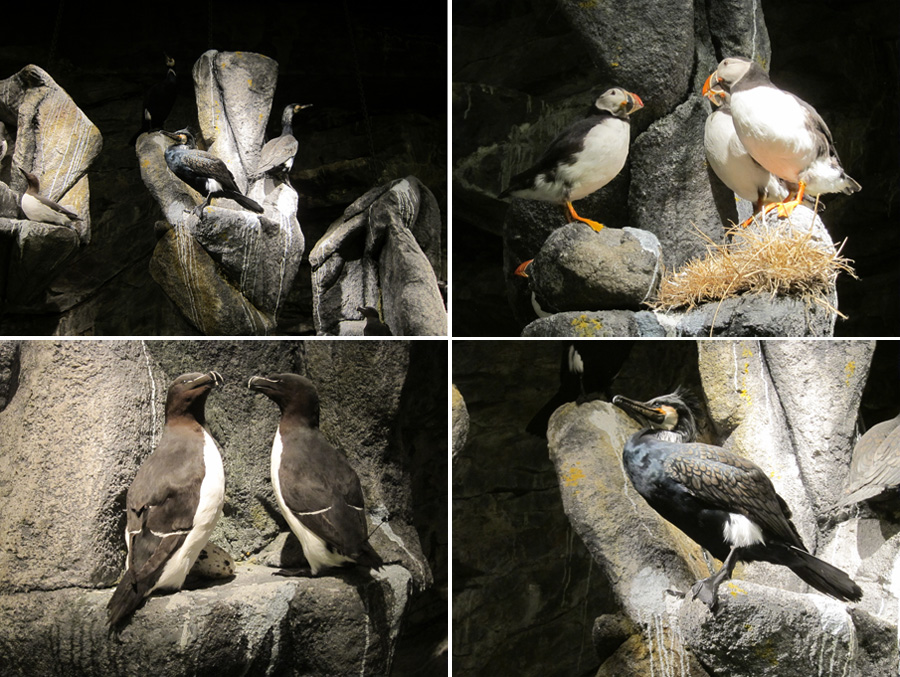
How does the lyric from the song go? “I’ve got the world on a string . . . “ Pete’s got the world on his finger. ;o) The bluff at North Cape rises almost vertically 307 meters (or nearly 1,000 feet) above the Arctic Ocean. Inside the visitor center is an amazing display of birds of the Arctic. The taxidermist did such an amazing job that the birds looked as if they were alive and ready to take flight. I actually expected to see them move.
There was a wide variety of birds, some I’d never seen before. And the nice thing was that they did not incorporate the smell. This was one thing we learned on our trips to Antarctica, the nature shows never mention the smell, and when you get several million penguins together, nesting, laying eggs and raising chicks, the smell is unbelievable. It took time for us to get used to it.
The visitor center has 3 levels, and in the lowest level, North Cape Hall, is a theater where the film (see link below) was shown every 15 minutes. It was a 180° panoramic film about Finnmark and the North Cape. It was pretty cool, and is just under 15 minutes long. It will give you a definite appreciation for the fact that you live in a place closer to the equator, where the sun rises and sets every day of the year, and you possibly don’t have to deal with snow. ;o) Enjoy! http://www.youtube.com/watch?v=8_Viiu3hqR8 We leave the visitor center at North Cape and drive through the fishing village of Kjøllefjord. After stopping for some photographs, we head into the mountains to a Sámi camp and meet the Utsi family. The tent in this Sámi camp is much larger than the previous camp.
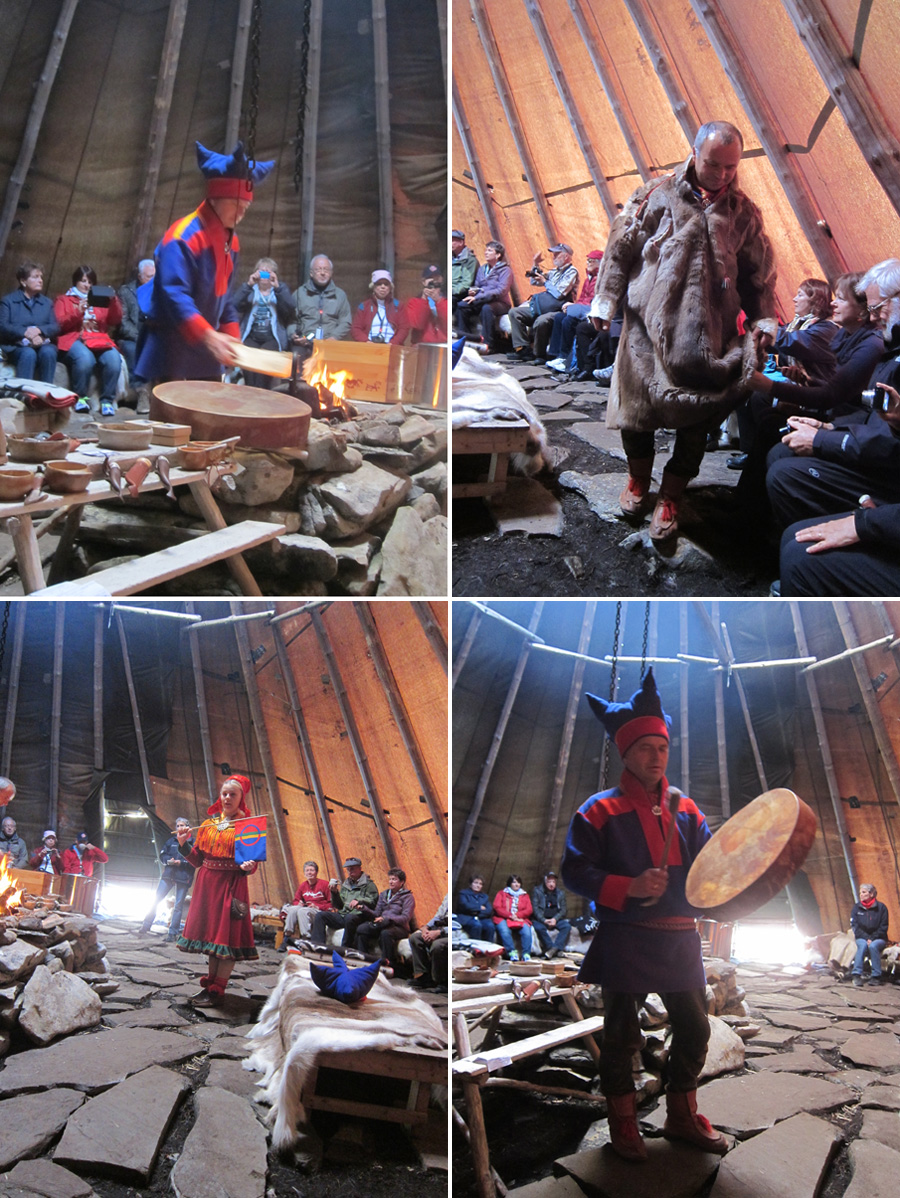
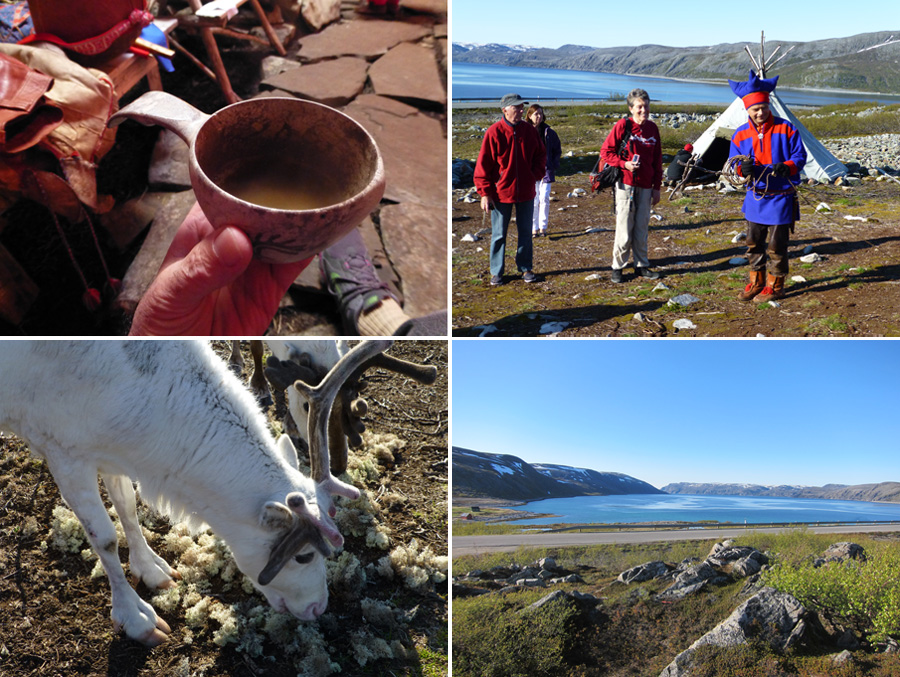
We are invited for a visit, and we find that the inside of the tent seems even larger than it appears from the outside. We are to enjoy a cup of broth derived from reindeer meat. It was actually very tasty.
Our host and his daughter give us a brief history of their traditions and the Sámi way of life, and showed us their arts and crafts. The handle of the knife I’m holding is highly polished and intricately carved. In the last frame our host takes us all outside to demonstrate the technique used by the Sámi to lasso a reindeer. Inside, he adds more wood to the fire, and dons a warm coat made from reindeer hide. He has us feel how soft and warm it is.
His daughter does all the talking, and he beats a drum and sings a native song for us. The wooden cup we drink from is hand carved. After our host successfully lassos a fence post with reindeer antlers fitted to the top, he offers the lariat to the gentleman in the red jacket below and asks him to give it a try. He steps up like a pro, and I think to myself, this should be pretty funny. But to my surprise, the guy succeeds in lassoing the antlers on the post just as easily our host did, and on the first try. I’m sure it must be much more difficult than they made it appear.
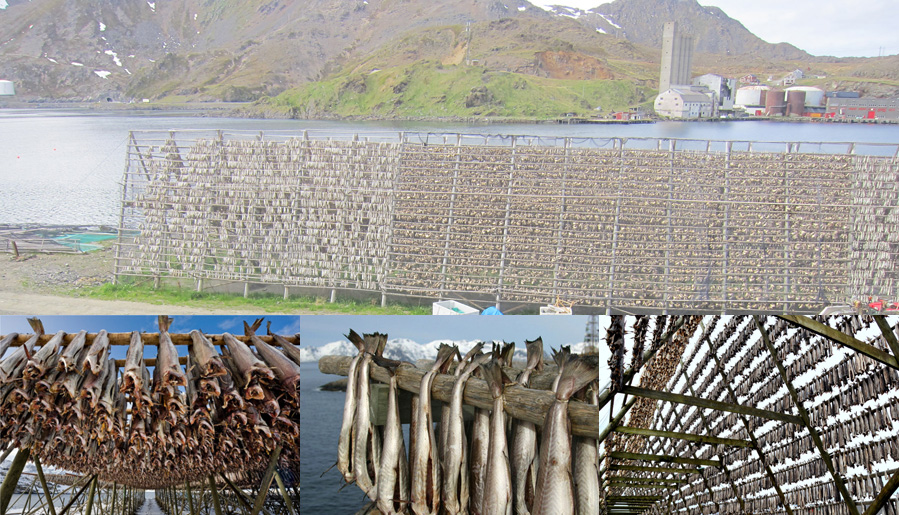
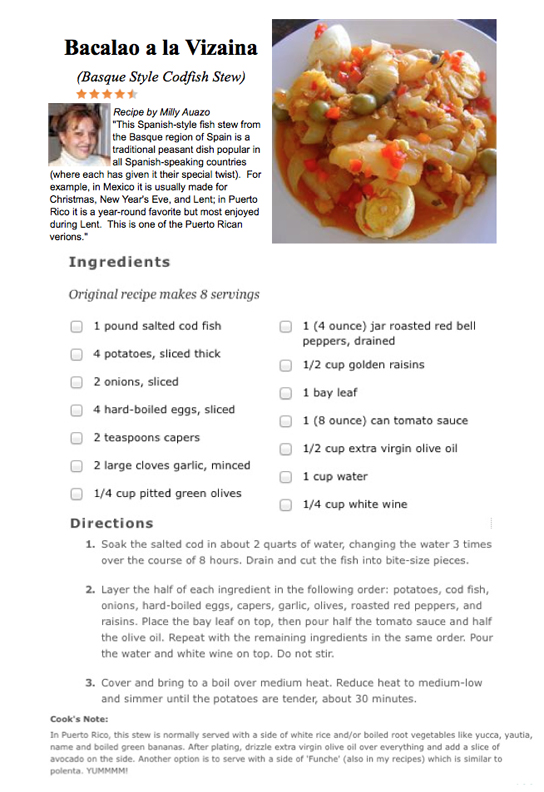
The reindeer seem to enjoy the lichen very much. They had no fear of us, and enjoyed nibbling on the lichen as we watched them. The lake looks beautiful, but in winter I think it must freeze over, and is most likely covered in snow. I mentioned stockfish at one point. Cod is a huge business in Norway, and it has been for centuries. Cod are caught when they come into the fjord to spawn, and they are split in half to the tip of the tail, and then hung over these huge wooden frames to dry out in the wind. They said that the fish hang there for about six weeks. It is then packaged and sent all over the world. They even have it in our local grocery stores, and it is especially stocked up for Christmas, as it is traditionally eaten during this time of year. It is called Bacalao. I bought some when we got home, and I found what looks like a pretty good recipe on the Internet.
In case you are game to try it, here is the recipe I found, and it’s got 4½ stars. You can’t go wrong with Basque Style food.
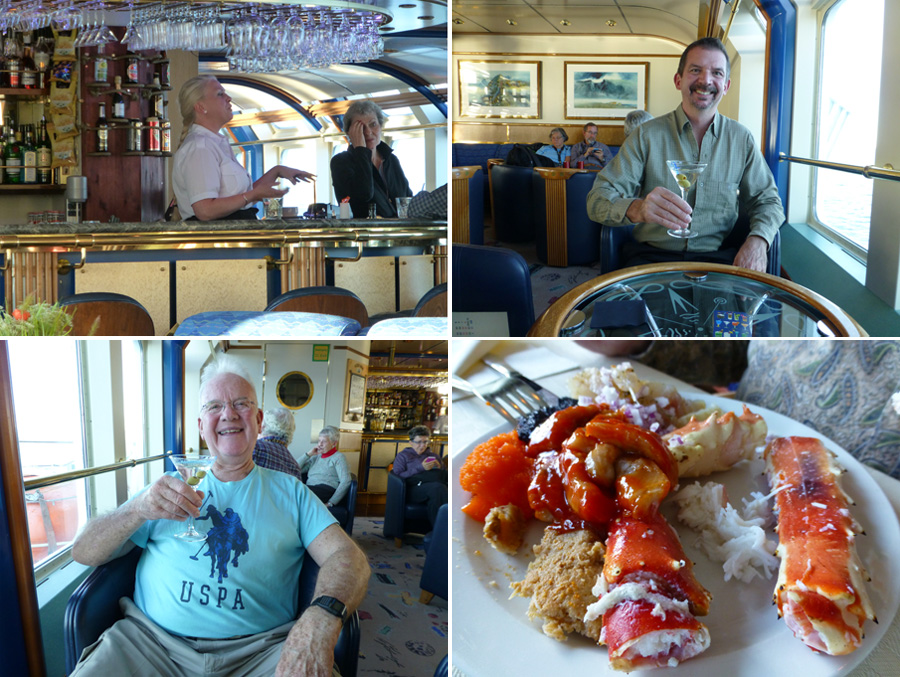
From here we head back to Honningsvåg to return to our ship. Our bartender for the 12 days we were on the ship is Segrun. I said to Pete, that’s an odd name. She told him it is very Viking. We, as usual when we are on a vacation, enjoy a martini before dinner.
Dinner this night was crab legs, and they were really good. We will arrive in Kirkenes tomorrow and our shore excursion will be a trip to the Russian border. So stay tuned for Chapter 7. |
|
||||
|