|
|
|
|
|
|
|
|
|
|
|
||||||||
|
||||||||||||||||||
|
Email us at: |
||||||||||||||||||
 |
||||||||||||||||||
 |
 |
|||||||||||||||||
|
Click the sun to see the |
||||||||||||||||||


 |
|||||||||
|
|
|
|
|
|
|
|||
|
|||||||||
|
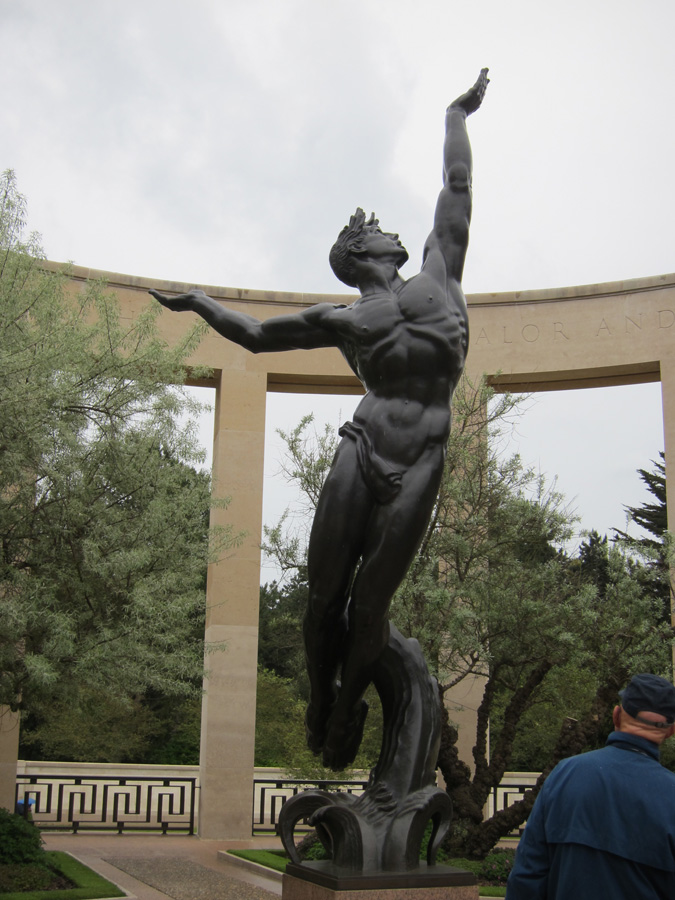
Part 8 We stopped at the U.S. Cemetery above Omaha Beach. Our guide timed it so we were all gathered at the Memorial, along with several other groups, and they performed the ceremony where the Star Spangled Banner was played, and everyone there sang the words. It was very heart warming. The Memorial has a 22 foot bronze statue "The Spirit of American Youth Rising From The Waves". It was truly an inspired work of art, and this inspiration was transmitted to us all.
The Normandy U.S.Cemetery, with it's 172.5 acres, has 9,367 burials of US service men and women. Of this number, some 307 are unknown, three are Medal of Honour winners and four are women. In addition there are 33 pairs of brothers buried side by side. It is the largest American Cemetery from WW2, but not the largest in Europe: that is the Meuse-Argonne Cemetery from WW1 with more than 14,000 burials.
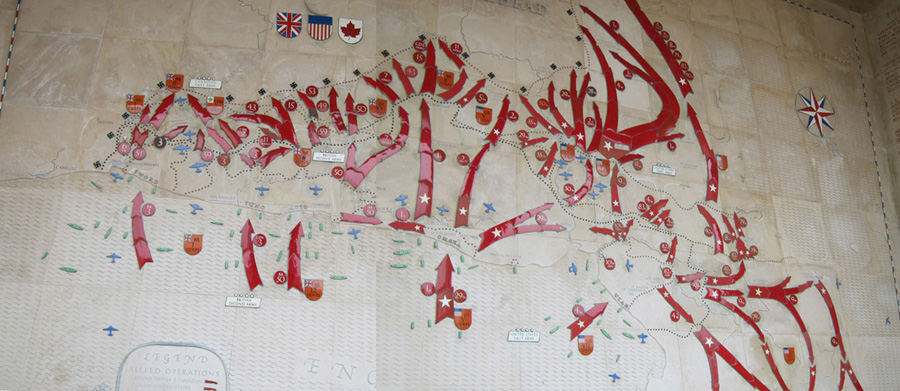
On the walls of the Memorial you can see how the various divisions pushed back the Germans. An impervious wall of men and machines over the next several months forced the Germans back into Germany, and victory eventually became ours. Behind the statue is the Garden of the Missing which commemorates a further 1,557 soldiers, sailors and airmen who fell in Normandy and have no known grave. One of the pairs of brothers who are buried next to each other, is 2/Lt Preston Niland 22nd Infantry and Sgt Robert Niland 505th PIR. Robert was killed on D Day and Preston on the 7th of June. A third brother was thought killed in the Pacific, so the fourth was allowed home. However, the brother in the Pacific actually survived the war. It was their story which inspired the script writers for 'Saving Private Ryan'.
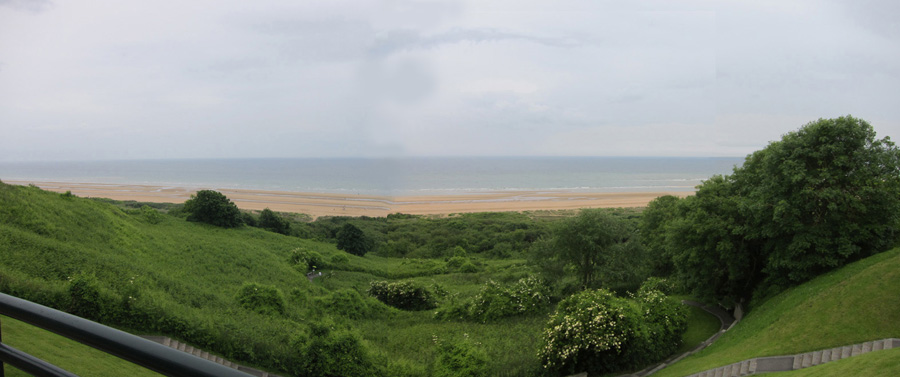
This is a view from the cemetery that overlooks the left flank of Omaha Beach, where the 1st Division landed on D Day.
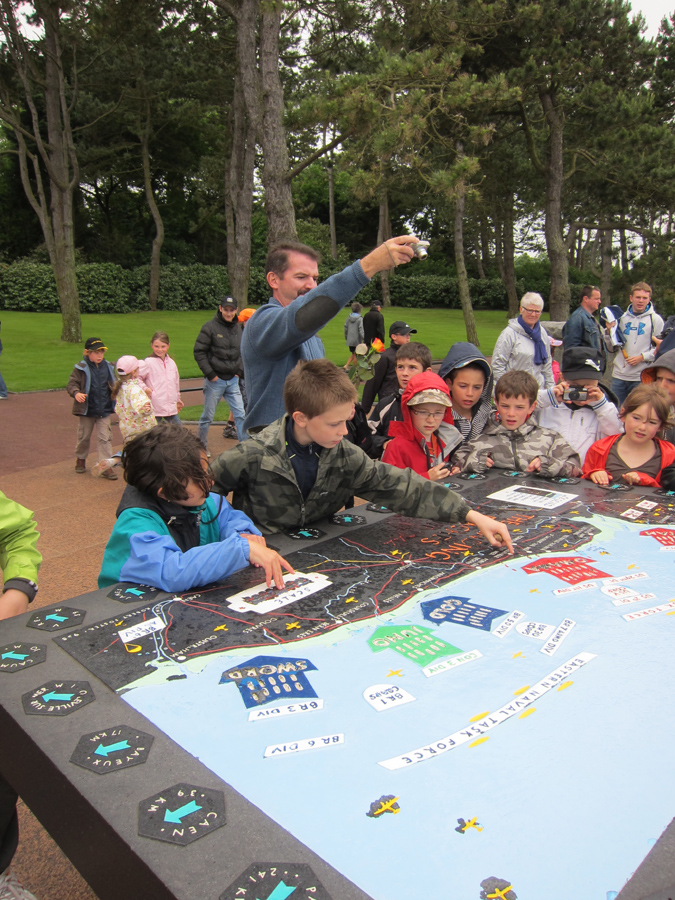
Pete is having difficulty getting this shot, with all the kids clambering over everything. I'm
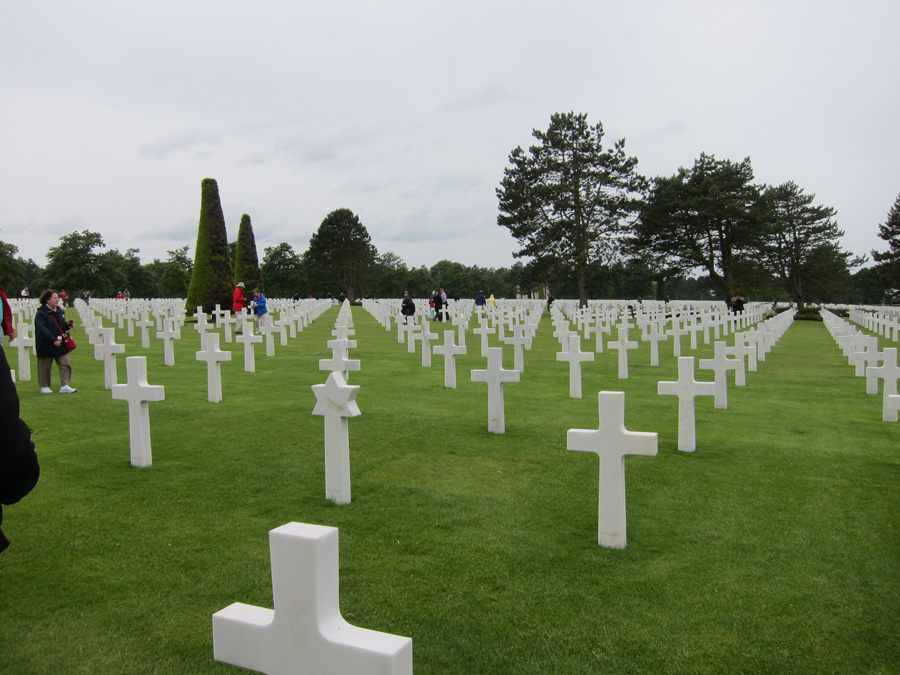
This is just one small section of the cemetery. The crosses seem to go on for as far as the eye can see.
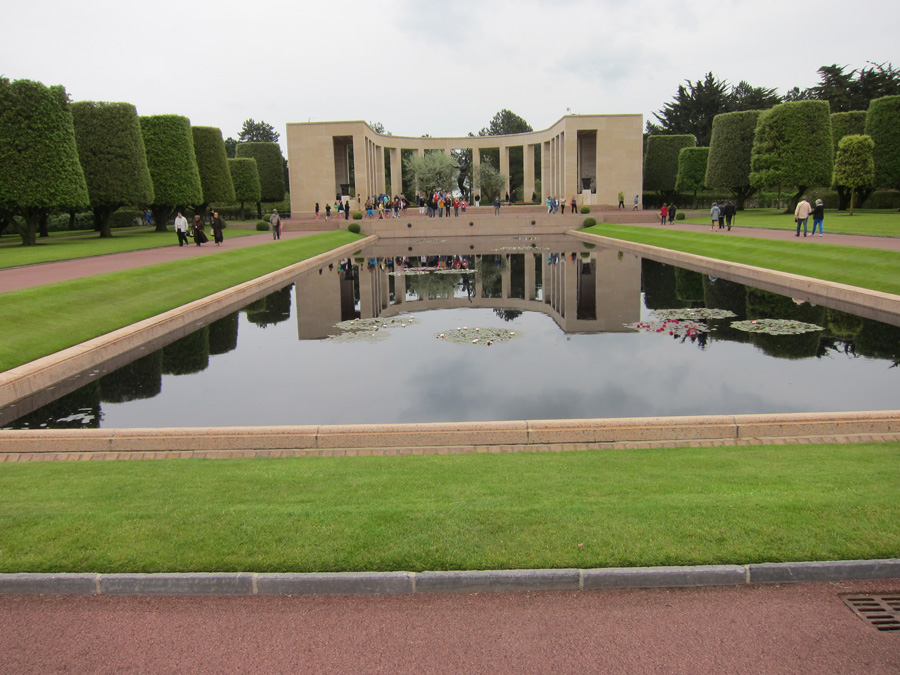
The reflecting pool with the water lilies in front of the Memorial presented a beautiful and tranquil
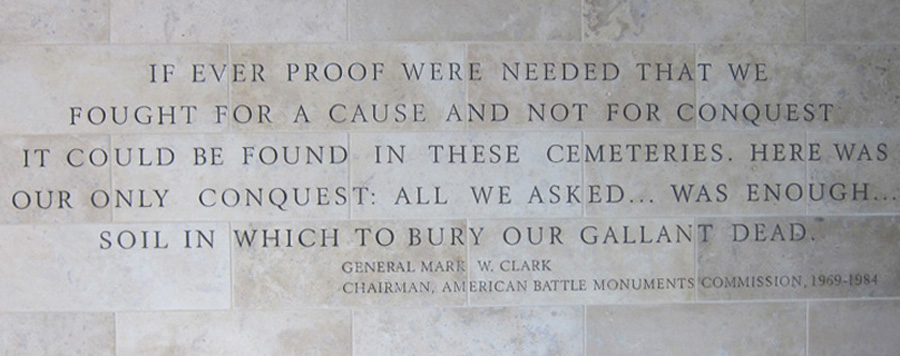
These words from General Clark says a lot about what America stands for, the preservation of our freedom.
It did start to drizzle on us, and I was glad we were prepared. Walking on the same sandy
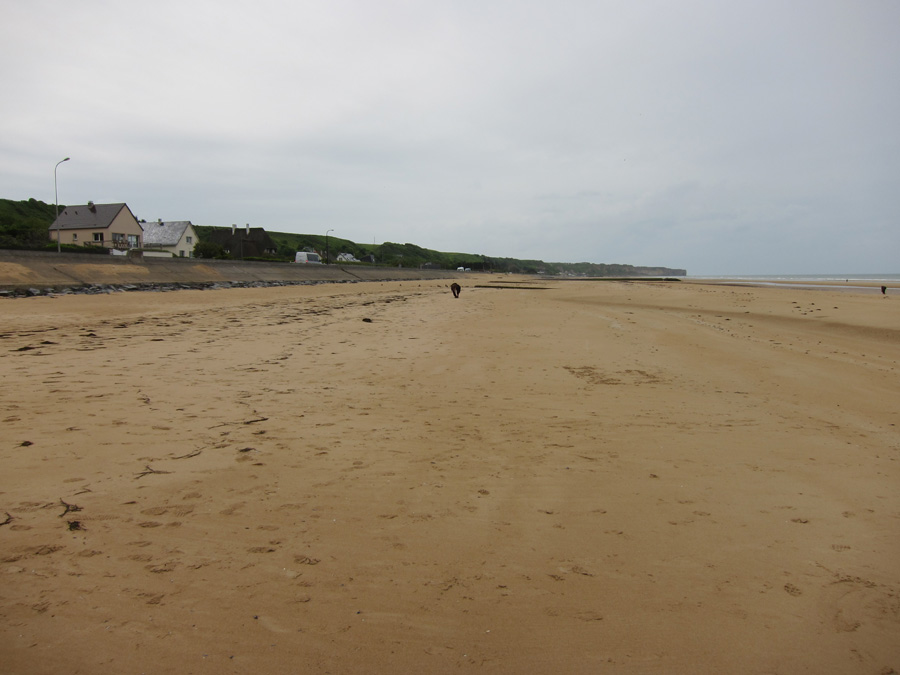
Omaha Beach is a very wide beach from the waters edge to any form of cover, so crossing this flat space with no
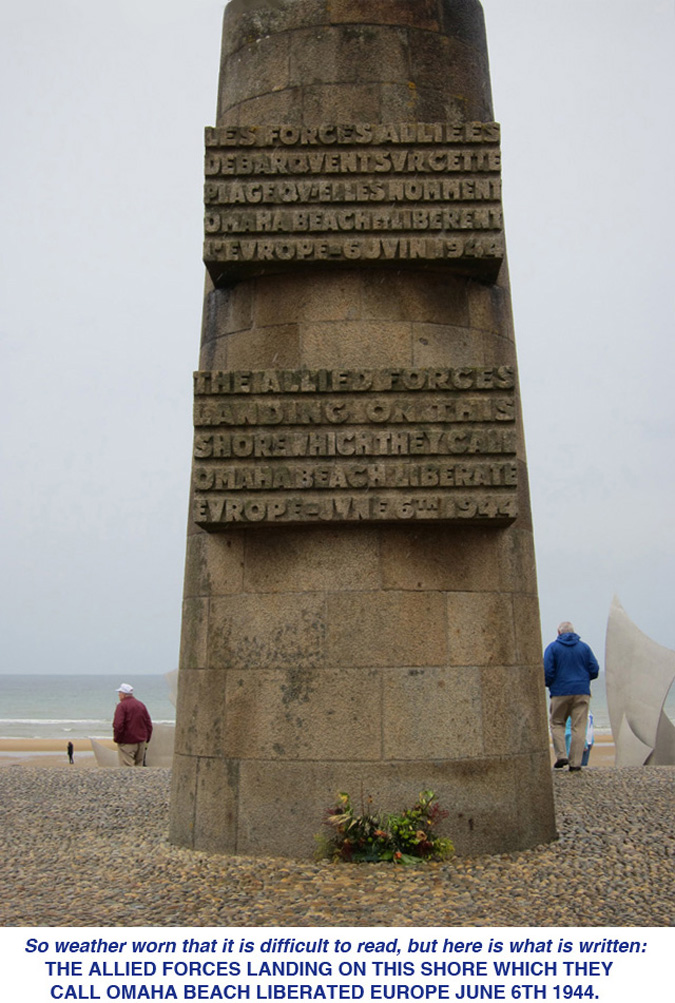
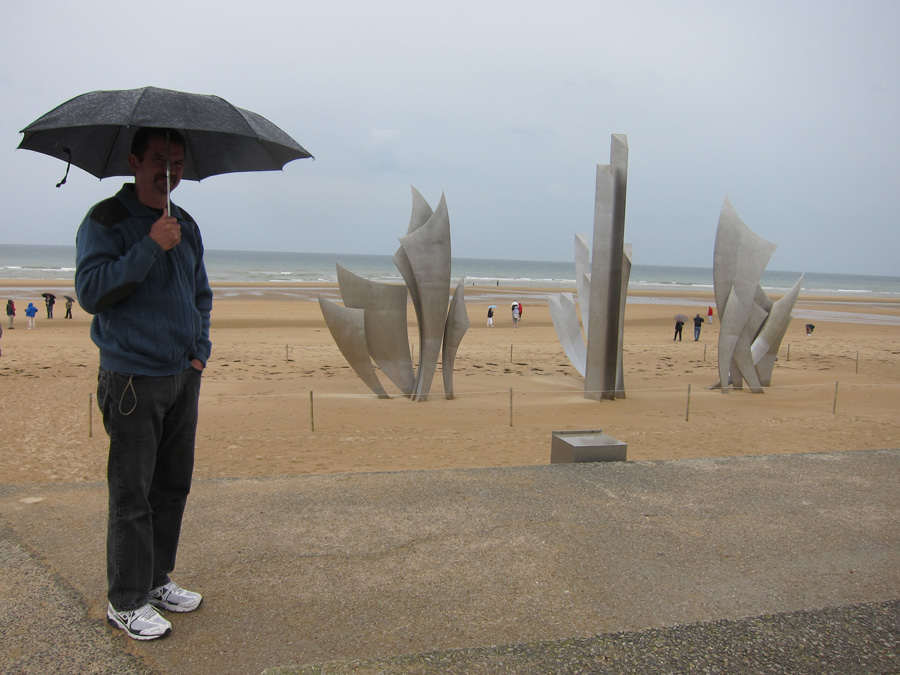
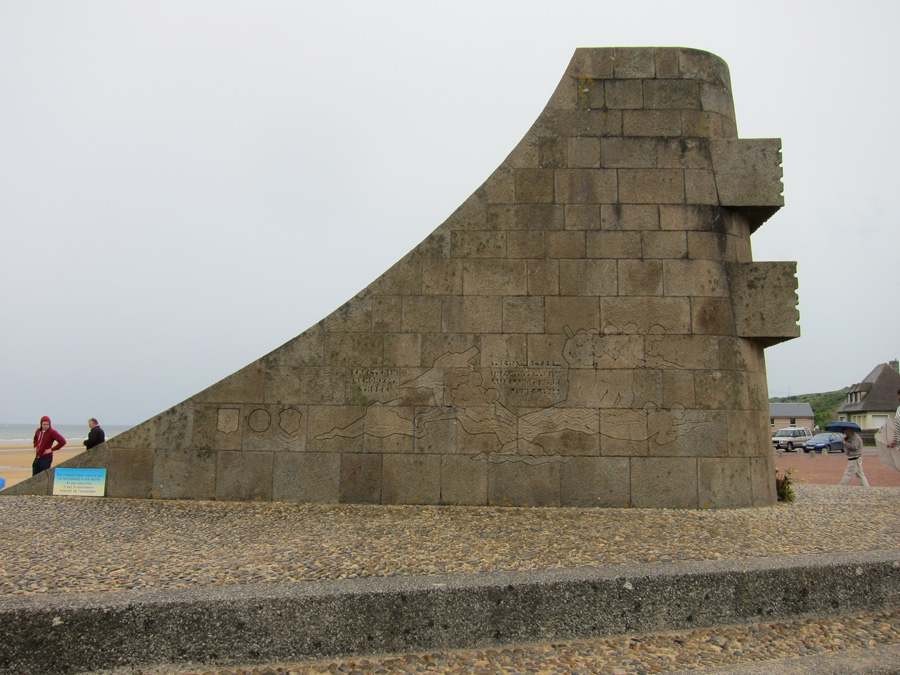
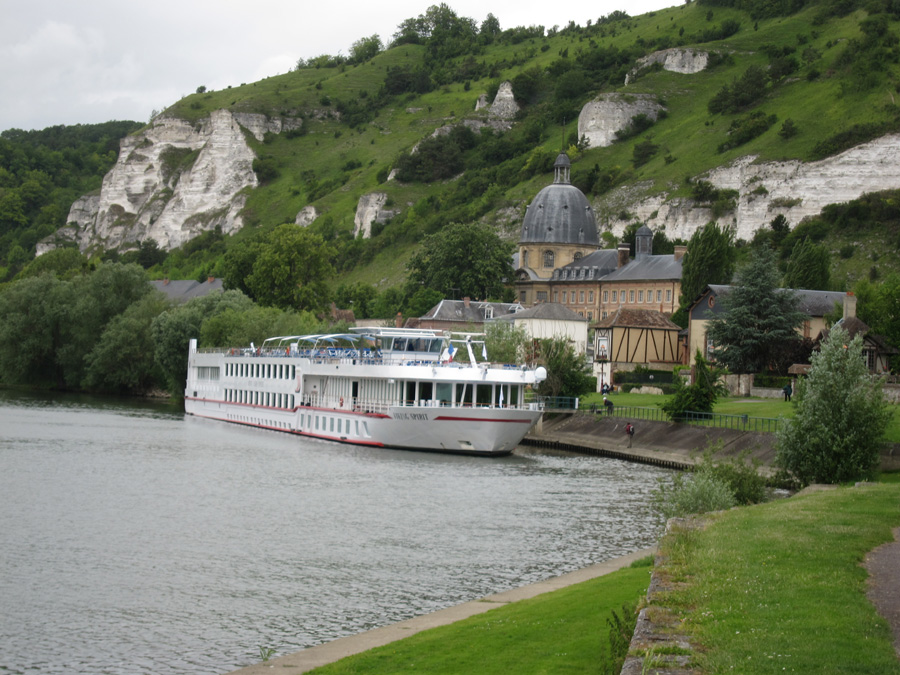
A profile shot of the monument on Omaha Beach. It hardly seems adequate to mark the bravery that went down here. We had lunch at one of the restaurants in the small own where the D Day Museum is located. After lunch we continued our tour of Normandy as we wended our way back to Rouen and our boat where we spent the night moored at the quay in Rouen. The next morning we weighed anchor at 7:00 and headed for Les Andelys, arriving there at 1:00 PM. The stop was short, as we had a shore excursion at 1:30, to climb up the hill to the Château Gaillard, and we weighed anchor at 3:00 PM, departing for Conflans.
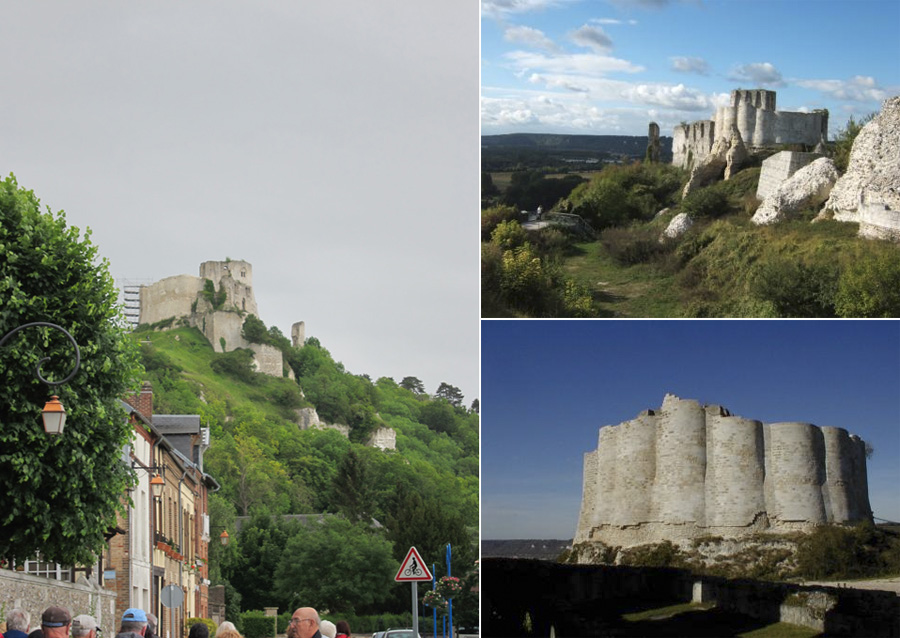
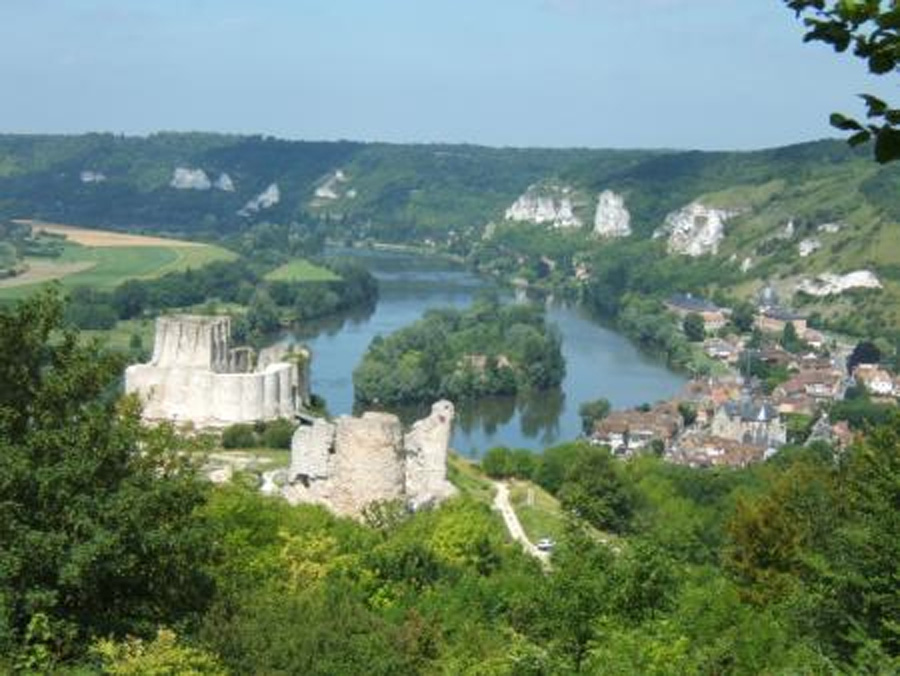
Château Gaillard stands on a hill overlooking the Seine and the quaint little town of Les Andelys. The road going up to the château from the town was pretty steep, so I elected to skip the climb as my arrhythmia was still with me then, and I wasn't up to the exertion. Instead, I walked around town, visiting the little shops, and an interesting church in the center of town. The Château Gaillard was built by Richard Lionheart, then both the King of England and the Duke of Normandy. The château was begun in 1197 and was finished one years later, in 1198. It required over six thousand workers in Les Andelys who had to work relentlessly to achieve such a feat. Richard chose the location for his fortress very carefully. The Seine takes a sharp curve at Les Andelys. In the curve in front of the peninsula, a cliff 100 meters high juts out like a boat prow over the river. A strip of land links this rocky spur to the plateau behind.
Richard took maximum advantage of this strategic position. The castle could only be attacked from the plateau side. Thus, a complete system of concentric defenses was erected on this side. The donjon, or great tower and innermost part of the castle, the last retreat,was entrenched at the top of the cliff. Facing the plateau was a triangular shaped outwork which was flanked by five towers, and together these constituted the first line of defense of the fortress. A ditch 12 meters deep surrounded it. If the enemy managed to gain control of this bastion, he would come up against high outer walls. He would have to get over this rampart to get as far as the courtyard, then he would face the castle itself, which is to say the second outer wall surrounded by a second ditch. This second rampart is the most original feature of Château Gaillard. Richard Lionheart hit upon the idea of making an embossed wall rather than a smooth one. The rampart was made of 19 arcs of a circle pierced by arrow slits. The round shape gave less hold to projectiles, which had no salient angle to catch. In addition, it allowed for shooting slantwise through the arrow slits from any point of the wall, and thus the rampart had no dead angles. This structure was completely new in 12th century France.
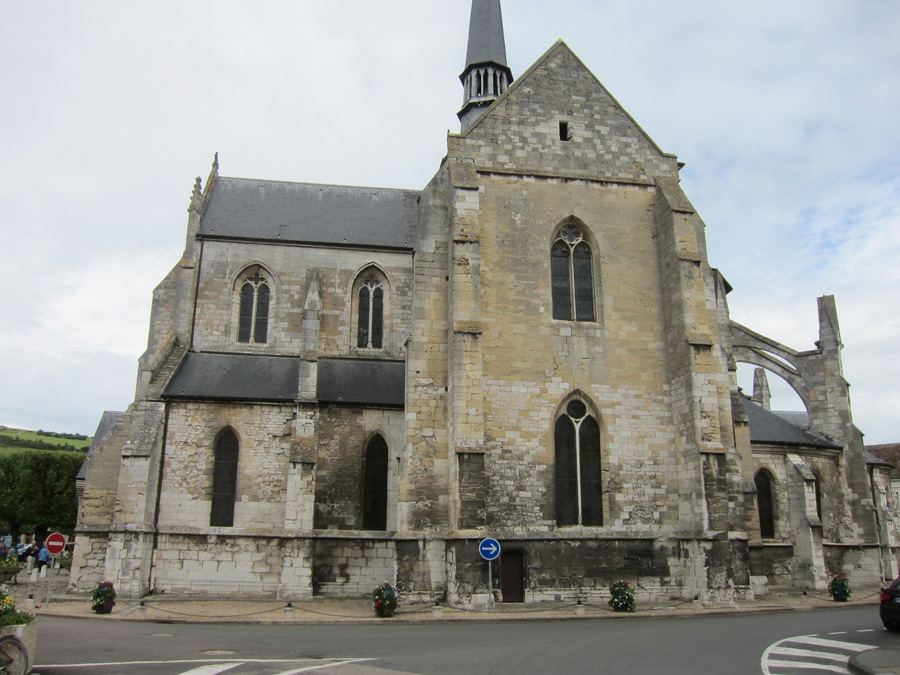
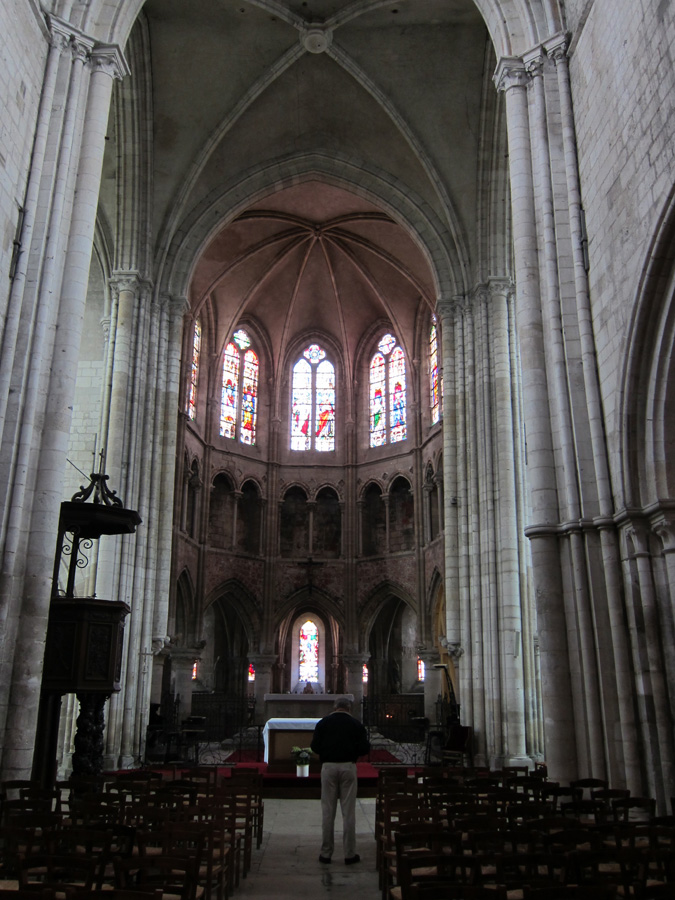
This church appeared to be quite old and in need of attention, but worth a look inside. And so I did. Named the Petit Andely Saint Sauveur Church, it was built for those six thousand workers who built the fortress for Richard. Construction of the church was begun in the 13th century and spread over a period of 500 years.
It was pretty dark inside, with very high vaulted ceilings, and yet was quite small in
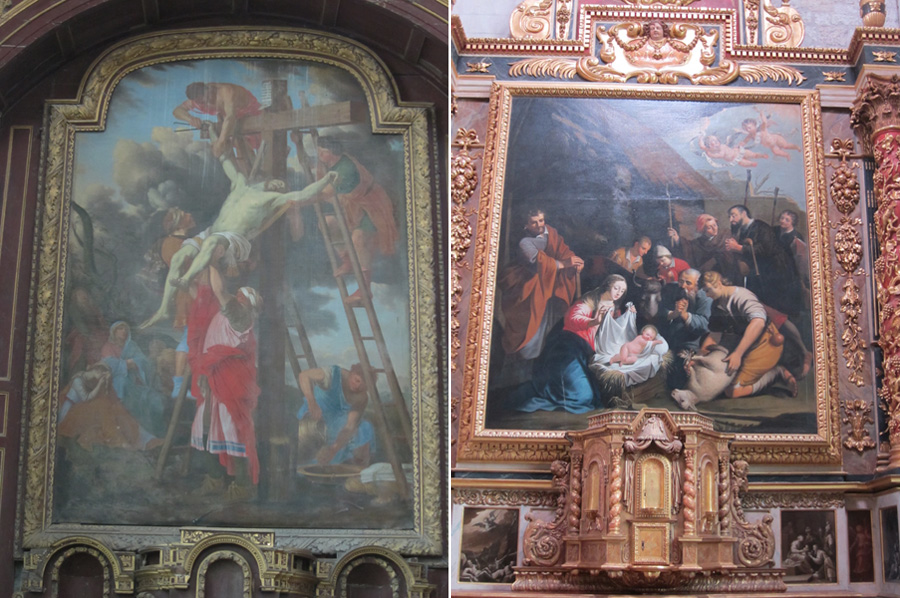
It contained some of the typical beautiful artwork that you would expect to find in a catholic church.
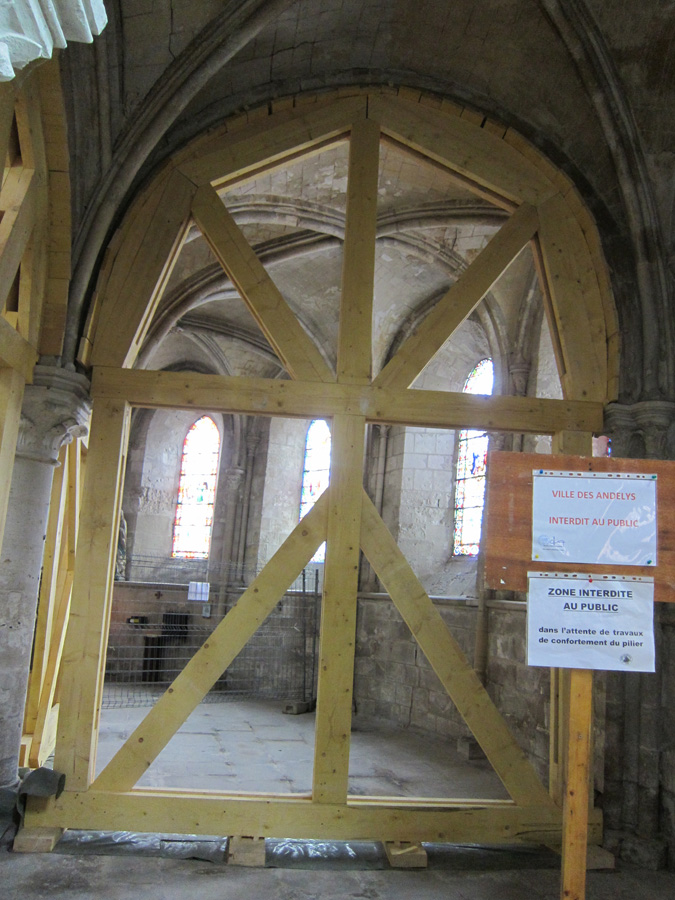
And it also had one section closed off to the public. I'm not sure what is going on here, but I think
I headed back to the ship, admiring the town along the way. I could fall in love with this place.
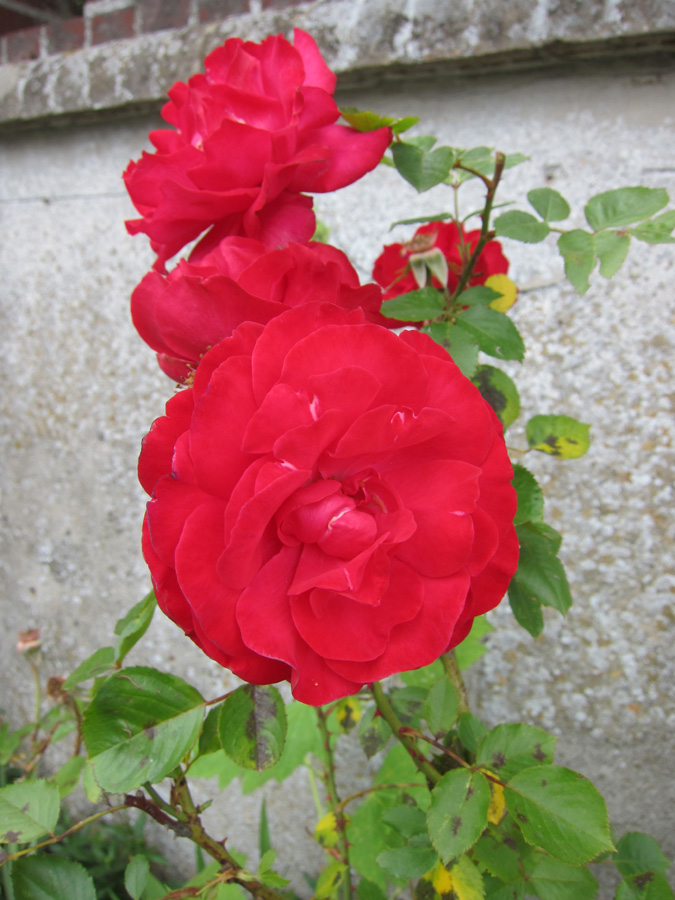
I'd love to have a garden and grow roses like this, and maybe even a vegetable garden like Bruce has,
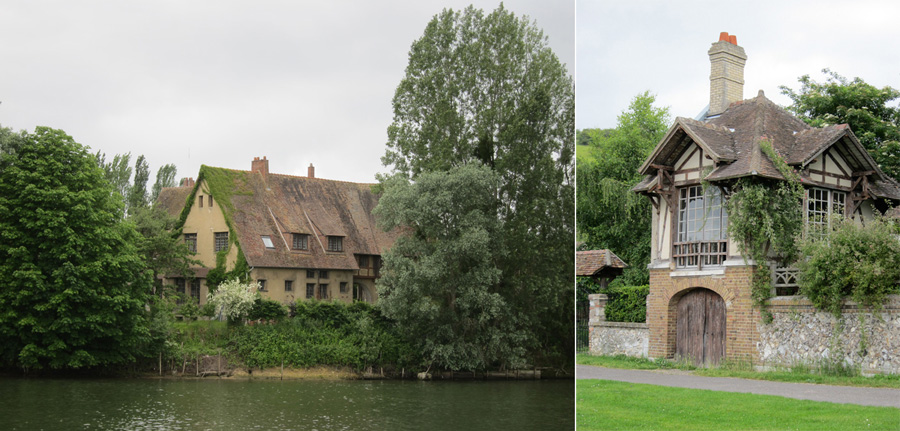
I think I could easily live in one of these some day, when I'm ready to settle down, but for now we'll just keep traveling. This being Friday the 15th of June, we are one day out of Paris, and the end of this first week of cruising with Viking. The Captain's Cocktail Party is tonight, as well as the Captain's Dinner. Tomorrow everyone will be busy packing and getting ready to disembark early Sunday morning. We will be going on to the Viking Neptune for our second week of cruising, on the Shône and Rhône rivers. We depart Paris by motor coach on the 17th of June. But before this, we will stop at Conflans-Sainte-Honorine. Part of the Seine's charm as it leaves Paris is its sinewy route. But its meandering course also means that the small city of Conflans is 42 miles by boat, even though it is only 20 miles north of Paris by car. But there's no hurry—Conflans-Sainte-Honorine has long been considered the capital of French inland waterways, and it's not changing anytime soon. Largely, this honor can be credited to its situation at the confluence of the Seine and Oise rivers. The Oise flows into France from Belgium, and so provides a crucial waterway for trade and communication with the northern reaches of Europe. And of course, the Seine continues west to the Atlantic and any number of European seaports. Barges, "pushers" and river boats line Conflans's shores. Its embankments bustle with lively, colorful markets, terraced cafés and pleasure cruisers. Walkers and joggers trace riverside paths come rain or shine. Conflans was named simply for its location at the rivers' "confluence." In the 13th century, officials added it surname to honor the female saint whose relics have been kept in town since the year 876. Conflans began as an agricultural village. As waterway traffic grew, so did the economy as bargemen stopped here on their way to Paris or Rouen. The Industrial Revolution had the same effect and soon the town's trade, shipyards and classrooms were booming. To this day, bargemen moor their cargo ships her and catch up with each other on the day's happenings or the tide's flow. Also in Conflans we had our final Optional Shore Excursion for this Viking Spirit cruise; a guided visit of the Palace of Versailles and the gardens. However, since I had already visited Versailles twice before, and I knew how much walking was involved, I elected to remain on board and read, and enjoy a relaxing morning on the sun deck. â In Part 9 I will share with you Pete's photos of his trek up the mountain to the Château Gaillard, and also of Versailles, where you will learn about the probable cause of the French Revolution, IMHO. |
|||||||||
|
|||||||||