|
|
|
|
|
|
|
|
|
|
|
||||||||
|
||||||||||||||||||
|
Email us at: |
||||||||||||||||||
 |
||||||||||||||||||
 |
 |
|||||||||||||||||
|
Click the sun to see the |
||||||||||||||||||


 |
|||||||
|
|
|
|
||||
|
|||||||
|
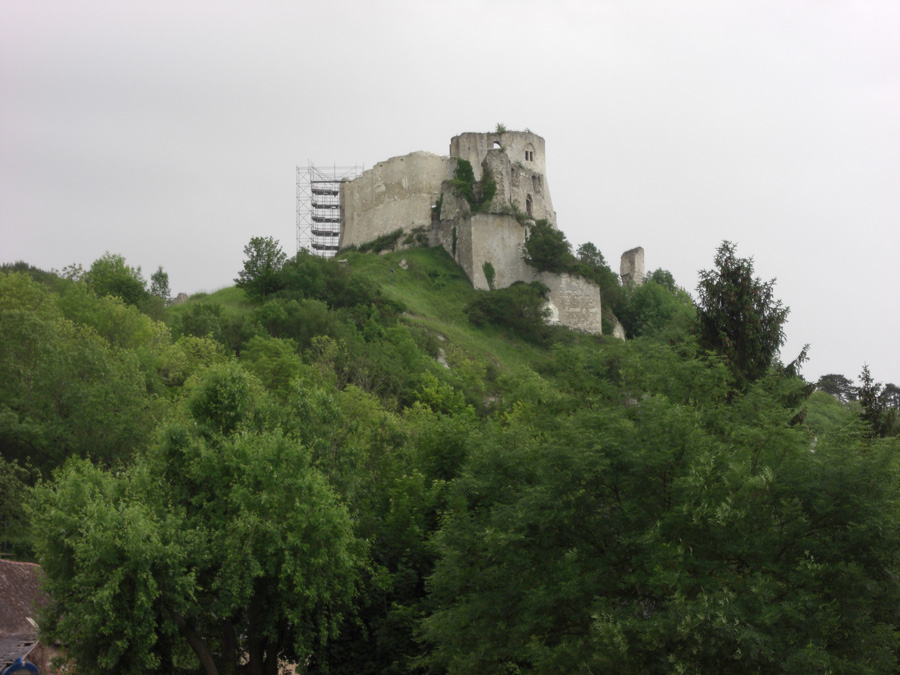
Part 9 Pete took some great shots from the hill on which resides the Château Gaillard. I think they are worth sharing.
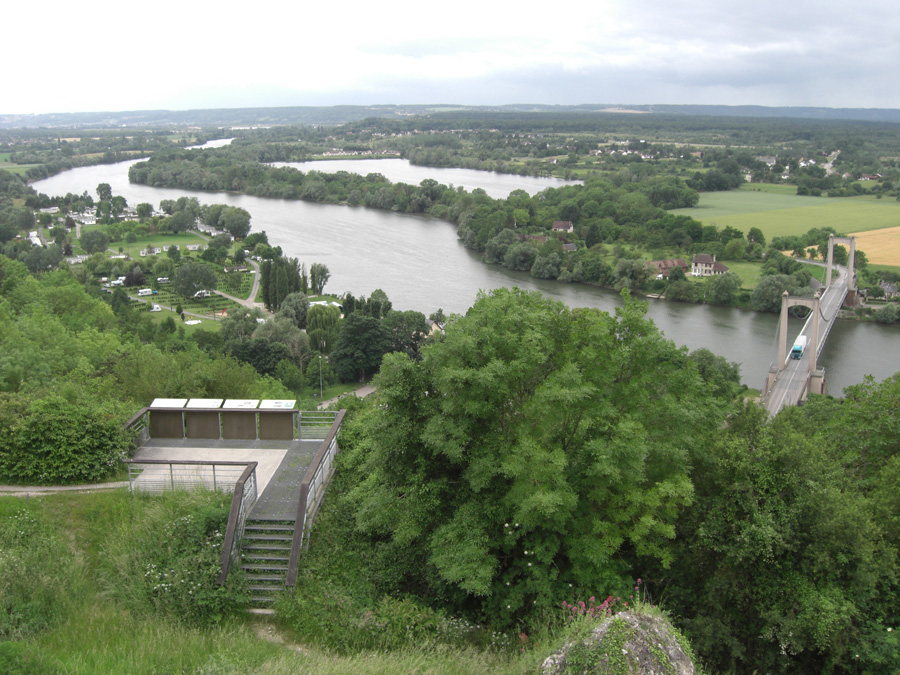
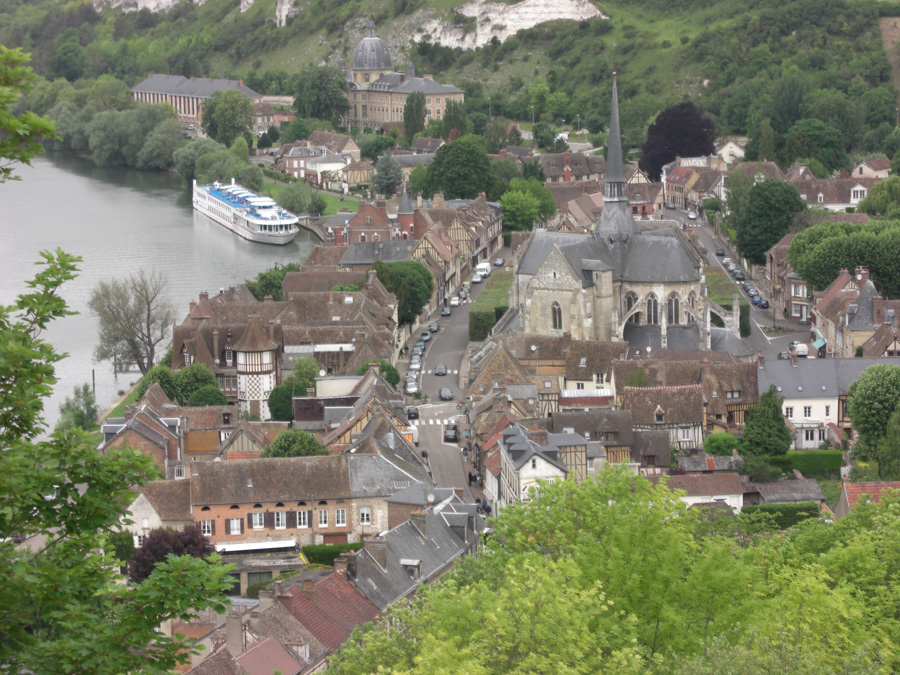
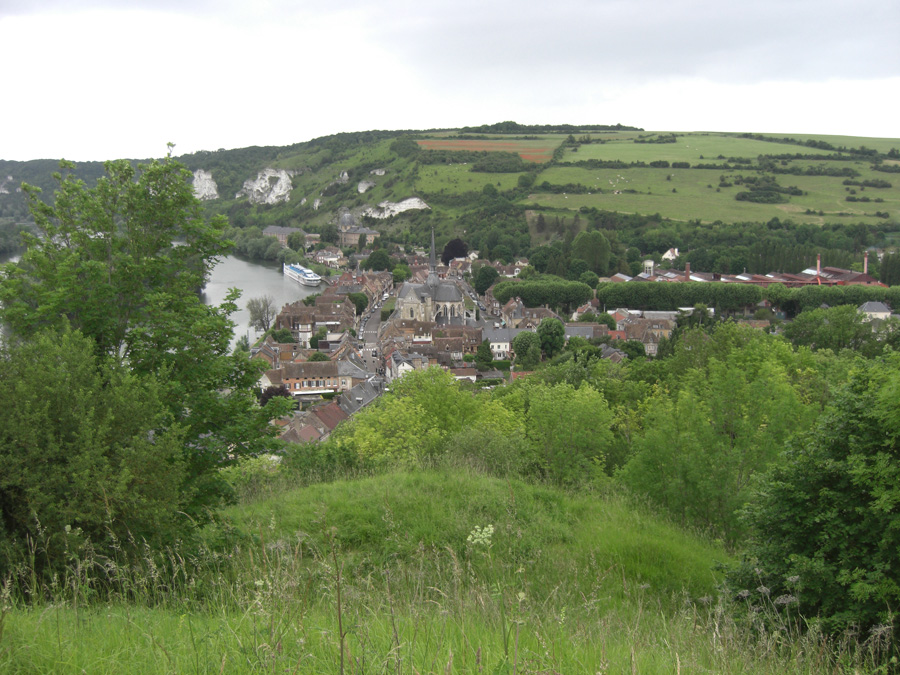
High on this hill the castle commanded an excellent view of the entire countryside.
There is not much left from the original castle. Most of the stones from the outer ramparts were given to the various
Richard Lionheart died one year after his castle was completed. He went to war during Lent, and I suppose that
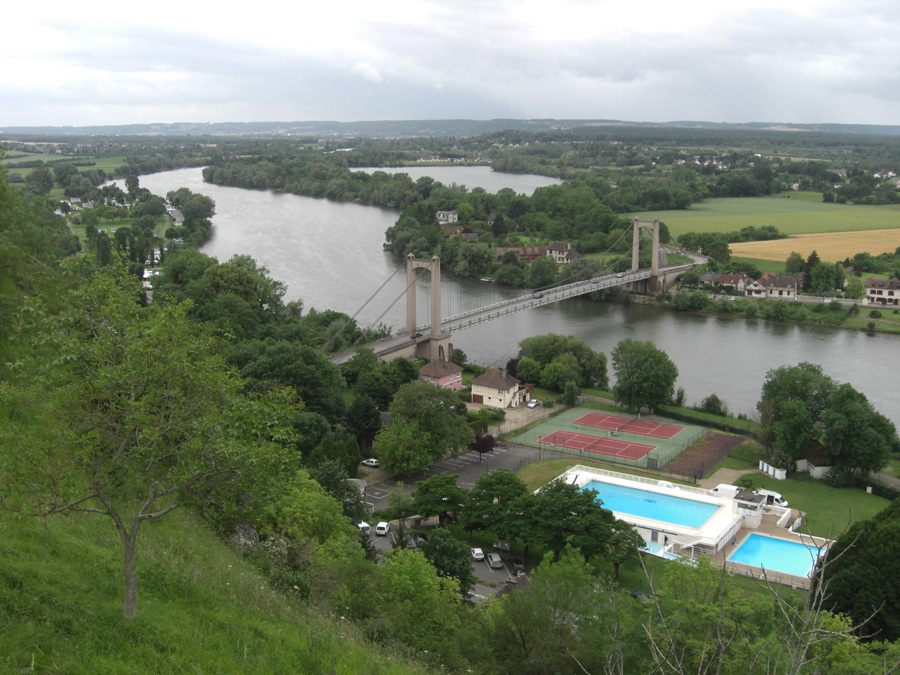
The pool and the tennis court sort of detracts from this view, especially if you are trying to visualize a medieval landscape.
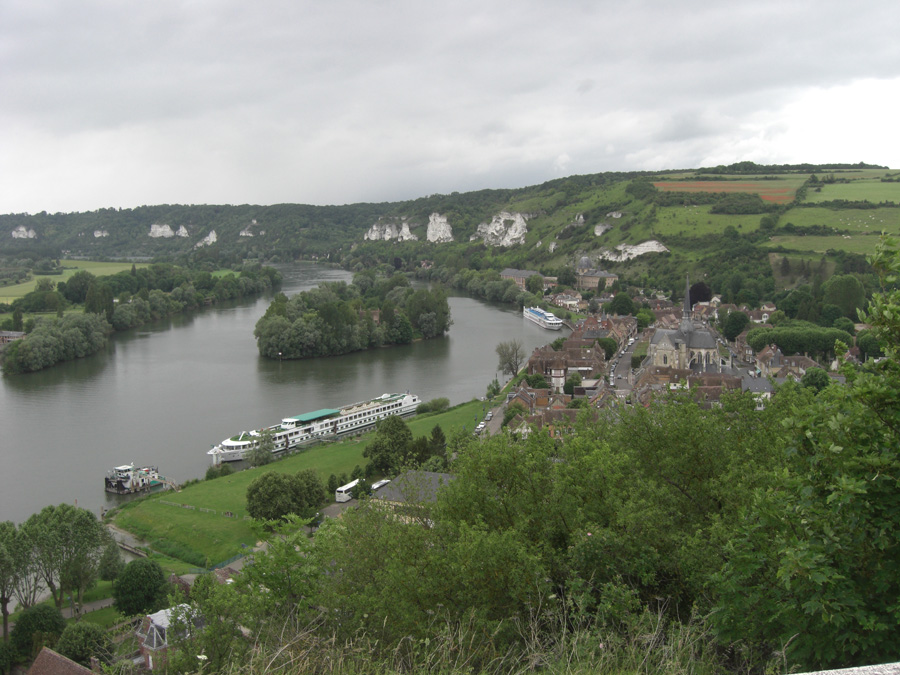
It is beautiful countryside. The Viking Spirit takes up almost the entire quay.
Pete got a great shot of the church I visited. You can really see the flying buttresses which are
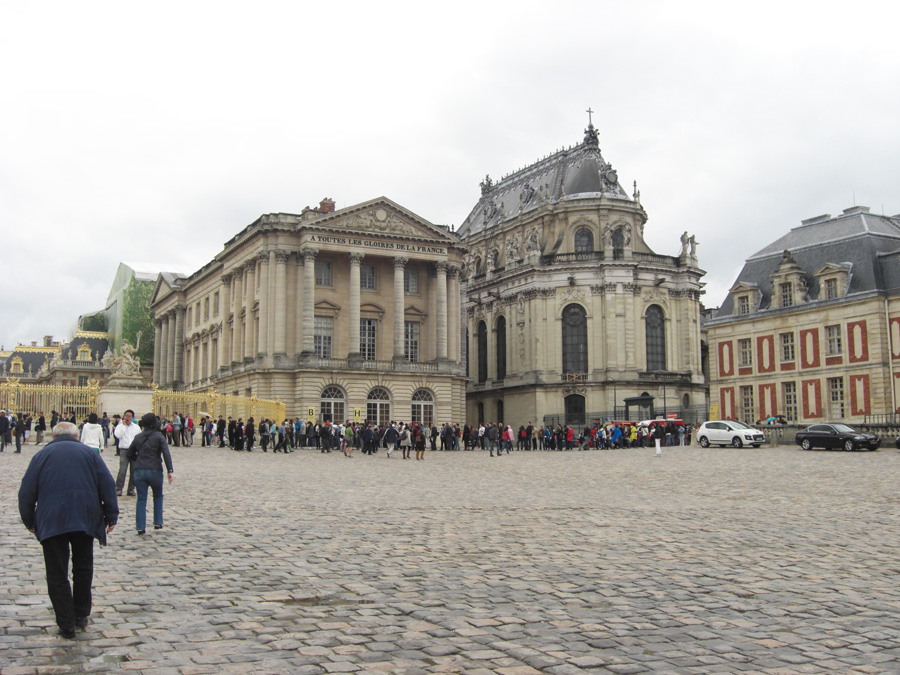
I don't know for sure, but my guess is that those fields in the distance are grape vineyards. This looks like At 3:00 PM we left Les Andelys and headed for Conflans, arriving there at 11:15 PM. On the way we enjoyed the Captain's farewell cocktail party, and the Captain's dinner, which was very relaxed. And that was fortunate for us, as neither of us had brought along a suit and tie. At 8:00 AM the next morning Pete left for his half day shore excursion to visit the Palace of Versailles. In 2008 we did a Viking River cruise in Russia, beginning in Moscow and ending in St. Petersburg. We visited the Winter Palace of Catherine the Great. I think Luis the XVI was competing with the Empress of Russia, as the Palace of Versailles looks very much like Catherine's Winter Palace. Sort of a "keeping up with the Jones's" situation. The following set of reasons which brought about the French Revolution, as I read them, seemed pretty synonymous with events we are experiencing in the United States today. They say that history repeats itself. Let's see. The French Revolution took place in 1789. In 1785 France faced economic difficulties, mostly concerning the equitability of taxation. Does that sound vaguely familiar? The U.S. is so in need of tax reform, yet nothing is being done. The French people enjoyed more political freedom and a lower incidence of arbitrary punishment than any of their fellow Europeans. A little like North Americans today. However, Louis XVI, his ministers, and the widespread French nobility had become immensely unpopular. The sitting Congress in the U.S. today is the most widely unpopular Congress EVER! The fall of the ancient regime in France may be blamed, in part, on its own rigidity. Congress refuses to fix the problems that plague the American people, because those problems do not effect them. Congress does not have to rely on Social Security. They have their own retirement system, and one that is quite lucrative, and guaranteed by laws they implemented. Congressmen do not have to rely on Medicare or have to purchase a private health plan. They have their own health plan paid for by the taxpayers. There is no vested interest in fixing either program. Their rigidity in this matter seems equivalent to that of the French nobility. The Revolution in France was not due to a single event but to a series of events, that together irreversibly changed the organization of political power, the nature of society, and the exercise of individual freedoms. It was debt that led to the long-running fiscal crisis of the French government. On the eve of the revolution, France was effectively bankrupt. It is said that before the revolution, the debt that France had rose from 1 billion to 2 billion livres. Extravagant expenditures on luxuries by Louis XVI, whose rule began in 1774, were compounded by debts that were run up during the reign of his even-more-profligate predecessor, Louie XV (who reigned from 1715 to 1774). Heavy expenditures to conduct the losing Seven Years' War against Britain (1756-1763) and France's backing of the Americans in their War of Independence, ran the tab up even further. Today the U.S. has the highest deficit ever. It has been compounded by wars in the middle east, Iraq, Afghanistan, and possibly soon Libya and Iran. This is too much of a coincidence to be ignored. Taxation: Since it was one of the major trading nations, France needed to raise most of its tax revenue internally, rather than through customs tariffs. The U.S. is a major trading nation, but our balance of trade has become skewed so that we are paying more taxes on imports than we are receiving on exports. Failure of reforms: During the reign of Louis XV and Louis XVI, several ministers proposed revisions to the French tax system so as to include the nobles as taxpayers, but these proposals were not adopted. A few in the U.S. Congress have tried to reform the tax code to include the 1%, or the very wealthy, but have thus far failed to do so. Famine: These problems were all compounded by a great scarcity of food in the 1780s. A series of crop failures caused a shortage of grain, consequently raising the price of bread. Because bread was the main source of nutrition for poor peasants, this led to starvation. The two years prior to the revolution (1788-1789) saw meager harvests and harsh winters, possibly because of a strong El Niño cycle caused by the 1783 Laki eruption in Iceland. Global warming has been causing severe storm cycles and excessive heat waves causing droughts, thus crop losses. Commodity prices are rising, and the prices of any product that uses these commodities in their product to rise as well. I recently read that one in six Americans are not getting adequate food. Could this evolve into a general state of famine? Transparency: Properly speaking, the people ought to have been accustomed to the fact that the French government did not fulfill its financial obligations, for since the time of Henry IV, that is, within two centuries, it had failed to meet its obligations fifty-six times. In earlier days such catastrophes had not been announced and publicly discussed. Now all France, which for two generations has been worked upon by the party of rationalism, shared the outcry against the financial situation. The bursting of the housing bubble, the failure of several financial institutions (some deemed too big to fail), and the failure of regulatory bodies to reimpose safeguards which have been whittled away by lobbies for the banking and financial institutions, these failures have now become blatantly and widely known to every citizen. There should be a huge outcry for justice, but this has not happened. Perhaps it is yet to come. I don't know about you, but all of this seems to be like the handwriting is on the wall, history possibly repeating itself. Are we in for a second American Revolution, but this time not against the British, but against our own leaders? Only time will tell. The willow can only bend so far before is snaps. And now for some of Pete's photos of the Palace of Versailles, which will show just how far the French nobility and royalty pushed the envelope.
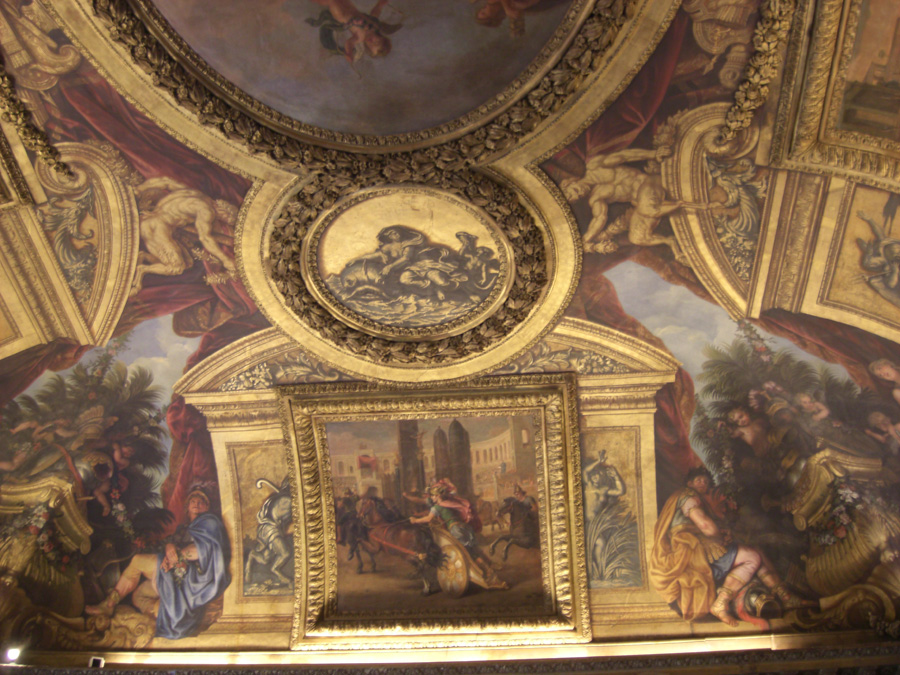
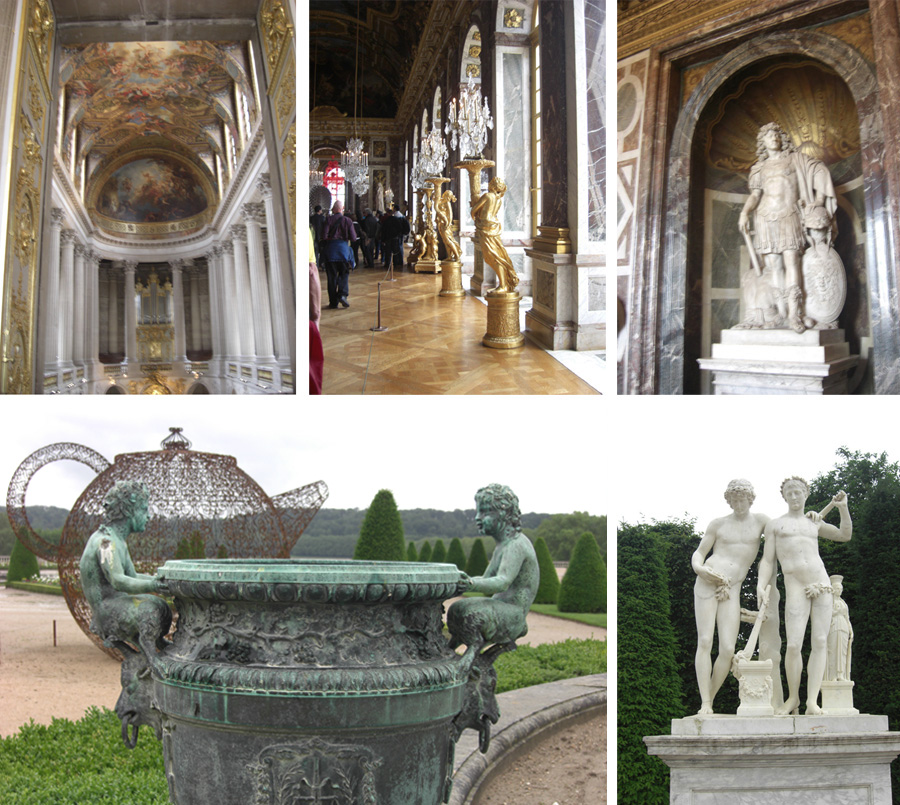
Yes, that is gold leaf. Can you imagine the neighbors awe if this was your ceiling?
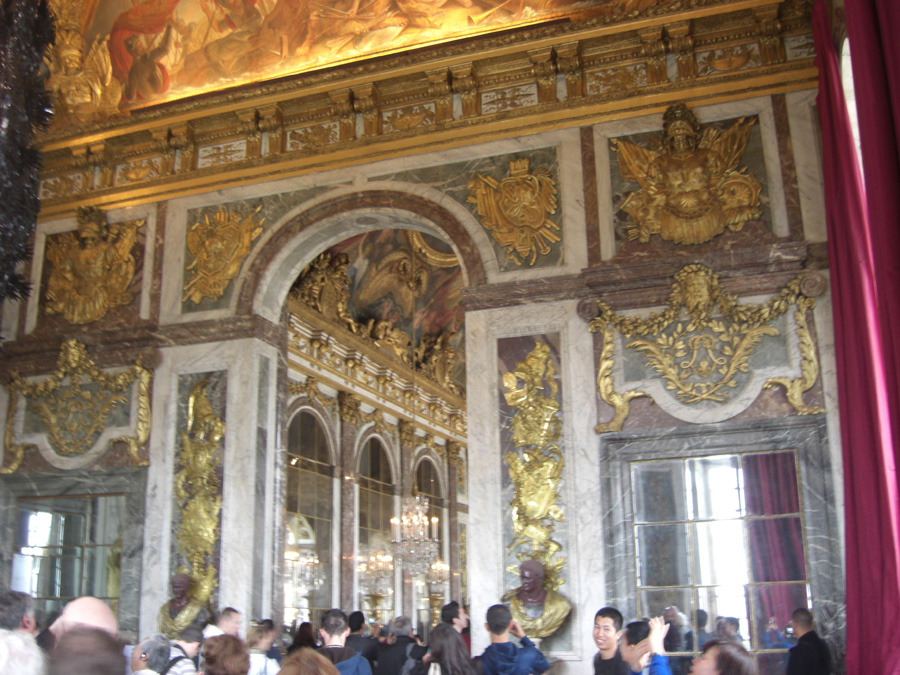
What else can I say, it is just SOOooo French. What a party I could put on here.
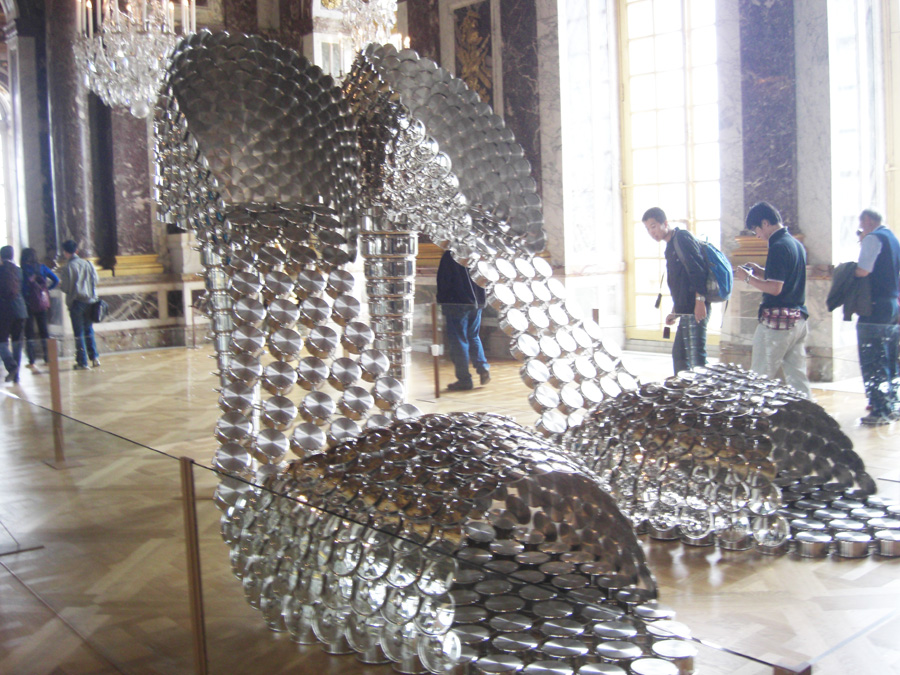
Pete said there was some kind of modern art exhibit going on, and these oversize stilettos were constructed of pots and pans.
There was so much gold leaf everywhere, and bronze and marble satues. Just one of these objects could probably buy a house today.
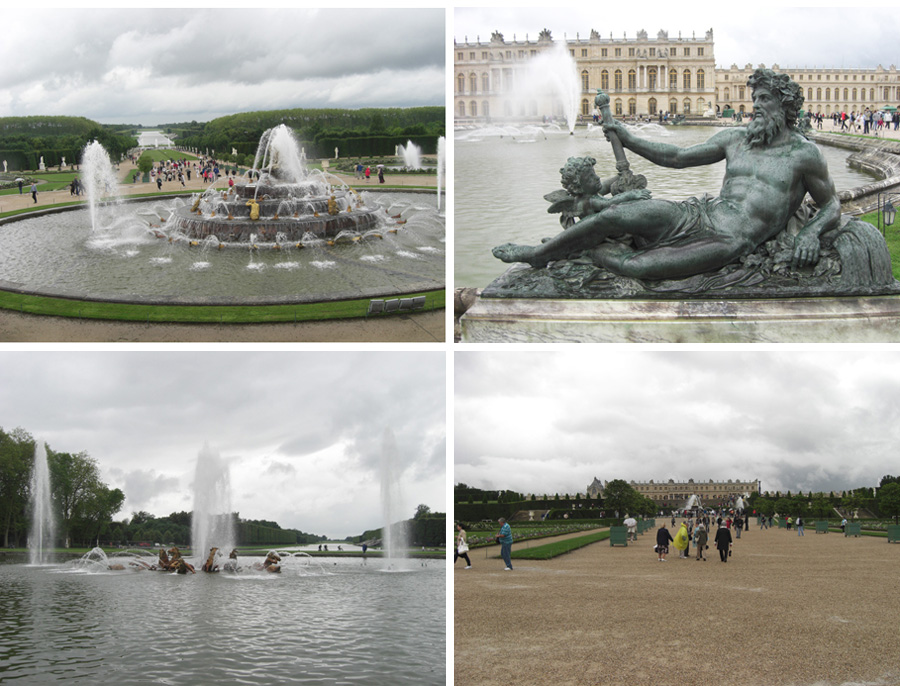
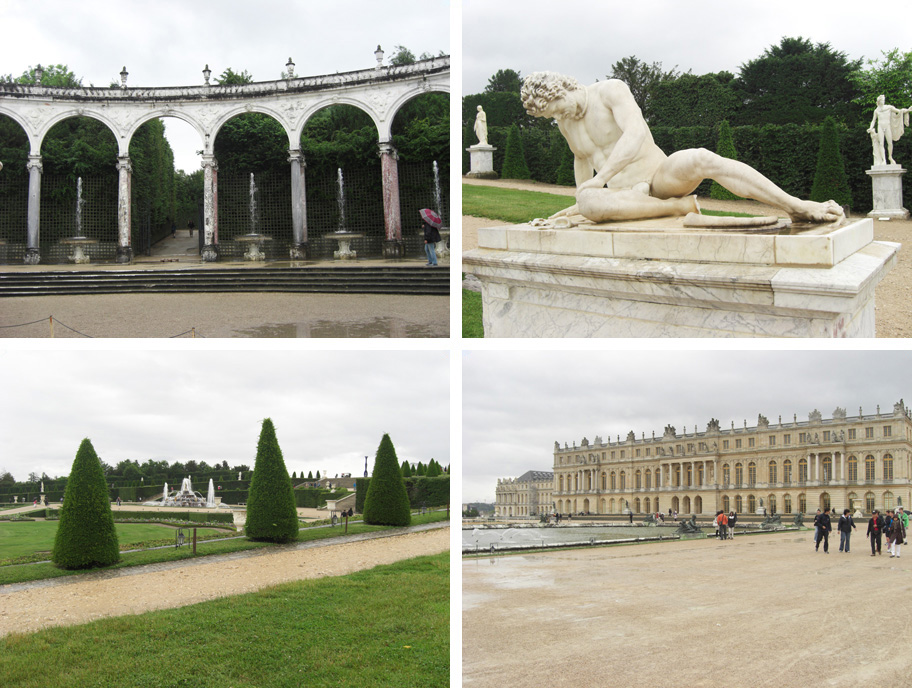
The garden and the pond areas were acres big. It is said that the French Navy would hold mock naval battles
There were fountains and marble statues everywhere. Versailles is known as the largest palace in the world, when
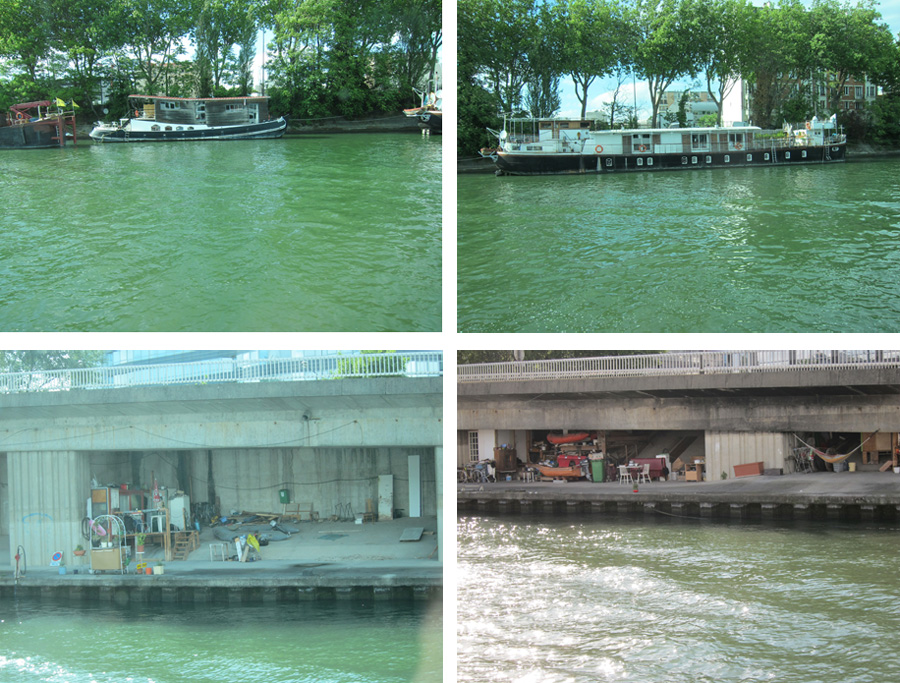
If I didn't know I were in Paris, I'd swear I was back home in Buenos Aires. These building look so familiar. Pete returned to the boat, and at 1 PM we departed Conflans bound for Paris, arriving in Paris at 6:30 PM. Along the way we saw all kinds of sites. Live aboard boats of all shapes & sizes, and levels of luxury or utility. At one point in my life I thought I wanted to buy a sailboat and tour the world. Then I read a few books relating peoples experiences of doing just that, and I decided it was not for me. You'll have to read those books to understand why I came to that conclusion.
Besides families living on their boats, there were homeless people living under the bridges. It makes me realize
We approach the quay where we departed 7 days ago. Tomorrow morning we will
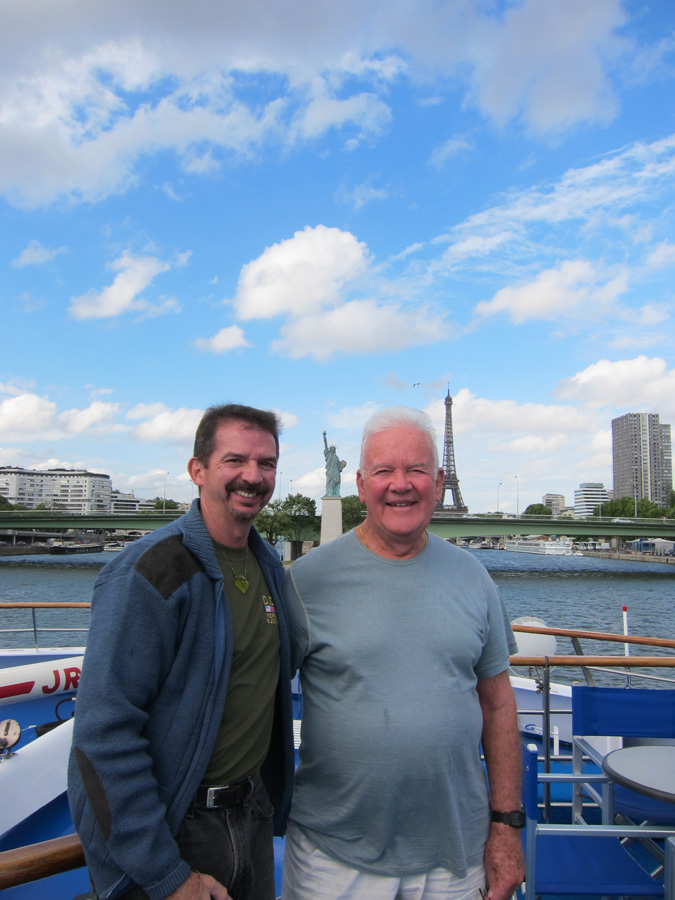
This 1/4 scale Statue of Liberty stands on an island, much like our Statue of Liberty on Liberty Island |
|||||||
|
|||||||