|
|
|
|
|
|
|
|
|
|
|
||||||||
|
||||||||||||||||||
|
Email us at: |
||||||||||||||||||
 |
||||||||||||||||||
 |
 |
|||||||||||||||||
|
Click the sun to see the |
||||||||||||||||||


 |
||||||||||
|
|
|
|
|
||||||
|
||||||||||
|
We are still on Fernandina Island. It has quite a variety of wildlife. It is wonderful to be here and experience all this nature first hand. I hope I'm able to capture the wonder enough so that you can enjoy it too. As for our friends from the Athala, I hope it brings back many wonderful memories for you.
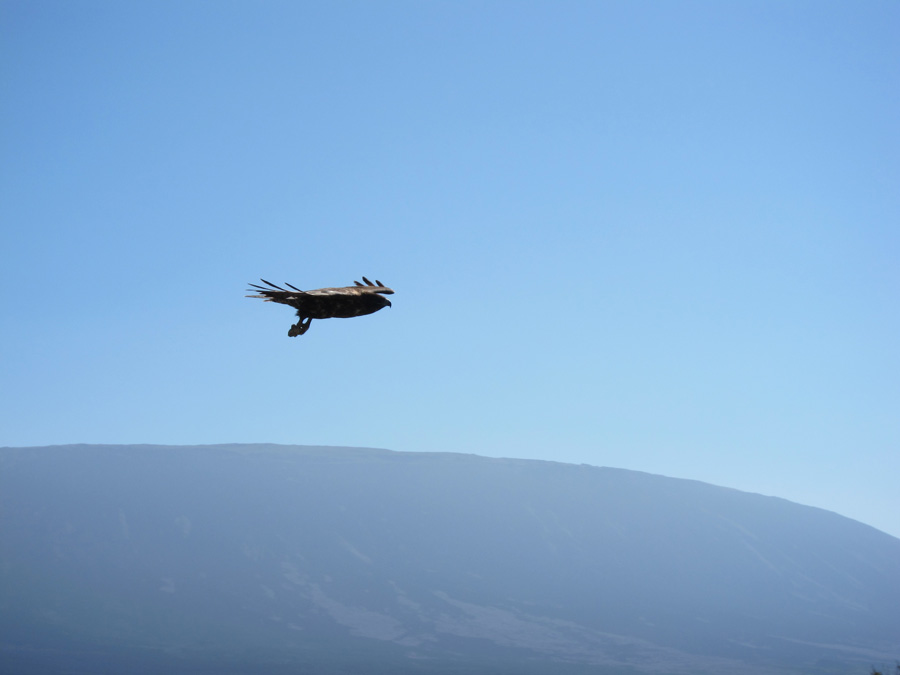
A huge Galapagos Hawk flew in from out of the blue. It was beautiful to watch him coming. They are the masters of flight.
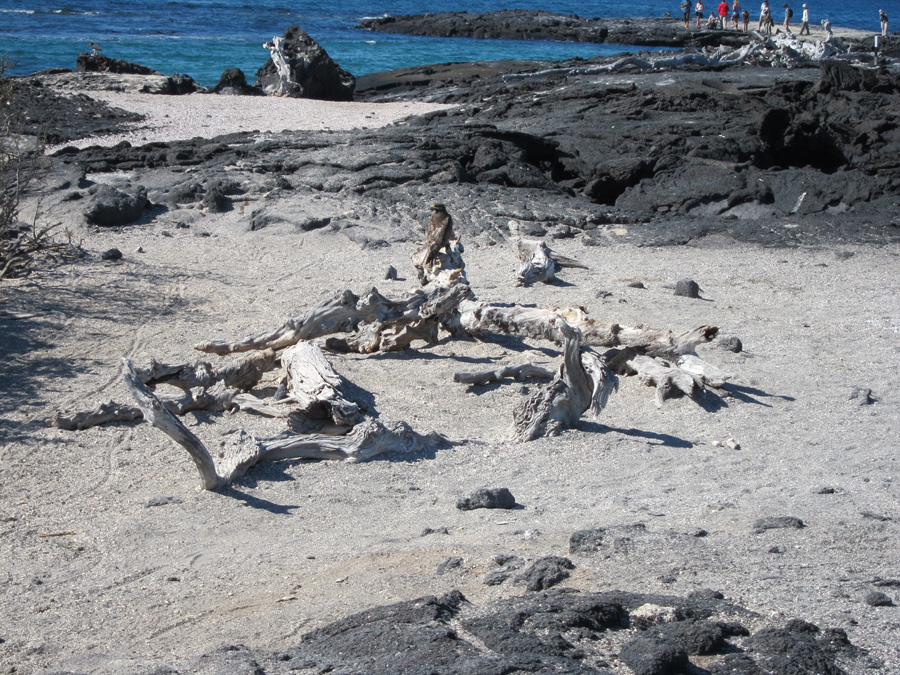
He landed on that log in the center. Perhaps he thought we might leave some scraps of food for him.
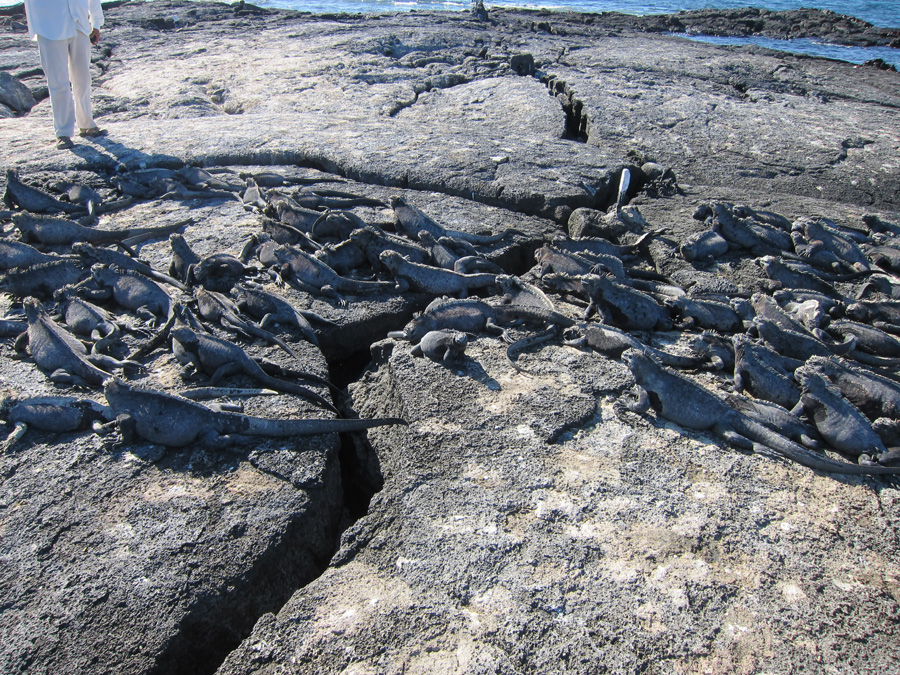
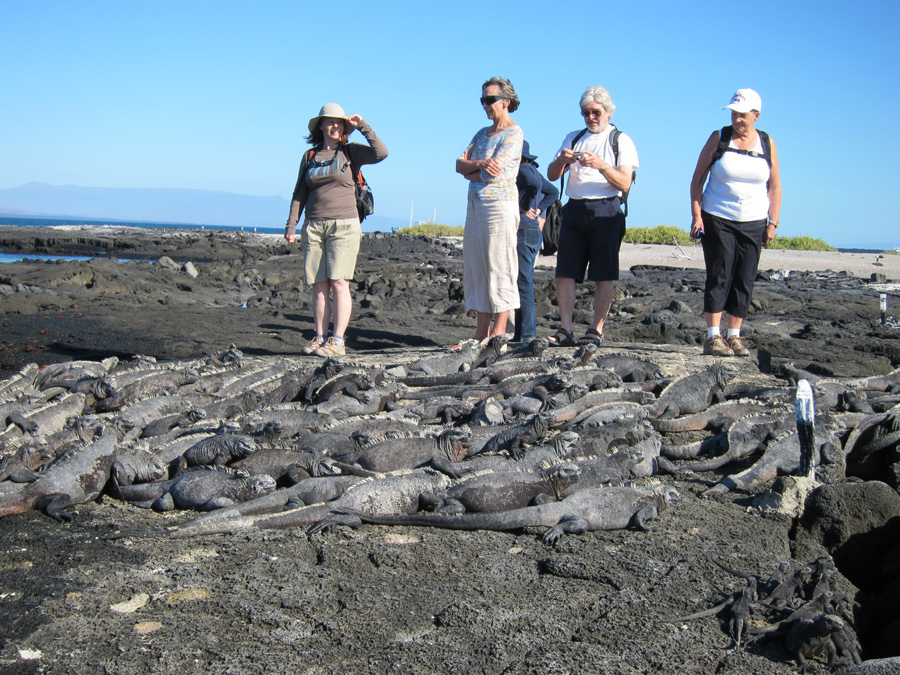
This looks like rush hour on the Iguana Highway, but actually they are not moving. They are just sunning themselves. Iguanas are reptiles, so they are cold blooded. When they go into the ocean to feed, their body temperature drops considerably. They must lay in the sun to bring their body temperature back up to normal. I wonder if their teeth chatter like ours when we are cold. It reminded me of the Borg from the Voyager TV series, who must enter a stasis chamber to regenerate. These warm rocks are the marine iguanas stasis chambers, and they are regenerating.
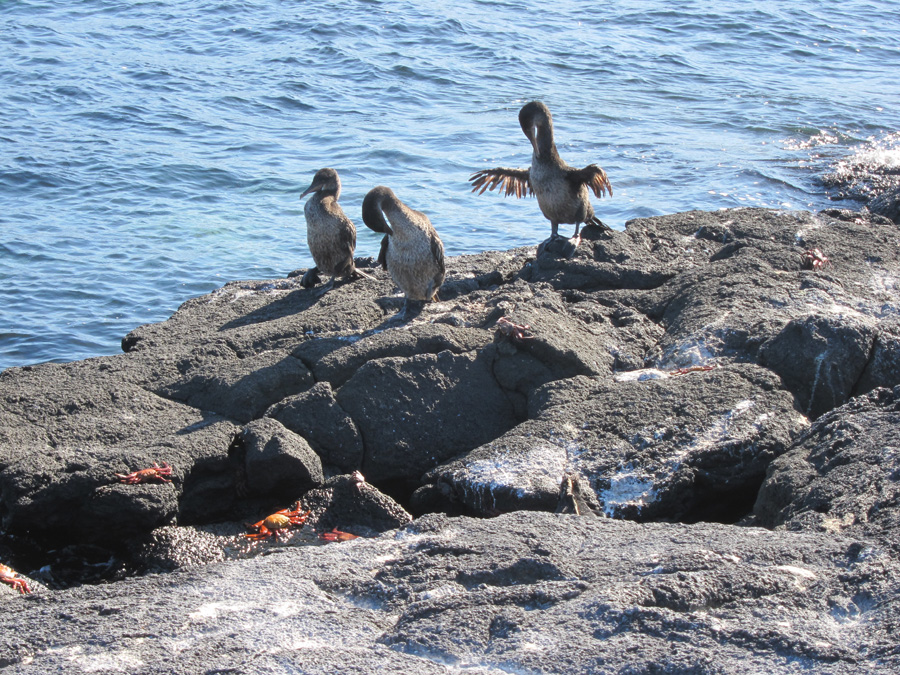
These are the rattiest looking cormorants I think I've ever seen. They are flightless, obviously. Those
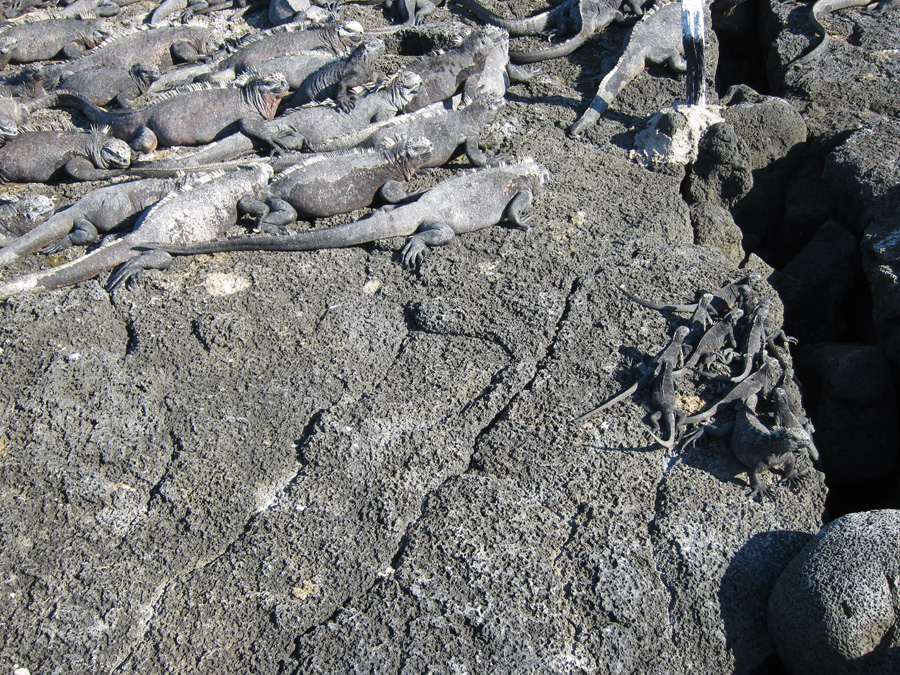
This was the cutest little group of baby iguanas. I think they are too young to go into the water to feed. I don't know how they get their nourishment. Another question I should have asked Javier. I suppose they do the same as birds, and the mothers bring food back in their gullet and regurgitate it for them to eat. There is certainly nothing else to eat on these barren volcanic rocks.
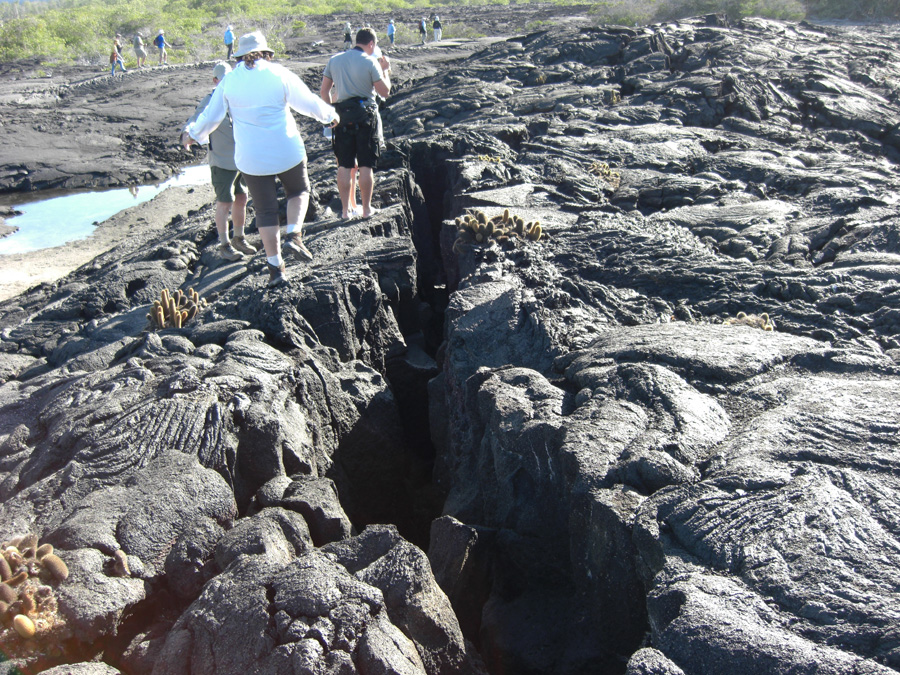
The group was having a ball exploring, and taking in nature in the raw. Finding a clear path through
The volcanic terrain was very rugged and you had to really watch your step or you'd find yourself in a crevasse.
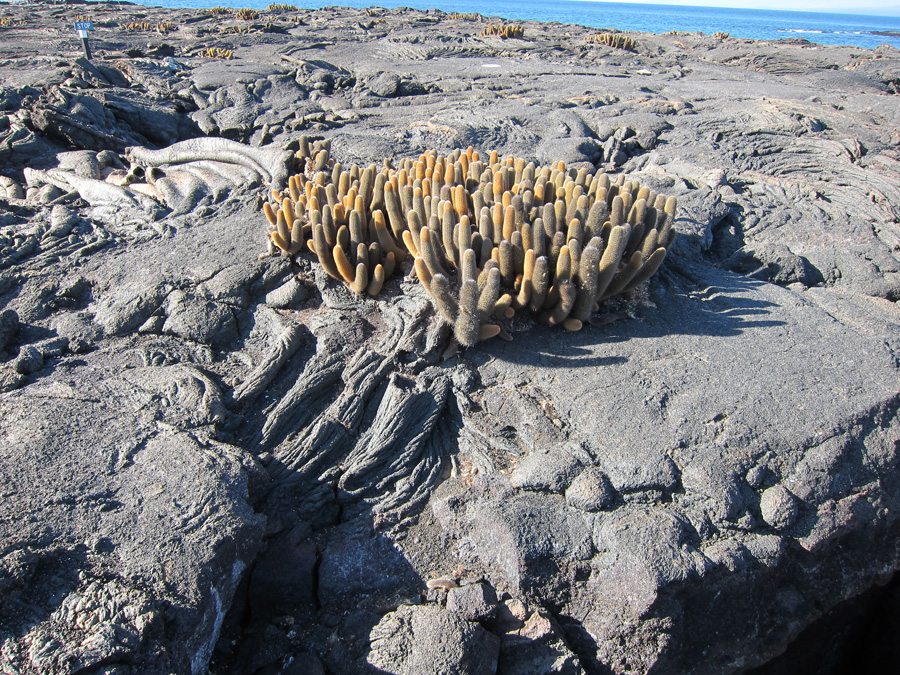
This Lava Cactus was really bazaar. How can a plant establish itself on a slab of what was once molten lava? lava? Mother Nature certainly is a miracle of persistence, and endless diversity. Note the interesting patterns in the lava. There are folds and swirls, as if you were stirring cake batter. Lava fascinates me. I am really looking forward to our trip next June to the Big Island of Hawaii. We have never been there, and I'm told told that you can walk out on the lava, which is still hot, and feel it moving up and down under your feet. I'm not from Missouri, but I'm definitely going to have to be shown that one.
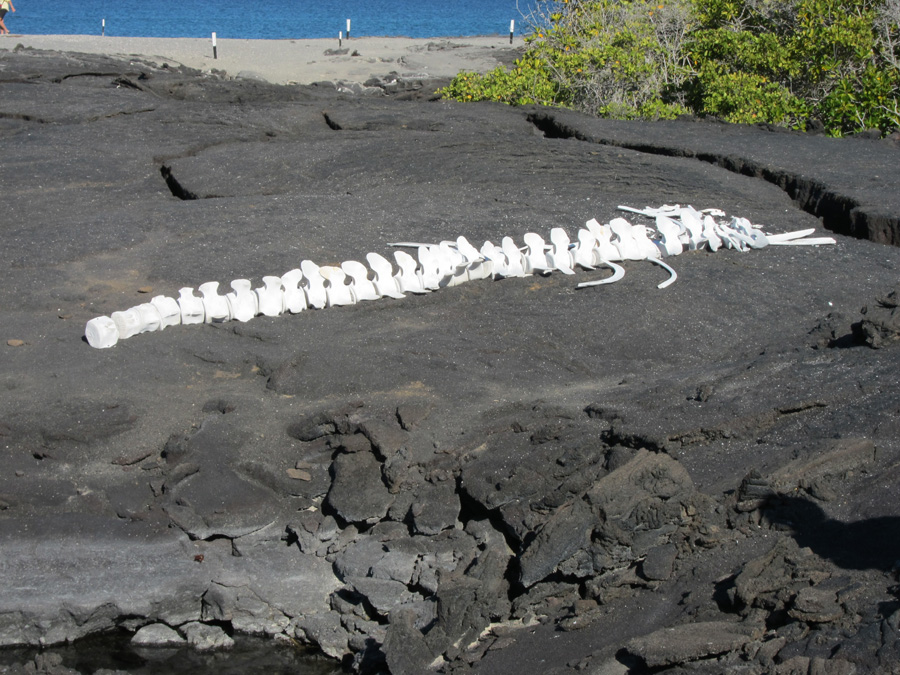
Javier told us that several years ago a small whale washed up on shore, and it's bones is all that was left when the creatures I've reached 4.6 MB. In Chapter Six we will be visiting James Island. |
||||||||||
|
||||||||||