|
|
|
|
|
|
|
|
|
|
|
||||||||
|
||||||||||||||||||
|
Email us at: |
||||||||||||||||||
 |
||||||||||||||||||
 |
 |
|||||||||||||||||
|
Click the sun to see the |
||||||||||||||||||


 |
||||||||||||
|
|
|
|
|
|
|
||||||
|
||||||||||||
|
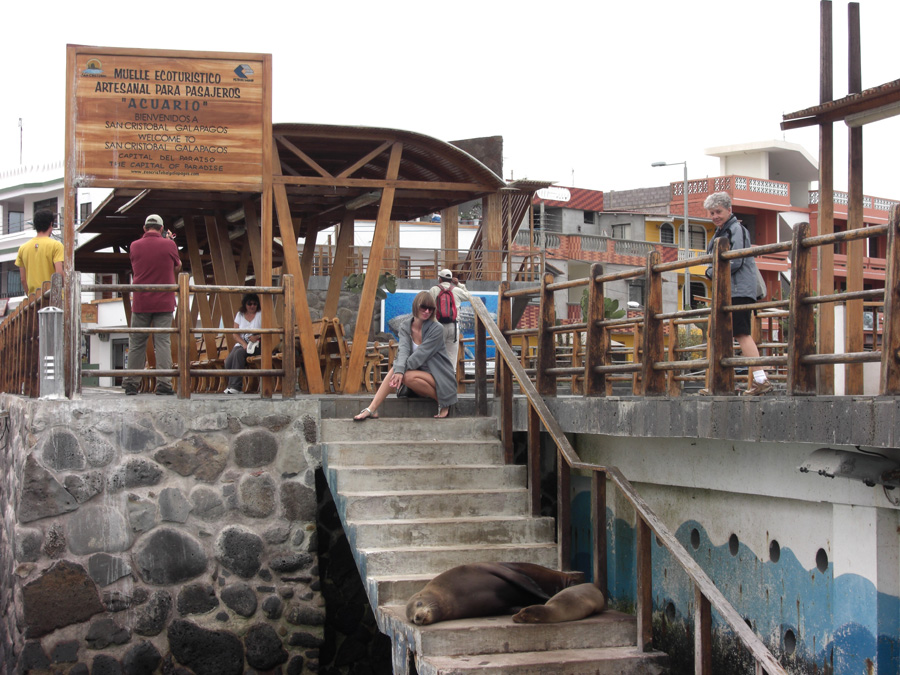
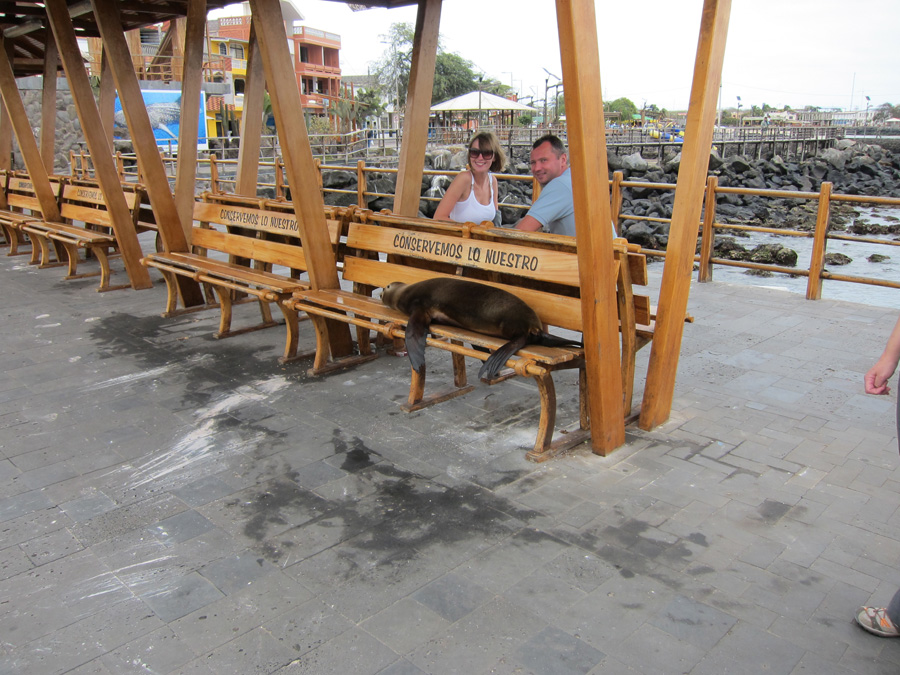
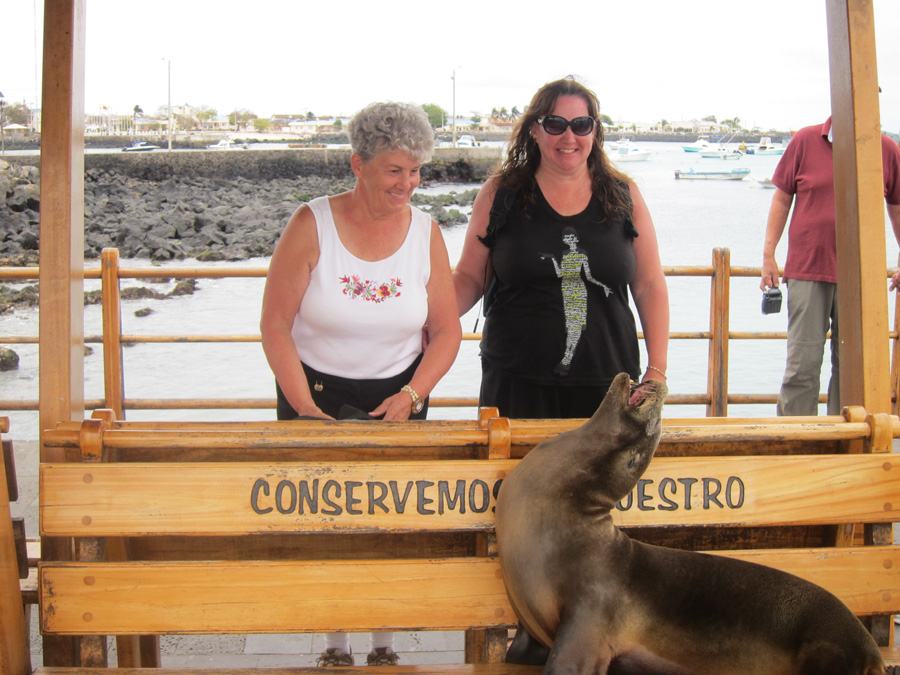
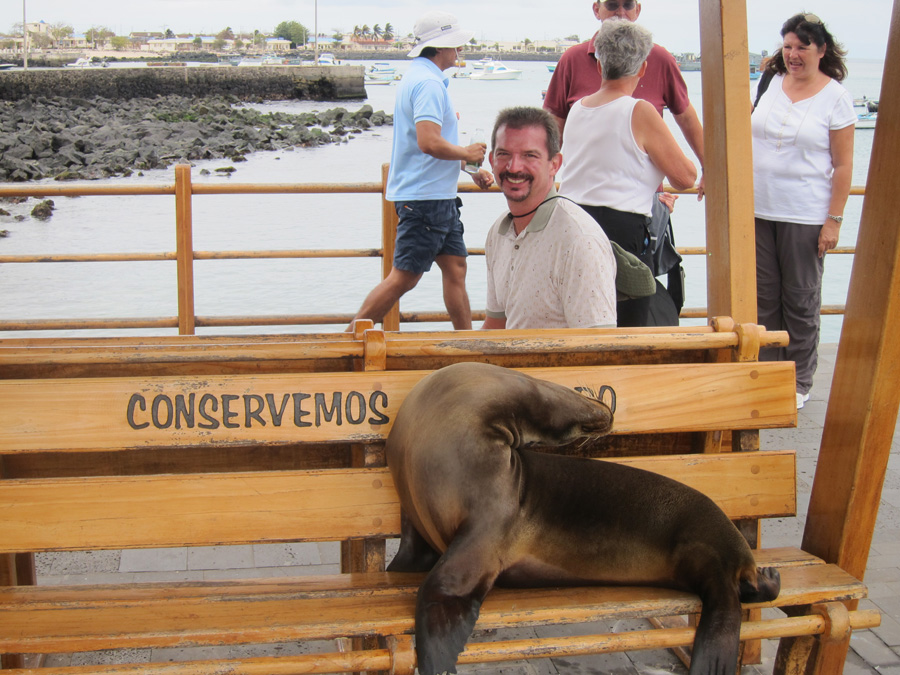
The sea lions pretty much took their naps anywhere they pleased. Even on the benches where we humans were supposed to sit.
Elina and Artur don't seem to mind the smell. Yes, it's like visiting the penguins in Antarctica, they
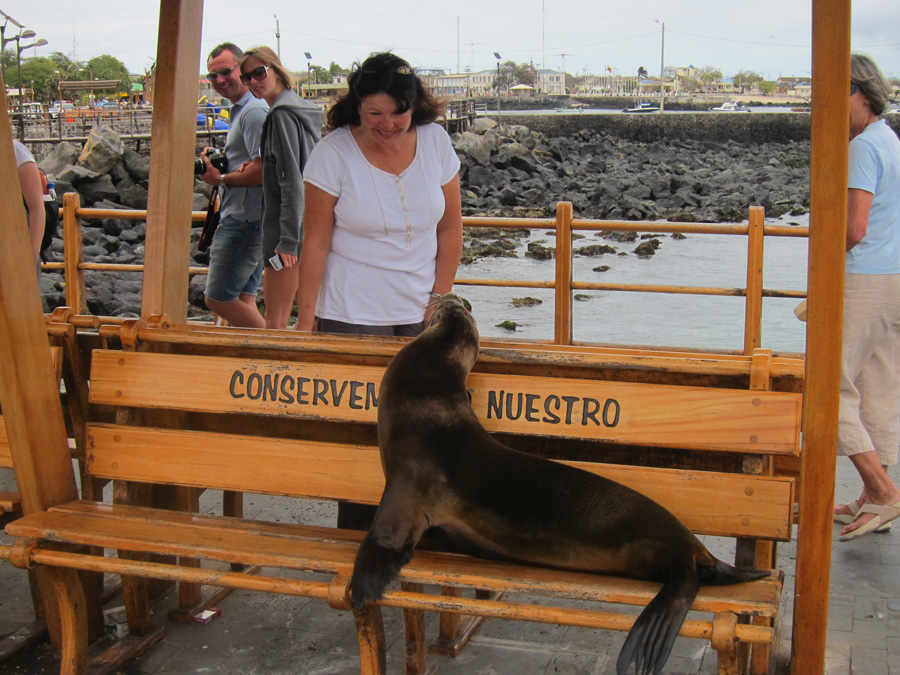
He seems to have taken a shine to Marlies.
Well, Marlies didn't fork over any fish, so he's begging from Tania and Peter.
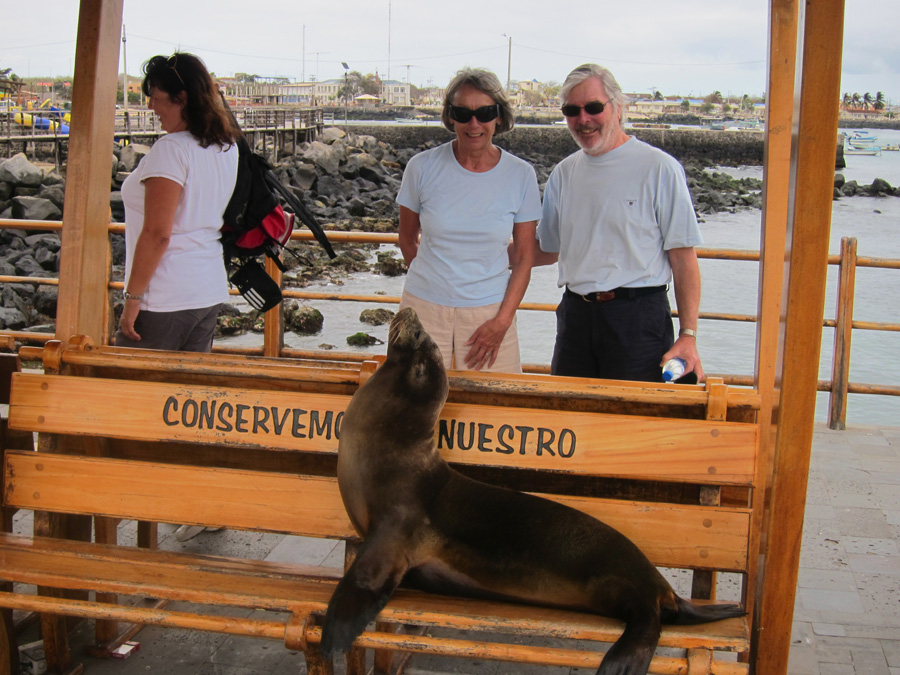
No luck with Tania and Peter, so he's playing his Ace card by singing for his supper for Julia and Laurena.
And with Pete he resorts to a little bit of acrobatics. Man I wish I was that flexible.
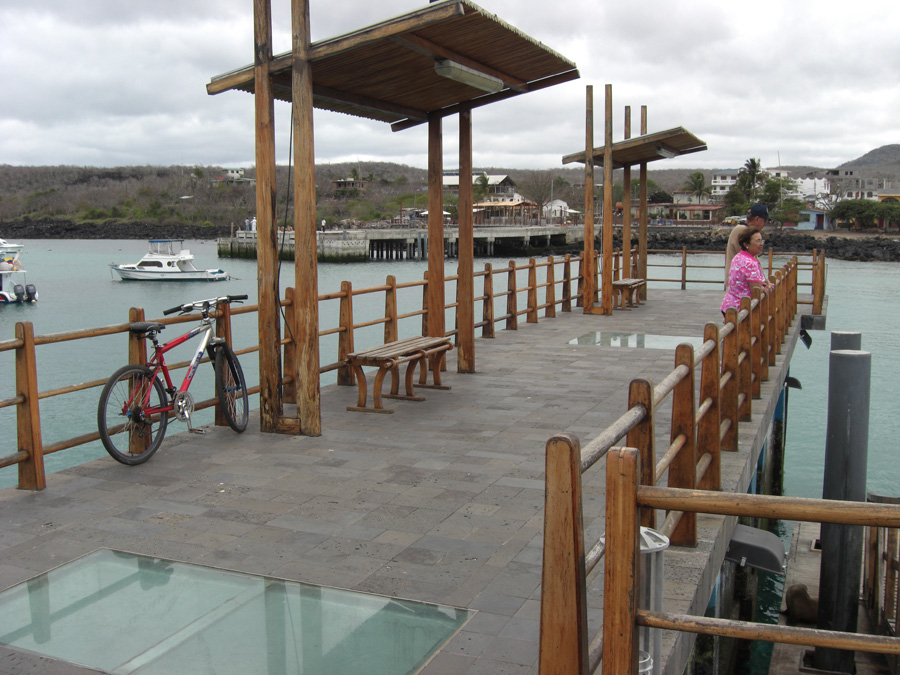
The pier was outfitted with plate glass in the floor. I was reluctant to walk on it, not wanting to take a plunge.
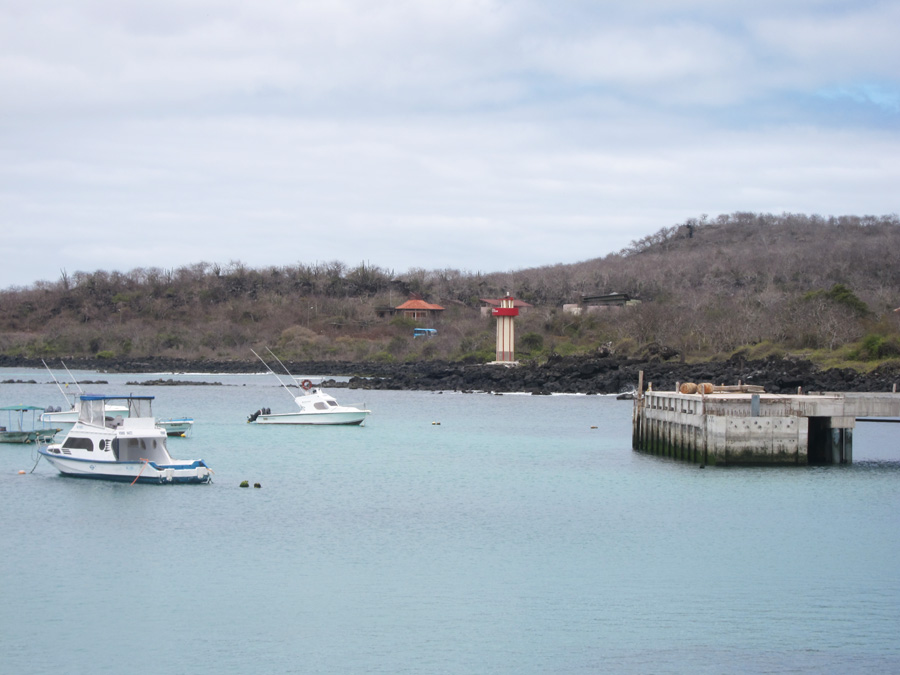
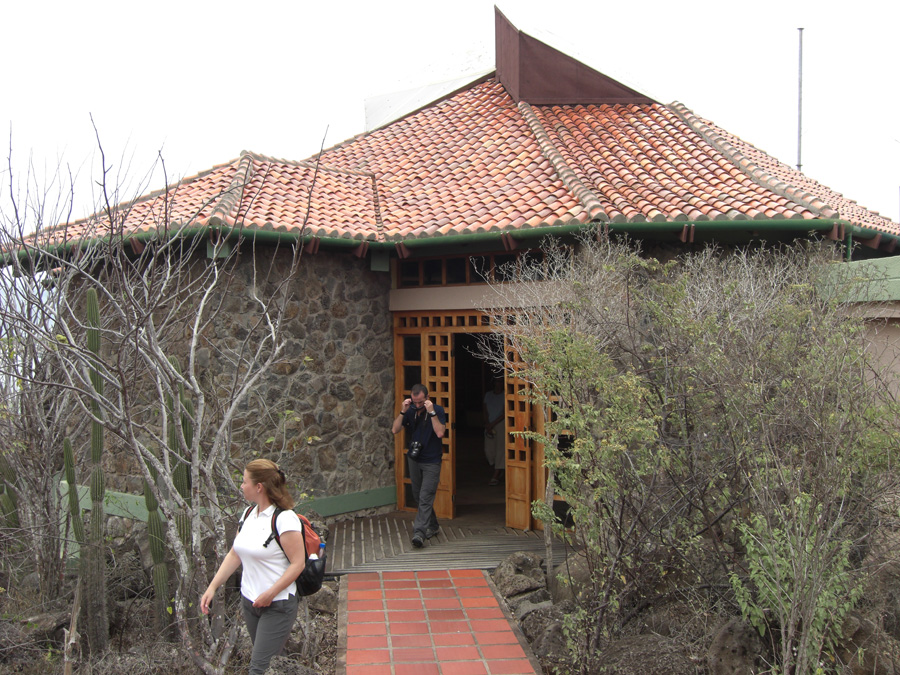
Looking across the bay you can see the building of the Interpretation Center nestled behind that red
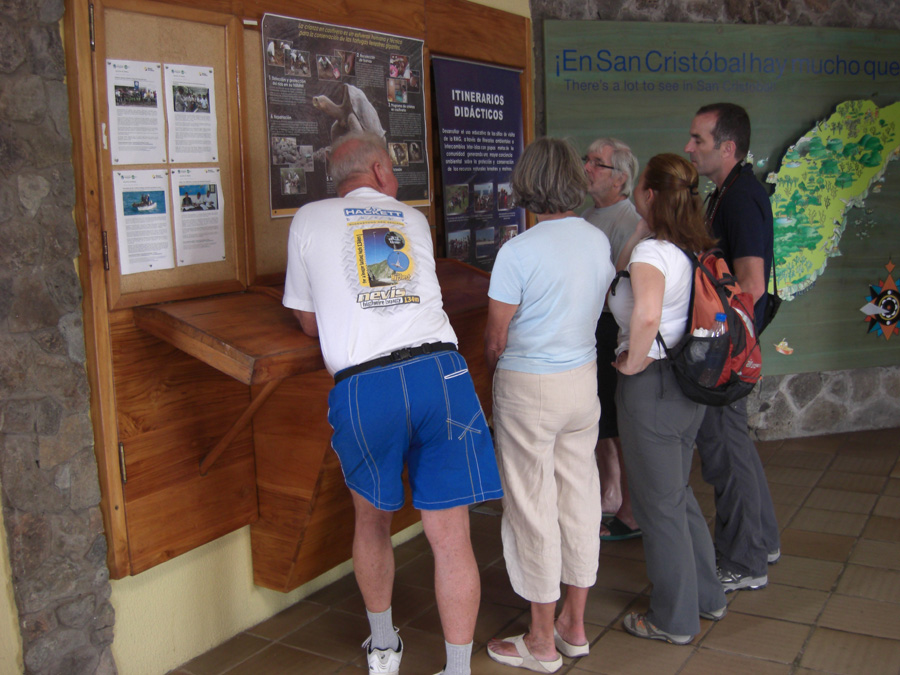
As I mentioned earlier, there was lots of interesting information to digest in the Interpretation Center.
The buildings at the Interpretation Center were rather unique compared to the rest of the buildings on the island.
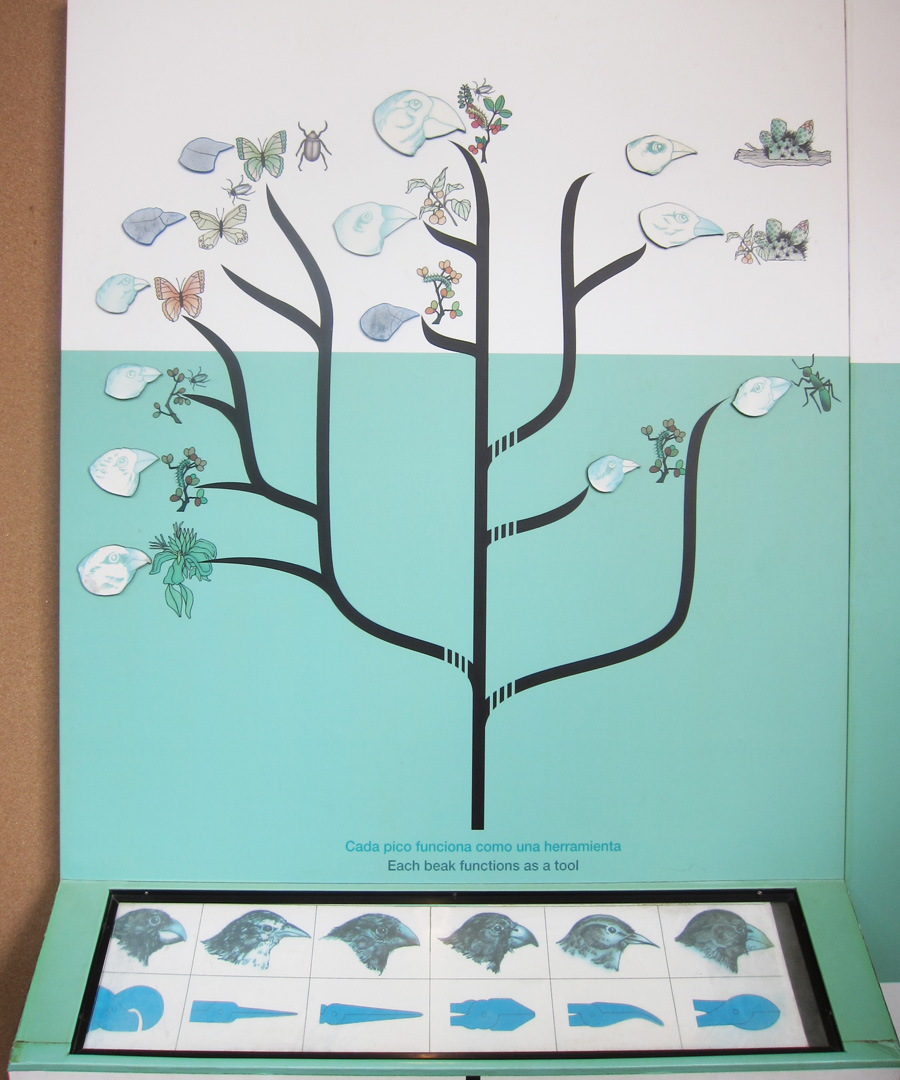
This illustration shows the various bird beaks which evolved over time in accordance with the
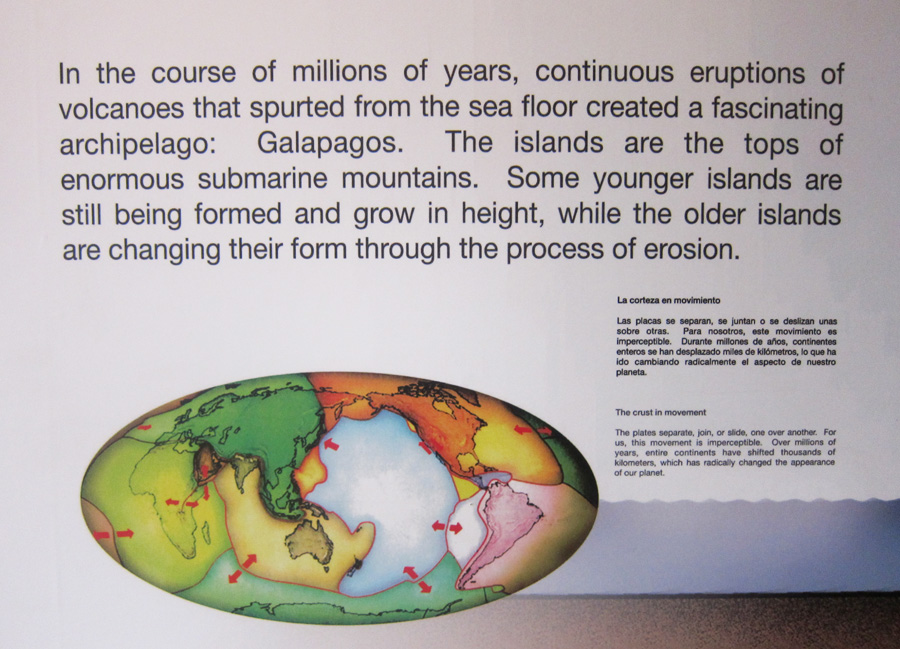
An illustration of the movements of the various tectonic plates.
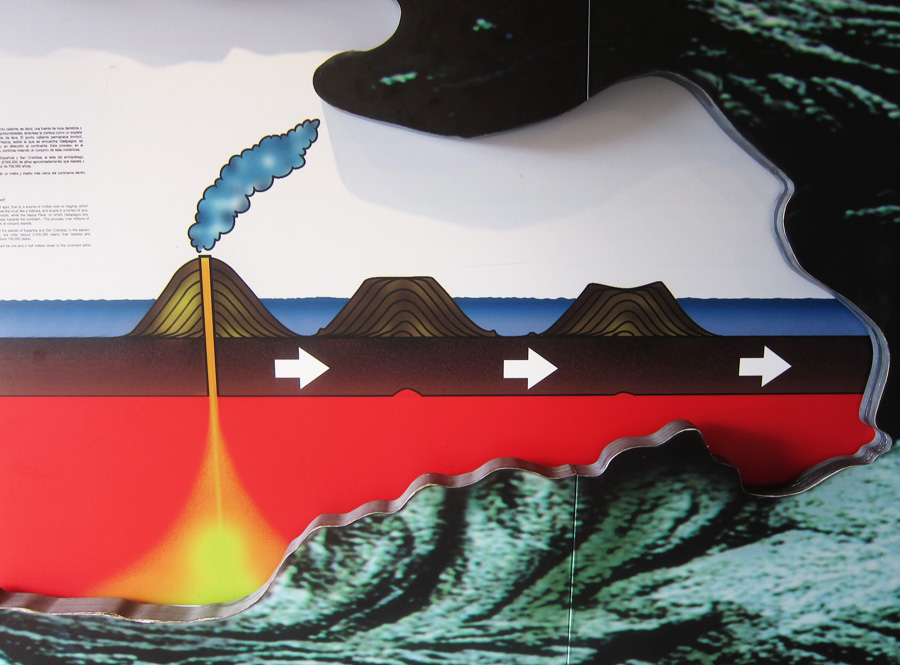
I had mentioned earlier about the formation of the Galapagos archipelago. This illustration makes it even clearer. Beneath Galapagos is a hot spot, that is, a source of molten rock or magma, which rises from the depths, pierces the crust like a bellows, and erupt in a torrent of lava. The hot spot remains immobile, while the Nazca Plate, on which Galapagos sits, moves 3 centimeters per year towards the continent. This process, over millions of years, has created a cluster of volcanic islands. This explains the fact that the islands of Española and San Cristobal, in the eastern part of the archipelago, are older (abut 3,000,000 years) than Isabela and Fernandina in the west (about 700,000 years). Just imagine! These islands will be one and a half meters closer to the continent within 50 years. I've been putting a lot of photos in this DAY SEVEN travelogue, and am not at 4.3 MB. More to follow
|
||||||||||||
|
||||||||||||