 |
|
|
|
|
|
|
|
|
|
|
||||||||
|
||||||||||||||||||
|
Email us at: |
||||||||||||||||||
 |
||||||||||||||||||
 |
 |
|||||||||||||||||
|
Click the sun to see the |
||||||||||||||||||


|
 |
|
|


|
|
|
|
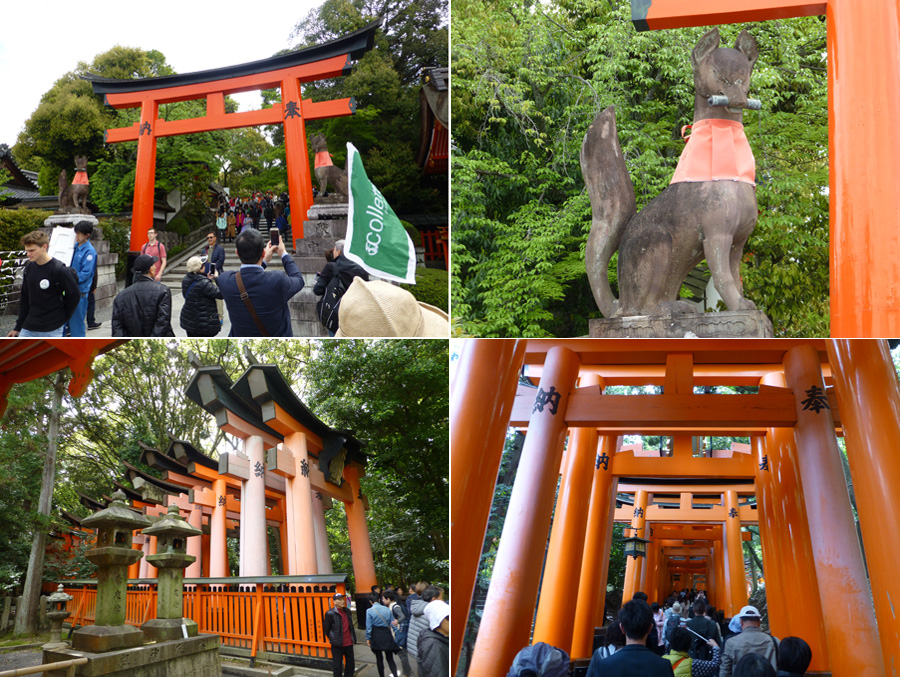
It is still Day 10, and we are headed for the Fushimi Inari Taisha. This is the head shrine of the god Inari, and was established in 711 AD. Inari Okami has been worshiped as the deity who provides the people with the food, clothing, and housing that support life and who brings abundance and joy. Shintoism began with a form of mountain worship in which Inariyama was designated as a kamnabi, a place in nature where a deity is enshrined.
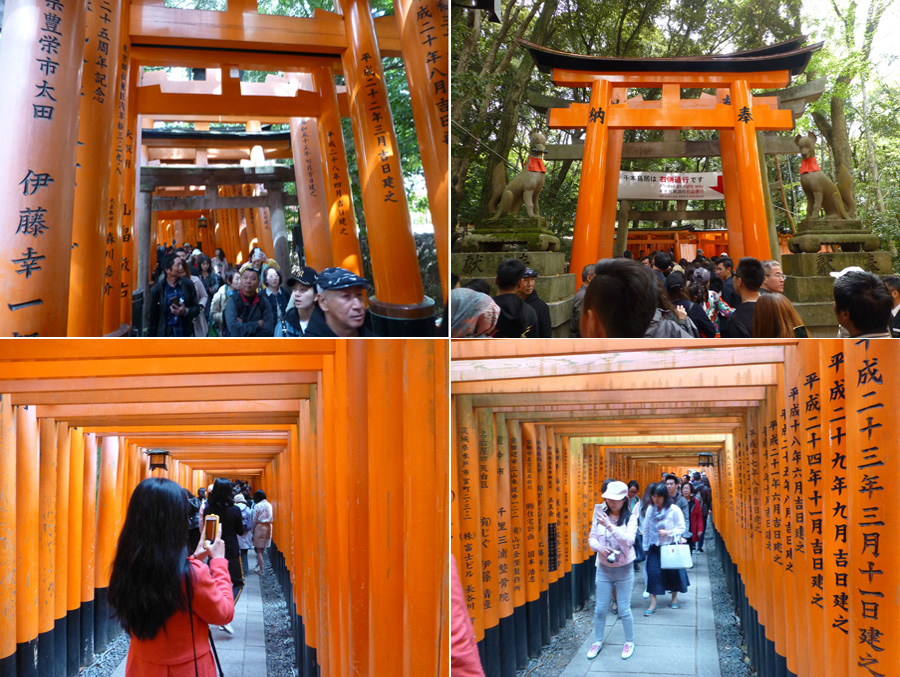
Worshipers have donated tori gates to express prayers and appreciation since the Edo period (1603-1868), and Fushimi Inari Taisha is now famous for its Senbon Torii “Thousand Torii” gateways.
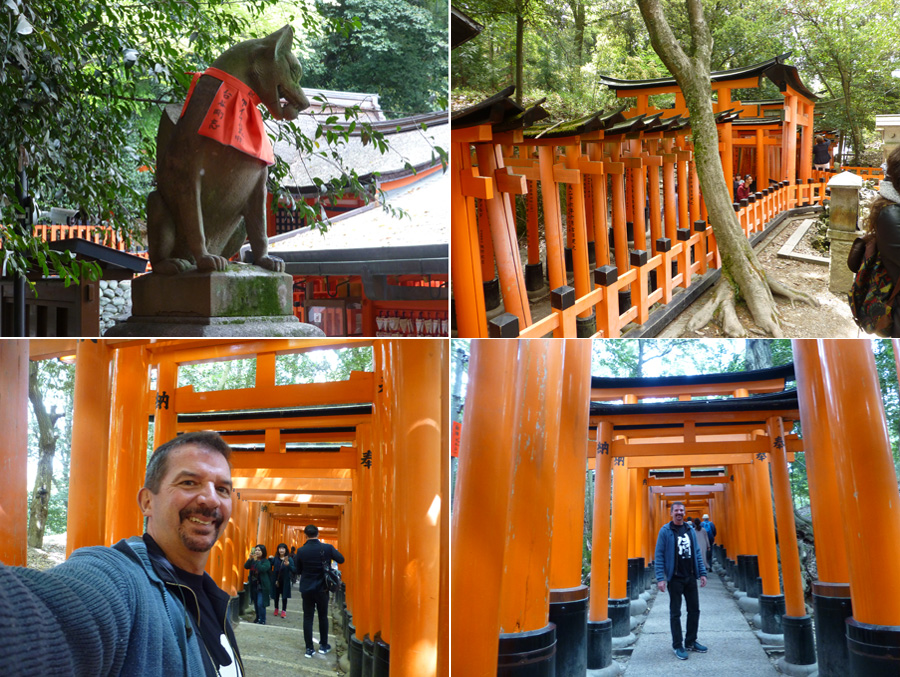
Passing through the torii gates in one direction shows them as blank, while in the opposite direction you see the inscribed prayers on each one. I like the temple dog with the ball in his mouth. That makes him appear to be quite a playful creature.
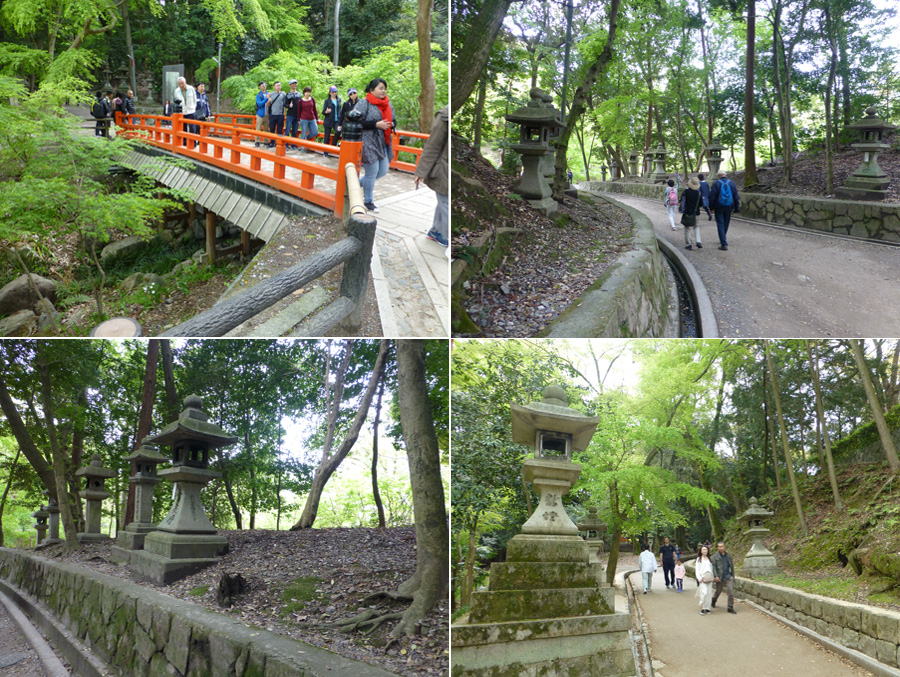
The torii seem to go on forever. Pete’s selfie views the torii from the entrance direction and they are quite impressive. Leaving the shrine you see lots of stone one story pagodas along the path. The forest is ancient, and quite beautiful.
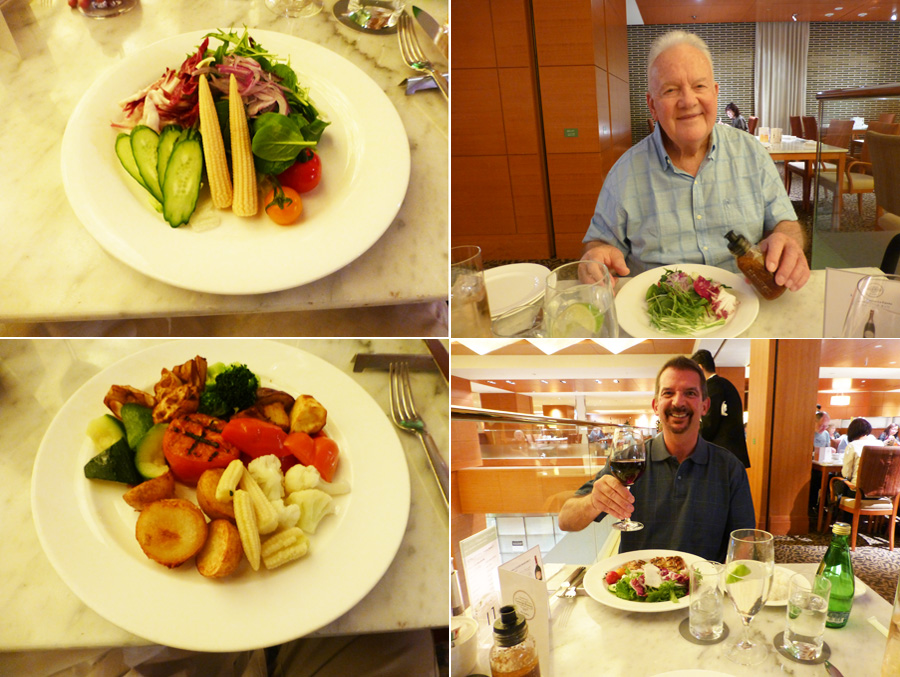
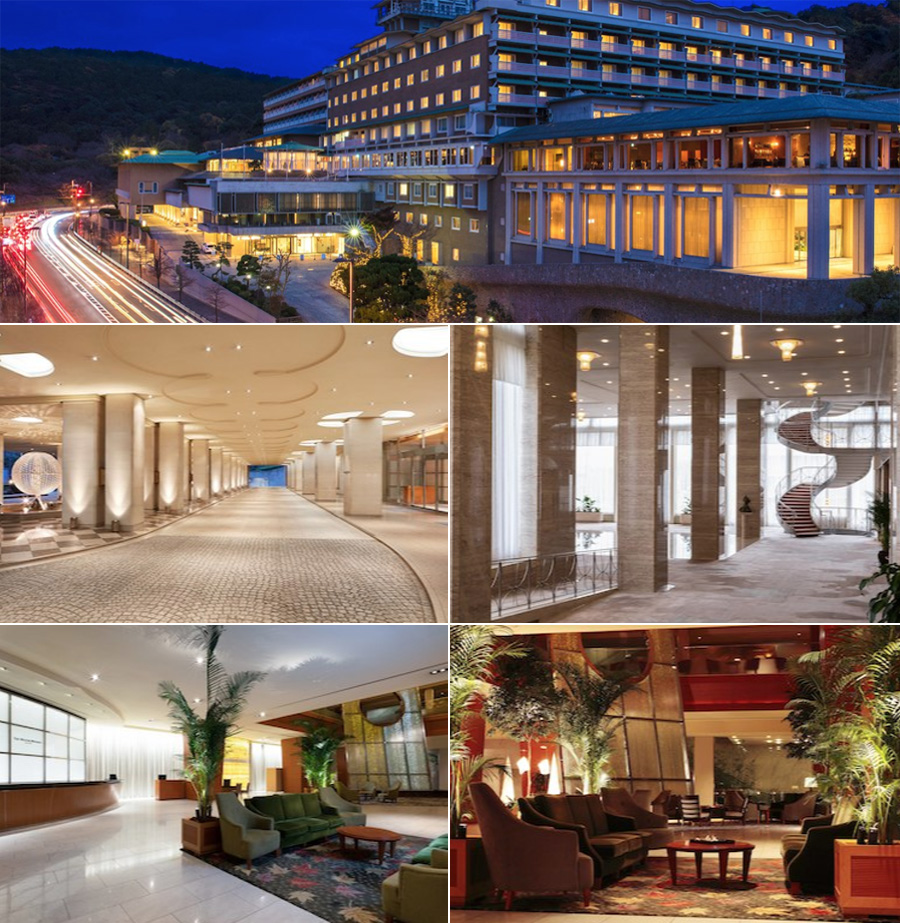
Like much of Japan, you feel the peace and tranquility of nature, which is well preserved for future generations. Pete and I enjoyed a very pleasant dinner in one of the hotel’s restaurants. We were staying at the Westin Miyako Hotel, and it was pretty luxurious. It had several restaurants, one specializing in Japanese cuisine and another in Chinese cuisine. We tried both since we were staying there for 4 nights.
I will say this, the accommodations selected by Collette for this tour were pretty outstanding. Take a look at a few photos of this hotel. The drive up entrance was quite impressive, and the lobby was very cool. Our room was more than comfortable.
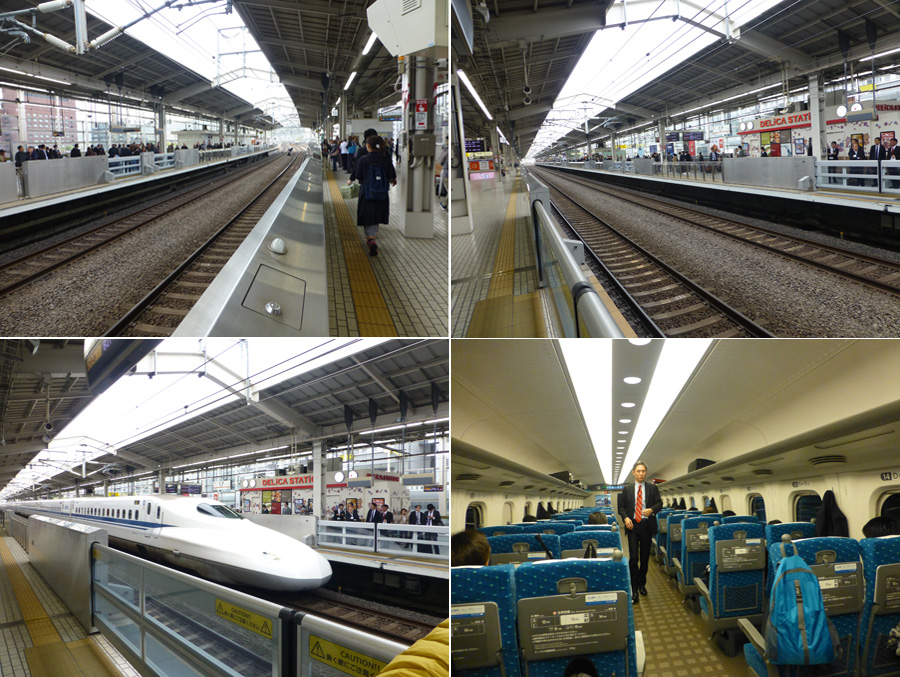
Day 11, Tuesday 17 April 2018. The next morning at the train station, anticipation was high as we waited for the Shinkansen bullet train to arrive and take us to Hiroshima.
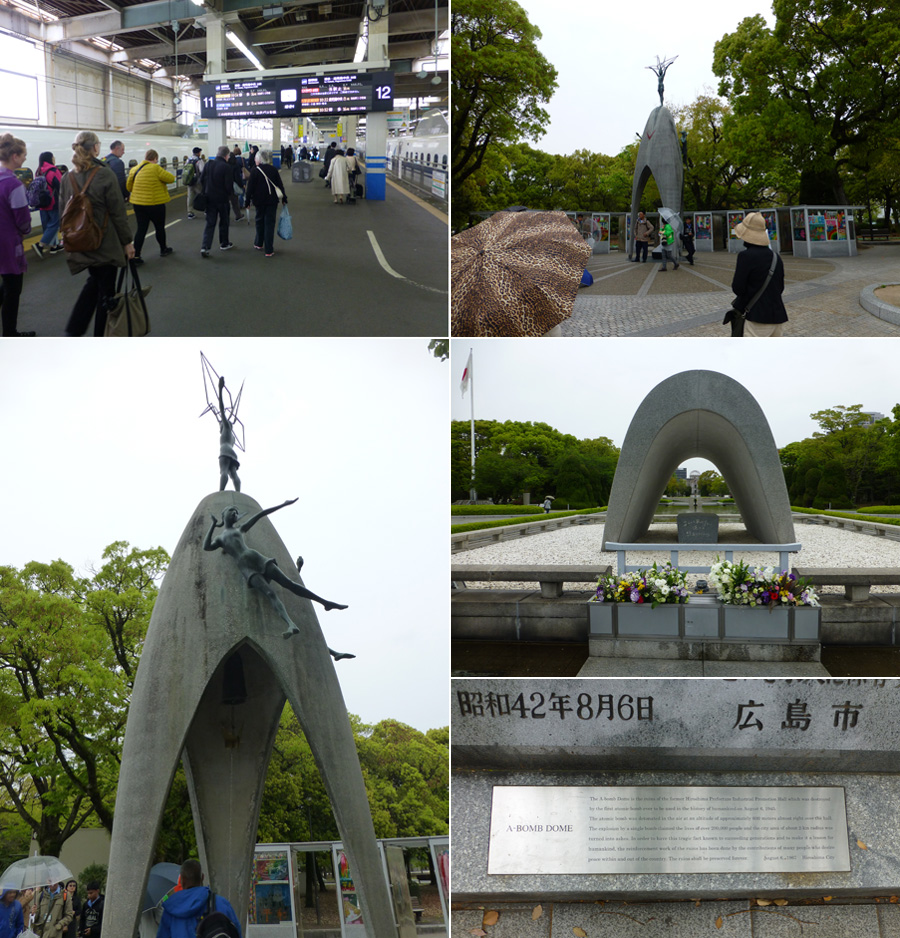
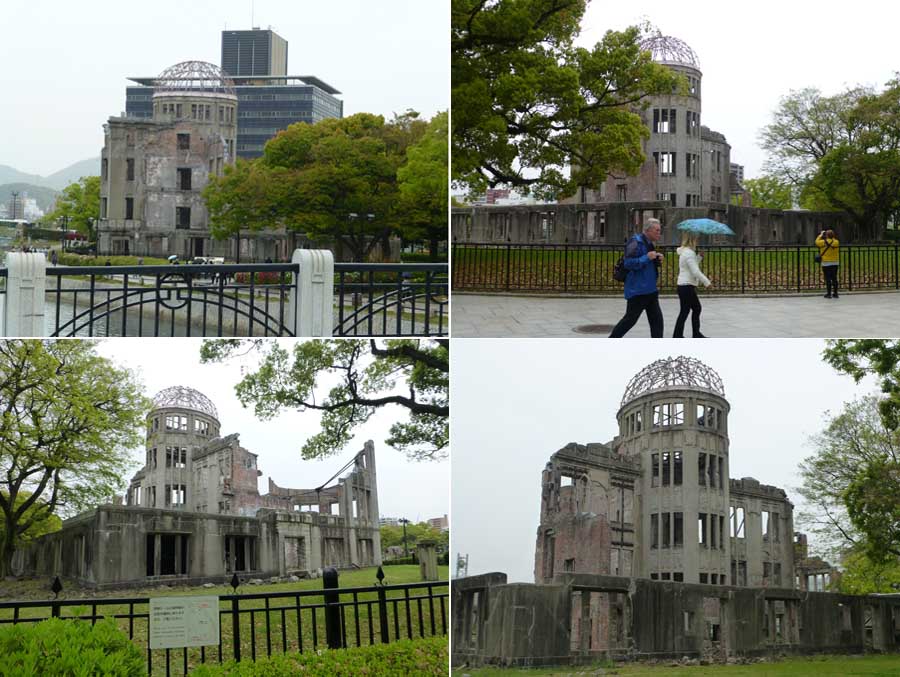
There was no disappointment as the sleek train pulled into the station. Too bad airplanes can’t be as spacious in economy as the accommodations were on board this train. Leaving the train in the Hiroshima station, Niko guided her brood on a tour of the city. This inspiring monument to the quest for peace was a fitting reminder of why war is a bad idea.
I am totally convinced that if it was required that all of the politicians, including the president and his administration were to be in the first wave of attack in any war against another power, there would never be another war. The “A-bomb Dome” plaque above is too small to read, so I will type it here. “The A-bomb Dome is the ruins of the former Hiroshima Prefecture Industrial Promotion Hall which was destroyed by the first atomic bomb ever to be used in the history of humankind on August 6, 1945. The atomic bomb was detonated in the air at an altitude of approximately 600 meters almost right over the hall. The explosion by a single bomb claimed the lives of over 200,000 people and the city area of about 2-km radius was turned into ashes. In order to have this tragic fact known to succeeding generations and to make it a lesson for humankind, the reinforcement work of the ruins has been done by contributions of many people who desire peace within and out of the country. The ruins shall be preserved forever. August 6, 1967 Hiroshima City” If you have ever visited the Arizona Memorial in Hawaii, you must have felt a deep sorrow within your body, to realize that you were actually standing on the grave of hundreds of sailors who are forever entombed within the bowels of this massive battleship. When you think about an atomic bomb being detonated over your city, and what it must have been like for the people of Hiroshima on that historic day, August 6, 1945, you must also feel that same deep sorrow within.
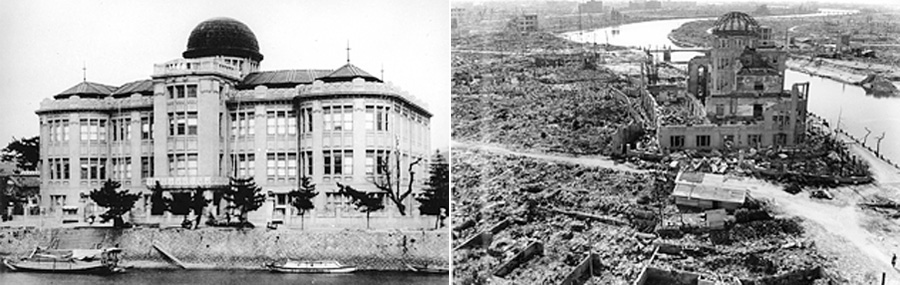
These before and after shots vividly portray the devastation done by a single bomb. At the time the a-bomb was dropped on Hiroshima in 1945, the science of nuclear weaponry was in its infancy. Today a single bomb could cause perhaps a thousand times more devastation.
It is a very precarious path we are on, to even contemplate the possibility of another war.
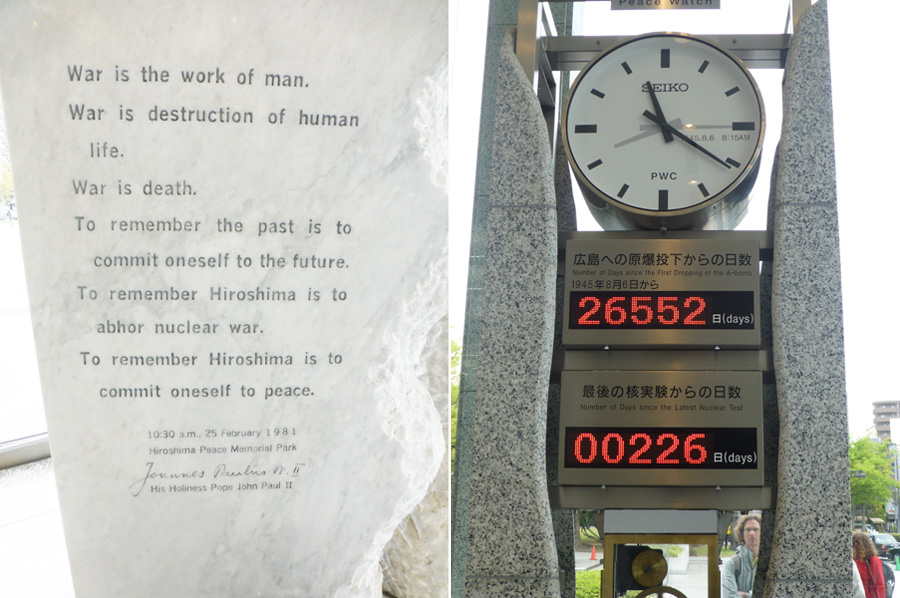
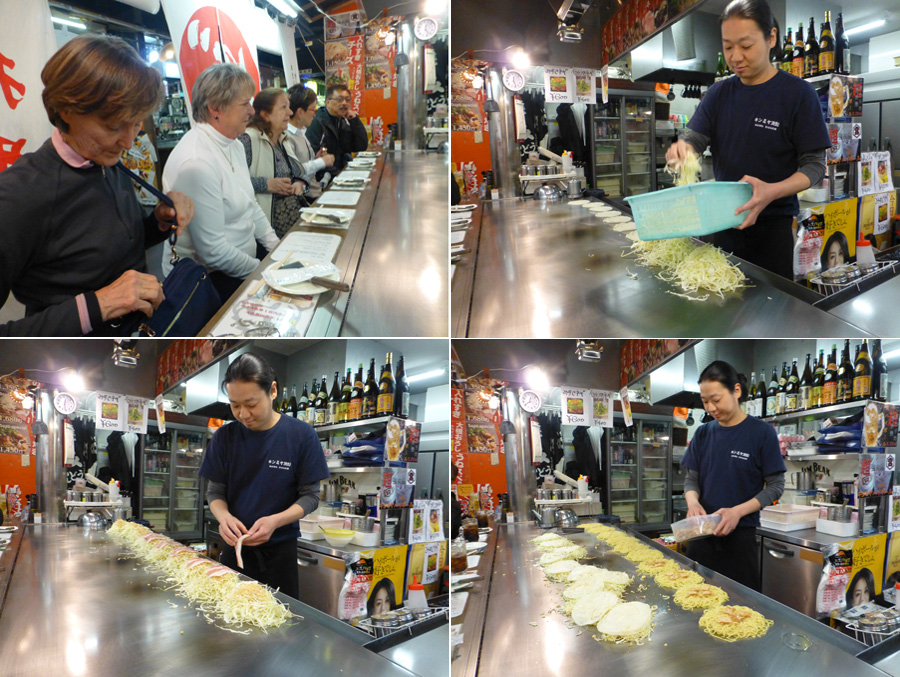
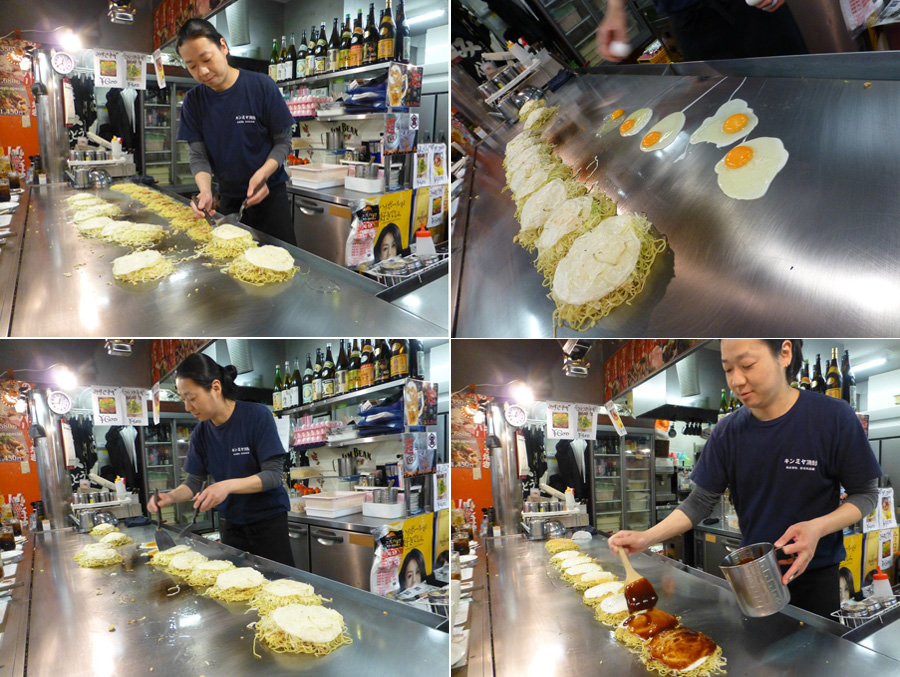
The pope had a few words to day in 1981, but the Seiko clock speaks volumes more than the pope did. 26552 is the “Number of Days since the First Dropping of the A-bomb”, and 00226 is the “Number of Days since the Latest Nuclear Test”. Have we learned NOTHING? Apparently not, and now the nuclear trigger is in the hands of a certified nutcase. The only fit words that come to mind are Lord please help us all. Lunch was a special treat. You got to watch it being prepared in front of you, like tepan cooking but without the knife throwing and burst of flames. The chef started with a pancake and covered that with a mound of cabbage.
Then some bacon, turn it over, and create a mound of noodles. Something I cannot describe was put on the noodles. The cabbage was placed on top of that, and an egg was added to the grill. It’s starting to look really good.
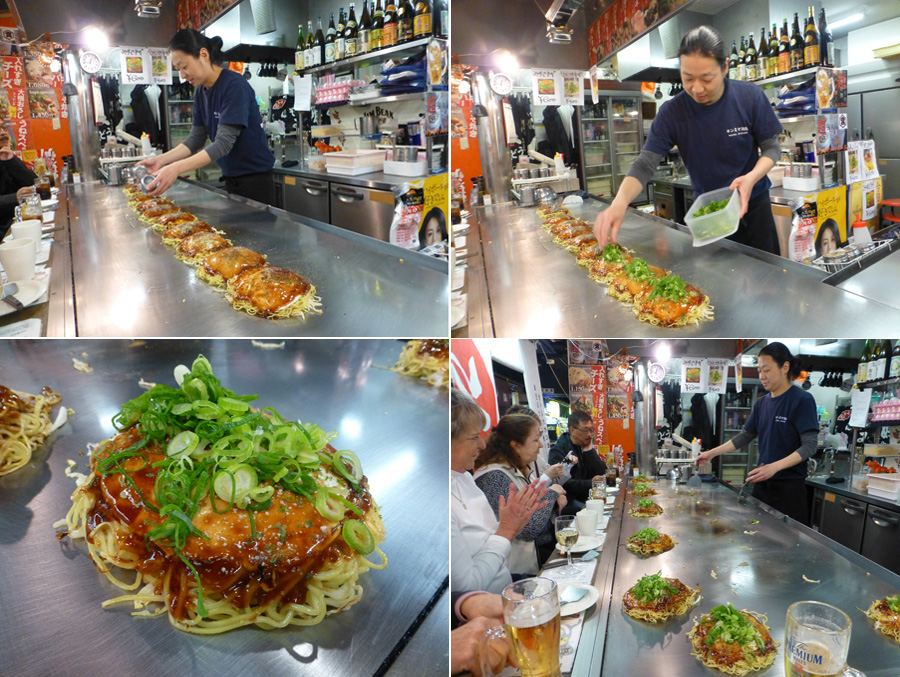
The mound of cabbage and noodles was placed on top of the egg, and then the top was brushed with some brown goo, which Pete didn’t care for. The Japanese seem to love this gooey brown soy mixture on many things. It was topped off with spices and sliced green onions.
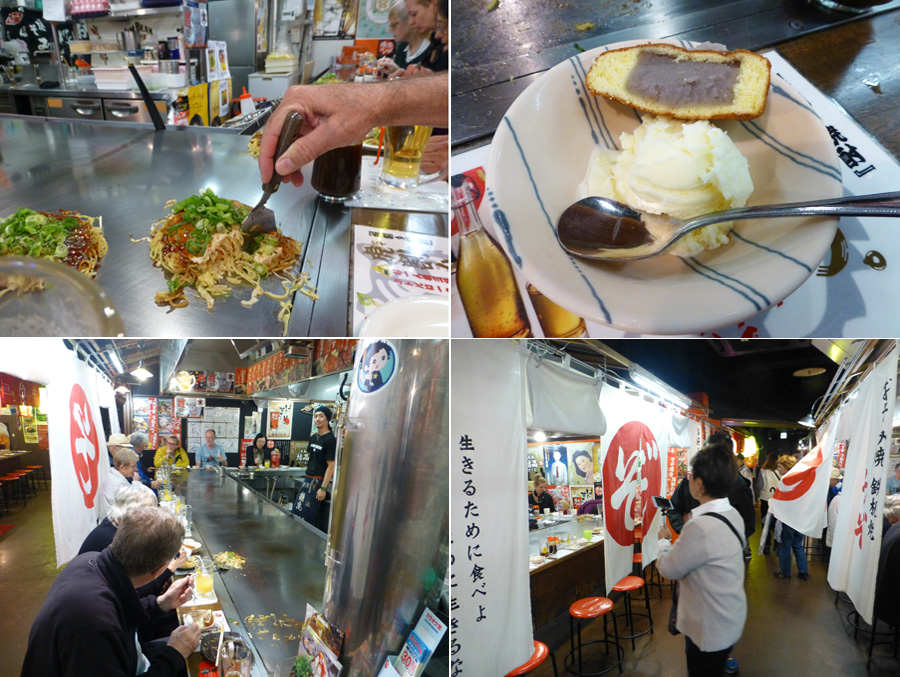
Everyone seemed delighted with the results, and probably hungry enough to eat it no matter what it tasted like. The ice cream and cake was a nice finish to the meal.
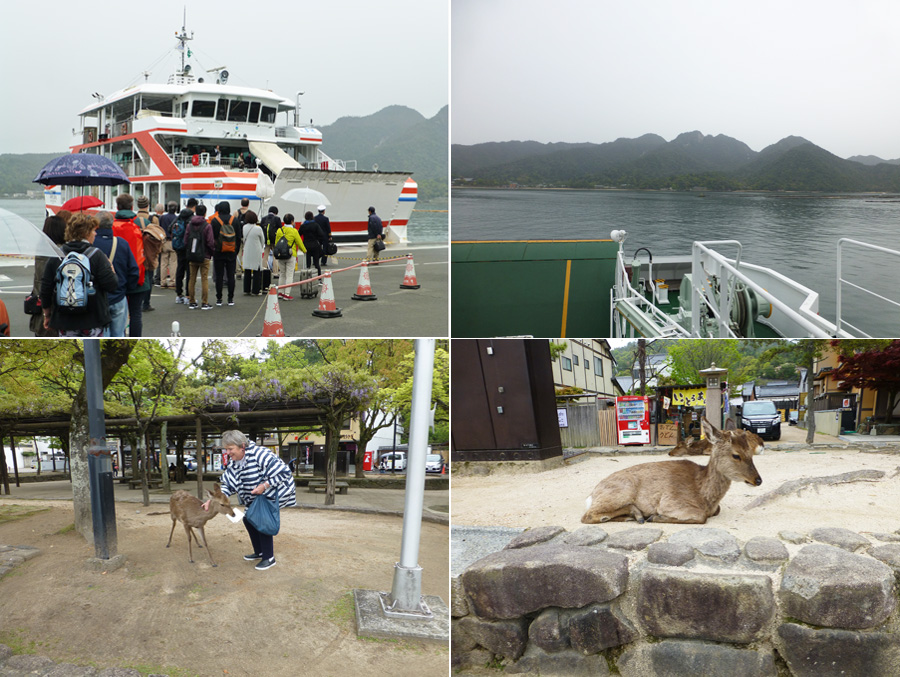
Next we took a ferry to cross the bay to the island of Miyajima, also known as Itsukushima, located in Hiroshima Bay.
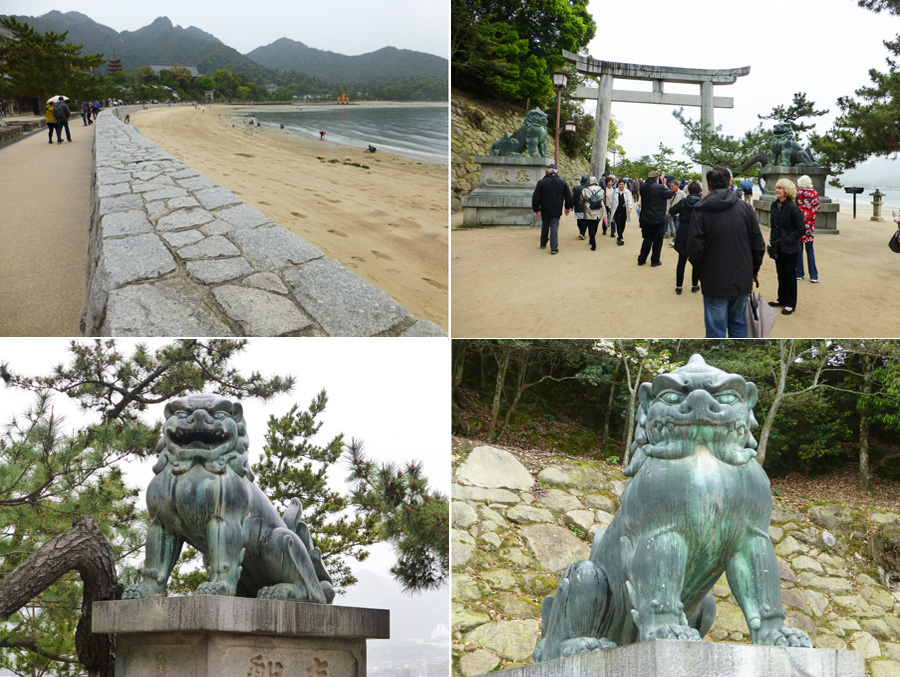
There were lots of deer on the island, and you weren’t supposed to pet them, but people did it anyway. How can anyone resist a soft furry animal that looks a lot like Bambi, but without the fawn spots.
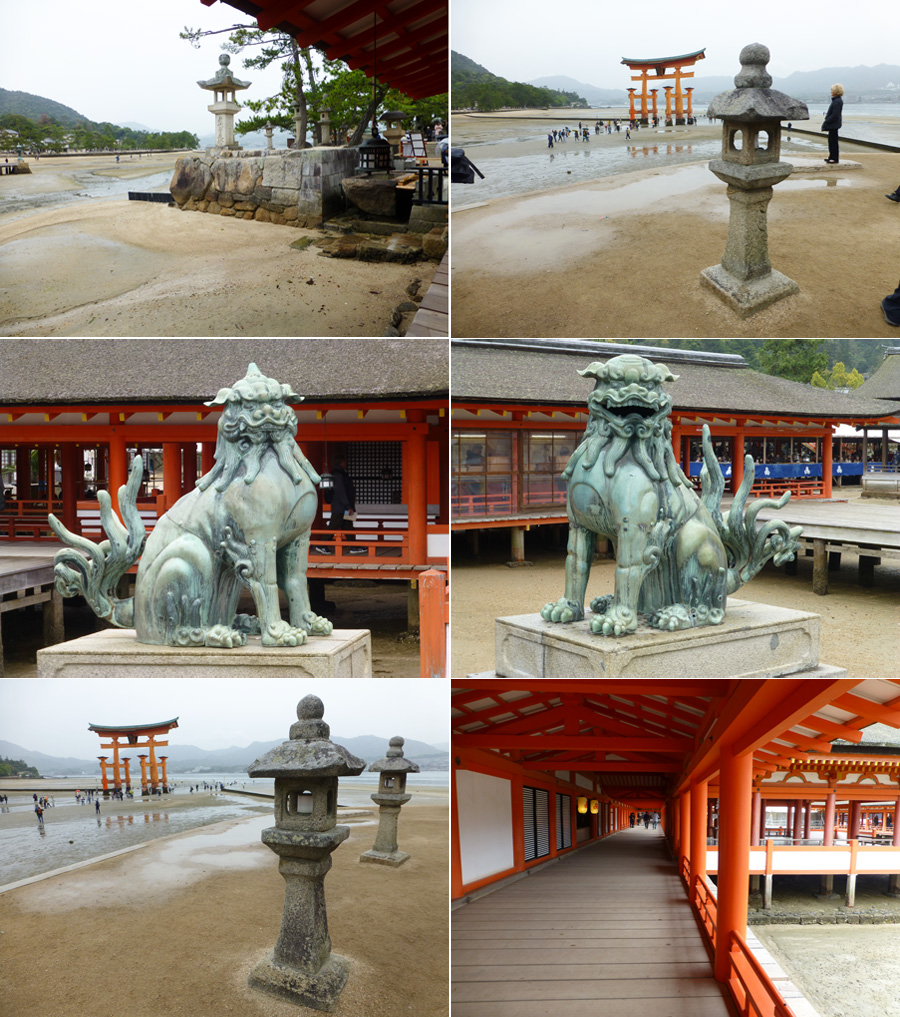
I think Flower was my favorite character. Off in the distance you can see the Great Torii Gate, which is the entrance to the shrine. There are always a pair of temple dogs (also known as Shishi, the word translating as “Lion") guarding the entrance to Shinto shrines and Buddhist temples. Curiously, one always has his mouth open, and the other one it is closed. A little Google research revealed that the open/closed mouth relates to Ah (open mouth) and Un (closed mouth). “Ah” is the first sound in the Japanese alphabet, while “N” (pronounced “un”) is the last. These two sounds symbolize beginning and end, birth and death, and all possible outcomes (from alpha to omega) in the cosmic dance of existence. You learn something new every day. That’s why I love traveling, it is so enlightening.
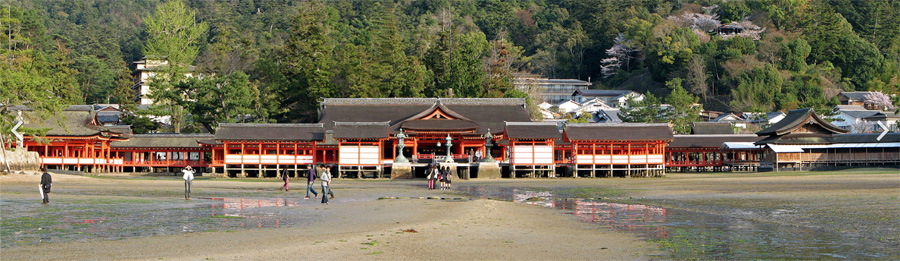
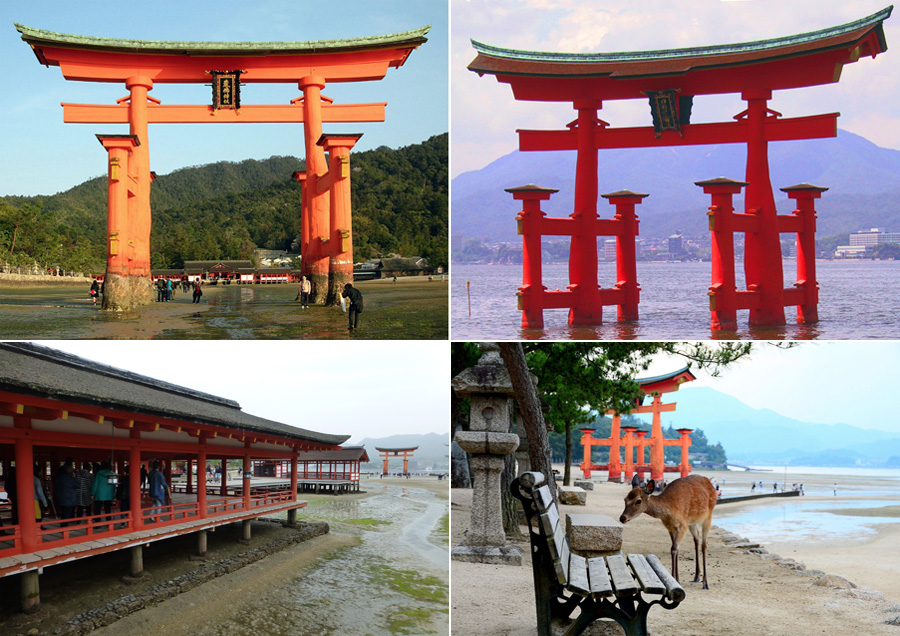
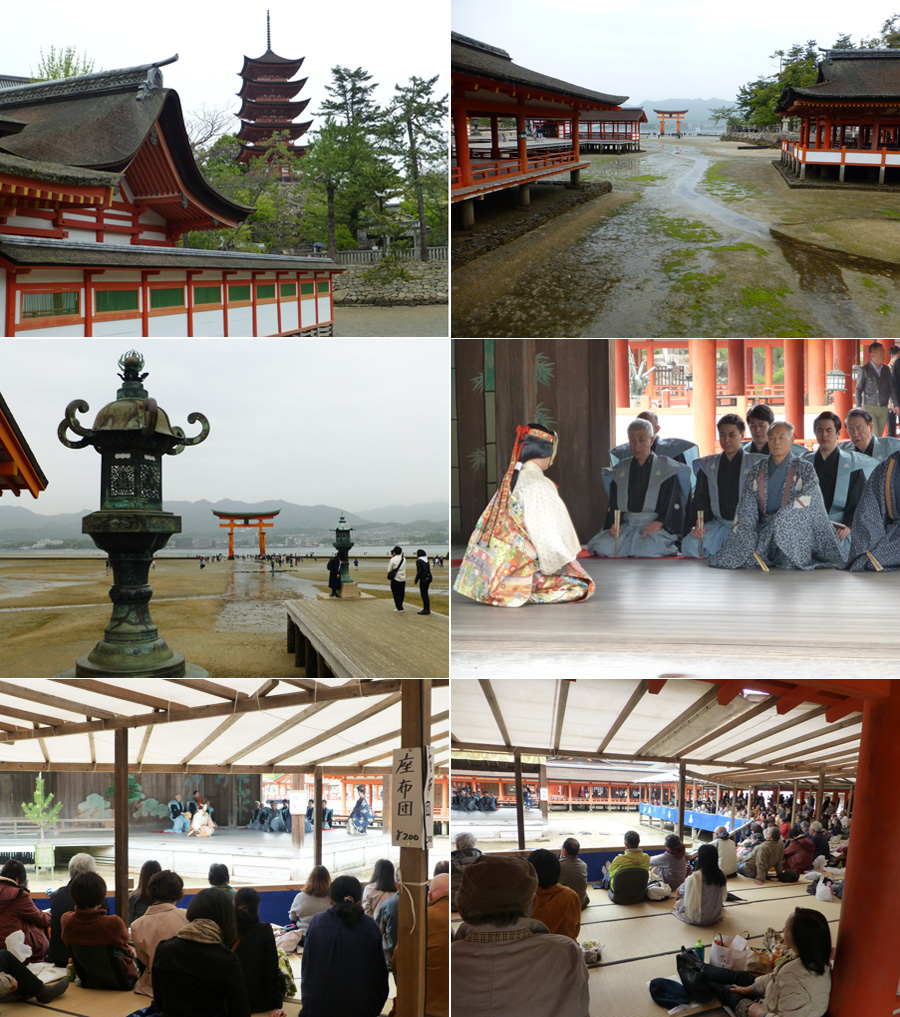
The giant orange Great Torii Gate is partially submerged at high tide. It marks the entrance to the Itsukushima Shrine. We have arrived at low tide so we can walk out to the base of the torii. The Itsukushima Shrine has been destroyed several times in the past. The first shrine buildings were probably erected in the 6th century.
There are records that in the year 1168, a Shinto priest, Saeki Kagehiro, had rebuild and expanded the buildings, to their current configuration. Those buildings were destroyed by fire in 1207, rebuilt again and in 1223 were once more destroyed by fire. They were then reconstructed again in 1241 and it is that reconstruction that we see at the shrine today. A view of the torii at low tide . . . . . . and a view when the tide is in.
Looking at the base of the torii, and the water mark and the people standing by the base, it appears that the tidal change is about 8 feet. The small deer seem to appear out of nowhere. It looks like venison to me. ;o) Note the temple dogs mouths below. “Un” and “Ah”. ;o)
As we passed through the shrine there was some sort of ceremony or dramatization going on. It was not a part of our tour.
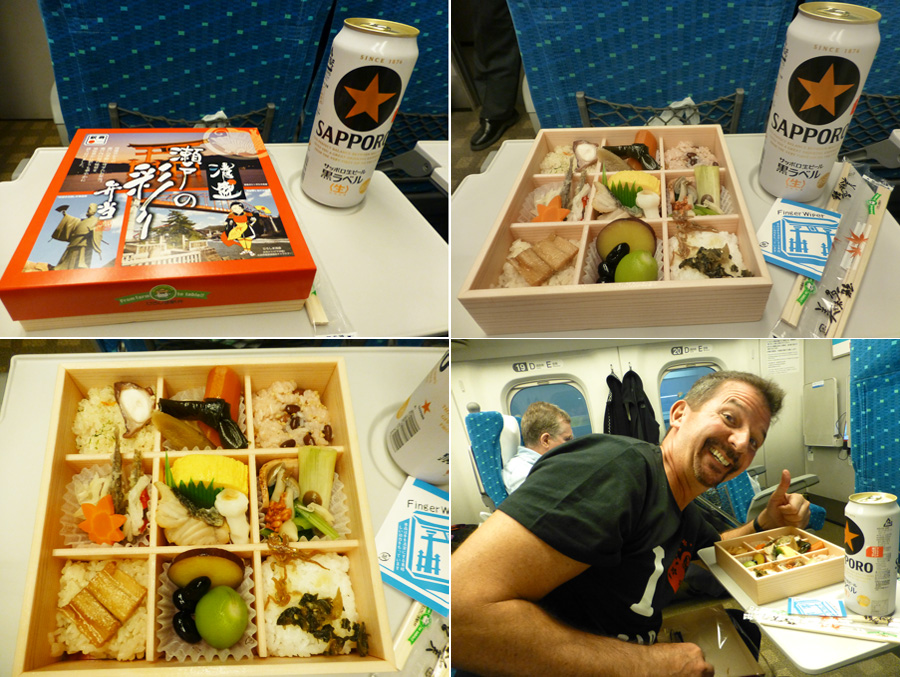
It did look rather interesting though, and there was quite a gathering of tourists seated and watching it. Our day ends, and we return to the train station for our Shinkansen bullet train trip back to Kyoto. Lunch was on us for the trip back, and Pete found this interesting shop selling beautiful bento boxes, so he got one for the train. He said that everyone else bought a sandwich and chips in the shop next door. He asked Niko if it was ok to take a beer on the train, and she said of course, all the businessmen on their way home did the same. So Pete bought my favorite Japanese beer, Sapporo.
The bento box looked really good, and Pete was obviously delighted with his lunch. I wish I could have been there. This concludes our Collette Japan - Cultural Treasures tour, and since I had booked our return flight from Tokyo instead of Osaka, we had to take the Shinkansen train from Kyoto to Narita, which actually turned out to be easier than we had anticipated. We had a wonderful trip, all things considered, and as always, it was good to be returning home. To quote Dorothy in The Wizard of Oz, “There is no place like home." |

|
|||
|