 |
|
|
|
|
|
|
|
|
|
|
||||||||
|
||||||||||||||||||
|
Email us at: |
||||||||||||||||||
 |
||||||||||||||||||
 |
 |
|||||||||||||||||
|
Click the sun to see the |
||||||||||||||||||


|
 |
|
|



|
|
|
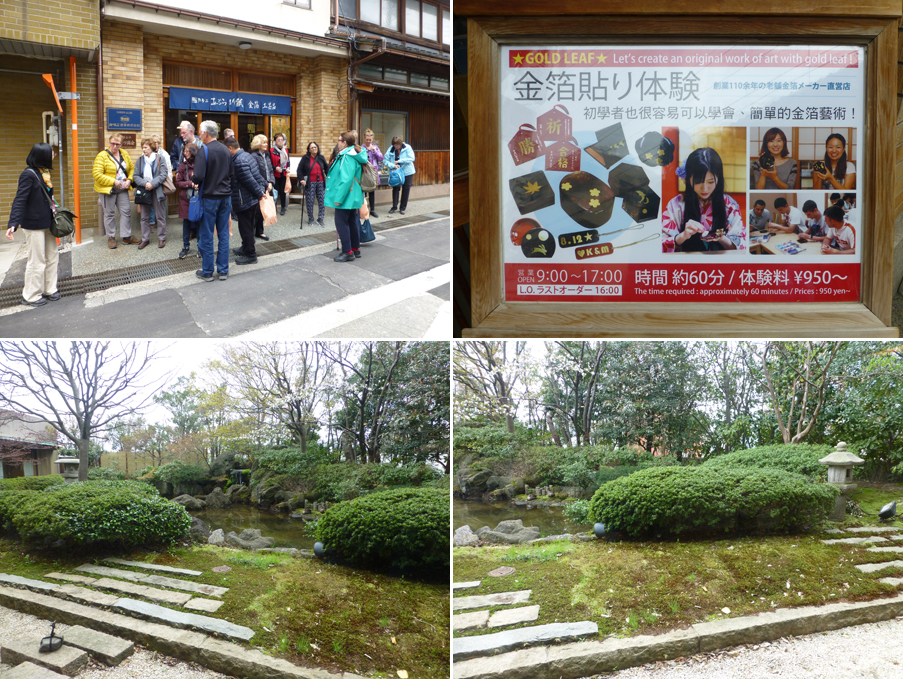
This is our Day 9 (15 April 2018), and Niko took us shopping for Japanese treats. Neither Pete or I took photos, as we have tons of photos of little shops with “Japanese treats”, so instead we waited until Niko took us to this little Japanese restaurant for lunch. We did take a photo of the advertisement for the shop where Pete decorated his Bento Box with gold leaf. It was pretty reasonable, at the then exchange rate it was just under 9 dollars U.S. to make your own souvenir to take home.
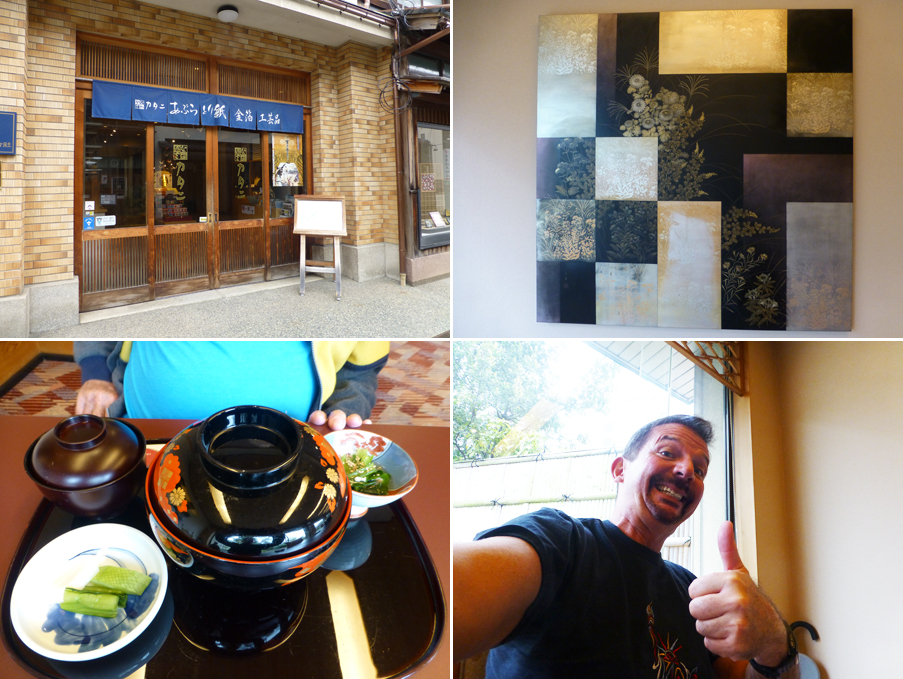
I still marvel at how the Japanese are such masters at turning nature into a sublime retreat where one can go to nourish the mind and soul. This garden was in the middle of the city and was meticulously cared for. It was very peaceful and serene. Is that doubling up on adjectives? Well, it just felt good to be there. ;o) We had lunch in this Japanese restaurant. On the wall inside was an art piece made using gold leaf. I’d hang it in my home.
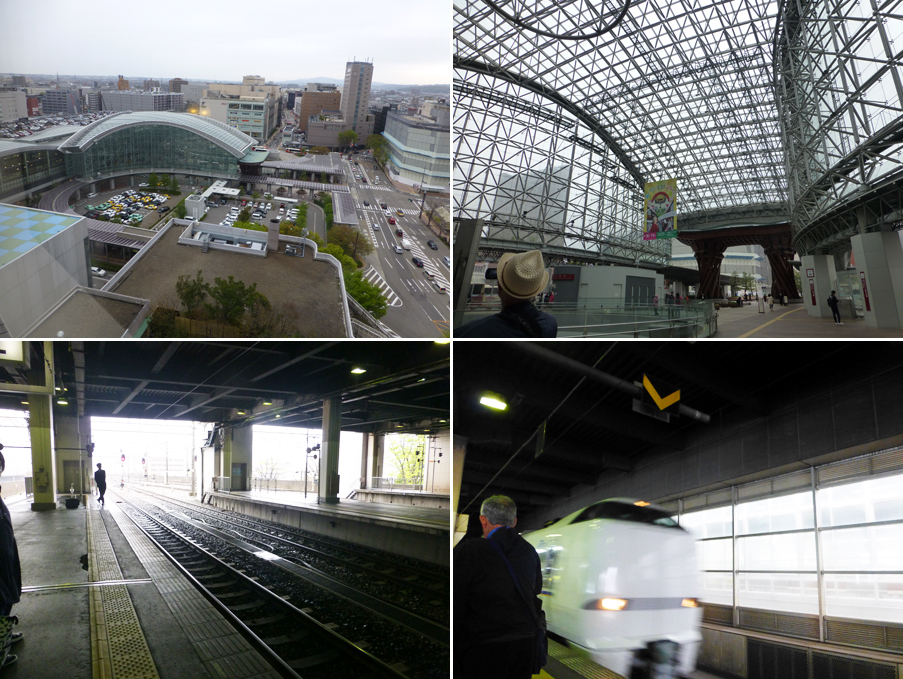
Lunch was very good, and Pete obviously was happy with it. We both enjoy eating, and cooking. We eat out so much when we travel that when we get back home, we never go out to a restaurant, but instead prepare gourmet meals ourselves. We each have our own special talents, and the combination is great! The train station was huge, a massive structure of steel and glass. Here is where we would catch an express train to Kyoto.
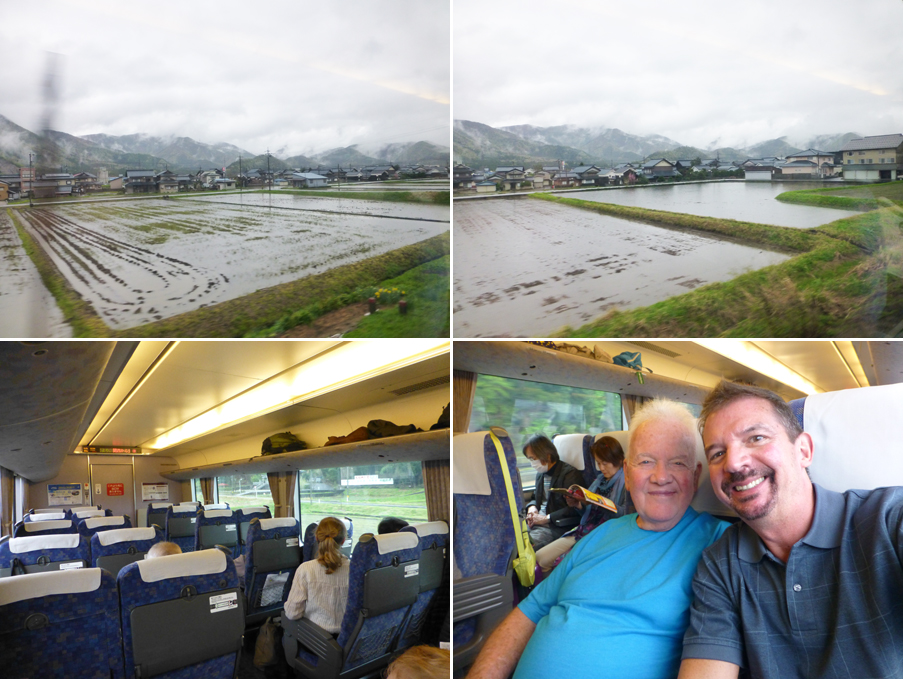
It arrived, and was it a sleek looking train. I thought that it would be a blast to be an engineer on this train. On our three hour trip to Kyoto we passed many small towns and lots of rice paddies. In April it was still cold from winter and spring planting had not yet begun, although the fields were flooded. I remember when I was in Japan many years ago, I would see girls in these fields with bare feet in that icy water with rice plants in their arms to stick one by one into the muck. I thought to myself that I was so lucky to have been borne in a non-farming culture, and was a computer guy. ;o)
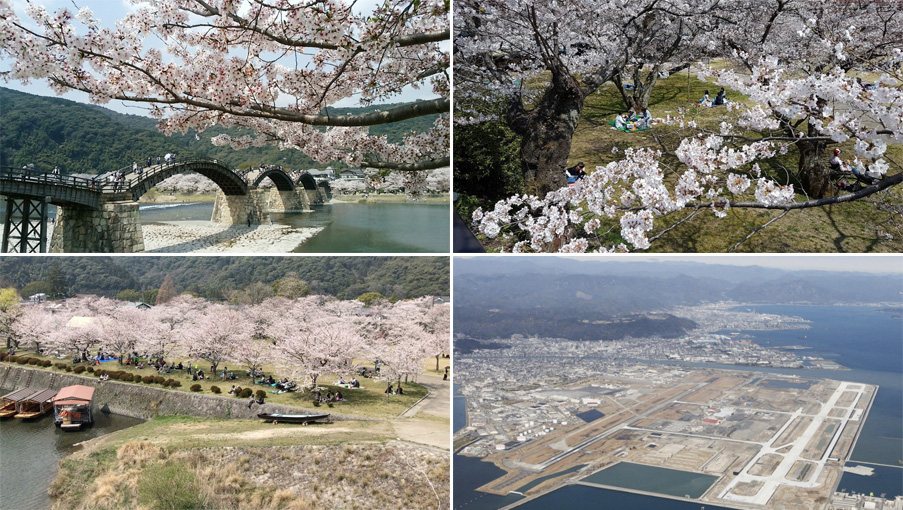
The seats on the train were very comfortable, and the tracks were so smooth you felt like you were riding on glass. A short aside about my earlier years in Japan. It was the period 1959-1961, and I was stationed in Iwakuni at the Marine Corp Air Facility there, on southern Honshu. It was a wonderful time to be in Japan. I remember spending weekends bicycling around the beautiful countryside. I crossed the Kintai Bridge and spent an entire day one summer, during the cheery blossom festival, enjoying rice dishes and sake with a Japanese family who invited me to join them in the park. None of them spoke a word of English, and I knew very little Japanese, yet we were able to communicate with sign language as long as the sake kept flowing. The Kintai Bridge was build in1673 and consists of five wooden arches that span the Nishiki River in the city of Iwakuni, in the Yamaguchi Prefecture. Cherry blossom time in Iwakuni was a magnificent time of year.
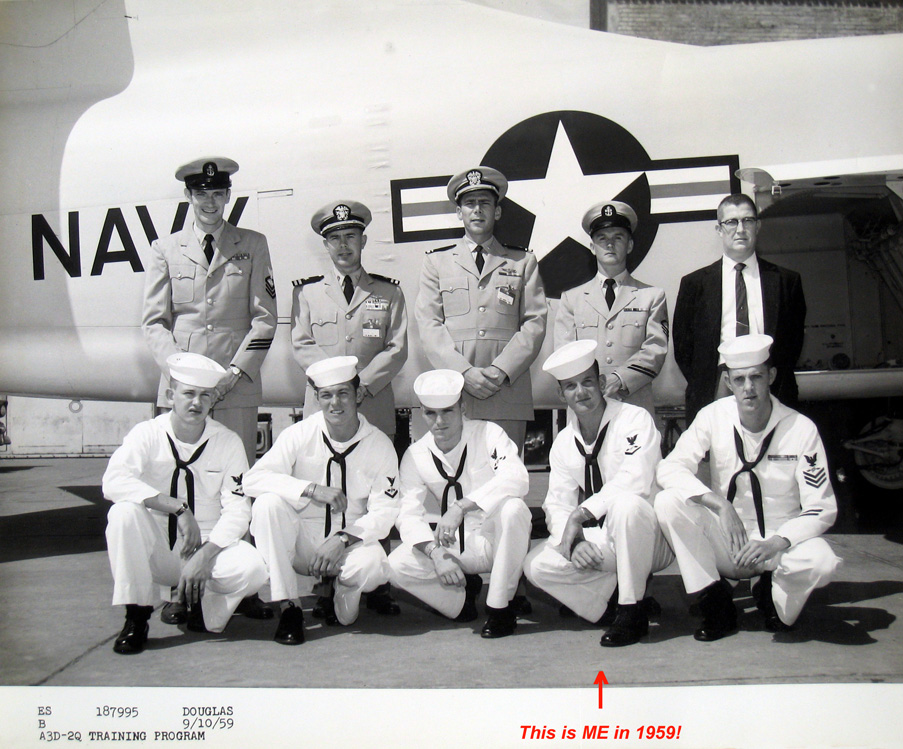
The 4th photo above is the Marine Corp Air Facility on the Nishiki River delta. For my 1st year in Japan I flew from this base. Before coming to Japan I had to attend a school run by Douglas Aircraft in El Segundo, California, the manufacturers of the A-3 Skywarrior aircraft. This photo shows my classmates and I, and our Douglas Instructor. We had a month to learn the aircraft systems of the A3D-2Q, which was to be delivered to the VQ-1 squadron in Japan where I had orders to go. We would be flying missions in the A3D-2Q once it arrived.
Actually, it was several months before Douglas was able to deliver the first aircraft to our squadron, so in the meantime I flew in the squadrons other aircraft, like the P4 (formerly the WWII Martin B-26 Marauder) and the P2V Neptune. The P4, like the A3D, was converted from a bomber to an ECM aircraft for the VQ squadrons, VQ-1 in Japan and VQ-2 in Spain. P4, decommissioned soon after my arrival. P2V Neptune, a sub chaser A3D-2Q Skywarrior with VQ-1 tail letters
I had only a few flights on the P4 aircraft before the last one in the Navy was flown back to the U. S. for decommissioning. They melted down one of the propellers and made tie clasps with the image of the P4 for everyone in the squadron. I think I still have mine somewhere. Our squadron was known as a “cloak and dagger” squadron, because what we did was top secret. Our job was to fly towards the coasts of Russia and China and get them to bring up their fire control radars so we could plot their locations. They were mobil radar sites and would be moved regularly. If we happened to go to war with either country, we needed to know the best last known position of those radars so we could launch a bombing strike force that could avoid detection. Of course, this was in the 50’s & 60’s time frame, near the beginning of the Cold War. Warfare is totally different these days I’m sure. The P2V Neptune was also known as the “Truculent Turtle” because of its record-breaking endurance flight in September 1946. The Turtle flew nonstop without refueling from Perth, Australia, to Columbus, Ohio, a distance of 11,235 miles, in 55 hours and 17 minutes, a record it held until 1962. The elongated tail was a MAD boom, or Magnet Anomaly Detector, which could detect a fluctuation in the earth’s magnetic field caused by the presence of a large metal object, like a submarine. In the photo above the P2V is flying over a submarine on the surface, but they are normally under the surface, and invisible except for their magnetic disturbance. The A3D is normally a medium bomber, and in the Air Force is known as he RB-66. Our A3D-2Q version was converted into an electronic countermeasures (ECM) aircraft, converting the bomb bay into a compartment with 4 seats for an ECM crew, and all their masses of electronics gear. When we would fly into an Air Force base, and 7 guys would come down the escape shoot and alight on the tarmac, their jaws would drop, and then Marine guards would show up and be posted around our aircraft, allowing nobody near it. The Air Forces RB-66 medium bomber had a crew of 3, so our 7 man crew was a real puzzlement. They badly wanted to see the inside of our aircraft. I spent 5 years on Active Duty and was discharged in the summer of 1962, but I transferred to Active Reserve status, and spent the next 21 years flying out of Moffett Field in Mountain View, California, in the P3 sub chasing aircraft.
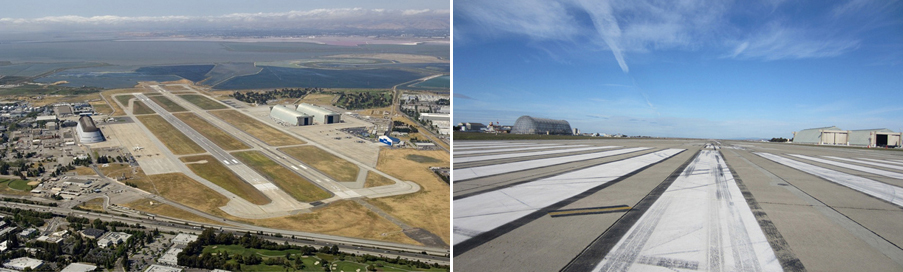
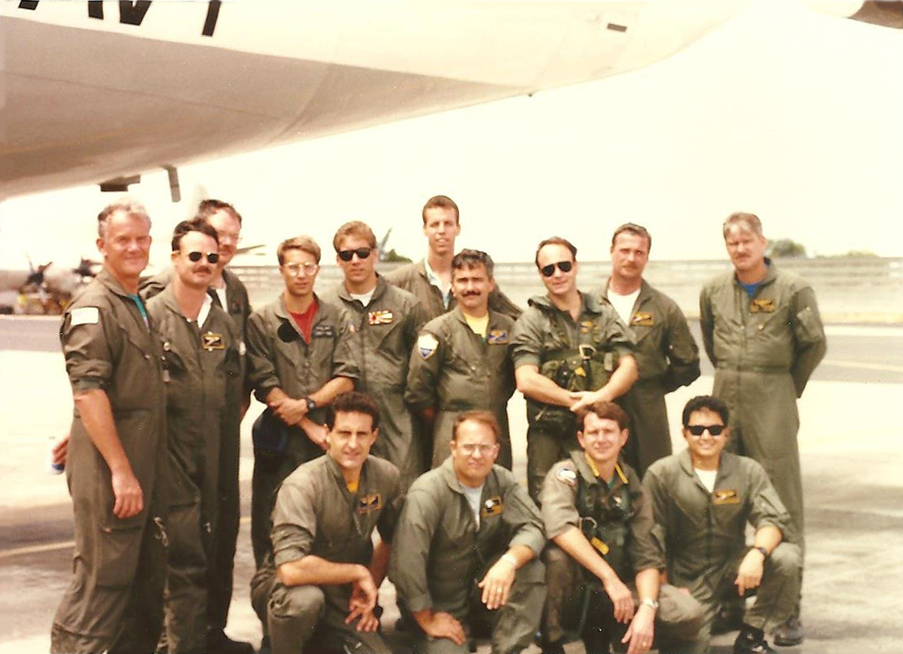
This is Moffatt Field in Mountain View, California. I wish I had a dime for every landing I made on this runway. In the reserve, you “drill” one weekend a month, and in the summer you go on a one or two week deployment overseas to replace the active duty fleet so they can have a brief “vacation”. During those 21 years we had several deployments to the Philippines, Japan, Okinawa, and even a few to Hawaii (which was really choice duty). ;o) This is my flight crew on one of those deployments. I’m on the left end, standing.
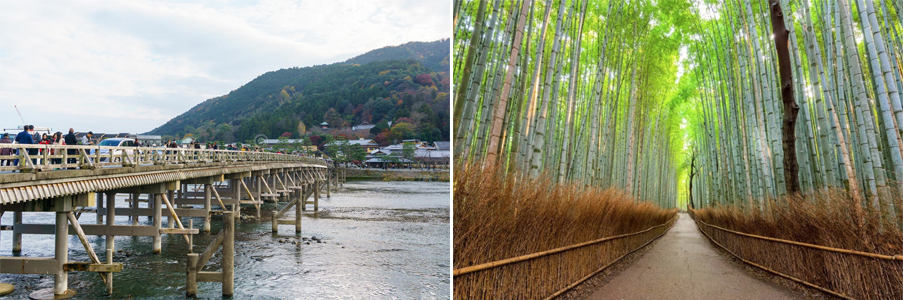
Sometimes the pilots needed to take a cross country flight to build hours and proficiency in navigational skills to keep current, and we would fly to the east coast, usually Maine. Once there, we would load up the plane with live lobsters, return home, and each of us would have a party, inviting our friends for a lobster feast. More than once I would return home with 50 live lobsters to dunk in boiling water. Oh the stories I could tell. ;o) Well, please forgive me for this long divergence from the travelogue. It’s just that revisiting Japan has brought back some really great memories for me. Now back to business. Kyoto was formerly the imperial capital of Japan, from 784 to 1868. It was then moved to Tokyo. Kyoto is now one of the most cosmopolitan cities in the nation. Our first adventure there was to head for the Arashiyama to see the Togetsu-kyo Bridge and the Bamboo Grove. Both were obviously stunning, and both involved a long walk, which I was not feeling up to, so Pete, bless his heart, suggested that we find a place to have lunch.
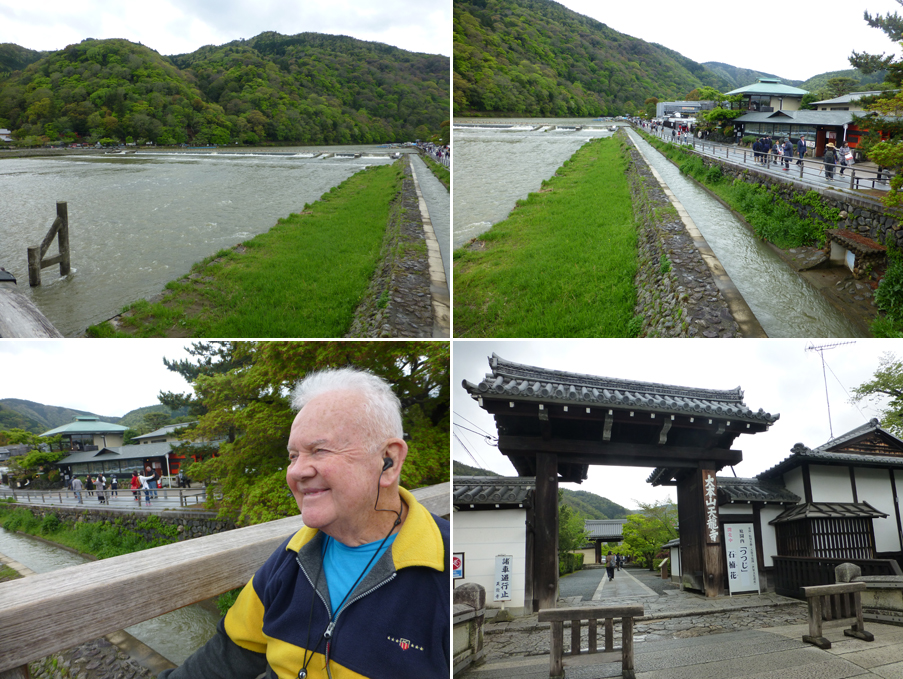
The bridge was very long, and my thought was, what do you do after you walk across it but simply turn around and come back. Also, the bamboo grove was very beautiful, but I’ve already seen photos of it, which satisfied my desire to see it for real. It is said there are monkeys there, but I’ve not had good experiences with monkeys when we were in Cambodia at Angkor Wat. They can be mean little critters. There is plenty of water running down the Katsura River this time of year, and I was intrigued by the canal running alongside the roadway which allowed the water from up stream to run swiftly to the next level down stream. I thought it might in some way be an integral and important part of flood control, but I had not way of confirming that.
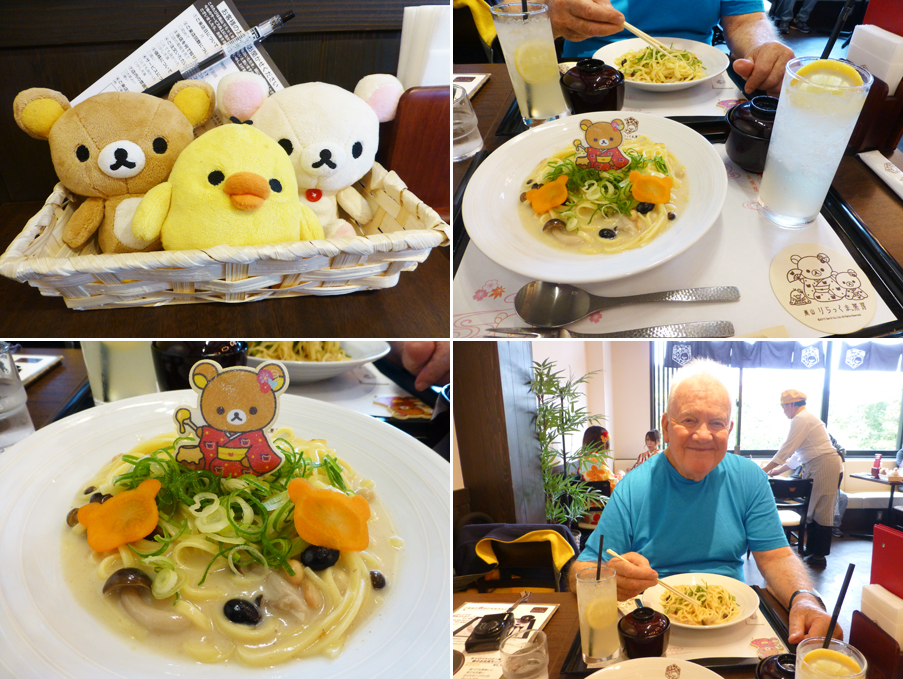
I loved the way their gateways are so impressive. As you pass through them you really get the feeling you are entering some place that is of higher importance. The place at which we stopped for lunch was some sort of Japanese fast food restaurant, and their theme was little bears.
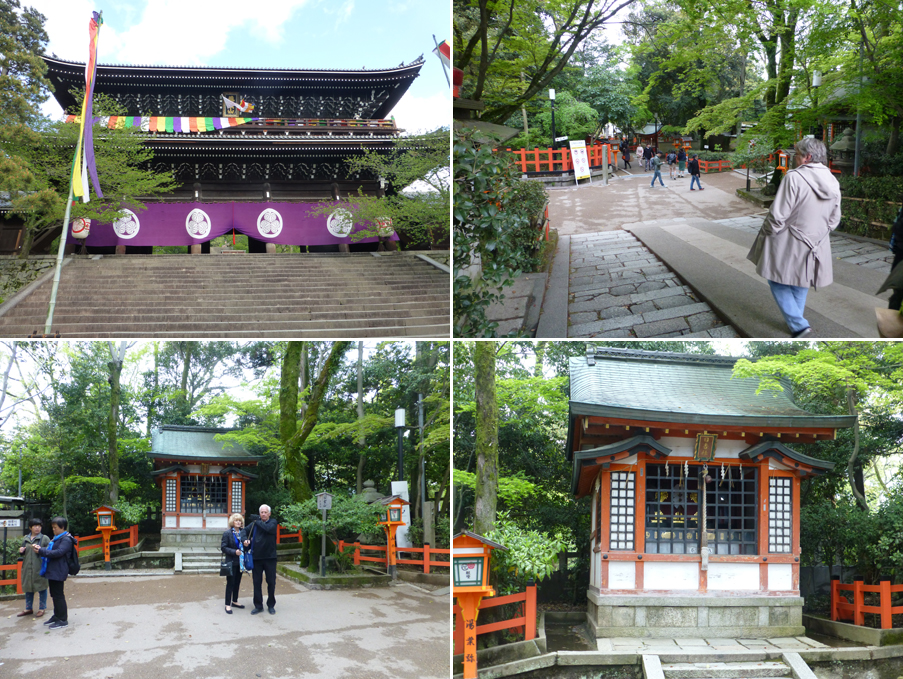
Even the carrots were shaped like the bear. Fortunately the noodles were pretty good. Even the lemonade was good. Kyoto has remained true to it’s past and boasts a staggering 2,000 temples and shrines. We barely scratched the surface, but the temples we did visit were very impressive. Their gardens were as you would expect, immaculately kept up.
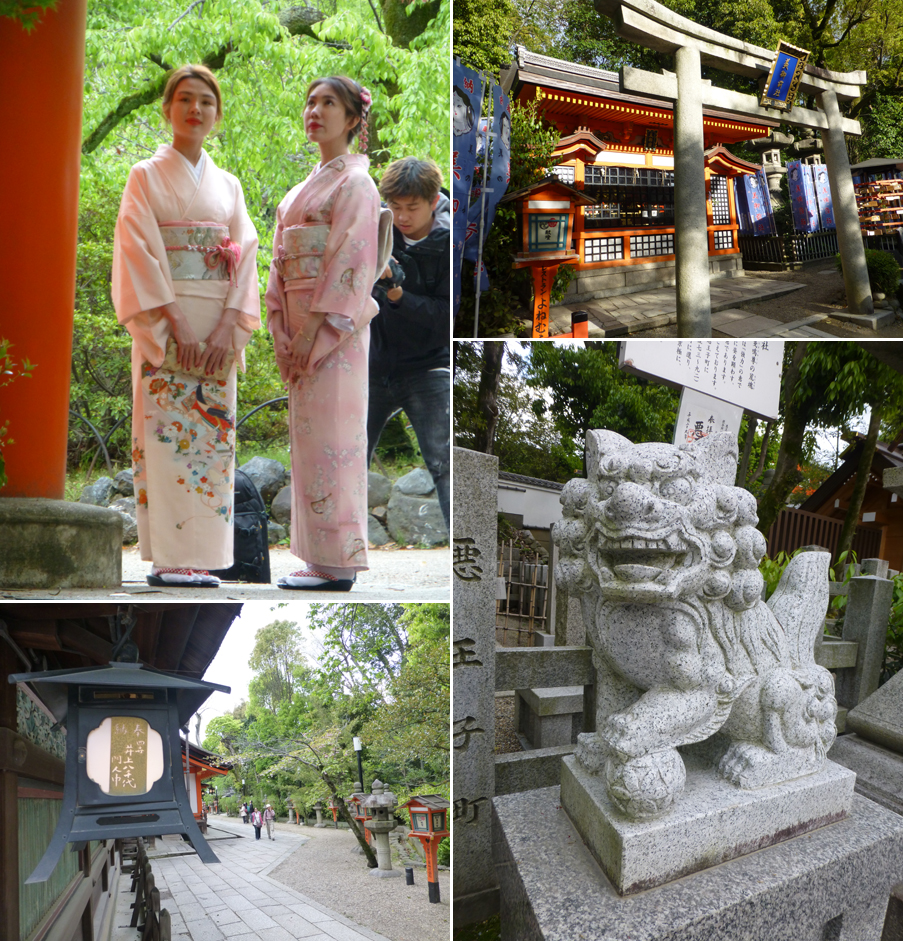
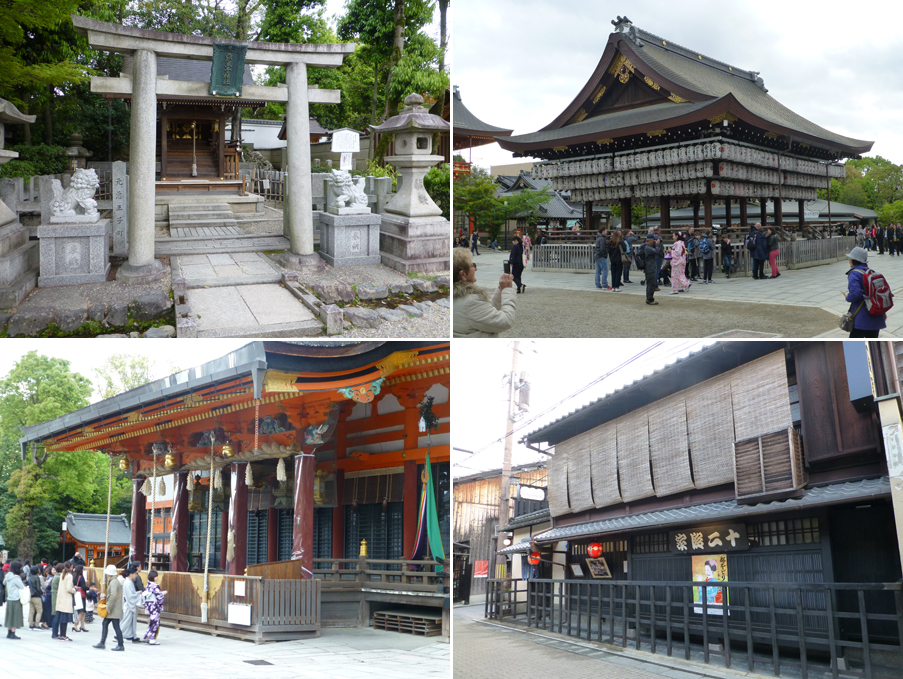
This shrine made me thing of a Catholic confessional for some reason. I expected to look through he screen and see a priest. These Japanese girls were beautiful in their kimonos. Apparently they are as attractive from the rear as from the front, given that the young man seems to be photographing them from the rear. Orange seems to be a favorite color for shrines.
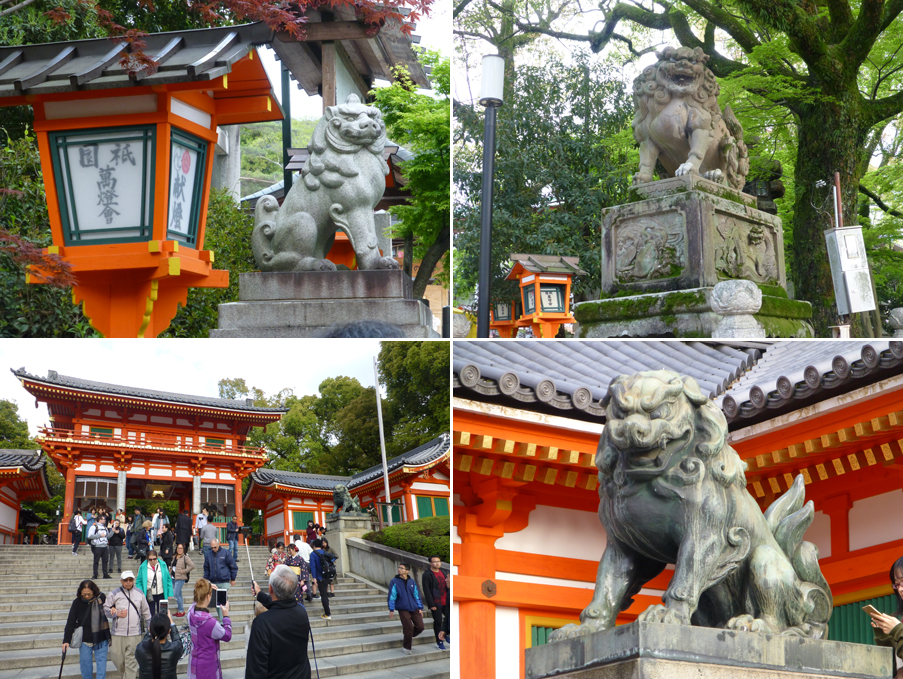
Temple dogs, often called foo dogs, are a tradition that stems back to the 200’s and can be traced from India to China to Korea and then to Japan. They usually come in a pair, a male and a female. They act as guardians at the gates to temples.
It is normal to be required to remove your shoes when entering a temple or a shrine.
On this Shinto temple you can see the elaborate use of orange paint. I still don’t understand why it is so prevalent.
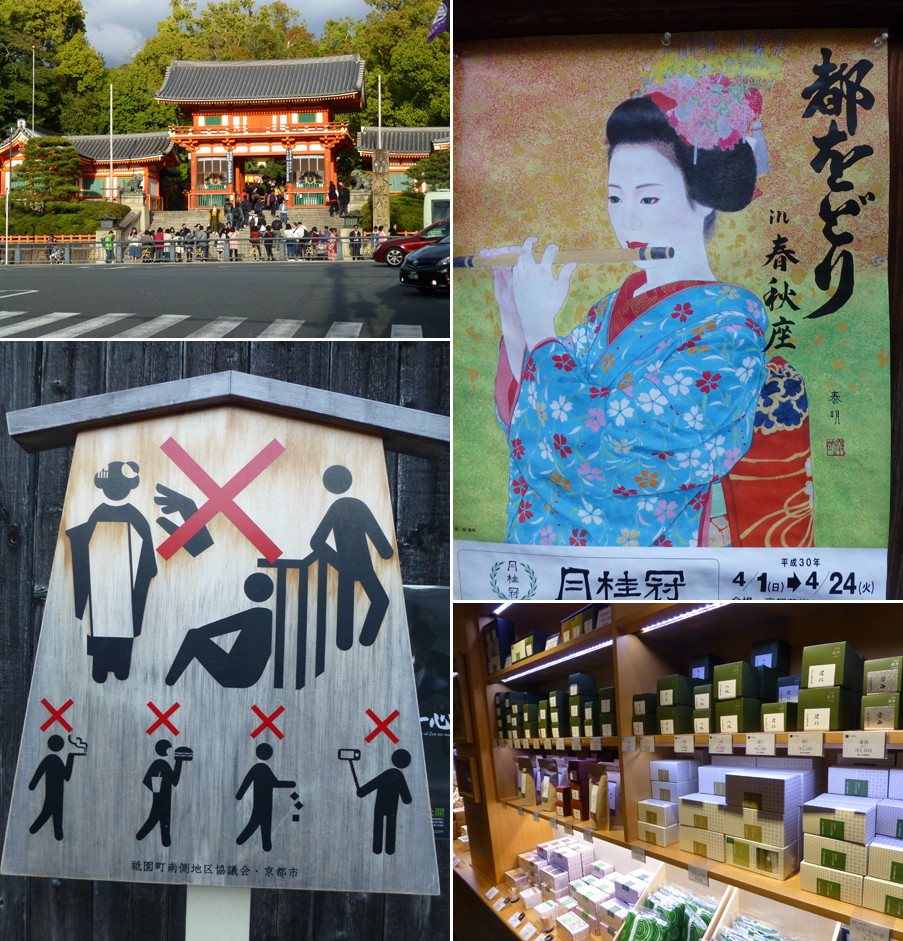
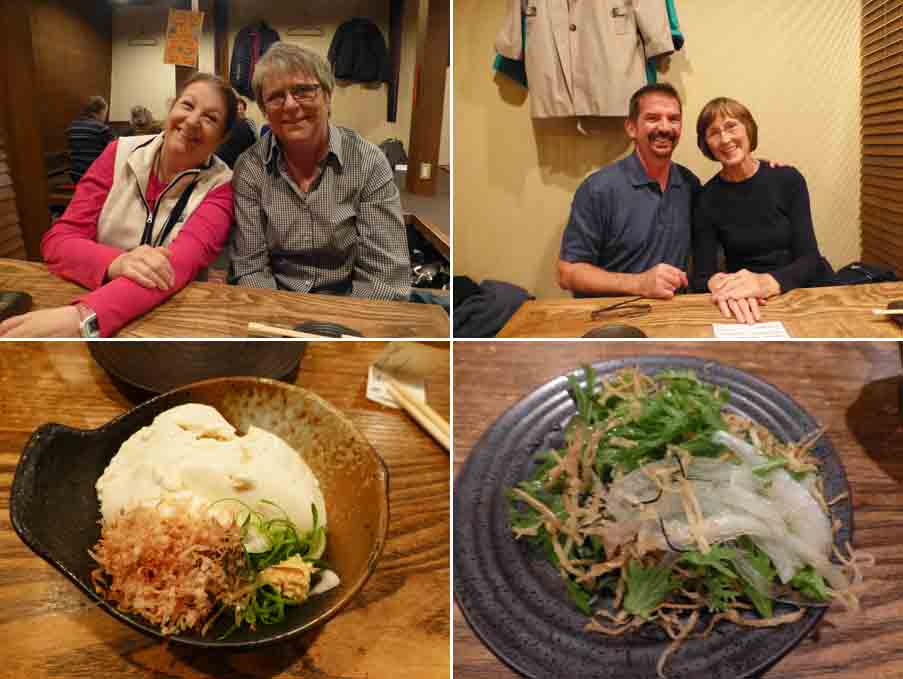
I thought this sign denoting what NOT to do was rather comical. Why would you need to tell someone not to push someone down a flight of stairs. I never saw any pushing or shoving when we were out in public. Everyone was quite orderly. Dinner tonight was at a traditional yakitori restaurant. Ginny and Margaret look ready for the meal, as do Pete and Karen.
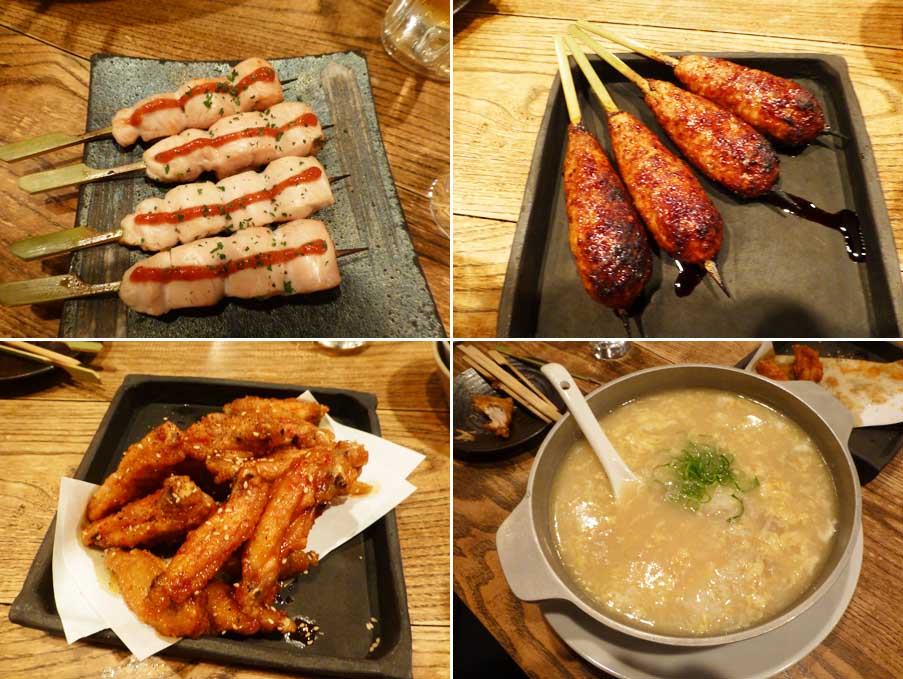
An appetizer and small salad starts the meal. Yakitori consists of skewering various meats and other things on a stick and grilling them.
There was also a delicious bowl of soup. The meal was fit for a king. This was a great way to end our day on the tour. Tomorrow we start a new week, and will visit the Nijo Castle, a UNESCO site, and the home of the first Shogun. |

|
||||
|