 |
|
|
|
|
|
|
|
|
|
|
||||||||
|
||||||||||||||||||
|
Email us at: |
||||||||||||||||||
 |
||||||||||||||||||
 |
 |
|||||||||||||||||
|
Click the sun to see the |
||||||||||||||||||


|
|
|||||||||||||||||||




|
|
|
|
The Edo period of Japan (1603-1867) was a period of internal peace, political stability, and economic growth under the shogunate (or military dictatorship) which was founded by Tokugawa, the third and last shogunate.
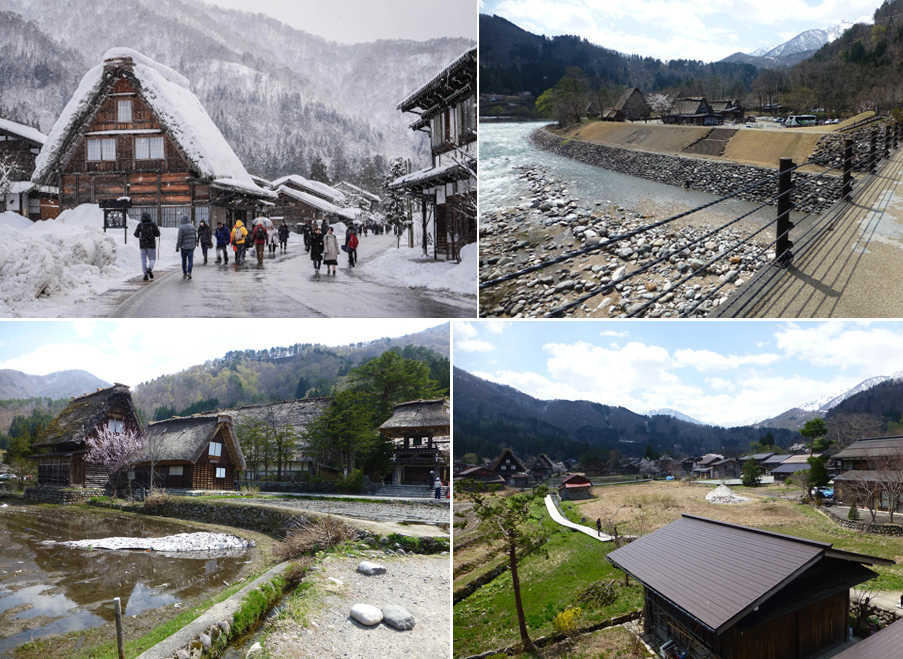
Tokugawa Ieyasu was the founder and first shōogun of the Tokugawa shogunate of Japan, which effectively ruled Japan from the Battle of Sekigahara in 1600 until the Meiji Restoration in 1868. (Wikipedia) Edo is the ancient name of Tokyo. From 1185 until 1603 Japan was a country enveloped in feudalism. There were many clans vying for power. A feudal society is a military hierarchy in which a ruler or lord offers mounted fighters a fief, a unit of land to control in exchange for military service. The individual who accepted this land became a vassal, and the man who granted the land became known as his liege or his lord. During the feudal period, as military rule took over, the emperor’s rule was restricted to religious matters. The Samurai were the warriors, the ruling military class that eventually became the highest ranking social cast of the Edo Period. Samurai employed a range of weapons such as bows and arrows, spears and guns but their main weapon and symbol was the sword. To get to the town of Kanazawa and visit the Samurai district, we had to cross the mountainous Shokawa Valley. Our driver said this was the part of the trip he hated most. It consisted of what seemed like a hundred tunnels through the mountains, and they were built long before semi trucks and motor coaches existed (which was the means of our transport). When we came upon a semi, or another motor coach coming towards us in a tunnel, we both had to slow to a stop, and proceed very slowly to keep from scraping sides. It was a long trip through the rainy night, and I was not able to sleep at all on the coach. I was wide awake watching every vehicle that passed us, thinking how brave our driver was to be driving through these narrow tunnels at all. It was definitely the most tense part of our journey, and I didn’t take a single photo to record the event, I was that tense. I need to make a slight correction to Part 7. All of the photos that follow the Lucky Cat I’m holding in my hand were from Shirakawa-go, not Takayama which I so indicated. Chalk it up to a few slipped gears in the mechanism of my old brain. Shirakawa-go is a very quaint village, the houses having gassho-zukuri-style thatched-roofs because in winter there is a lot of snow. Had we come to Shirakawa-go in winter, this is what we would have seen . . . instead of this
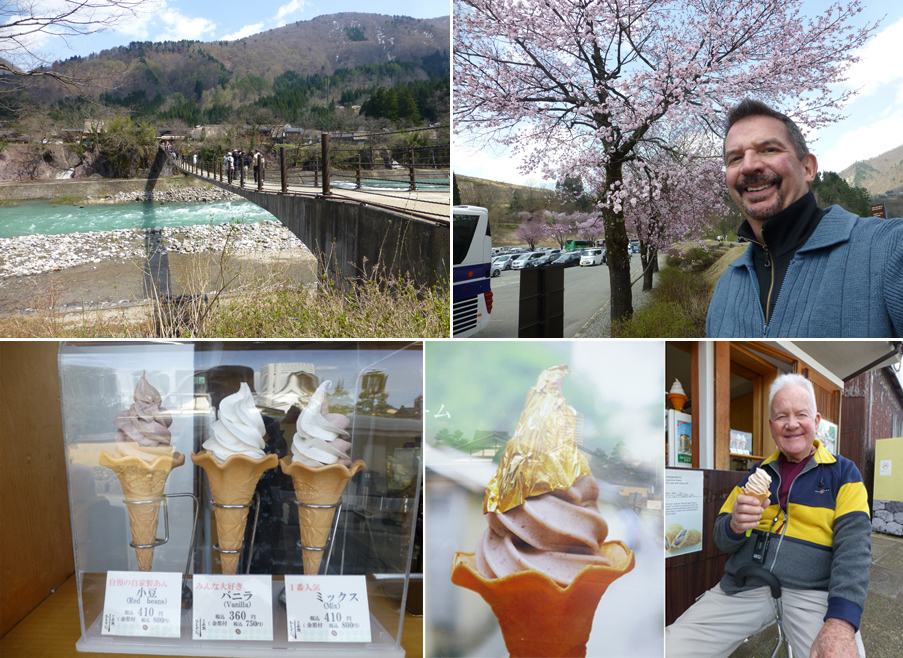
Although there was still snow on the ground in a few places, it was very definitely spring. We crossed the foot bridge over the river and headed for the parking lot where our motor coach awaited. We are both still enamored by the beauty of the cherry blossoms on the trees. I find myself wondering if each blossom turns into a cherry. I recall that we had a flowering plumb tree in Mountain View, but its blossoms never turned into plumbs. If these are not the same, then Japan should have a horrendous export business of products made from cherries. Cherry jam, pies, you name it.
When we arrived in Kanazawa, we found it impossible to pass up the ice cream store. I could have had gold leaf on mine again, but I was having second thoughts about putting a metal in my body, even if it was gold. Plus, it cost twice as much. Kanazawa was once one of the country’s richest regions, gold leaf-making having begun here in the 16th century. The city was quaint and clean to the extreme, like everywhere we went in Japan. It was like a story book with a happy ending.
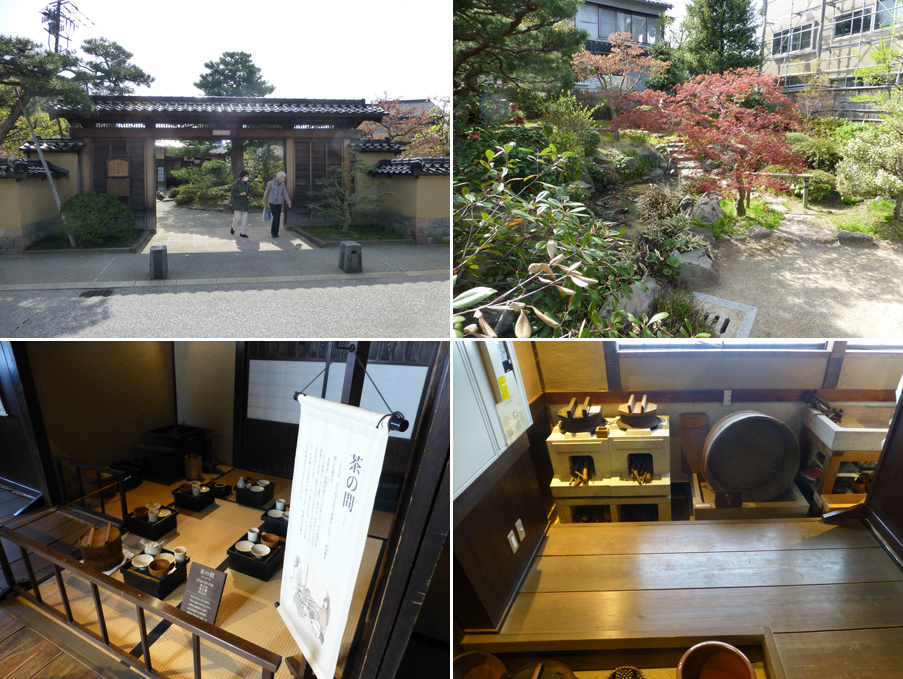
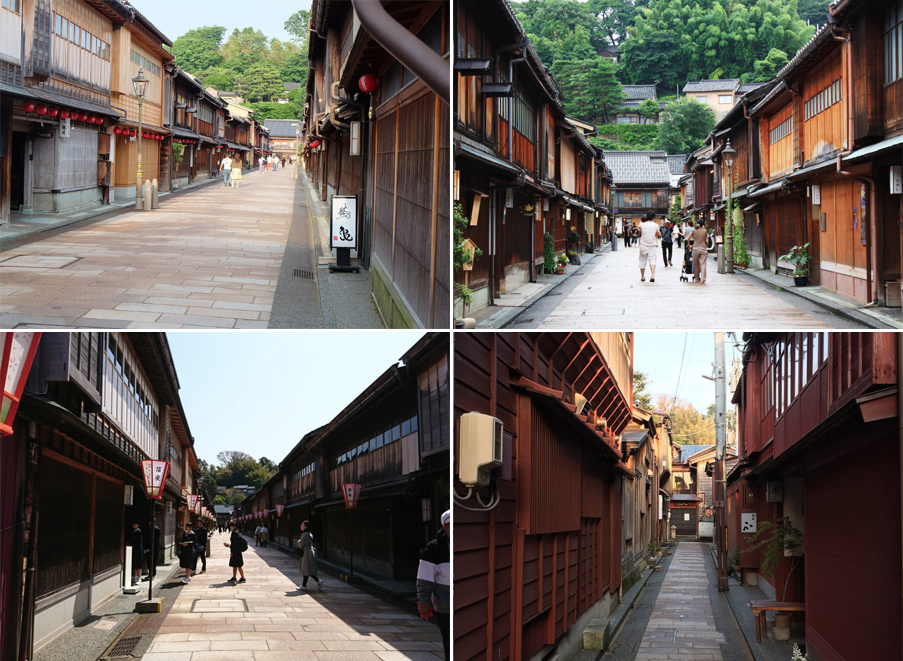
Basically the only people we saw were us tourists, and the shop keepers. Very few locals were out and about. I don’t know if it was the time of day, or if the locals felt more comfortable avoiding the tourist crowd. I tried to put myself in their shoes, and I decided it must be the later. In the Samurai district this gateway entrance to one of the restored Samurai homes was magnificent, as was the garden.
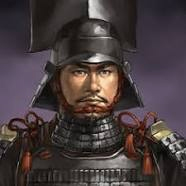
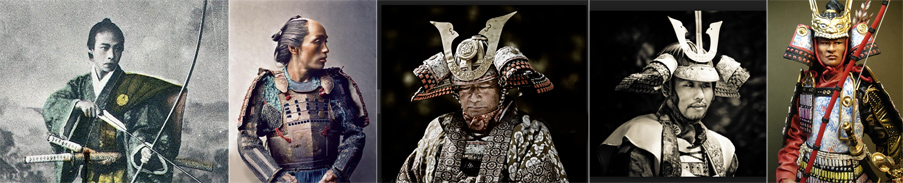
Inside the home the original furnishings were placed as they would have been 300 years ago. It would appear that the Samurai led a very prosperous and successful life. Here are a few examples of the Samurai. I don’t know if you’d call it a costume or a uniform, so lets just go with attire. If anything it is certainly foreboding. I’m quite sure that if I saw one of these guys coming towards me with his sword drawn, I wouldn’t have to think twice before I turned tail and ran as fast as I could go.
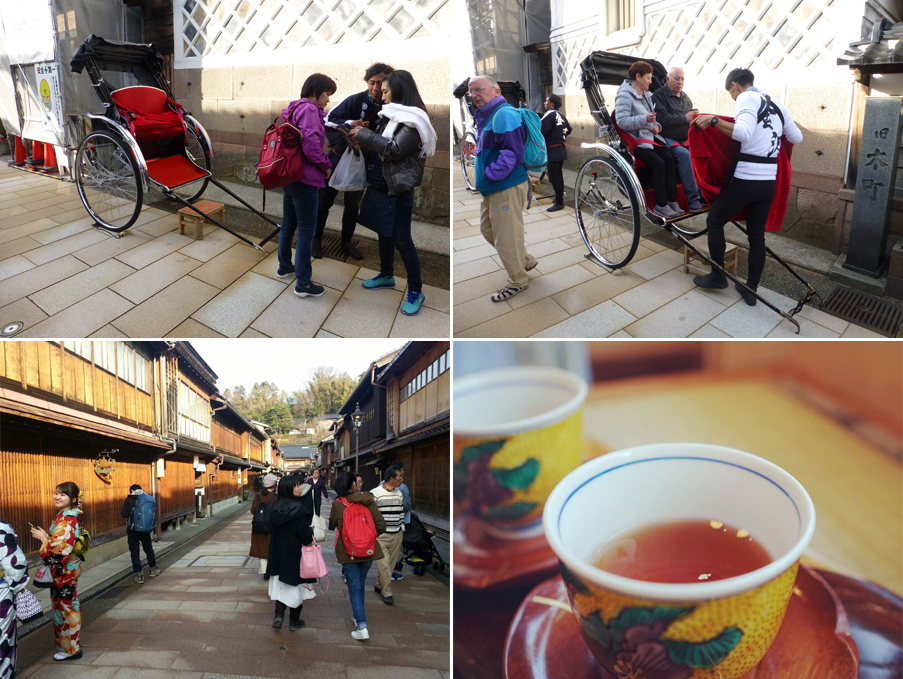
We spent the afternoon walking around the Higashi tea district. We saw some folks taking a ride in a rickshaw, which looked like it might be fun. We actually did it in Cambodia, and it was pretty cool, although it was actually a pedicab.
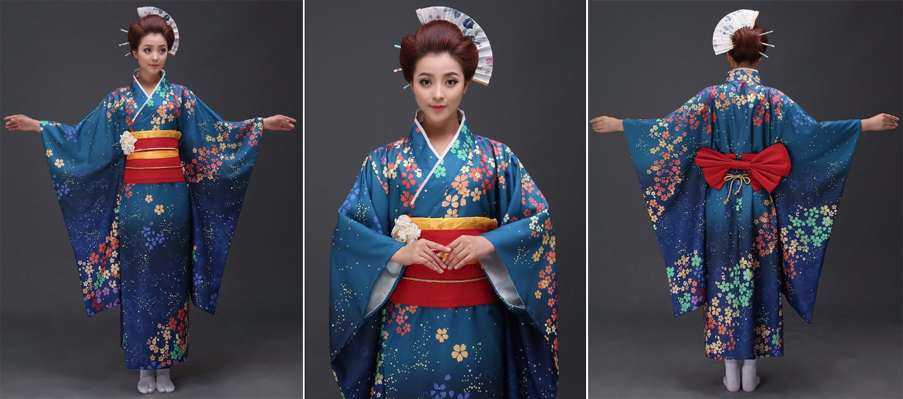
On occasion we did see some Japanese girls wearing a kimono. I always heard that a kimono was very expensive. The most expensive one I found on-line was only $71.39, and that’s with a 41% discount good for only 4 more days. Otherwise it was $121.00. I know nothing about the price of women's clothing, but that doesn’t seem all that expensive.
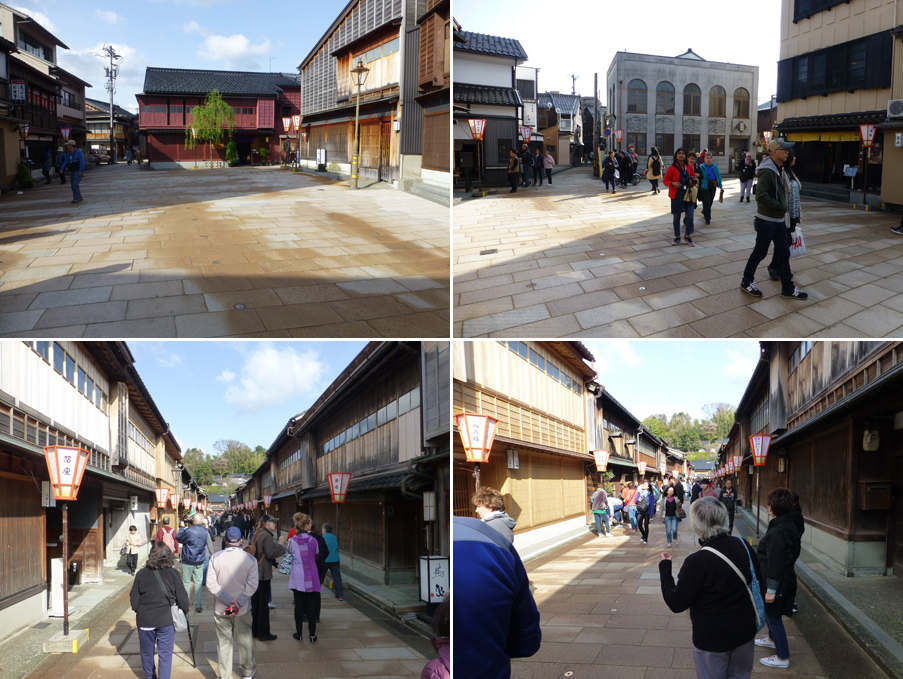
Continuing our walk through the Higashi tea district, we find the streets pretty much devoid of people. I find that curious.
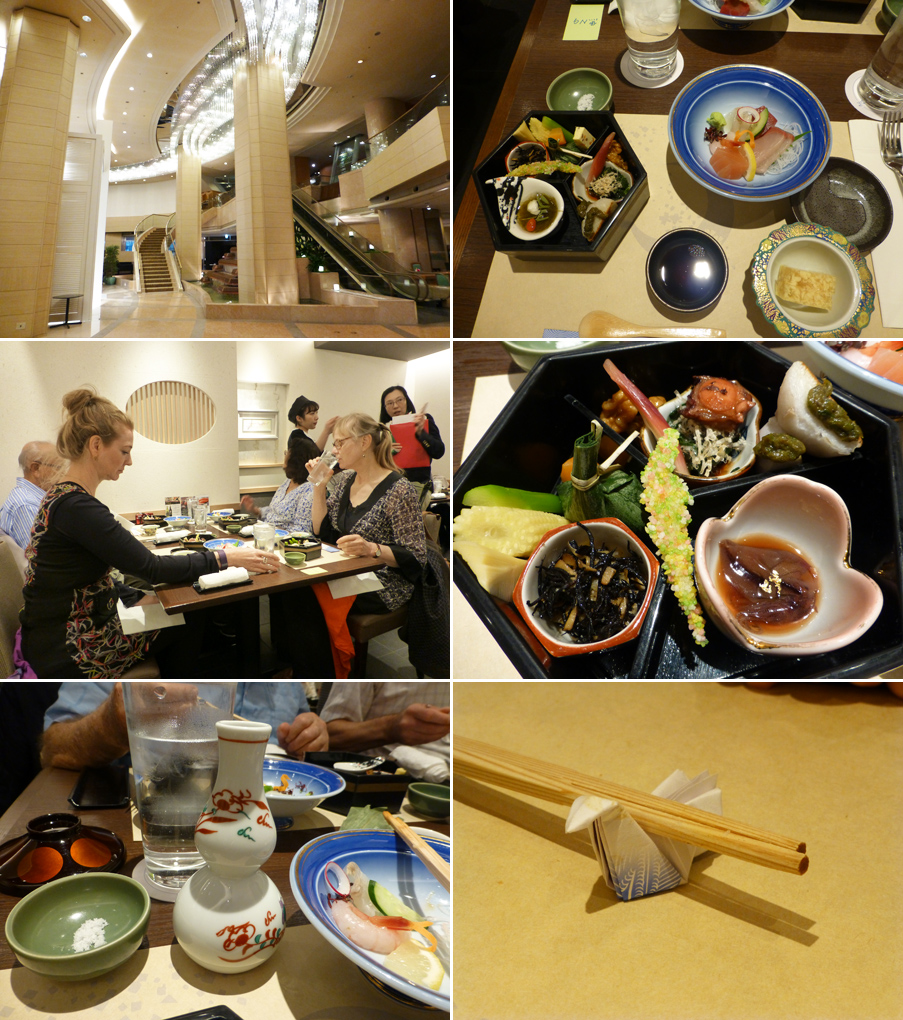
Some of the streets were very narrow, mainly pedestrian walkways. Still, everything was spotlessly clean, also a curiosity. We are on our own for dinner this night. Our 2 night stay in the beautiful Takayama Green Hotel was wonderful. It is a four star hotel. We opted to have dinner at their wonderful restaurant, and we were not disappointed. The food was amazing.
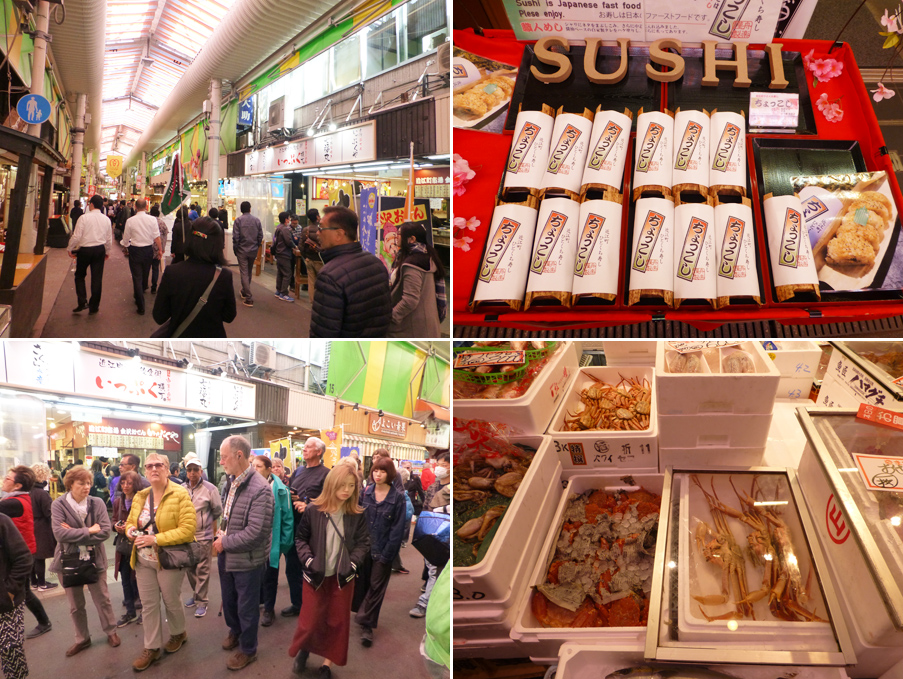
Our table was across from Cheryl and her mom Colleen. They provided little origami birds for us to rest or chop sticks on. I think that those who say they don’t like raw fish simply don’t know what they are missing. Pete and I will try almost anything. The only thing I really drew the line on was when we were offered a tarantula in Cambodia. I couldn’t get past the hairy legs. Day 8 finds us in Kanazawa where we make our way through the Omicho market and Kenroku-En (Garden of Six Qualities), a most beautiful garden. The market is huge, and everything looks so tempting. I love the way they present the food.
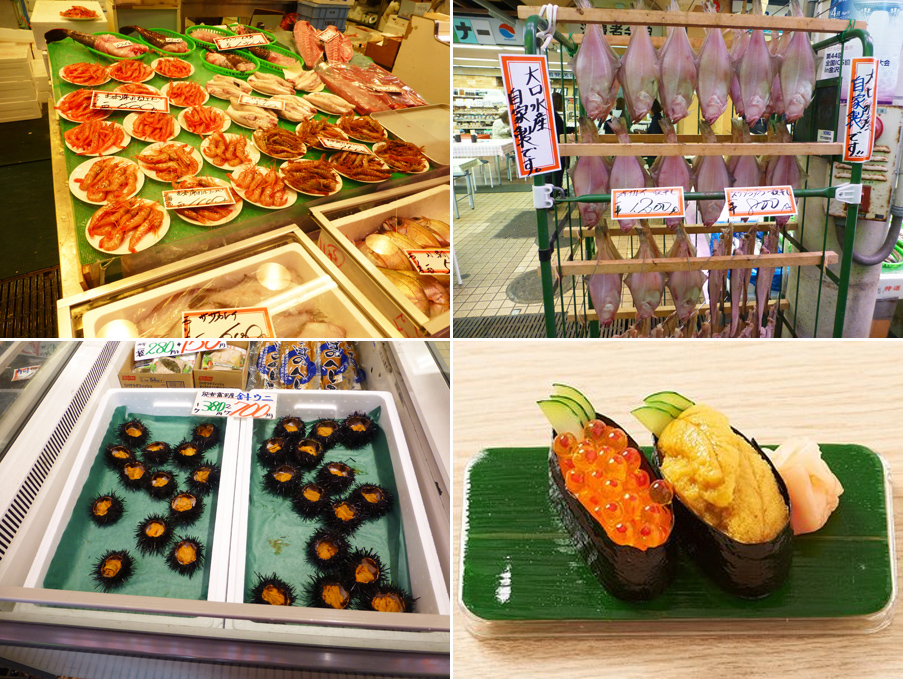
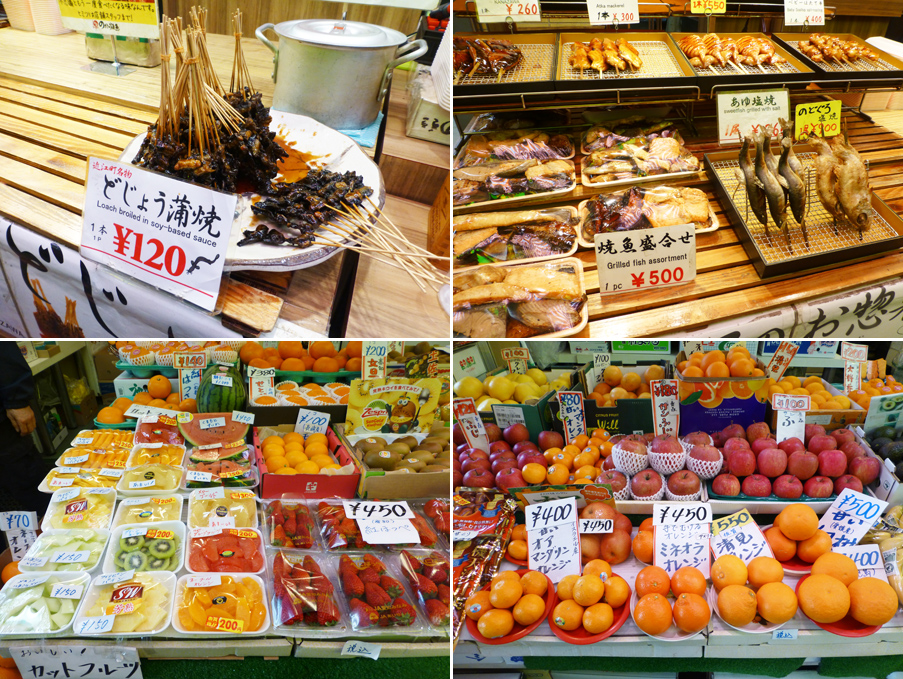
There was a huge selection of different species of crab. The shrimp and fish were also marvelous. The fish hanging by their tails are halibut, a bottom fish with both eyes on the same side of their bodies. In this photo you see to bottom side of the fish. This species is not available here in Argentina, and halibut is my second favorite fish, right after salmon. Fortunately for me salmon is plentiful in Argentina.
The roe from the sea urchin is a real delicacy. When we were in Puerto Montt, Chile, many years ago, we saw the fishermen in the fish market filling mason jars with sea urchin roe, and I assumed that it was a major export to Japan for sushi. Pictured above is both salmon roe and sea urchin roe sushi, and both are primo delicious. Continuing our tour of the market, there were things on a stick that you could eat while you walked, and most of them looked very tasty. The first photo is loach boiled in a soy-based sauce. Years ago when I had an aquarium, I had a few clown loaches, and I can’t imagine boiling them in a soy-based sauce, putting a stick through them, and then eating them. My pets?
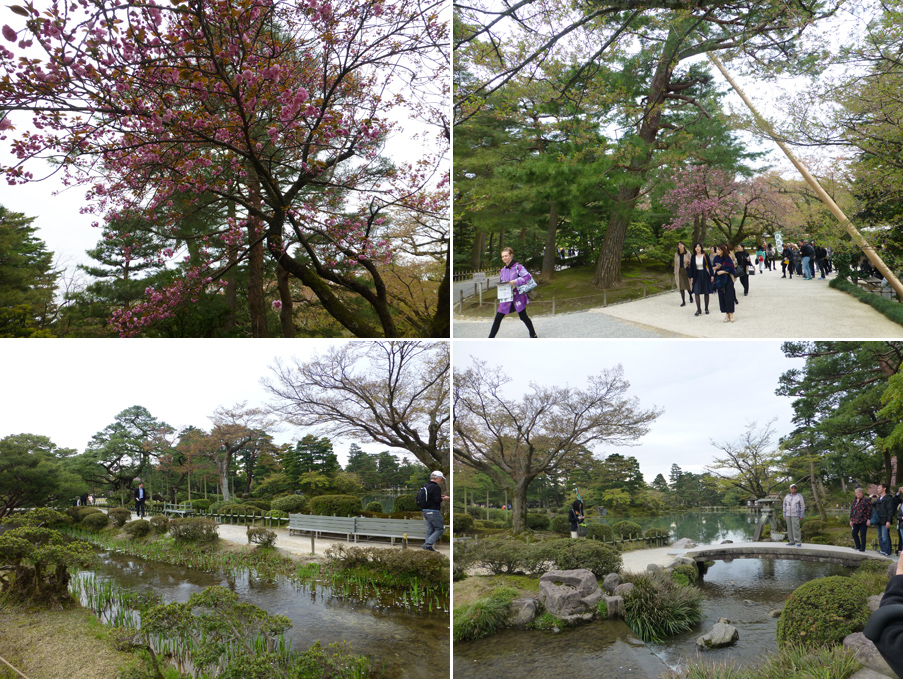
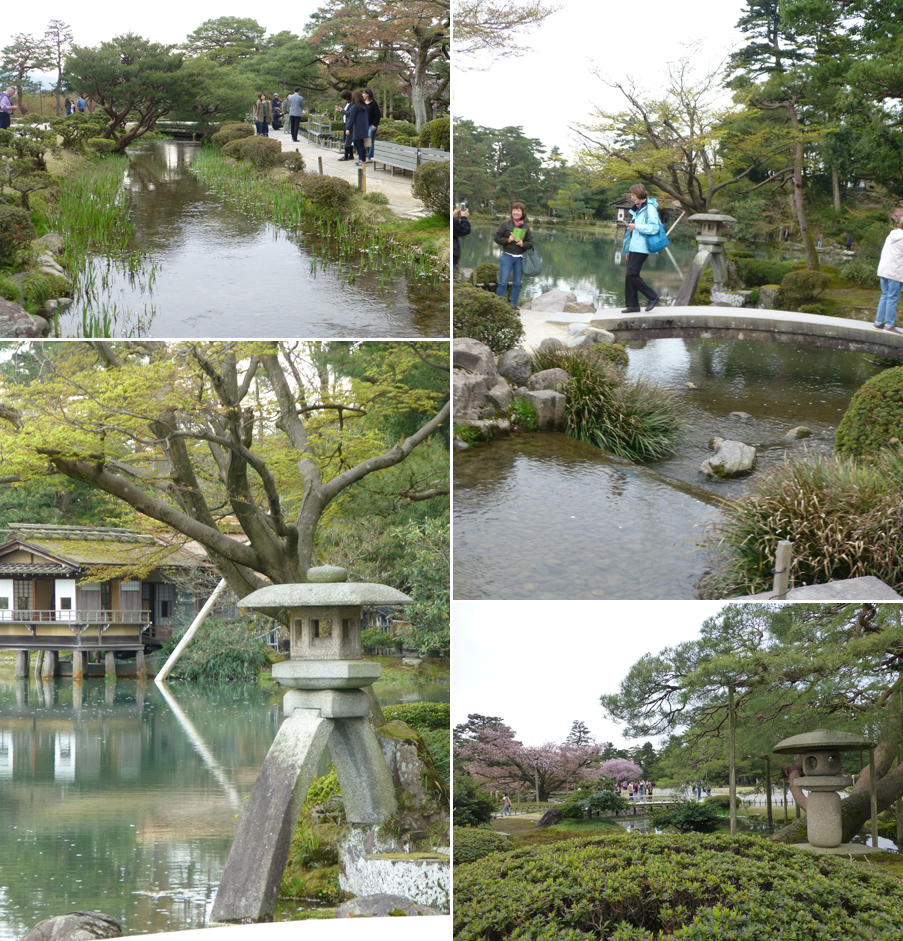
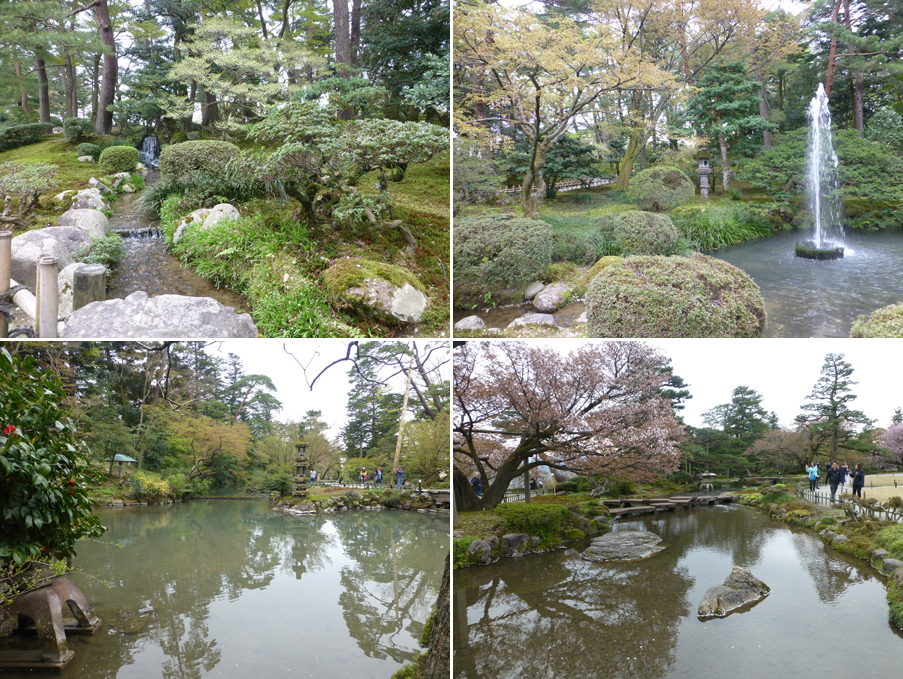
Again, presentation is a big thing here in Japan. Things look so good that you are bound to buy them. Our walk through the Kenroku-En garden was truly rewarding. It is one of the most beautiful gardens in Japan.
I know that these photos do not do it justice. Pete says that being there was breathtaking. The Japanese are master gardeners. When I lived in California as a youngster, in my neighborhood having a Japanese gardener was s sign of wealth, and your yard amplified that image in a way that was remarkably memorable.
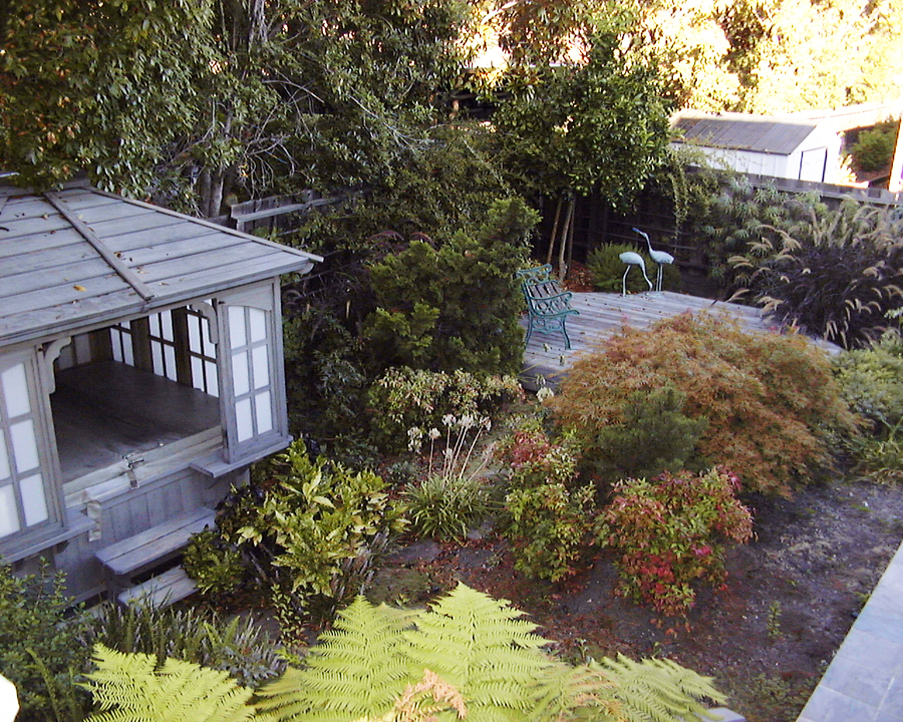
When we lived in our last home in Mountain View just before retiring to Argentina, we actually hired a gardening architect who advertise her expertise in creating a Japanese garden. We did all the work ourselves, using her drawings, and the result was a lot like this garden, minus the ponds, buildings and shrines of course. Our back yard was large, but nothing on this scale. This is a shot of our back yard in Mountain View. The one thing I miss the most is the jacuzzi.
Walking through this beautiful garden reminded me of what we had created in our back yard in Mountain View. There was a bit of nostalgia going on here. When we left Mountain View in September of 2000, bound for Argentina, we thought that we would never again have a home as nice as this one. As it turns out, our home in Argentina suits our retired life style better.
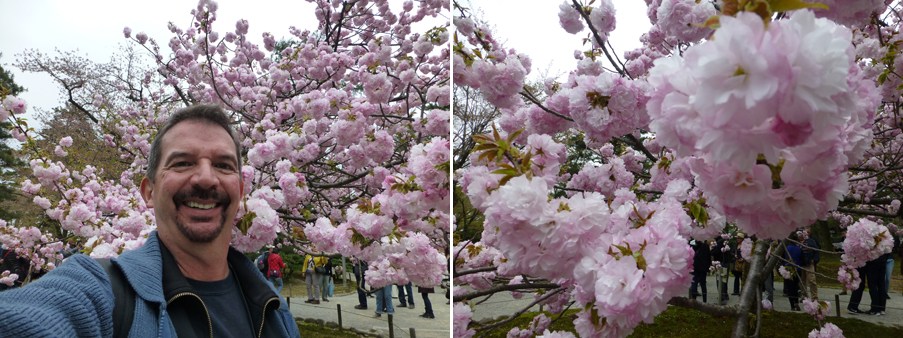
The blossoms were magnificent. In the spring we had flowering plumb trees, which were almost as magnificent.
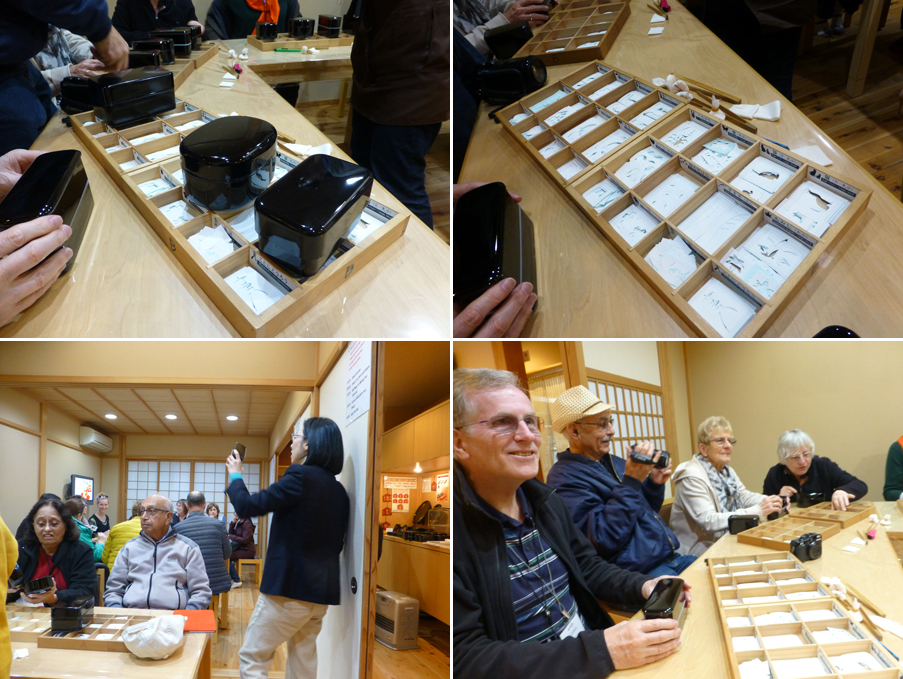
Now it was time to create our own bento box to take home with us for a souvenir. I wasn’t there for this event but Pete was. You were provided with a plane black lacquered box to start. There was an assortment of stencils in the tray.
Niko taking photos of the group as they sit in wonder as to where to begin. Fortunately there was an instructor. You could just hear what was going on in everyones mind ~ “Hmmmm! Now I’ve got to become creative. I can do this!”
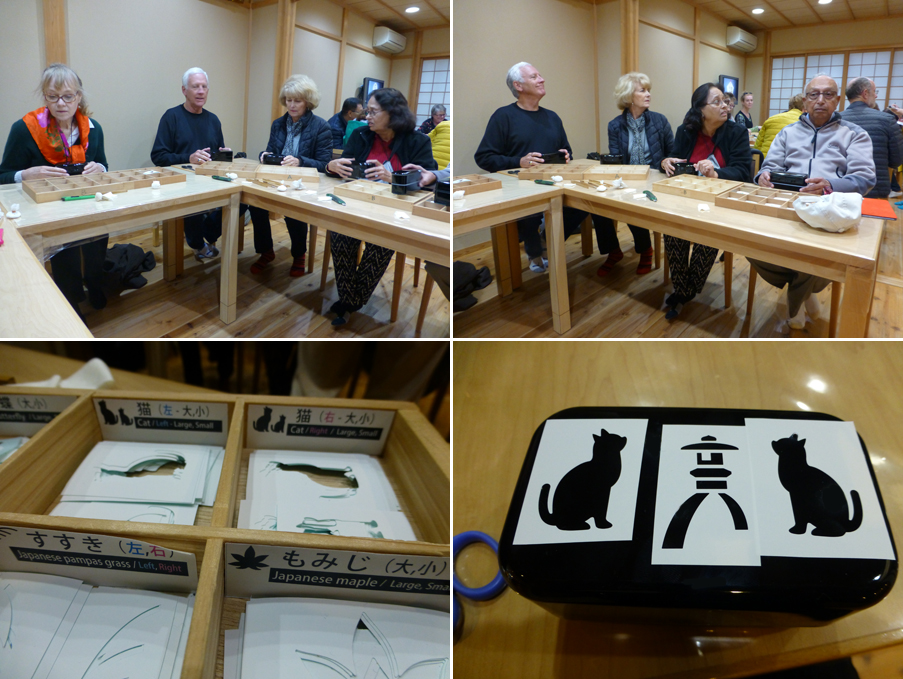
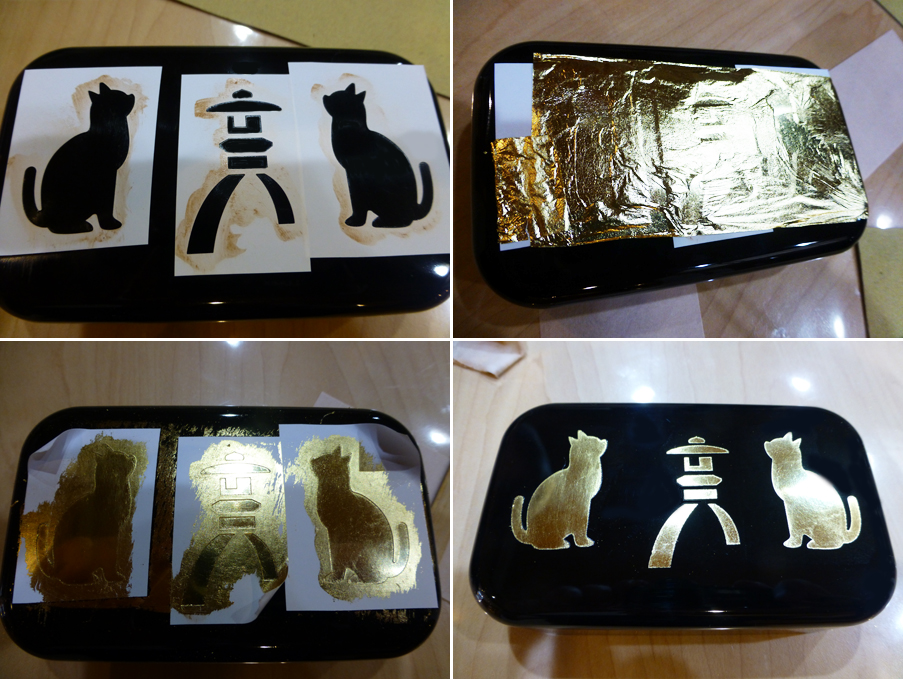
Pete chose a couple of cat stencils and a shrine. We have two cats at home, and one is a new kitten while the other is 10 years old. They were still getting used to each other when we left on this trip, so we kept wondering how they were getting along. Inside the stencil you painted some kind of glue, and then you would place gold leaf over the stencils and smooth it out.
When the gold leaf had been thoroughly pressed into the glue, you would remove the stencil, and voilà, a perfect image.
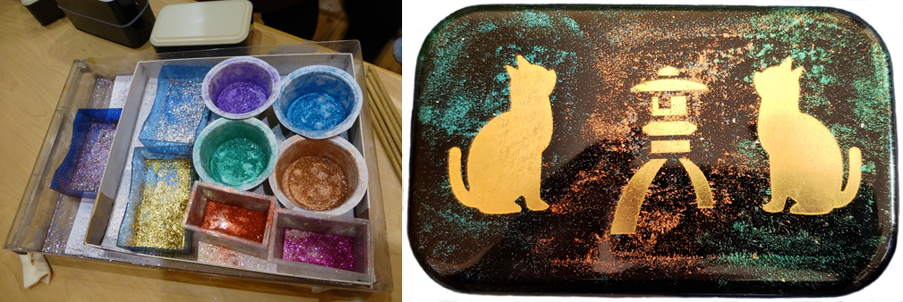
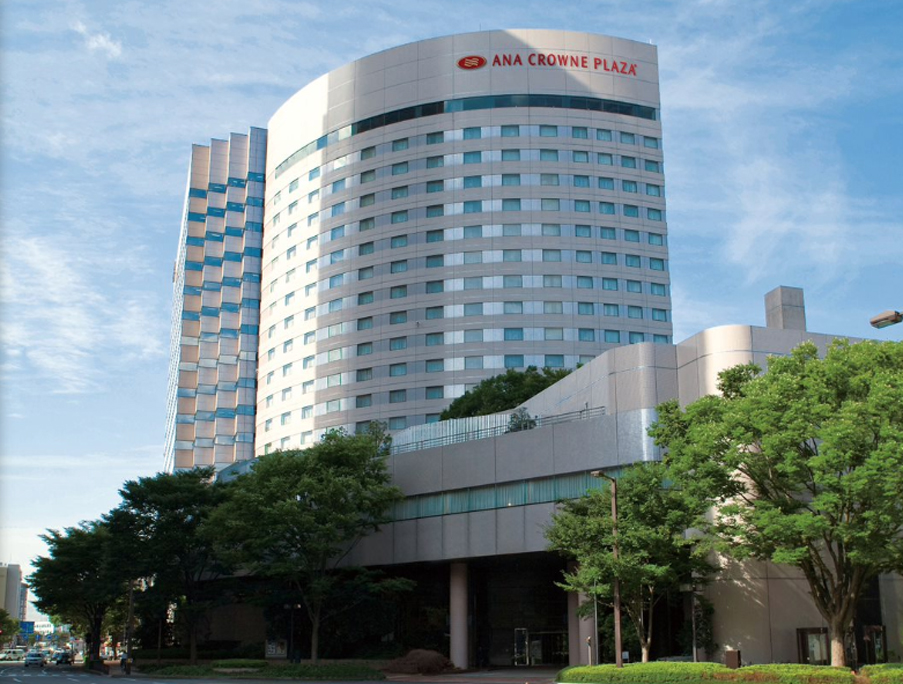
There was a box with colored sparkles you could splatter onto your box, and when it was heated up, the sparkles melted into the lacquer, and the gold leaf was fused. This is Pete’s final production he brought home with him. Not bad for a novice. Our hotel, the ANA Crowne Plaza Kanazawa was a 4 star hotel, and very nice. I spent the day there, conserving my strength for the long trip home, avoiding the possibility of being admitted into a Japanese hospital. Meanwhile Pete enjoyed the tour.
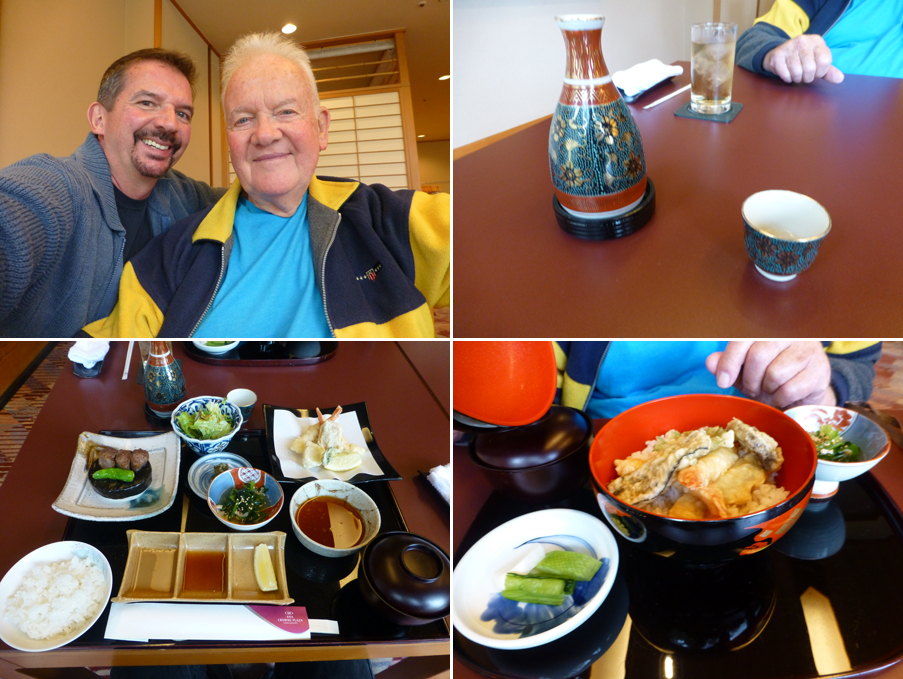
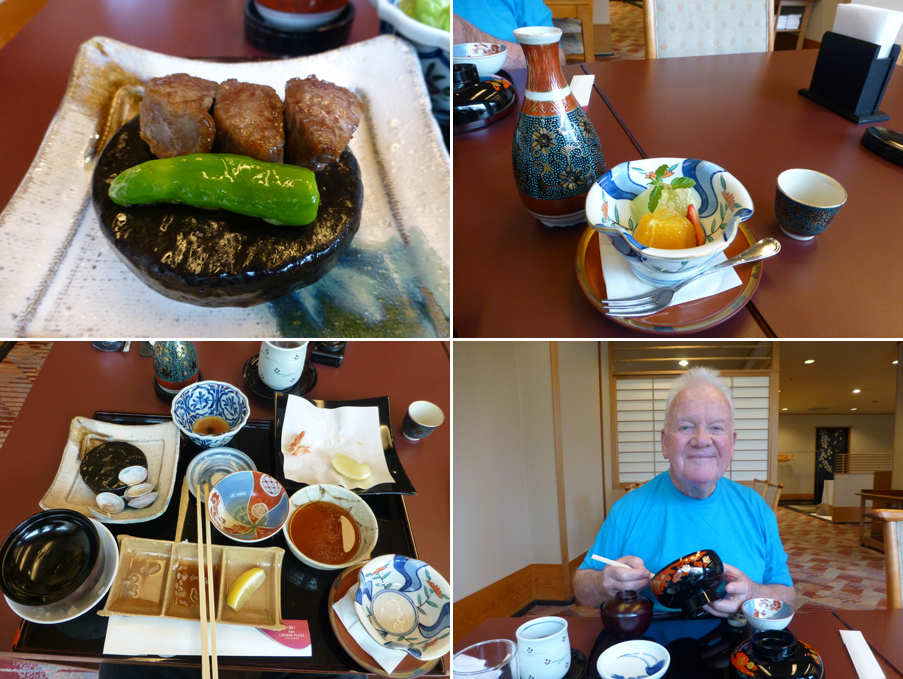
Pete returned from his day of exploring the beautiful Japanese garden, and putting gold leaf on his Bento Box, and I was so happy to have him back. We decided to have dinner in the Japanese Restaurant in the hotel. It was an excellent choice.
The sake was very good, and the presentation of the food was impeccable as always. We enjoyed it all immensely. The green pepper was a great compliment to the beef.
Since I had a very meager lunch from the room service menu, I was famished, and ate everything with gusto. The next day will be Sunday, April 15th, our Day 9. Niko will take us shopping for some Japanese treats before boarding an express train bound for Kyoto. But this will be told in Part 9. |
|
||||
|