 |
|
|
|
|
|
|
|
|
|
|
||||||||
|
||||||||||||||||||
|
Email us at: |
||||||||||||||||||
 |
||||||||||||||||||
 |
 |
|||||||||||||||||
|
Click the sun to see the |
||||||||||||||||||


|
 |
|
|



|
|
|
|
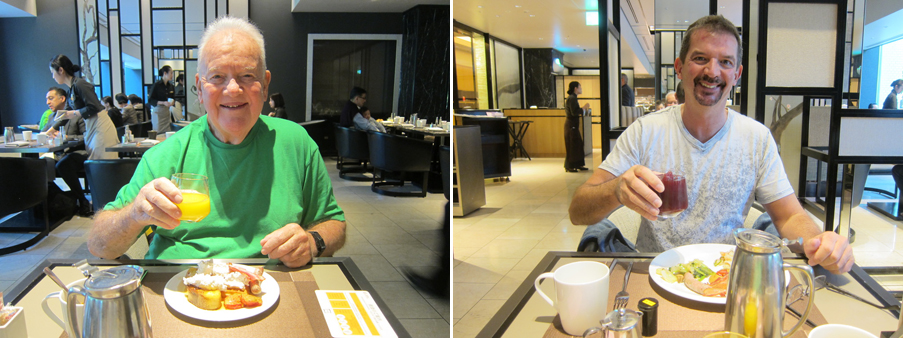
On the morning of Day 3 we enjoyed a leisurely breakfast in the hotel, then met in the lobby to begin our activities for today.
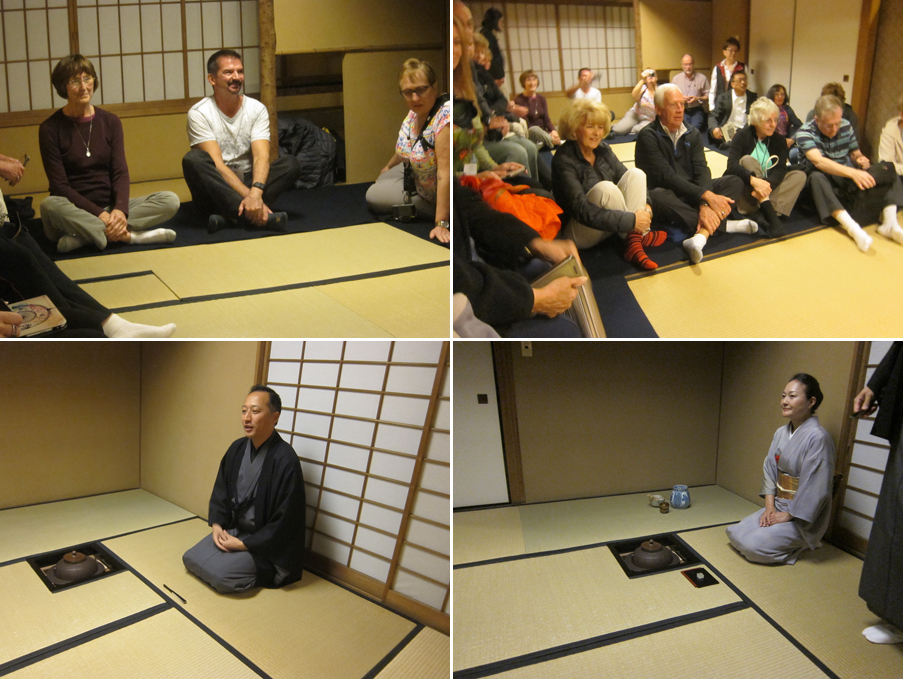
We would first be joining the locals to experience a tea ceremony in an authentic setting. Notice how Karen and Pete look almost comfortable in this seated position. Not so for the rest. A few of us, myself included, were fortunate enough to be sitting in the few chairs that were located against the far wall from the entrance to this room, and we were lucky enough to have entered first.
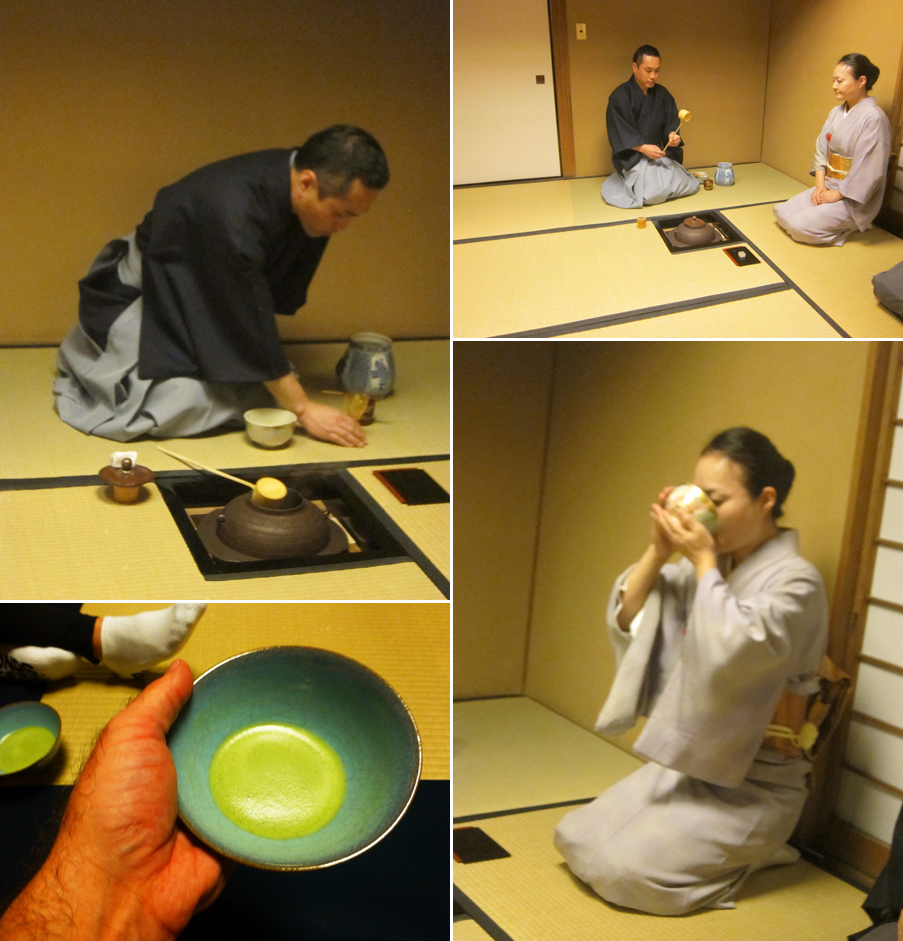
I was a bit envious of the ease with which our hosts were able to assume this bent knee position and maintain perfect posture. The Japanese tea ceremony, also called the Way of Tea, is a Japanese cultural activity involving the ceremonial preparation and presentation of matcha, powdered green tea. Zen Buddhism was a primary influence in the development of the Japanese tea ceremony. Our hosts were very precise in their movements, always with poise and grace. When one of them would enter the room, you would see the door slide open, and on the other side they were in a kneeling position as they silently slid the door open. Once it was open, they rose and walked through the opening, turning and kneeling once more, then silently sliding the door closed. They would arise and walk silently to their place in the room. There was a very precise way the tea master would prepare the tea. The serving bowl had to be washed and dried. The green powered matcha carefully measured. The hot water added very precisely, and then whisked with a special bamboo whisk into a frothy drink.
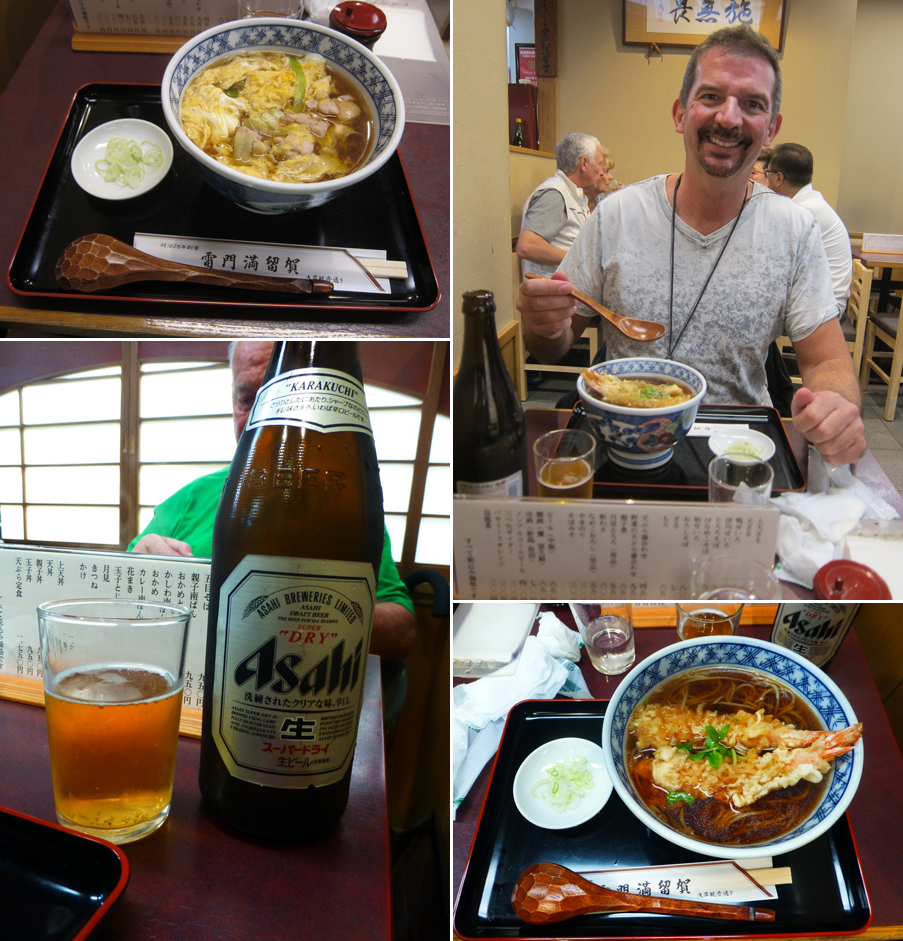
It was then presented to the guest. She would first hold the bowl in the palm of her hand and rotate it 360 degrees before taking a drink of the tea. I have not studied Zen Buddhism but I get the feeling that it is a religion of total and complete self control, poise and focused concentration. I make matcha myself at home, but my preparation and presentation isn’t the least bit ceremonial. I’m sure that if I were to incorporate a few of the techniques we learned here, I might gain some internal mental and psychological benefits I’m missing out on. I should probably first start out with a book on Zen Buddhism though. We were on our own for lunch today, so Pete and I found this great noodle shop and enjoyed a delicious bowl of udon.
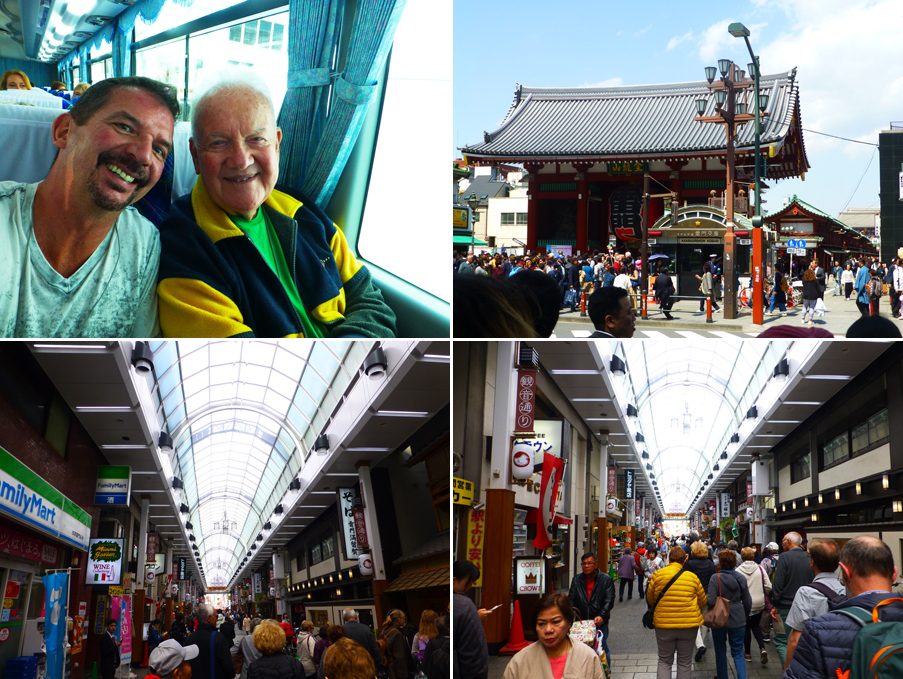
Pete enjoyed a cold bottle of Asahi beer with his meal, which had a couple of tempura shrimp in it. Mmmmmmm! Back on the motor coach we are heading for Asakusa, Tokyo’s oldest geisha district. Being mid day none of he geisha houses were open. We next went to the Nakamise Shopping Arcade, which Niko said would be the best place to find a souvenir of our trip.
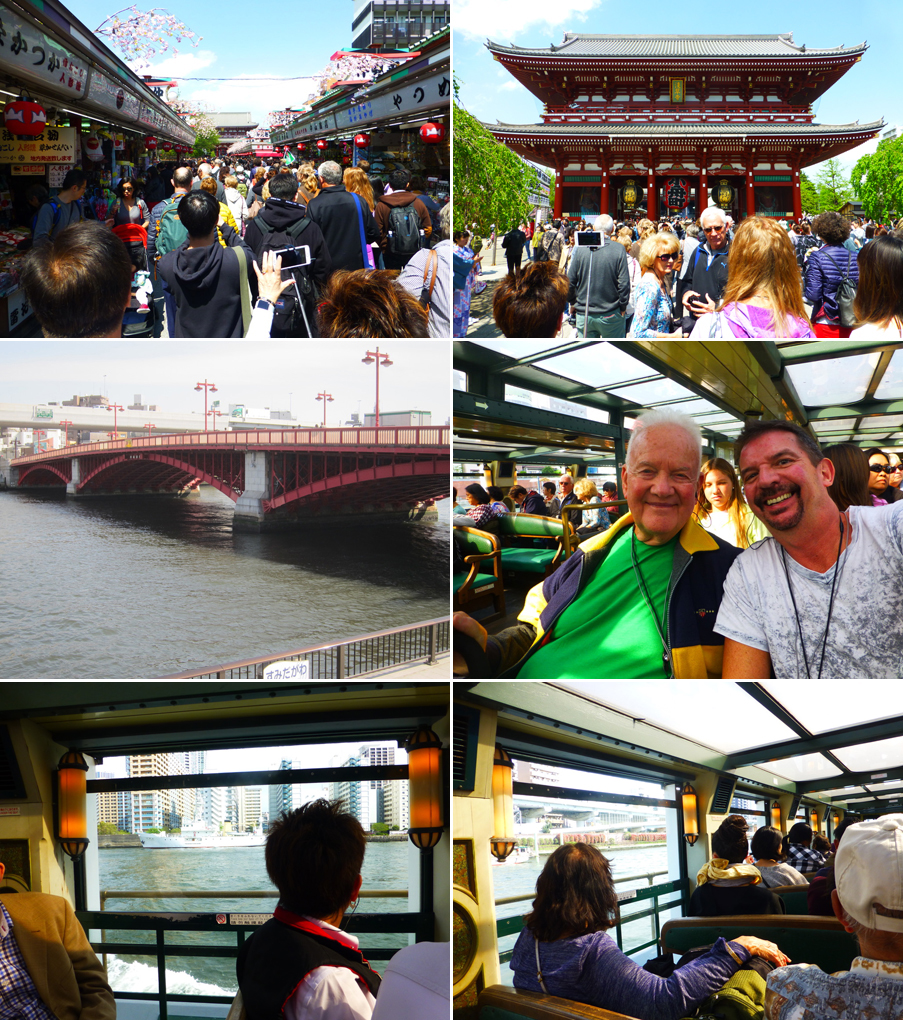
We never were much for collecting things, so we enjoyed just watching other people shop. Although it did get a bit crowded even for that. Instead, we decided to visit the ancient Sensōo-ji Buddhist temple. It is Tokyo’s oldest temple, having been completed in 645 AD. It was built to honor Kannon, the goddess of mercy. According to legend, a statue of the Kannon was found in the Sumida River in 628 by two fishermen, the brothers Hinokuma Hamanari and Hinokuma Takenari. The chief of their village, Hajino Nakamoto, recognized the sanctity of the statue and enshrined it by remodeling his own house into a small temple in Asakusa so that villagers could worship Kannon.
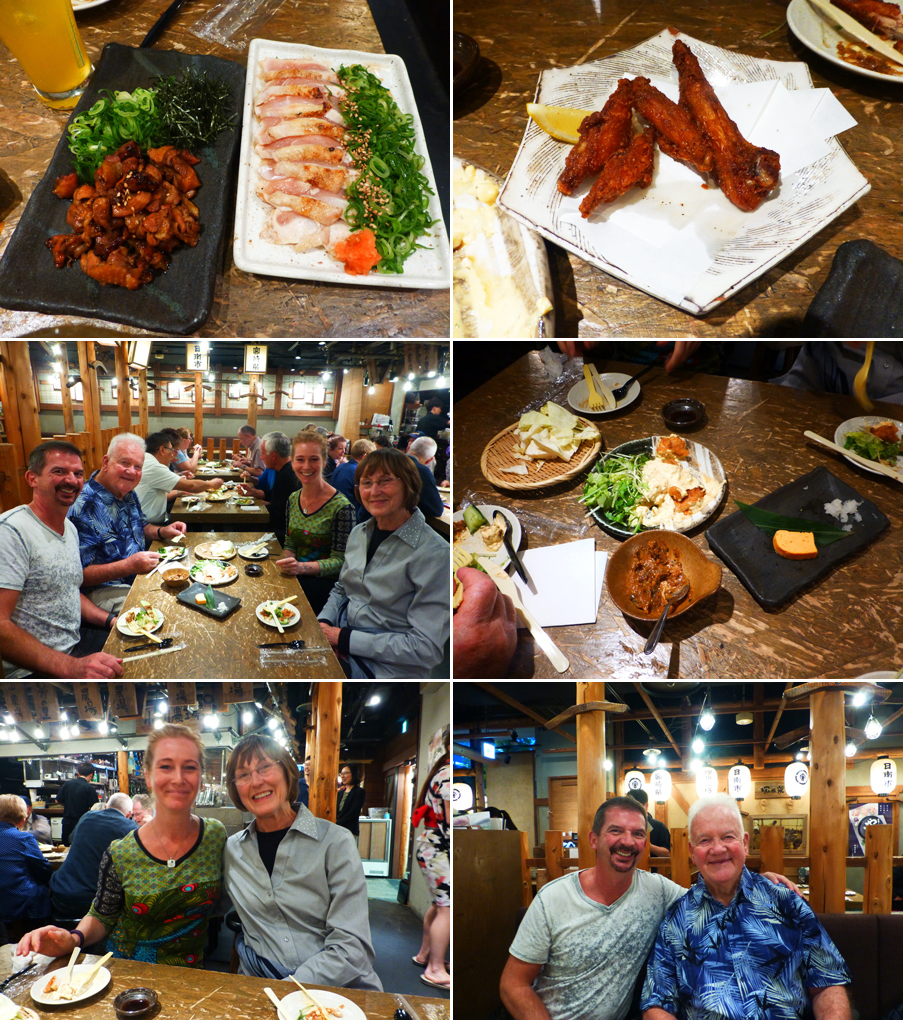
On the Sumida River we boarded a boat for the trip back to our hotel. It was a nice boat, and it was great to just sit and watch the sites on shore go by as we glided silently down the river. This was the meal that I believe Pete was the only one who actually liked it. Anyone we talked to afterwards said that they didn’t enjoy it, and I’ll have to admit, I did’t much care for it either. They had brought us a plate of raw chicken strips with green onions on the side, and a lite marinade on the strips. Raw chicken is nothing like raw salmon. The BBQ’ed chicken was fine, but ‘raw’, nah! This was one of the meals provided by Collette and I hope they didn’t spend a lot of money for it. I guess our western tastes can be a little picky at times. ;o( There were several dishes with strange things on them to share.
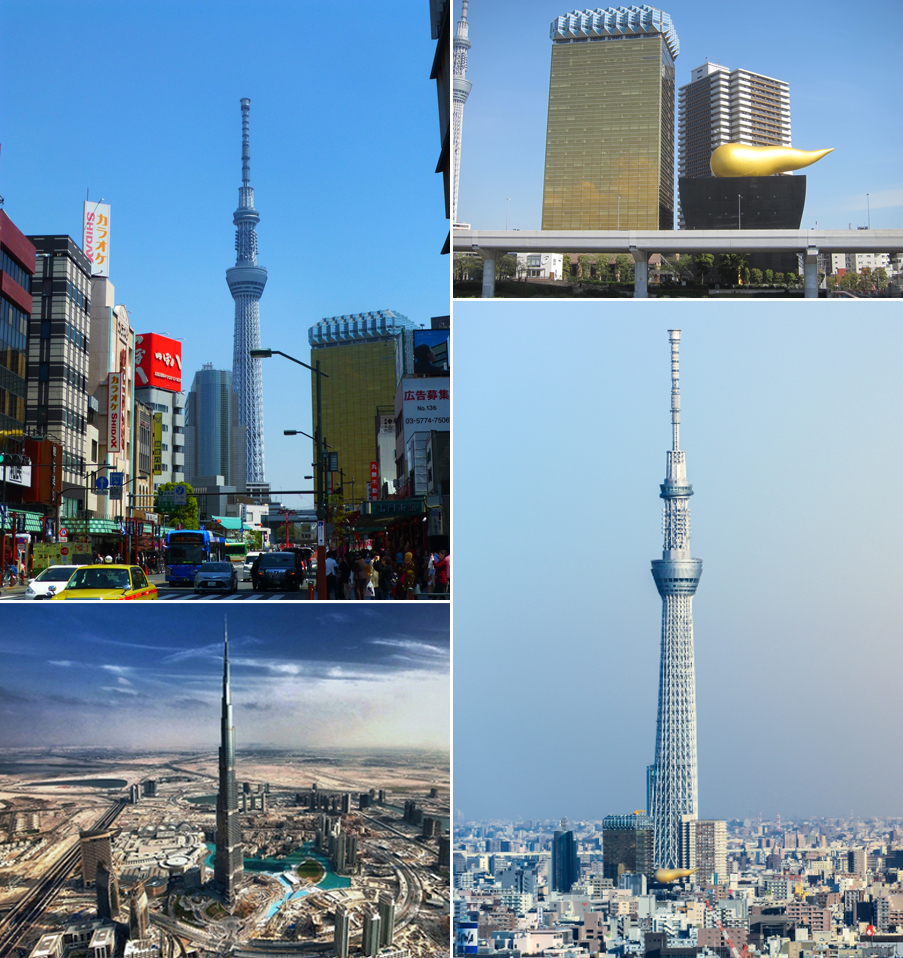
We did however, enjoy the company of Cheryl and Karen at this meal, so that made the event both enjoyable and worth while. The Tokyo Skytree in Sumida is the tallest tower in the world, but only the second tallest structure. At a mere 634 meters (2,080 feet) it is dwarfed by the Burj Khalifa in Dubai (below) which stands at 829.8 meters (2,722 feet). That weird gold blob on top of the building in frame 2 below, according to Niko, is supposed to represent the head on a glass of beer. It is a beer brewery below. It was difficult to wrap my head around that description once I had already formed in my own mind an idea of what it looked like to me.
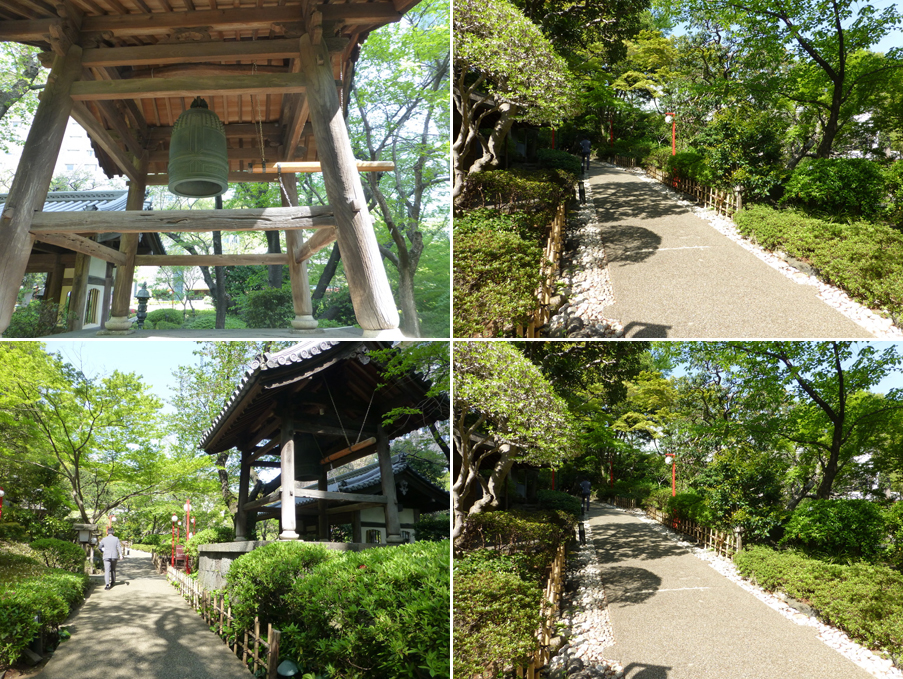
Going to the observation floors of the Tokyo Skytree was not part of our tour, although I thought it should have been. It couldn’t have been the cost, as it was only ¥4,000 (36.13 USD) for a combined ticket covering both the 350th floor and the 450th floor observation levels. It would have been a great way to see the city of Tokyo from a bird’s eye view. Oh well, perhaps on our next trip. When we got back to the hotel, and before dinner, we took another walk through he Japanese garden, enjoying its beauty and relaxing atmosphere. The ancient bell below gets rung once a day. The long horizontal beam that rings it is tied off by a strong chain and padlock to prevent it from being rung randomly by, tourists I suppose.
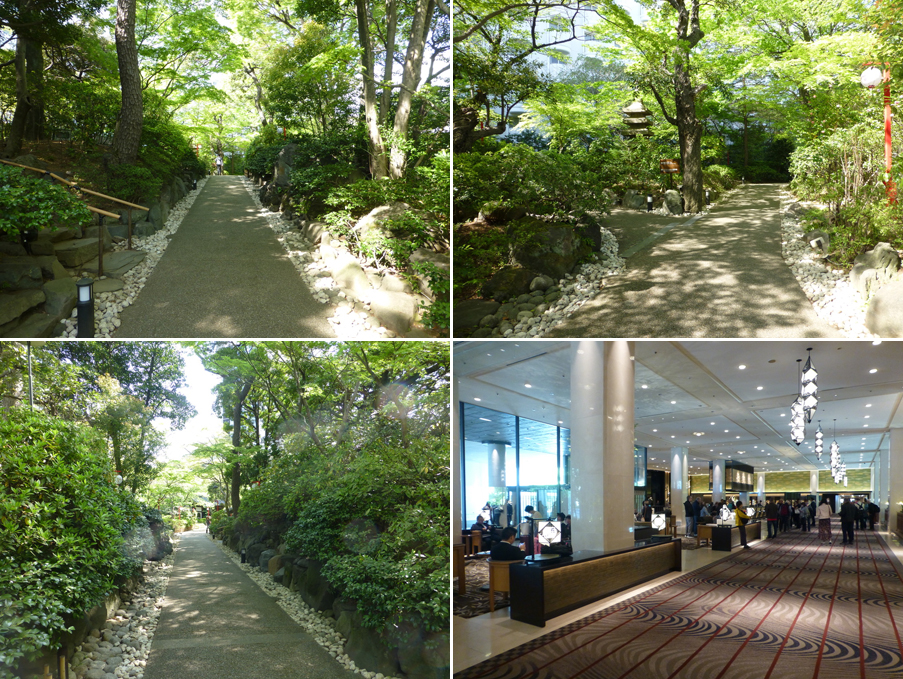
There were so many interesting paths to follow through the garden, and lots of surprise objects tucked among the bushes.
The hotel lobby was grand and fairly elegant. As hotel lobbies go though, on a scale of 1 to 10 I’d give it a 9. In the morning of our 4th day we must have our bags outside our doors early, as we will be leaving the Grand Prince Hotel in Tokyo and after a busy day will settle into our new hotel, the Odakyu Hotel de Yama in Hakone, Japan.
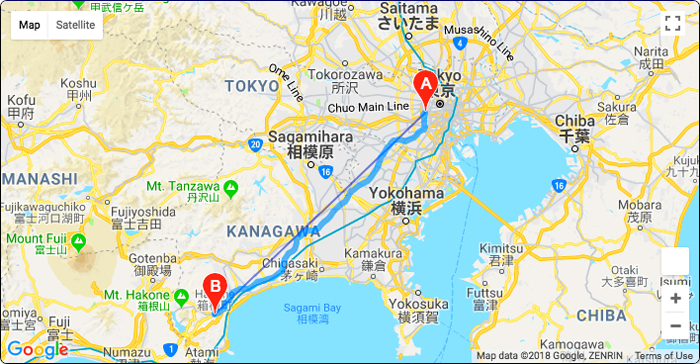
Hakone is about an hour and a quarter driving time from Tokyo, or 82.7 km (51.4 miles) in distance. That’s what is coming up in Part 3. |
|
||||
|