 |
|
|
|
|
|
|
|
|
|
|
||||||||
|
||||||||||||||||||
|
Email us at: |
||||||||||||||||||
 |
||||||||||||||||||
 |
 |
|||||||||||||||||
|
Click the sun to see the |
||||||||||||||||||


|
 |
|
|


|
|
|||
|
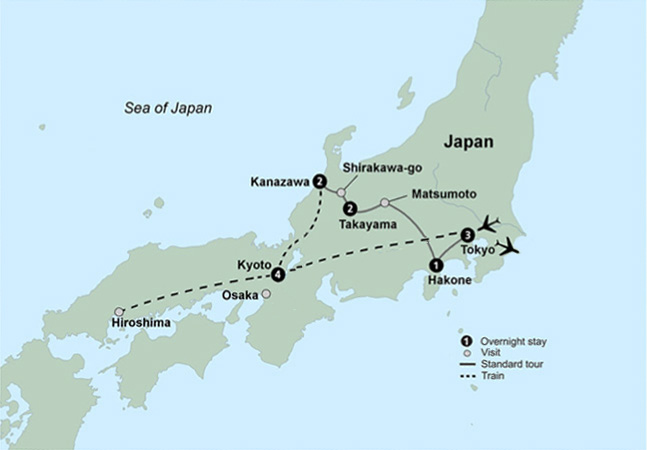
Collette’s Cultural Treasures of Japan tour map.
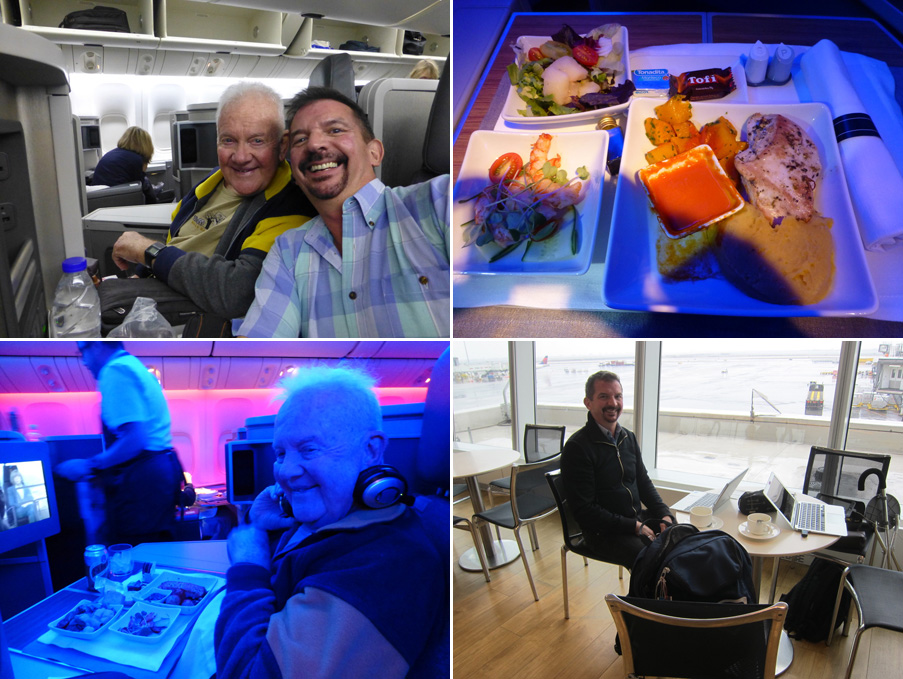
The actual tour began in Tokyo and ended in Kyoto, a fact that I should have payed more attention to when booking our flights from Argentina. I booked our return flight from Tokyo’s Narita airport, but the tour departure flight was from Osaka. This introduced just a slight blip in that we had to take the bullet train from Kyoto to Narita, a trip that Pete agonized over, but which actually turned out to be a piece of cake. Pete and I had been anticipating this trip for a long time. We almost cancelled it, because when we returned home from our California / Cabo trip on 20 March, I was suffering from the return of the arrhythmia that I had been free of for the past 3 years. We visited my cardiologist and I was given a prescription for a blood thinner, and was told that after 15 days on the thinner I would be eligible to have a defibrillation procedure which might stop the arrhythmia. I was given the ok to go on the 15 day trip to Japan, and I was so happy that we did not have to cancel. Pete had never been to Japan, so it was important to me that he should have this opportunity. We had upgraded to Business Class for the first leg of the trip, from Buenos Aires to JFK in New York. The upgrade from coach to business was based on availability, and it only cost $350 and 25,000 miles each, which to me was well worth it. For some reason we could not get the upgrade from JFK to Japan because it was the only leg operated by Japan Airlines, an American Airlines partner. Pete was obviously quite happy to be in business class. The meal was several orders of magnitude better than coach.
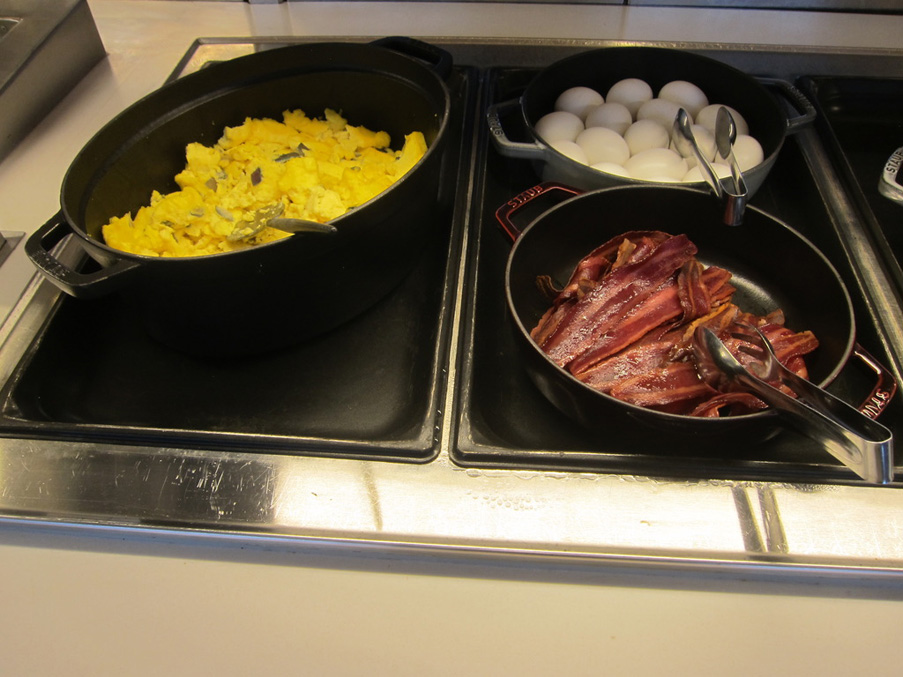
And Pete was able to get mixed drinks just by asking. At JFK we had a 4 hour layover, which we spent in the Admiral’s Club. Breakfast wasn’t bad, with hot scrambled eggs, bacon and both hard and soft boiled eggs, as well as an array of pastries, choice of juices, hot coffee and a good selection of fresh fruit. That took the edge off our 10h 54m flight from EZE.
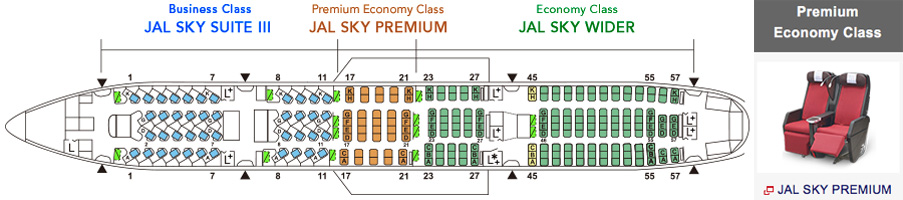
It is funny sometimes how things work out. While we were waiting for boarding to start, on a whim I went to the agent at the counter and asked if it was possible to upgrade from Economy Class to Premium Economy Class. It was, and it would cost us $350 each, and no mileage requirement. On Japan Airlines Premium Economy is essentially the same as Business class, except the seats do not lay flat. The meals, beverage service and everything else is the same as Business Class. We were in heaven. We had seats 17A & 17C, which had more leg room than we could use. The seats were much wider, and the leg rest was great.
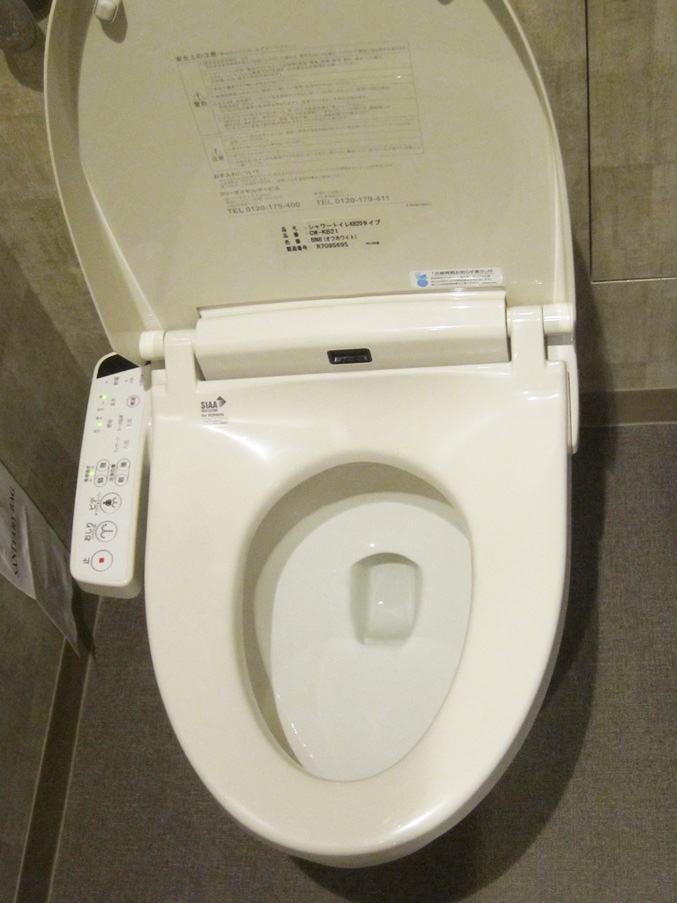
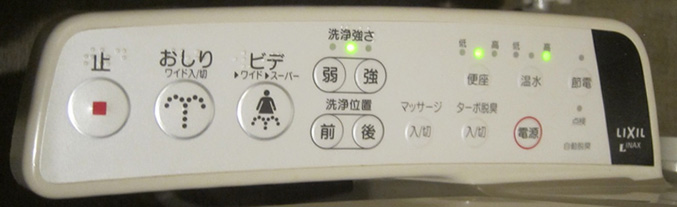
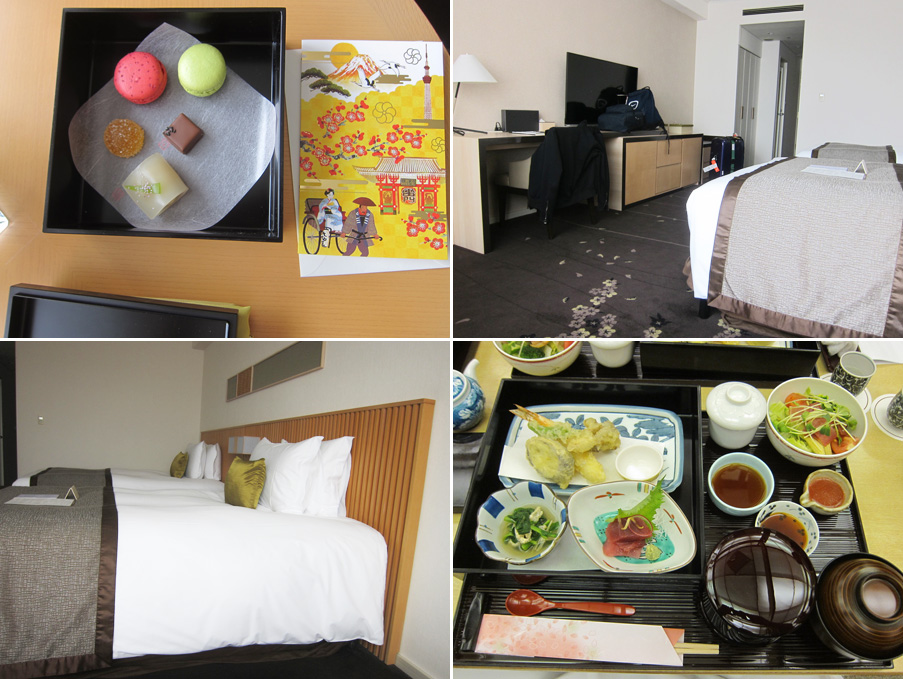
The flight to Narita from JFK was 14h 10m. That’s a long time in an Economy seat, so the upgrade was a real blessing. We arrived at Narita at 2:40 PM and were met by a Collette representative who drove us the 1 hour drive to our hotel, the Grand Prince Hotel New Takanawa in the heart of Tokyo. Our room was quite spacious, and this is bound to make you laugh, I fell in love with the toilet seat. It was HEATED! And, it was also a bidet. I so wanted to buy one and bring it back home with me.
There was an enameled box on the table near the window with various sweets in it, along with a welcoming card. The room was spacious, and the bed was quite comfortable, reminding me of the Westin’s “Heavenly Bed”.
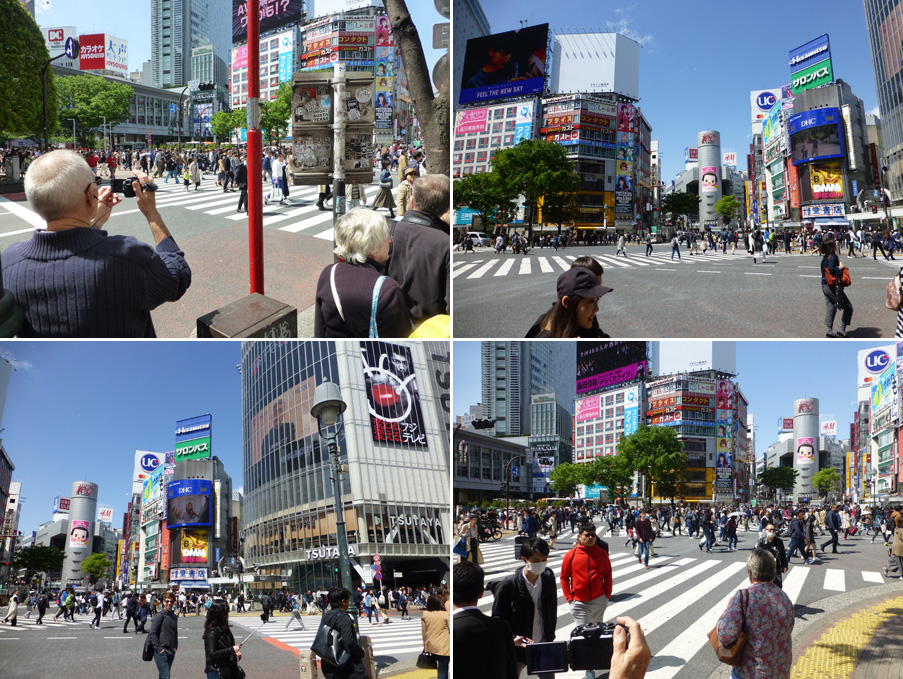
This evening we were to meet our fellow travelers at a welcome dinner, which by the way, was very good. I learned that the one job you didn’t want to have in a Japanese restaurant was that of dish washer. Have you ever seen so many dishes used to serve a single meal? I believe our group was 22, and we each had a tray of food just like this one. My second thought after seeing how delicious it all looked, was oh my gosh, the poor dish washer boy. My first job while still in grade school was a dish washer in a small diner located inside a drug store. I now see the advantage of having a Jewish owner of the diner and not a Japanese owner. The next morning our wake-up call came at 7:00 AM. We had breakfast in the hotel, and then gathered in the lobby at 8:30 AM to head off with our guide Kuniko Makimoto (“Niko” for short) to see the famous Ginza district. The Shibuya Crossing is known as the busiest intersection in the world. This was Sunday, so it doesn’t look like there are so many people, but Niko tells us that during the week this intersection is so full of people, all criss crossing from every direction that it looks like a place you would want to avoid.
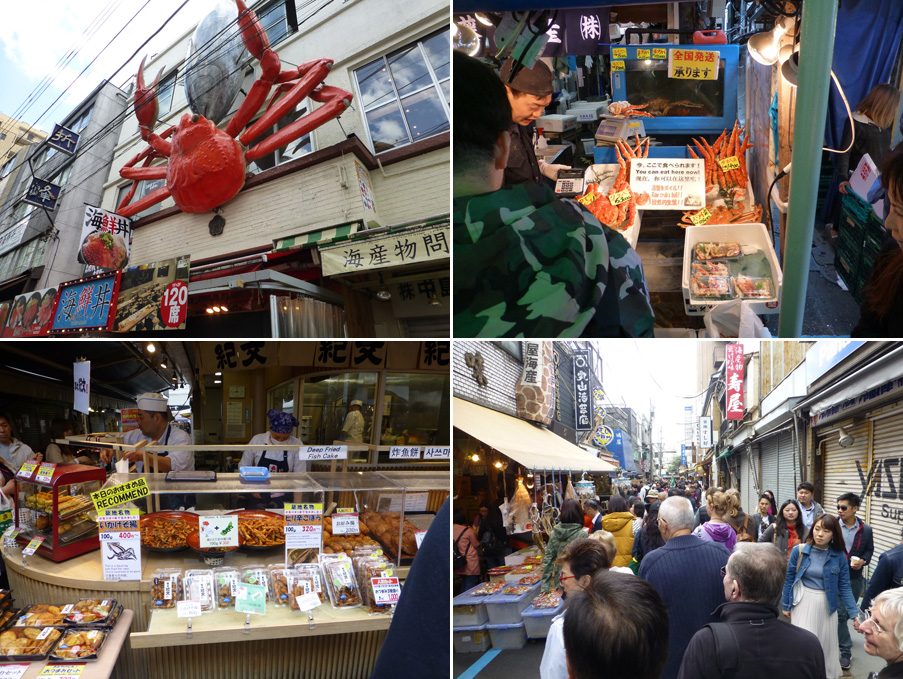
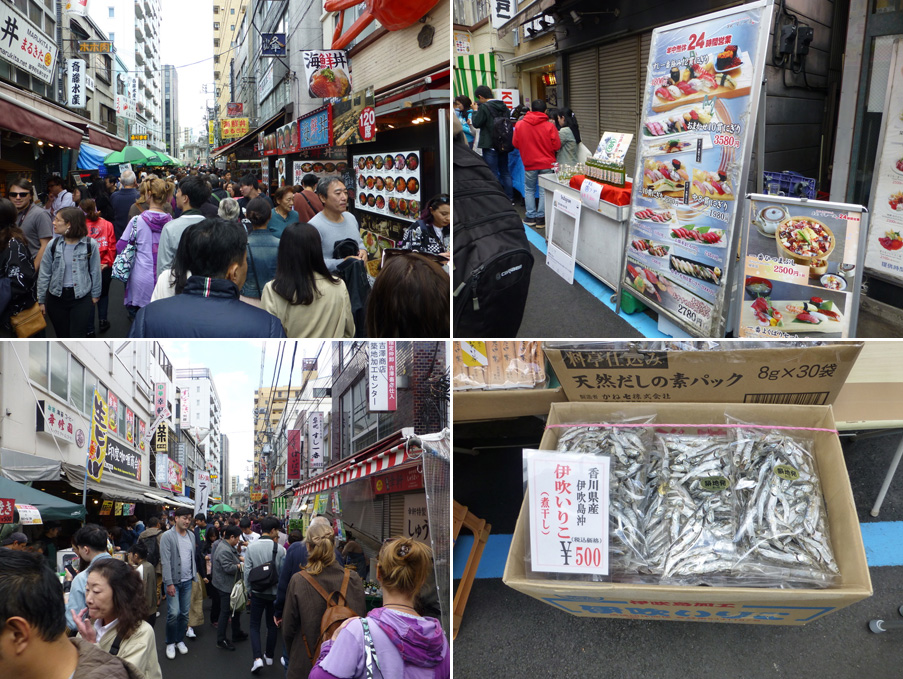
There was quite a bit of walking, and Niko took us on a route that passed by the markets, with their narrow streets and hoards of shoppers making it difficult to pass through.
There was so much stuff to see, it was a little overwhelming. Some of it looked really tasty, so it was good that we were still full from breakfast.
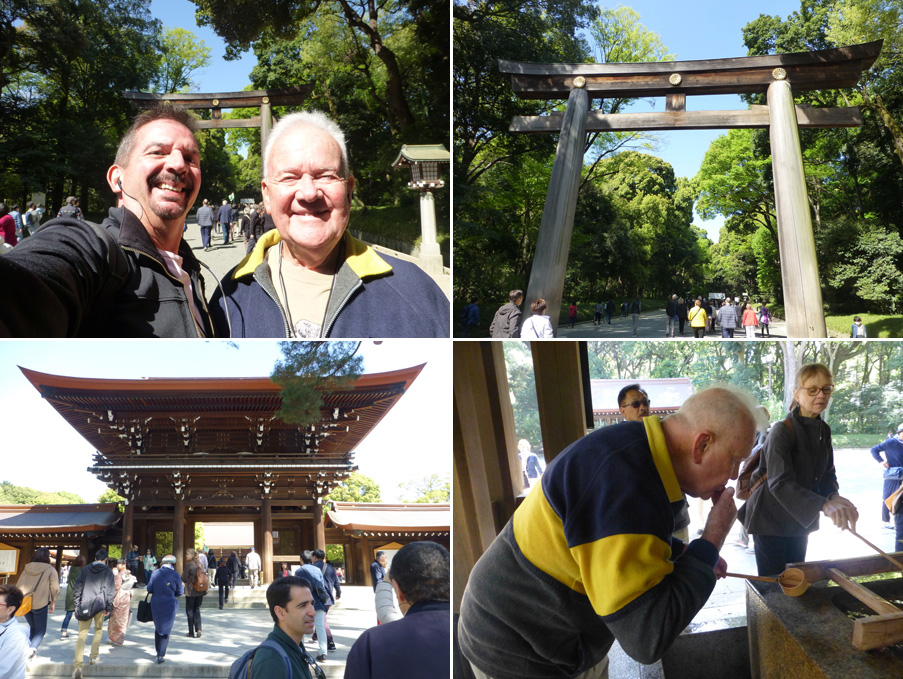
Our next stop was the Meiji Shrine, which is dedicated to the deified souls of Emperor Meiji and Empress Shōoken. It is the most important and popular Shinto shrine in Tokyo. Emperor Meiji was the first emperor of modern Japan, and was instrumental in opening Japan to the outside world. He became emperor in 1868, ushering in the Meiji Restoration that brought the rule of the Tokugawa shogunate government to an end. At the same time, the capital of Japan was moved from Kyoto to Tokyo. The shrine is sheltered by a 700,000 square-meter forest of 120,000 evergreen trees, donated from all parts of Japan when the shrine was established in 1920. The large torii (shrine) gate marks the entrance to the grounds. At 12 meters (40 foot) high, it is said to be the largest torii in japan, and it has the chrysanthemum Imperial Seal at the top denoting it’s importance.
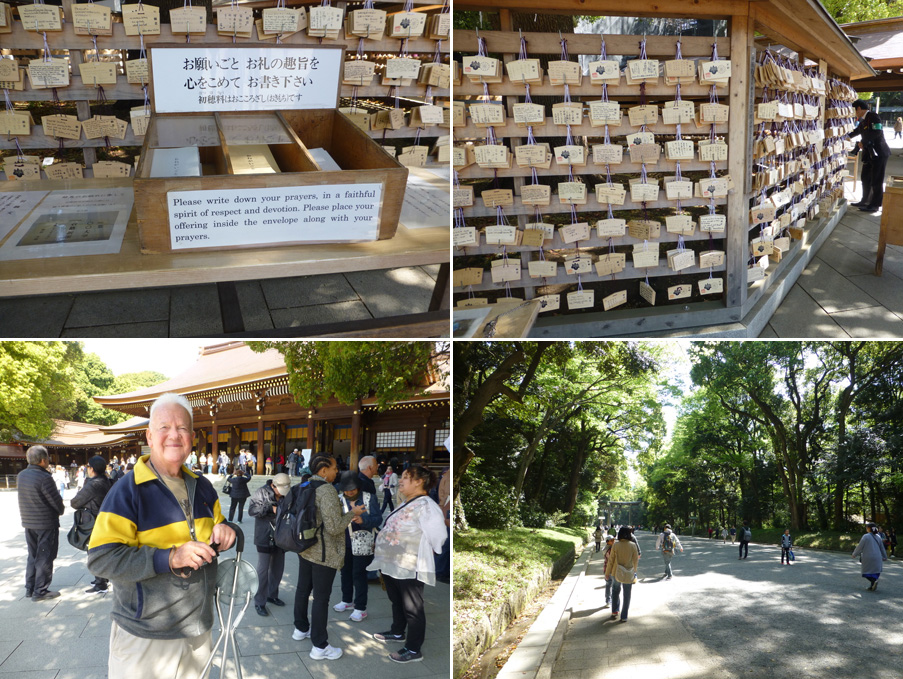
Before entering the shrine there is a ritual cleaning station where the hands and mouth are cleansed before praying. The instructions are to set your mind at ease. Shifting the dipper from one hand to the other, rinse first your left, then your right hand. Rinse your mouth with water poured into the palm of your left hand. (OOPS! I poured the water into the palm of my right hand). You could submit a prayer if you wished, along with a donation. And if you were hard pressed to come up with a prayer of your own that was “in a faithful spirit of respect and devotion”, there were literally hundreds of pre-written prayers that you could choose from.
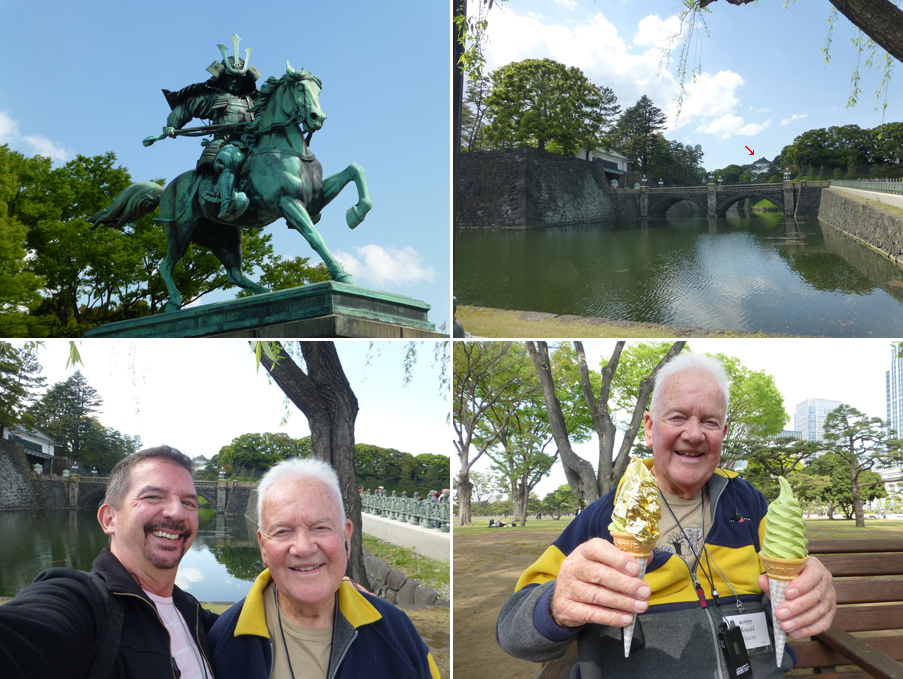
My seat-cane was something I could not do without at this stage. The arrhythmia had me mostly drained of energy. I could still walk, but slowly. Pete was so good about helping me along, yet we were continuously falling behind the group. Niko was not one to look over her should to see if the group was keeping up with her. Somehow we managed. The walk from the shrine back to the bus parking area was very long, so Pete and I got an early start, managing to arrive there only a few minutes after everyone else had boarded the bus. Our next stop was the Imperial Palace. On our walk through the east garden of the Imperial Palace we passed this beautiful bronze statue of a samurai on a horse. The samurai is Kusunoki Masashige, a great samurai warrior who fought for Japan’s Emperor Go-Daigo in the Genkö War in the early 14th century. The Imperial Palace can be seen in the distance beyond the bridge (arrow), and unfortunately this is as close as we could get to it. We didn’t even make it past the first mote. Pete thought it was worth a selfie, just to show that we were actually there.
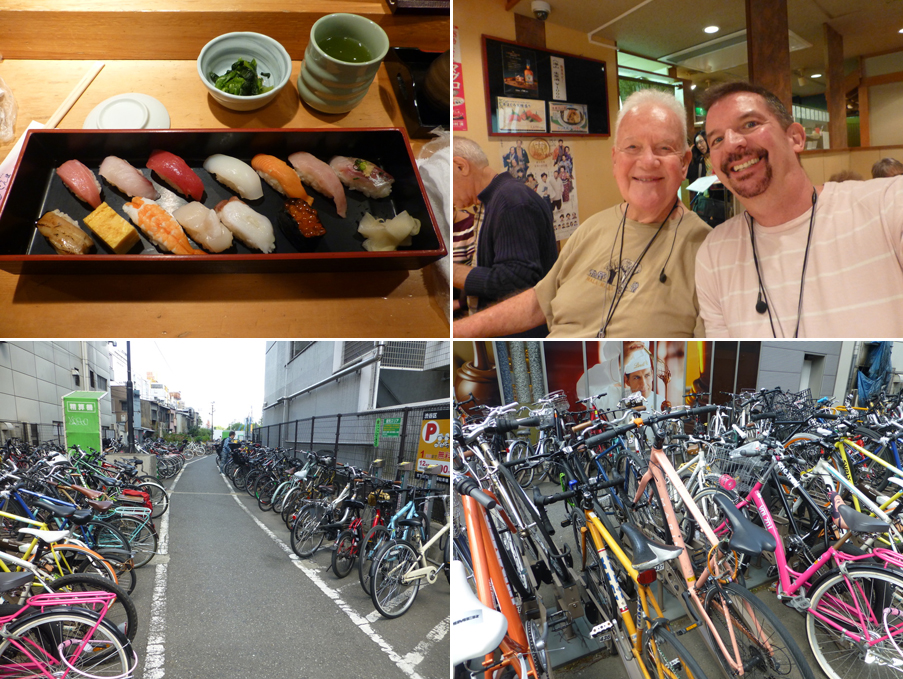
On our leisurely walk back to the motor coach Pete bought us each a green tea ice cream cone, and he got gold leaf on mine. Of course that doubled the price of the cone, and the only thing it added besides appearance, was a slight metallic taste. For lunch today we got a true tase of Japan: a sushi lunch in Tokyo’s famous fish market. Pete and I were in heaven, as we both love sushi. Unfortunately some folks couldn’t do raw fish. There were other choices though, so nobody went hungry.
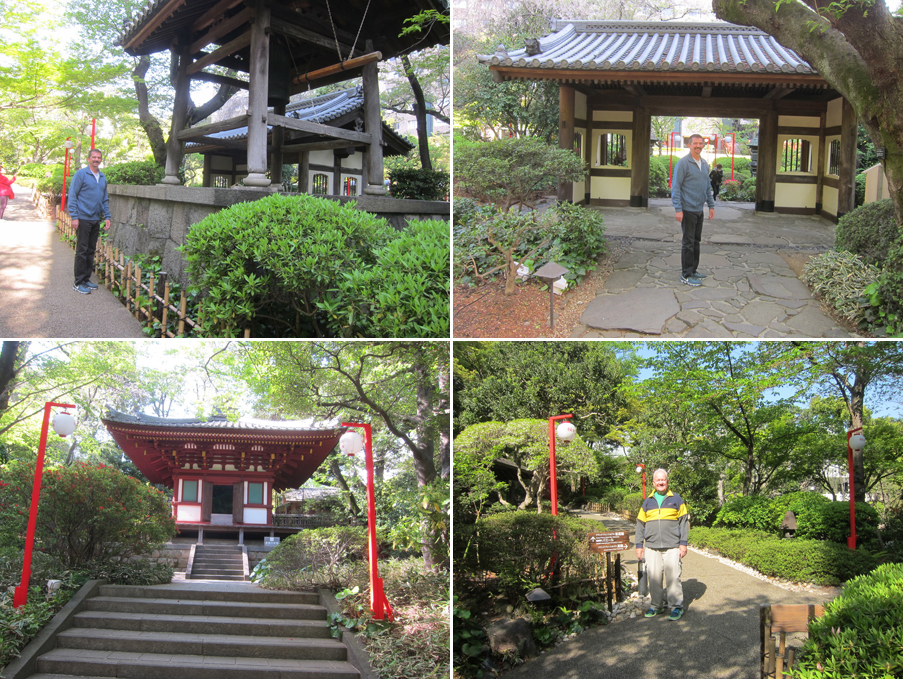
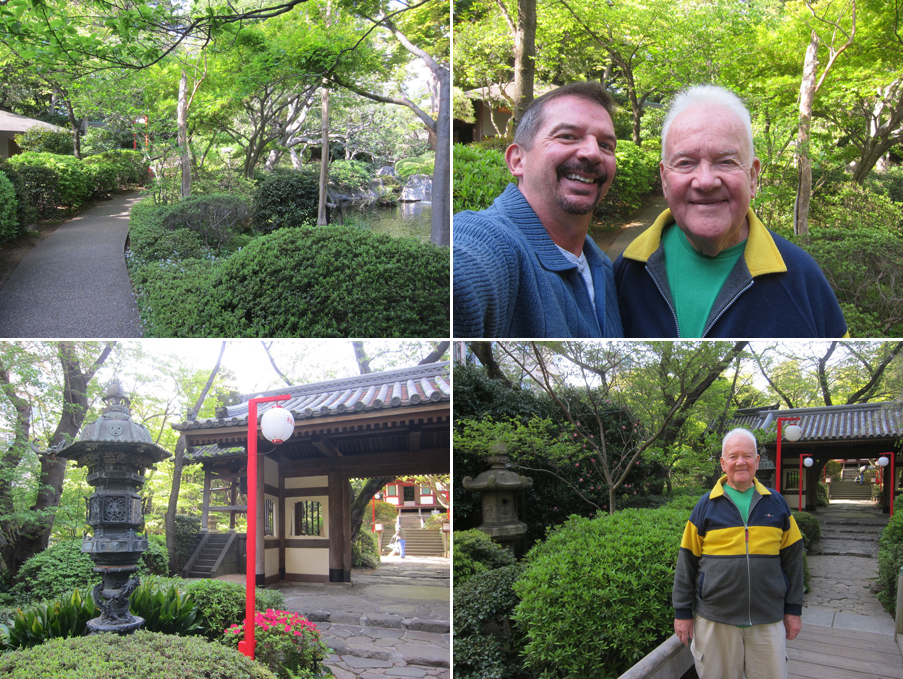
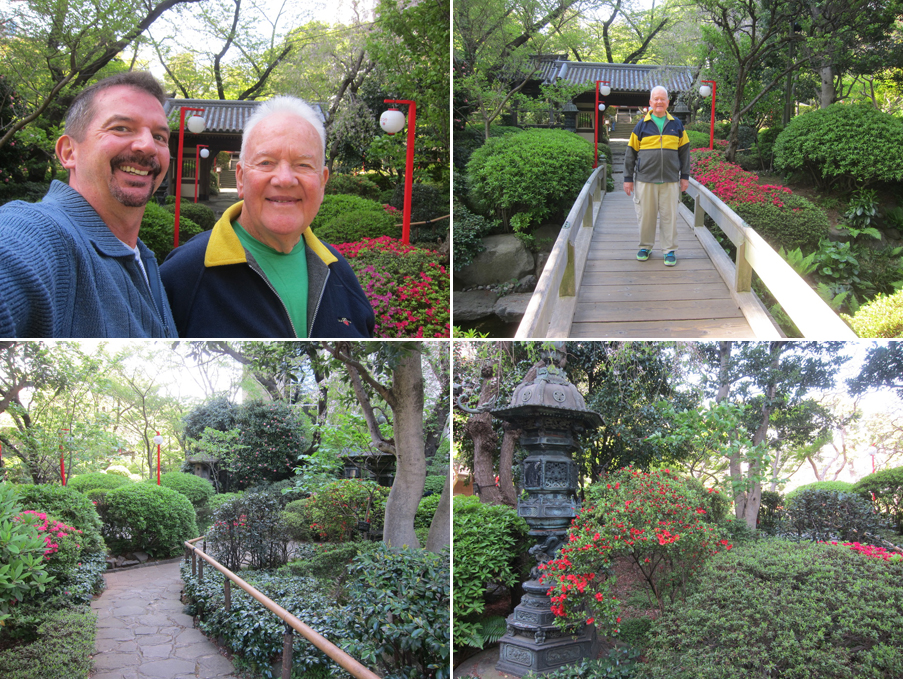
We didn’t know that bicycles were so popular in Tokyo. I felt like we had been teleported to Amsterdam. We returned to our hotel at 18:00 and were on our own tonight for dinner. Pete and I ate in one of the hotel restaurants, the Japanese one on the 9th floor of the main tower. Before going to dinner however, we took a leisurely stroll through the beautiful garden that lies between the towers of the Prince Hotel complex. Like all Japanese gardens it was immaculately manicured and cared for, and you felt a sense of balance and calm as you strolled along the pathways.
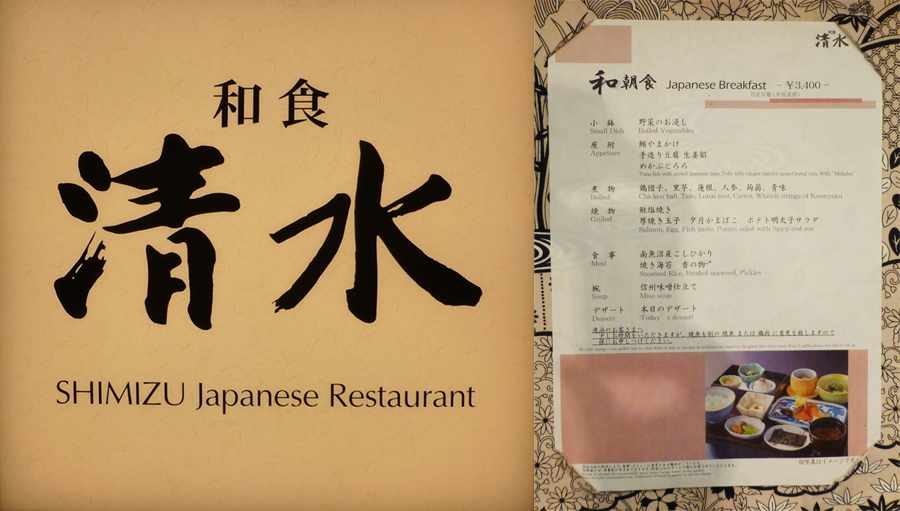
This stroll put us in a very pleasant mood to enjoy our dinner, which was at the SHIMIZU Japanese Restaurant in the main tower. We didn’t know that our travel agent, Carol Shimizu, had her own restaurant in the heart of Tokyo. ;o)
Thus ends our 2nd day in Japan. Day 3 will begin with breakfast in the hotel, followed by a tea ceremony in an authentic setting. |
|
|||
|