 |
|
|
|
|
|
|
|
|
|
|
||||||||
|
||||||||||||||||||
|
Email us at: |
||||||||||||||||||
 |
||||||||||||||||||
 |
 |
|||||||||||||||||
|
Click the sun to see the |
||||||||||||||||||


|
 |
|
|



|
|
|
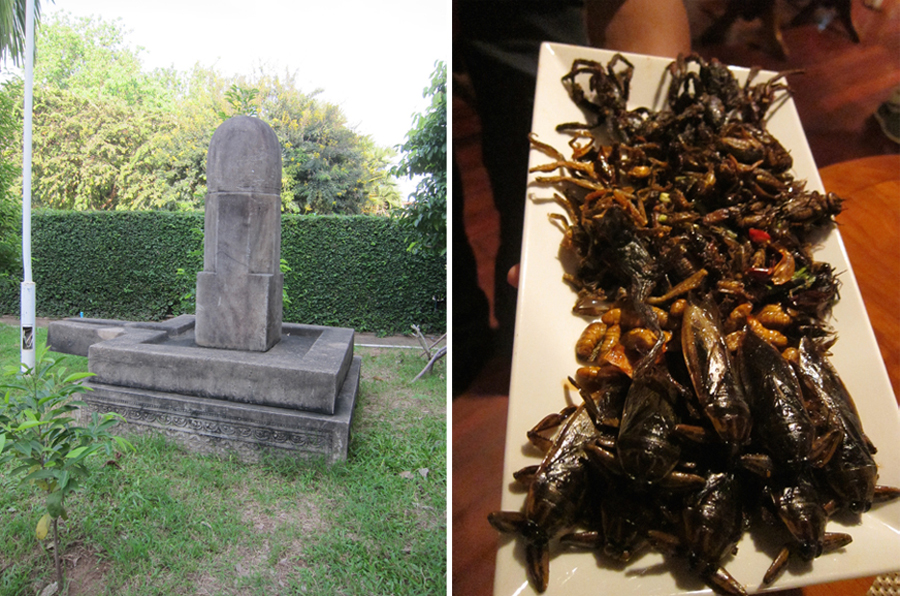
We would be spending the night on the boat, tied up in Phnom Penh, and the chef had prepared a special dinner for us, “A Taste of Cambodia”, and it was to be followed by a Folkloric Cambodian show. The dinner was a little unexpected. If you’ll recall, back in Chapter 4 & 5, when we visited Angkor Wat and Angkor Thom, in the temples there were some pedestals, and they were all missing the object which they were designed for. These were phallic symbols. Tin said that we would eventually see one. Well, here in Phnom Penh we did. The photo below (left) is such a monument, taken from one of the temples and moved here in Phnom Penh. I’m not sure why they couldn’t leave a few of them back at the temples. It’s a puzzle.
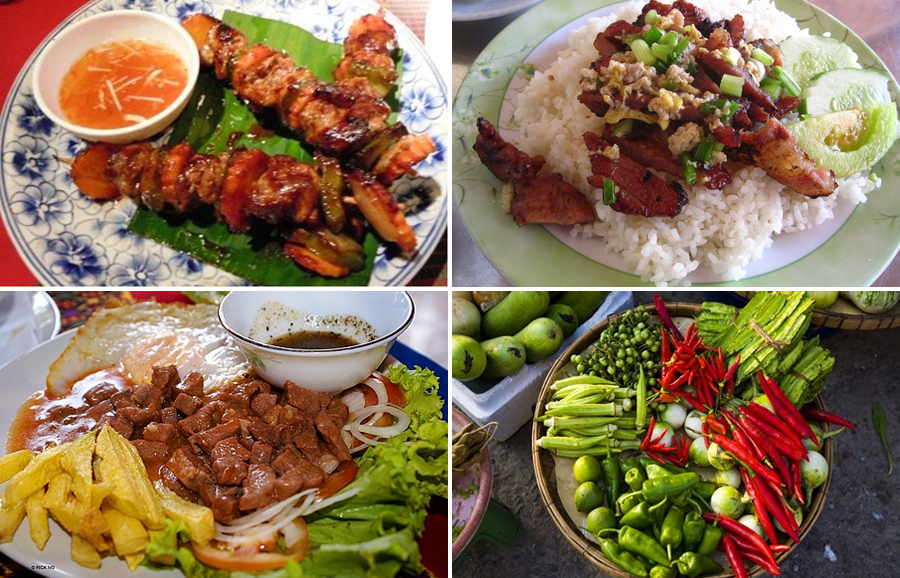
As for the photo on the right, that is the appetizer plate that was served at our special “Taste of Cambodia” dinner. They are beetles, larva, grasshoppers, and tarantulas. I tried a couple of the more harmless looking critters, but I definitely drew the line at the tarantulas. This was unfortunate, because later, everyone who did try the tarantula said that it was by far the best tasting of them all. That may or may not be true, in any case, I could not get my mind past their hairy legs, and the realization that buried within their hairy body was a poison sack. I still shiver when I think of eating one. There were also some very nice dishes of typical Cambodian cuisine. I would caution you to steer clear of those red peppers.
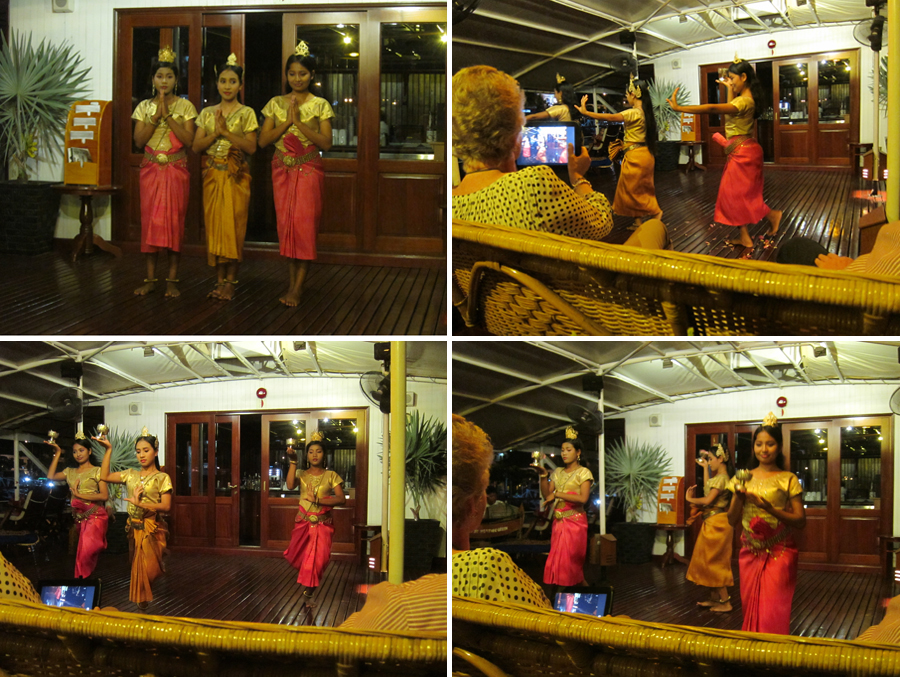
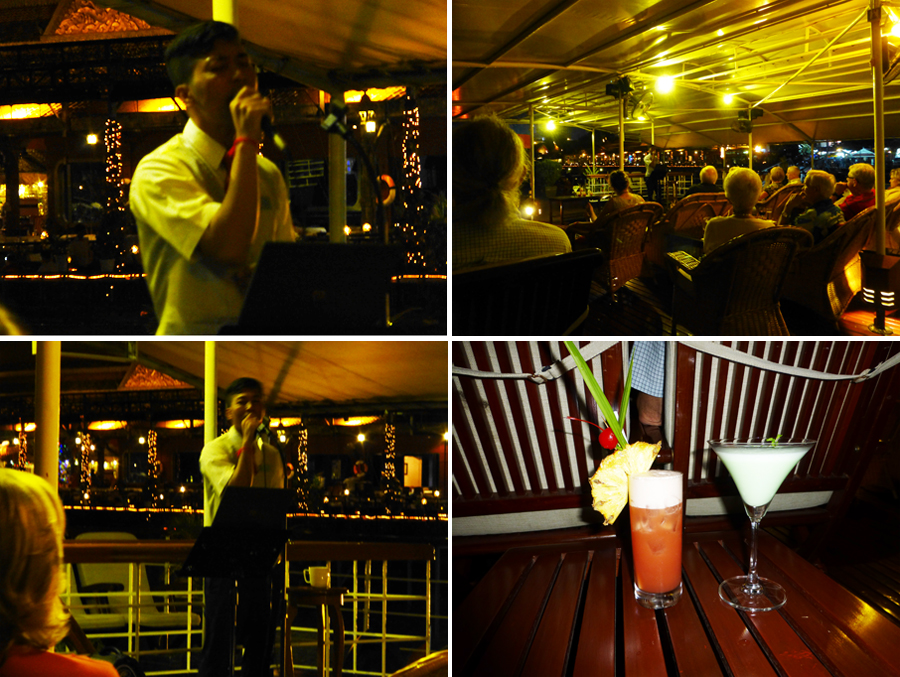
After dinner we were entertained on the sun deck. It was after dark, so forgive the poor quality of my photos. I don’t like to use the flash, as to me it makes everything so harsh. I can live with a little blurriness.
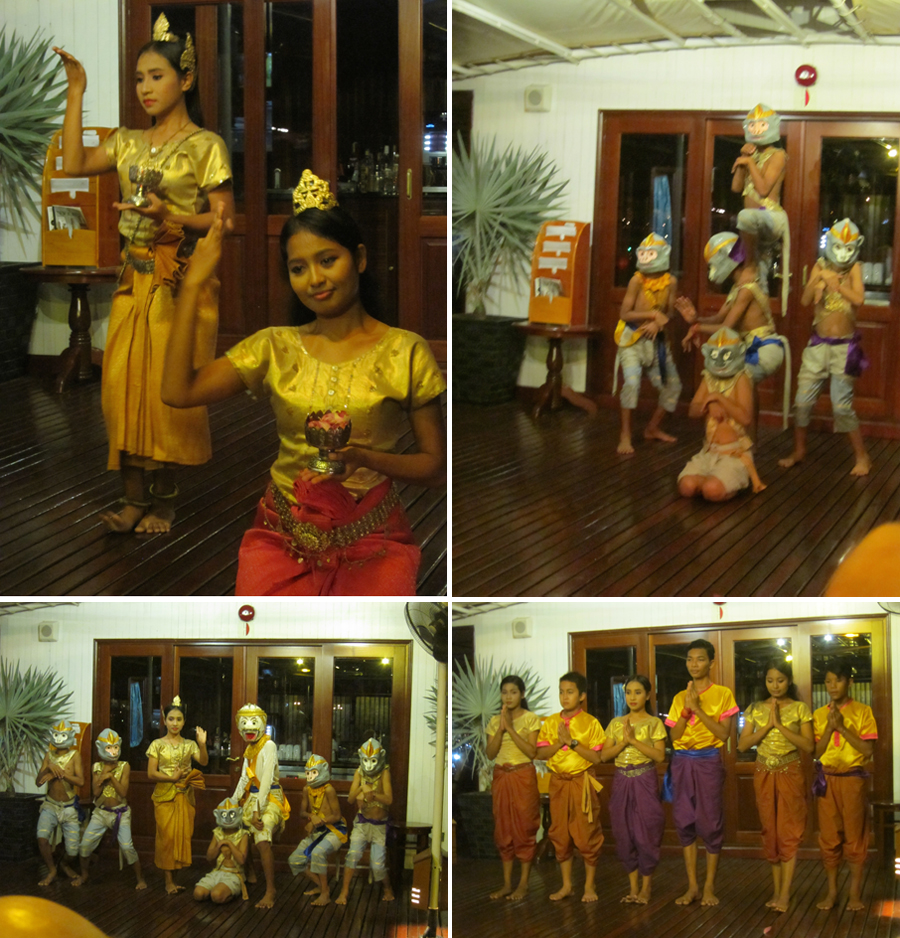
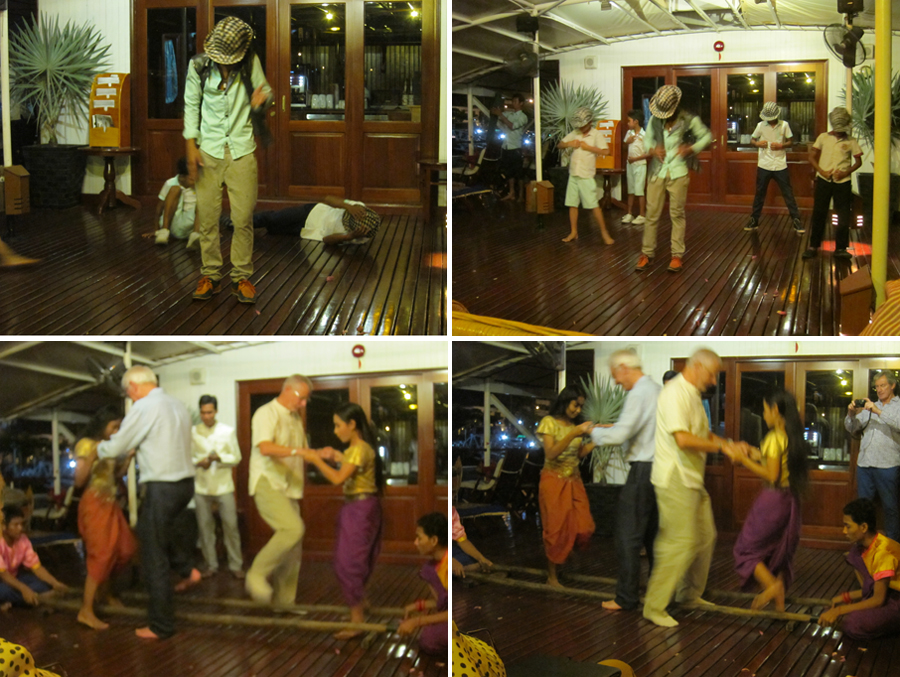
The dancers were very graceful, and full of poise. They reminded me a lot of Hawaiian hula dancers in a way.
The character in the monkey masks told a typical Cambodian story. This was folkloric art very well presented. This young man had a Michael Jackson routine, and he mimicked him pretty accurately.
Some of the men braved a dance with the young Cambodian dancers. I was glad that as they hopped over and between those moving poles, nobody tripped and broke a hip, or worse. ;o) It looked like they were having a great time of it. Our Bar Tender Pisey had a talent for singing, and he sang several songs for us this evening.
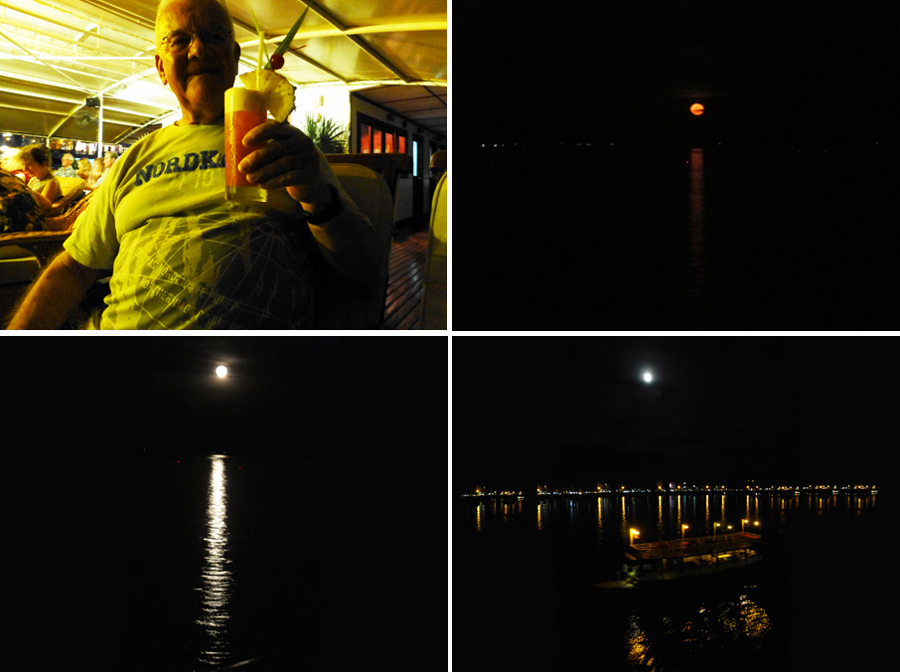
The cocktail specials were displayed to help us decide what to order. Both were quite tasty. You can see which drink I tried first. ;o) There was a full moon tonight, and it was a beautiful orange color as it rose.
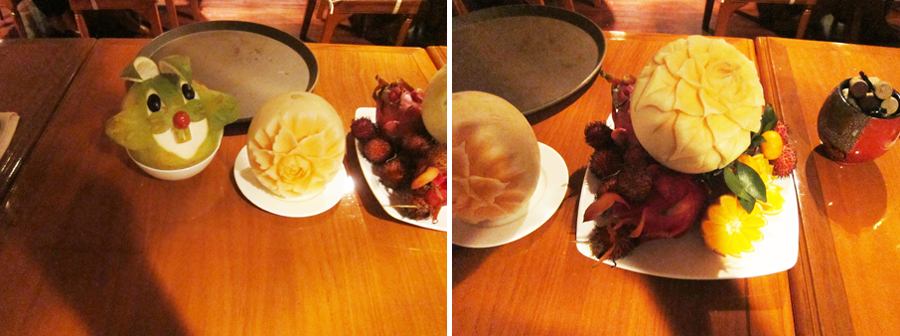
The moonlight shining upon the water, and later on, the reflections of the lights from the opposite shore were beautiful. At 9 the next morning we cast off from Phnom Penh and headed for Tan Chau. On the way there, we were given a presentation of Vietnam History and Culture by Ut and Tin. When did it all begin? Many Vietnamese archeologists and historians assert that the origins of the Vietnamese people can be reliably traced back to at least the fifth or sixth millennium B.C. when tribal groups inhabited the western regions of the Red River delta. A seminal event in the solidification of Vietnamese identity occurred in 42 B.C.E. when China designated he territory as its southern-most province and began direct rule over it. China would rule the region for almost one thousand years, thereby laying the foundation for the caution and ambivalence that Vietnamese have felt for centuries toward their giant northern neighbor. The Vietnamese reestablished their independence in 938. The next thousand years saw a succession of Vietnamese dynasties rule the country, such as the Ly, Tran, Le, and Vietnam’s last dynasty, the Nguyen (1802-1945). These dynasties, though heavily influenced by China in terms of political philosophy and organizational structure, participated in the articulation of the uniqueness of Vietnamese society, culture, and history. This period also saw the commencement of the “Movement South” (Nam Tien) in which the Vietnamese moved south from their Red River delta homeland and gradually conquered south and central Vietnam. In the process, they displaced two previously dominant groups, the Cham and Khmer. Despite efforts at industrialization after 1954, agriculture remains the foundation of the economy. Over 70 percent of the total population engage in farming or farm-related work. Following lunch, our Chef Vuthy gave a cooking class demonstration and a fruit carving lesson in the Dining Room.
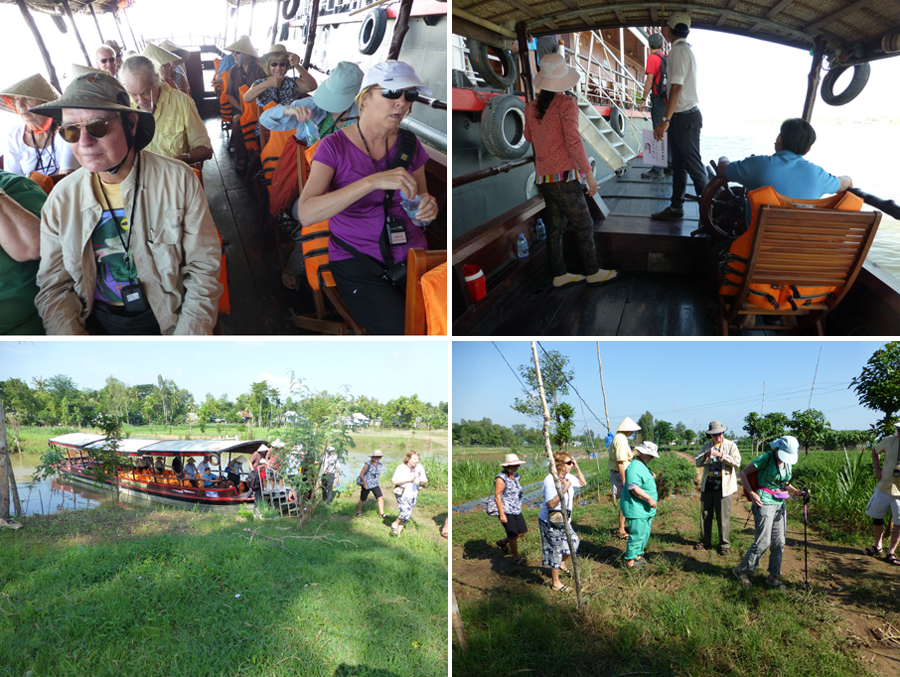
These fruits were far too pretty to eat, but I’m not one to let good food go to waste. Or is it waist. ;o) We wouldn’t be arriving at Tan Chau until 5:30 PM, so the afternoon was filled with a Wheelhouse Tour, and a musical performance by Pisey on the sun deck. Our next excursion was a boat trip to the floating village and a stop at ”Evergreen Island” (Vinh Hoa), which is located in the Mekong Delta.
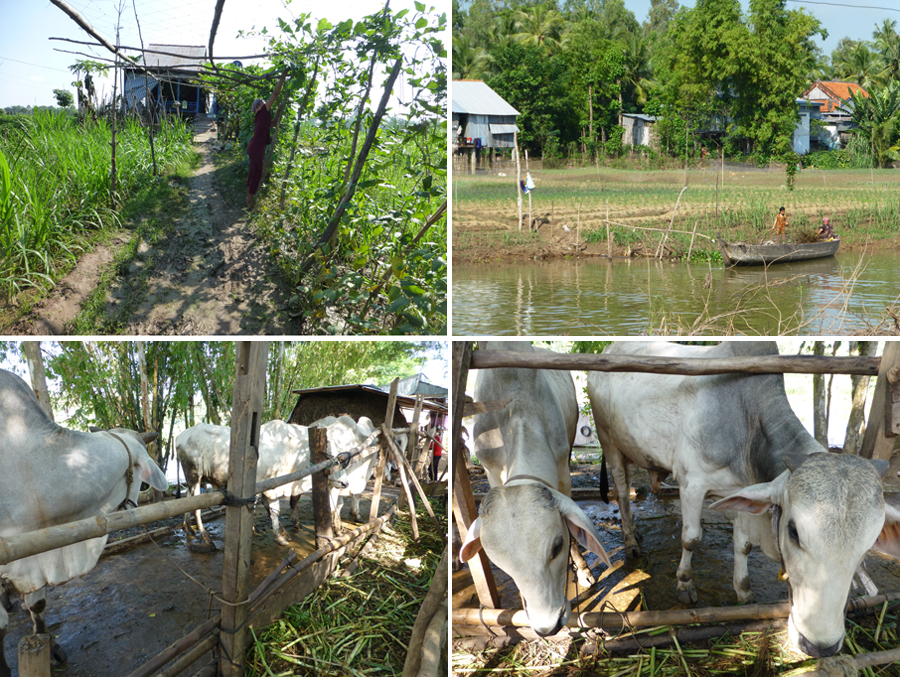
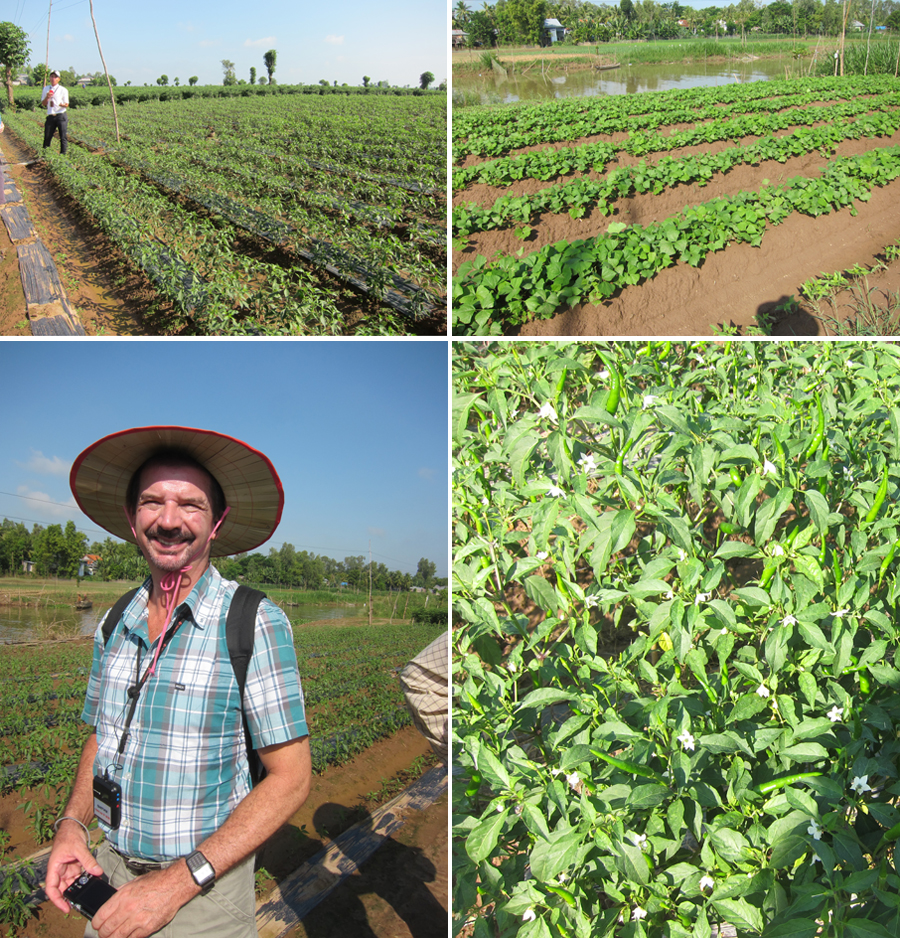
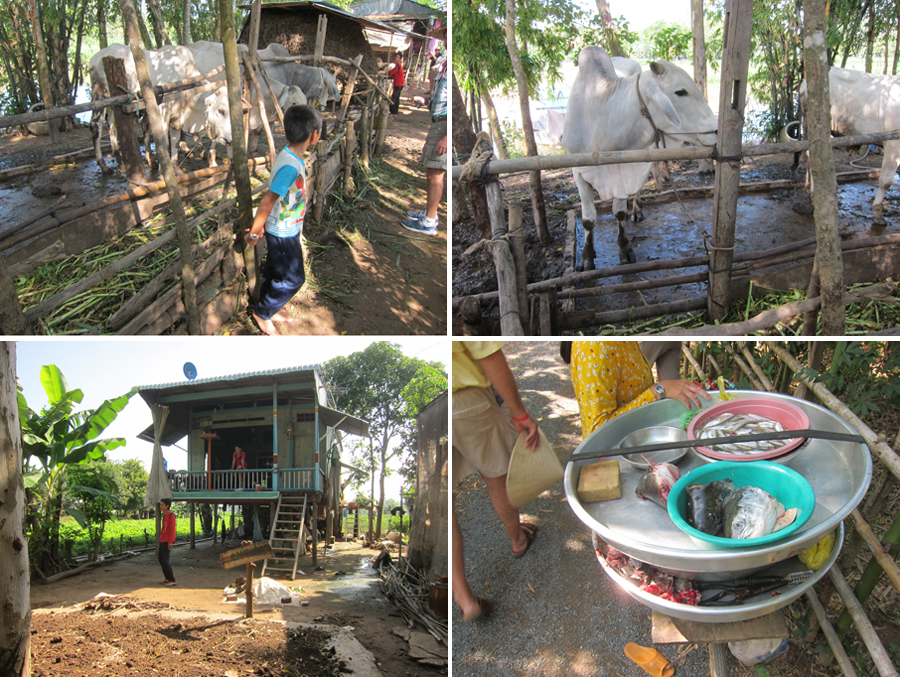
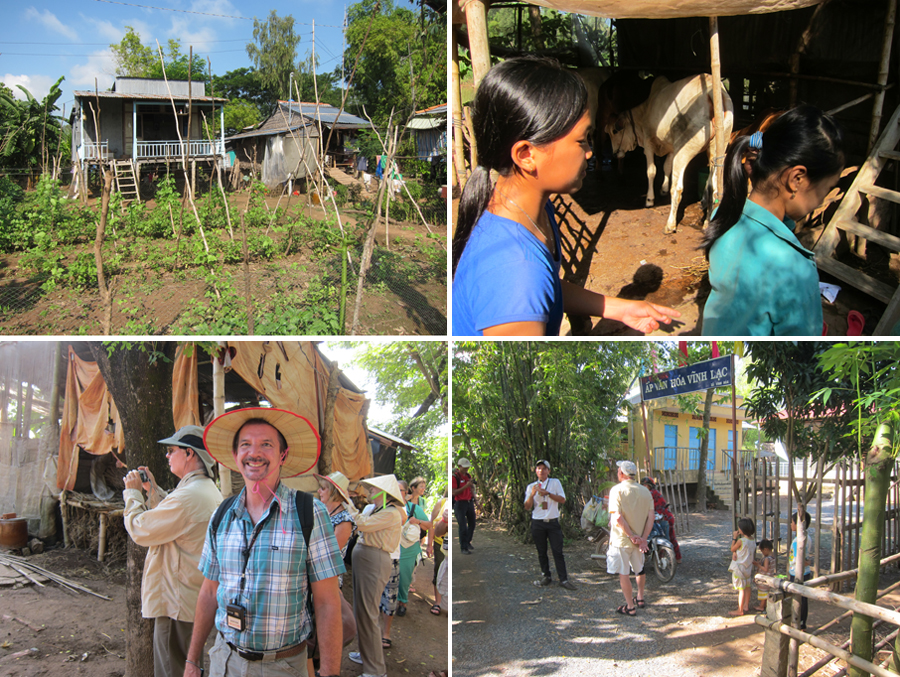
This entire island is one huge garden, with a multitude of crops. The soil was so rich, and the crops are so healthy looking. Some of the homes were built on pilings, so typical of Vietnam homes on the Mekong.
Their cows looked like they were very well cared for. They apparently had plenty to eat. Tin was very good about pointing out the various crops as we walked along a path, and saw the farmers working in the fields.
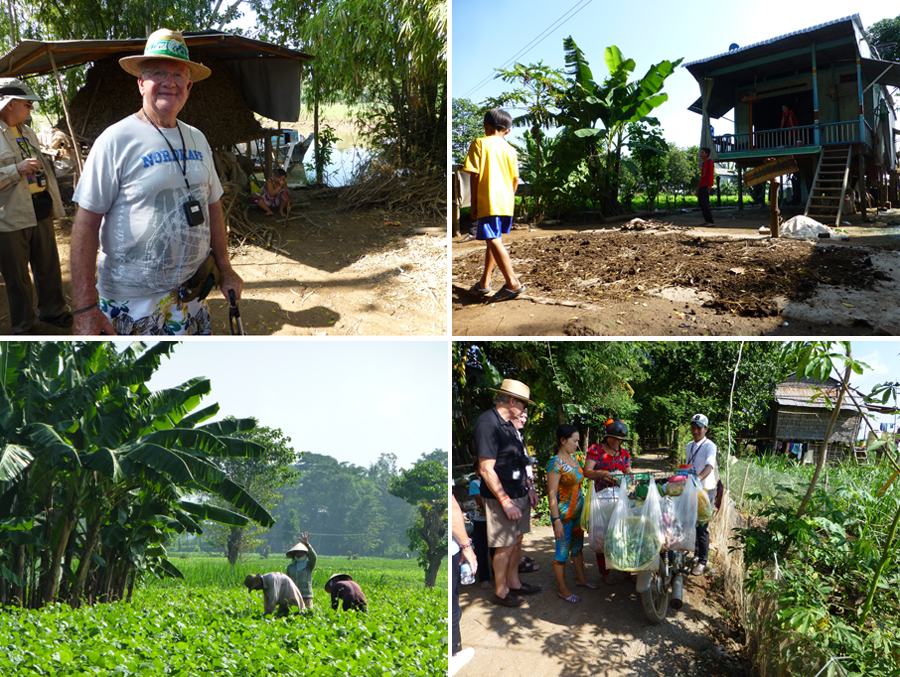
A lady on a moped had bags of fresh vegetables for sale. We had ample to eat onboard our boat, or I’m sure we would have bought from her. The climate was perfect for growing a myriad of different row crops. I believe the topsoil gets replaced each year with the monsoon season, as fresh silt it brought down from up river.
Pete looks great in his new hat. We both really enjoyed this part of our tour. Tin told us what these plants were, but I forgot. There were lots of children, and at the time I thought what a great place to grow up, with all the farm animals, and lots of fresh vegetables, and houses built off the ground on stilts. Think of all the fun games kids could make up.
Evergreen Island being on the river, you can imagine that fish is a large part of their diet. Seeing thees pots made me hungry. Growing things were everywhere, and everyone looked so happy and industrious, even the older children. It was good to see.
Everyone was snapping photographs of the wonderful sites we were experiencing. There was so much to take in, so much life in such a small area, Mother Nature and Man in perfect harmony. How I wish the entire world could be like this. It’s so much the better way to experience our existence, and actually contribute something constructive to life. I was pretty inspired In Chapter 13 I will finish up with a few more photos of Evergreen Island, and then tackle the fish farm, which was really very interesting. |
|
||||
|