 |
|
|
|
|
|
|
|
|
|
|
||||||||
|
||||||||||||||||||
|
Email us at: |
||||||||||||||||||
 |
||||||||||||||||||
 |
 |
|||||||||||||||||
|
Click the sun to see the |
||||||||||||||||||


|
 |
|
|



|
|
|
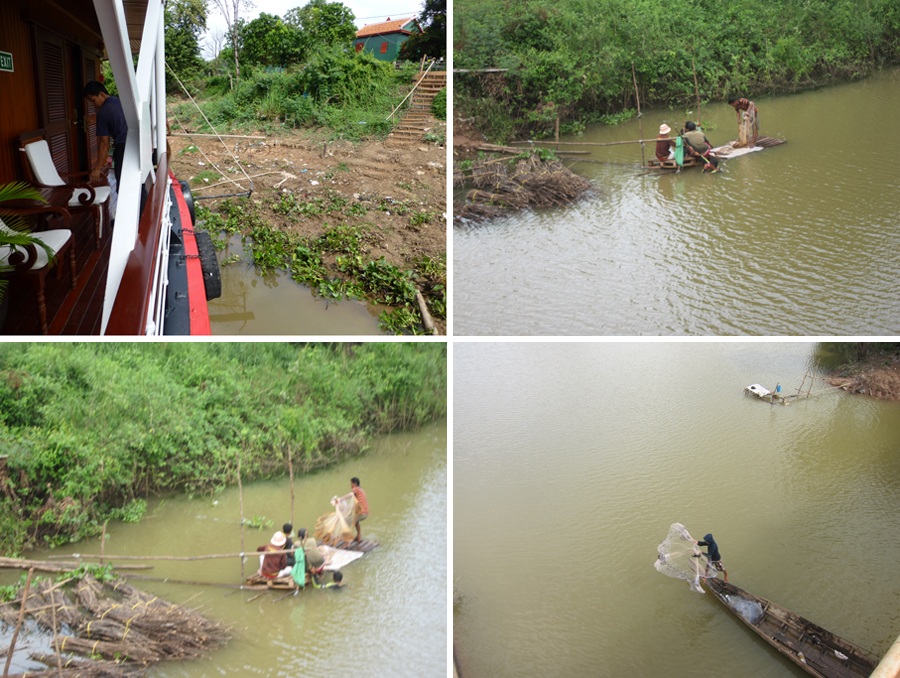
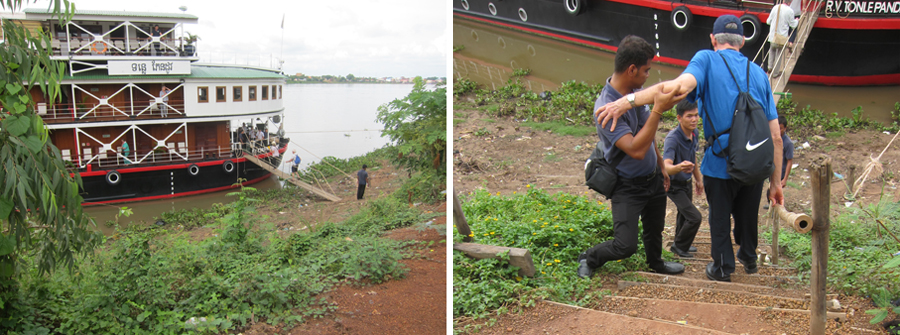
The great Mekong is after all a river, subject to the rains, and in tropical Indochina, rain is a powerful driving force. That’s why you’ll usually not see our boat tied up to a dock. There are very few of those. The shore is constantly changing, subject to the amount of rain that has fallen up stream, hence the practicality and flexibility of gang planks broaching the gap between gunnel and shore. Life along the Mekong is a complex mixture of survival. In the second frame below the guy standing to the right is gathering his fishing net, readying it to be launched. In the third frame he heaves the huge net into the water. In the forth frame, this agile fisherman exhibits amazing skill and balance as he stands on the gunnel of his canoe and throws his net into he river.
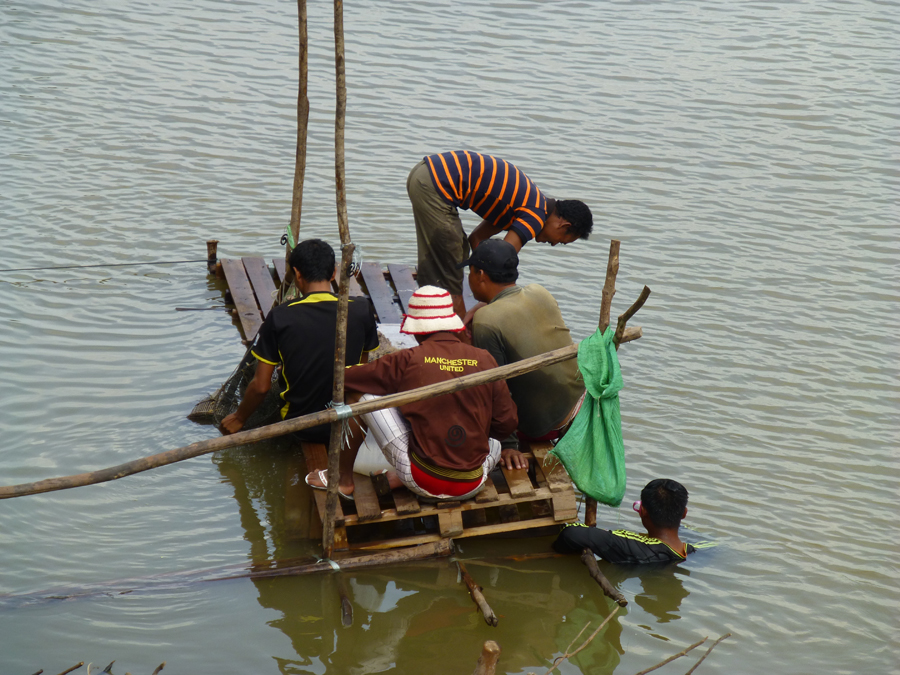
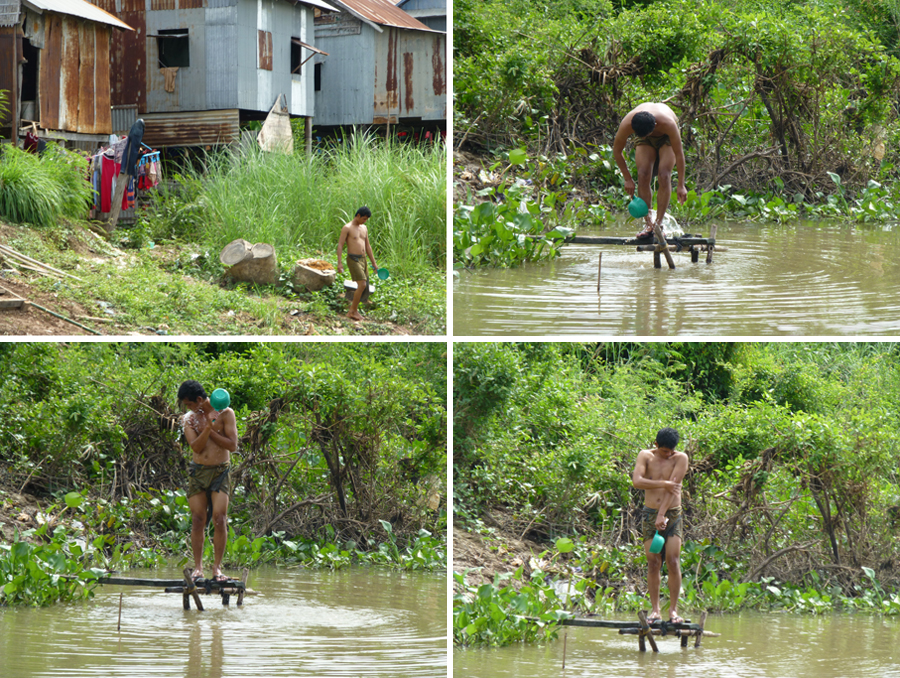
I wasn’t sure what the guy was doing IN the water, but it appeared he was wearing a diving mask. And, why were there four guys on this raft made of shipping pallets? I did get a chuckle from the ‘Manchester United' logo on the back of the one guys jacket. Remember David Beckhan? Of course, everybody does. He is only one of the richest athletes in the world, with a net worth of $350 MILLION, and an annual salary of $50 MILLION. I should have become a soccer player (or fủ?tbol as they call it in Argentina). Of course what better way to keep the body clean than to bathe in the Mekong river. You don’t even have to jump in. All you need is a green pot with a convenient handle to scoop up the water and pour it over your body. How simple can life be.
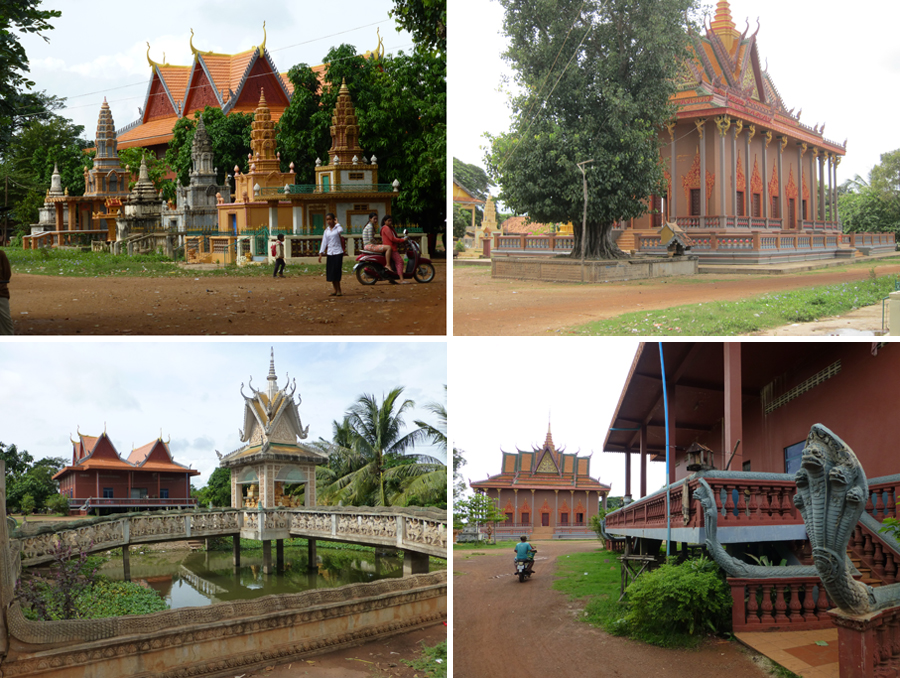
One couldn’t help but admire their skill in creating such beautiful temples, and maintaining them so well.
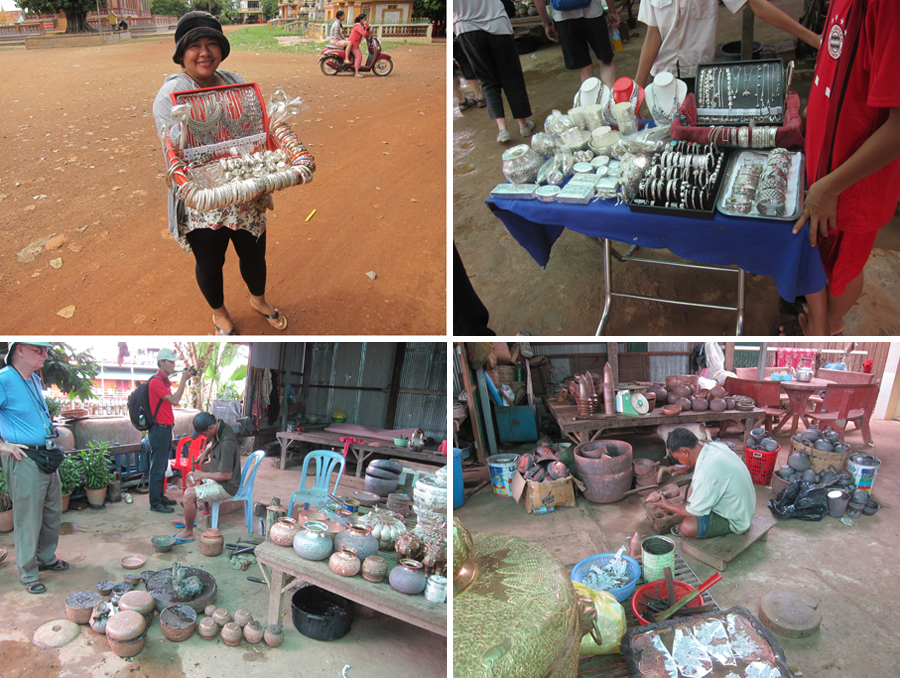
One of the places we stopped was a small village famous for their silver work. The girl below had an amazing array of silver bracelets, among other items of silver and enamel jewelry. And there was much more in the silver shop.
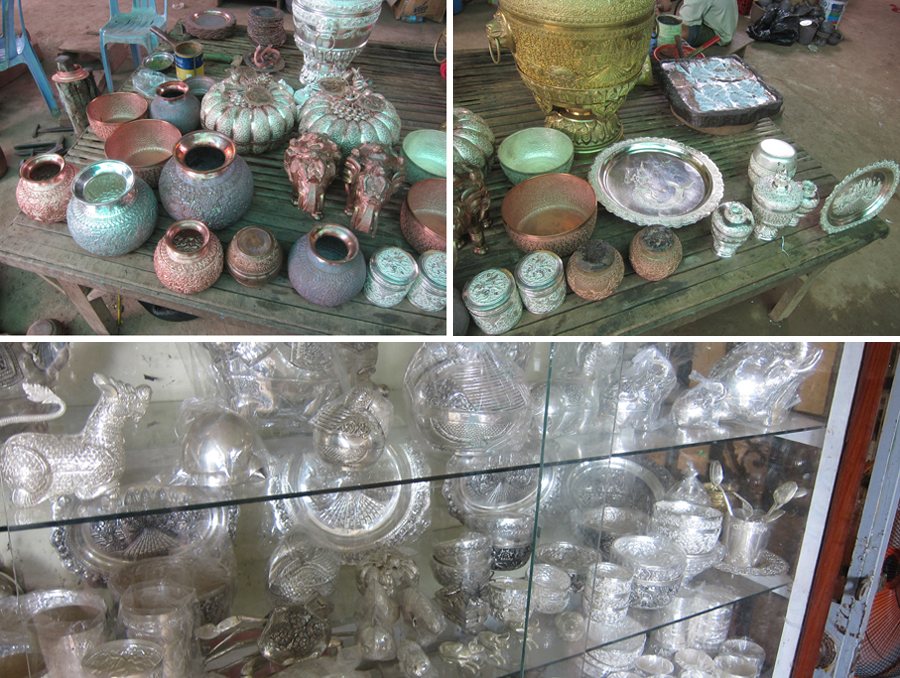
These two guys were very intent at their work of transforming copper into impossible shapes, with nothing but a small hammer. They were true craftsman, from the look of the beautiful pieces they produced. I mean, look at those elephants in the first frame below. They make the pots look easy, but I recon those have their own degree of difficulty.
The sterling silver items were kept behind glass. Probably to keep tourists from handling them and causing them to tarnish. Then going back aboard the boat, you can see how the crew is being helpful to us older folks as we wend our way down the steps.
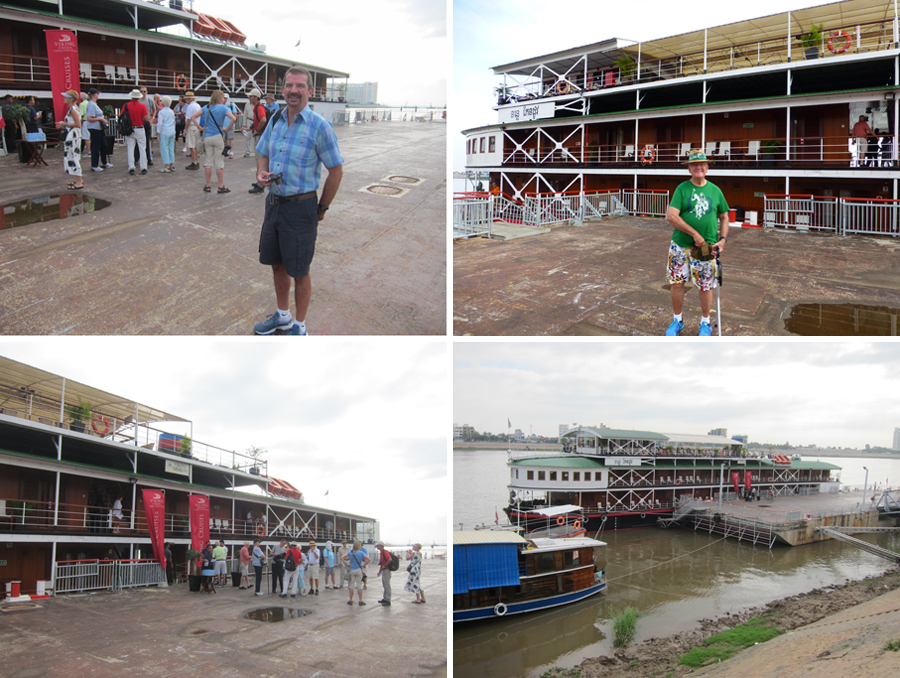
They actually did a pretty good job of cutting steps into the sloping shoreline, and installing the bamboo hand rail. But even so, it was a bit tricky, and I was constantly on the watch so I didn’t trip and fall. I know how easy it is to break a hip, or worse. And then we got the surprise of our life at our next landing. There was actually a huge floating dock at which we tied up.
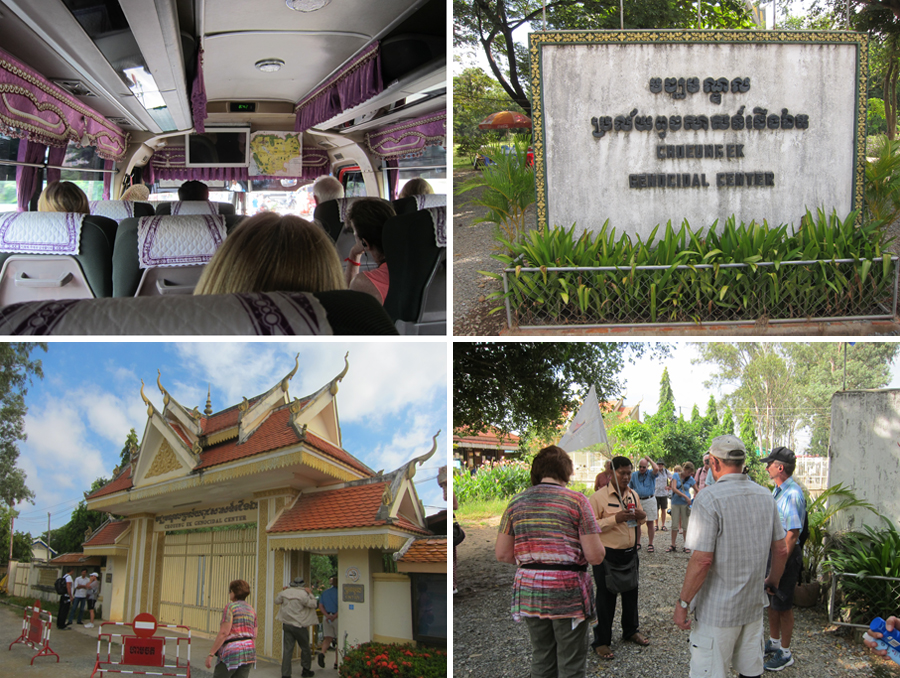
Talk about luxury, this was really unexpected, and greatly appreciated, by me at least. ;o) We took a short bus ride to our next shore excursion. The sign below reads ‘Choeung Ek Genocidal Center’.
Choeung Ek, located 17 kilometers south of Phnom Penh, was once an orchard. It is the best-known of the sites known as The Killing Fields in Cambodia.
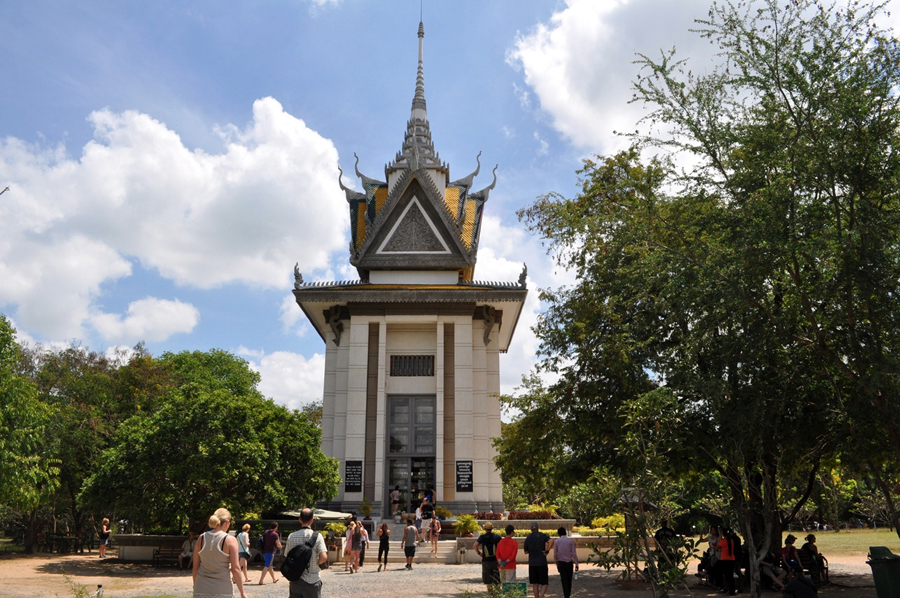
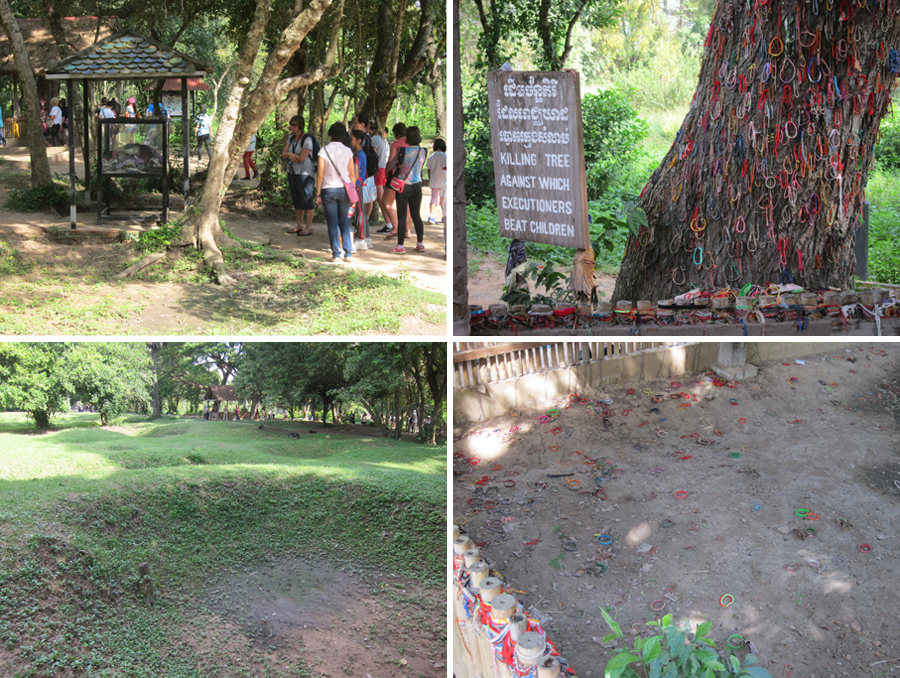
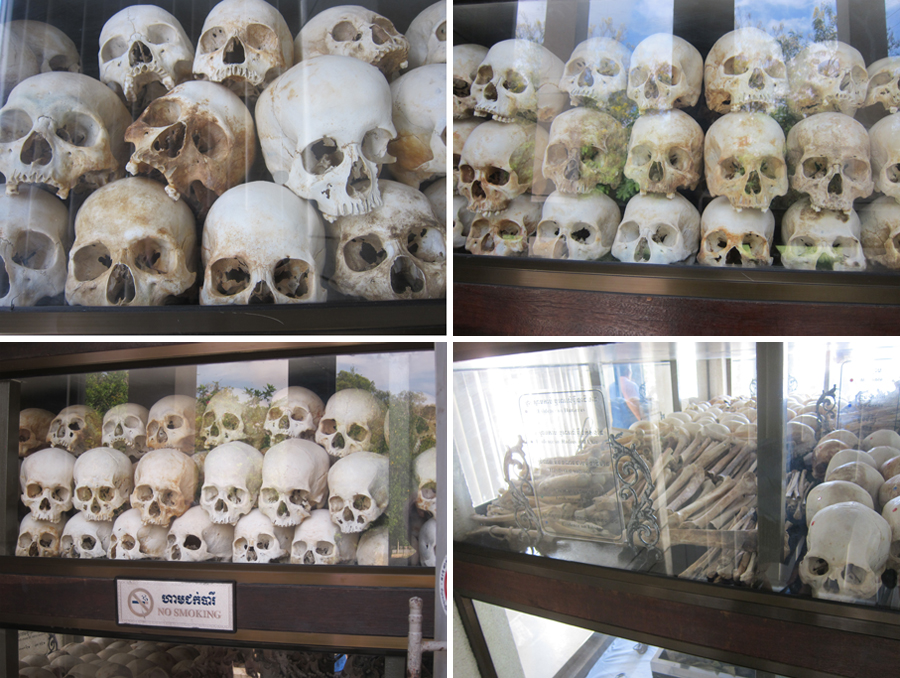
This Bhuddist Stupa (or shrine) is filled with more than 5,000 human skulls, from some of the 2,000,000 Cambodians who lost their lives during the Khmer Rouge regime under the leadership of Pol Pot, between 1975 and 1979. That’s nearly ¼ of the country’s population at that time. Bullets were expensive. The “Killing Tree” in the second frame below was used to smash the heads of children against to kill them.
Mass graves were everywhere. The colorful bracelets are left by visitors to honor the dead. Pol Pot knew that if he was to be overthrown, it would be by the educated and professional members of the society. He was cleaver, as he had the word passed among the prisoners that he needed educated men to help him rebuild the country. In this way he was able to gather together the engineers, doctors, teachers, lawyers and businessmen, and executed them first. What remained of the population when the kissing ended, was a society of farmers, and the peasantry. Today Cambodia is trying very hard to overcome this loss of their educated class by intensifying their efforts to educate their children. The skulls and bones displayed in the shrine are a grim reminder of those terrible days of infamy and slaughter.
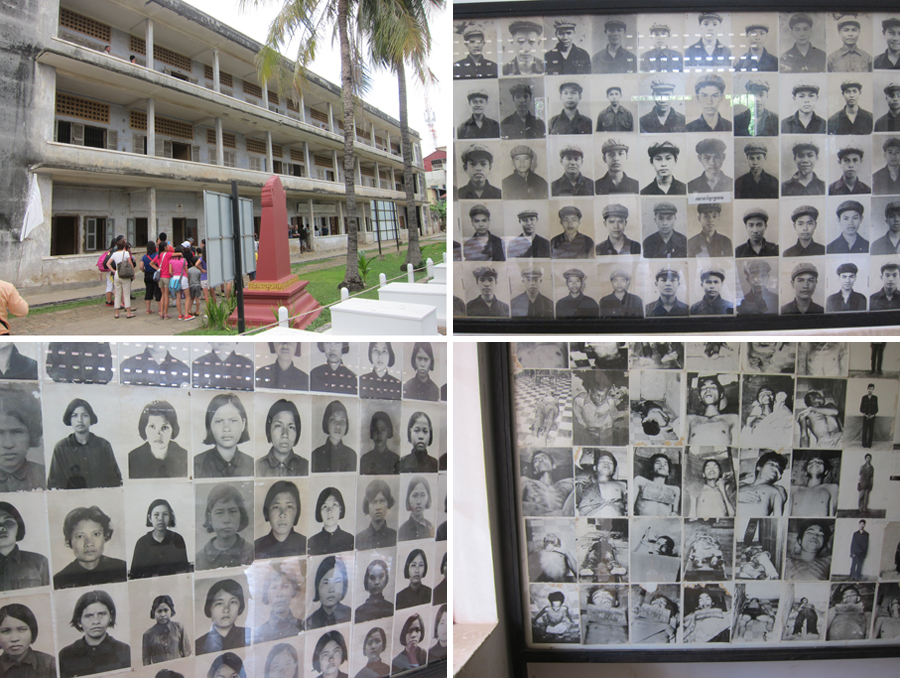
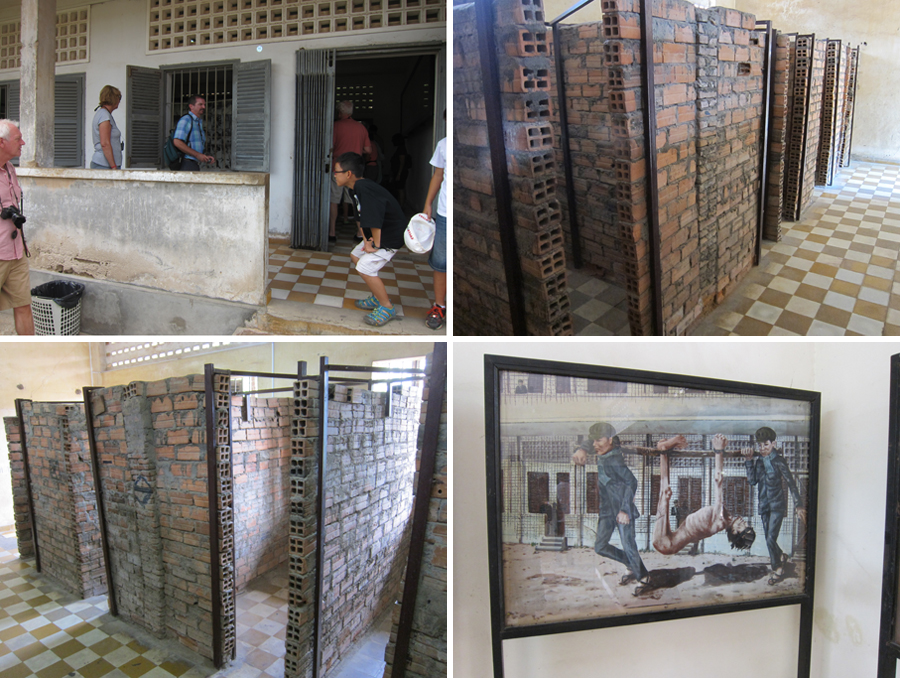
This building was a high school before 1975, and was converted to a prison by the Pol Pot regime known as S21. The regime was like the nazis of WWII in that they kept meticulous records of all the prisoners who passed through, after being tortured and interrogated.
The cells were small, and the prisoners were treated like animals. I still have a difficult time understanding how human begins can treat their fellows is such a terrible manner.
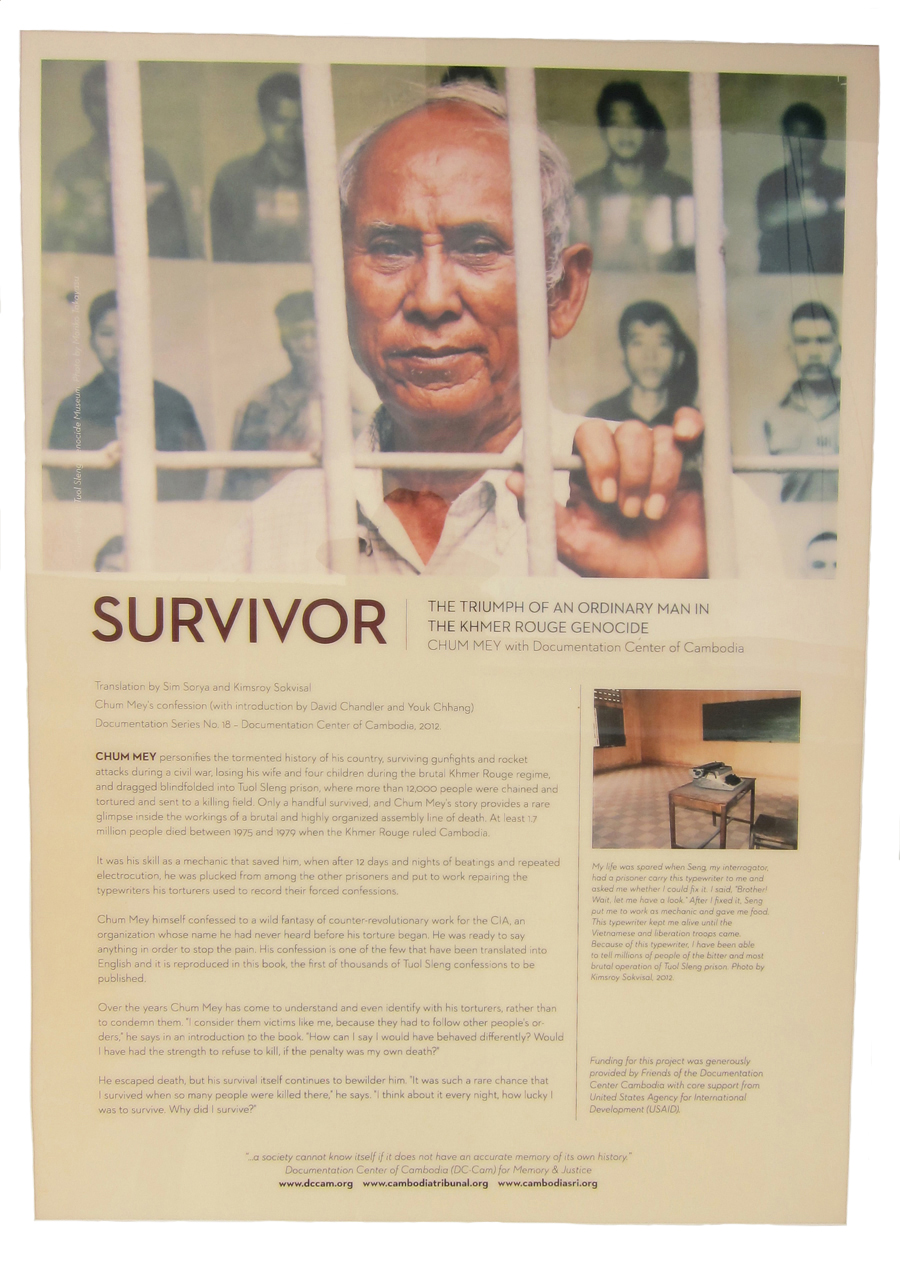
Are we a species of brutes? Historically, all I can say is that it has always been this way. There are only two remaining survivors of S21, and one of them was there, giving autographs, and selling his book.
On the morning of 7 December we cast off from Phnom Penh and head for Tan Chau, where we will embark on a boat trip along the floating village, followed by a rickshaw tour of Tan Chau. |
|
||||
|