 |
|
|
|
|
|
|
|
|
|
|
||||||||
|
||||||||||||||||||
|
Email us at: |
||||||||||||||||||
 |
||||||||||||||||||
 |
 |
|||||||||||||||||
|
Click the sun to see the |
||||||||||||||||||


|
 |
|
|



|
|
|||||
|
Day 15 Brown Bluff & Devil Island Penguins are beautiful, interesting and funny. George Gaylord Simpson “Penguins Past and Present, Here and There” Russian words of the day: “ba-Sho-ee spa-See-ba Cap-EE-tan” — Many Thanks Captain
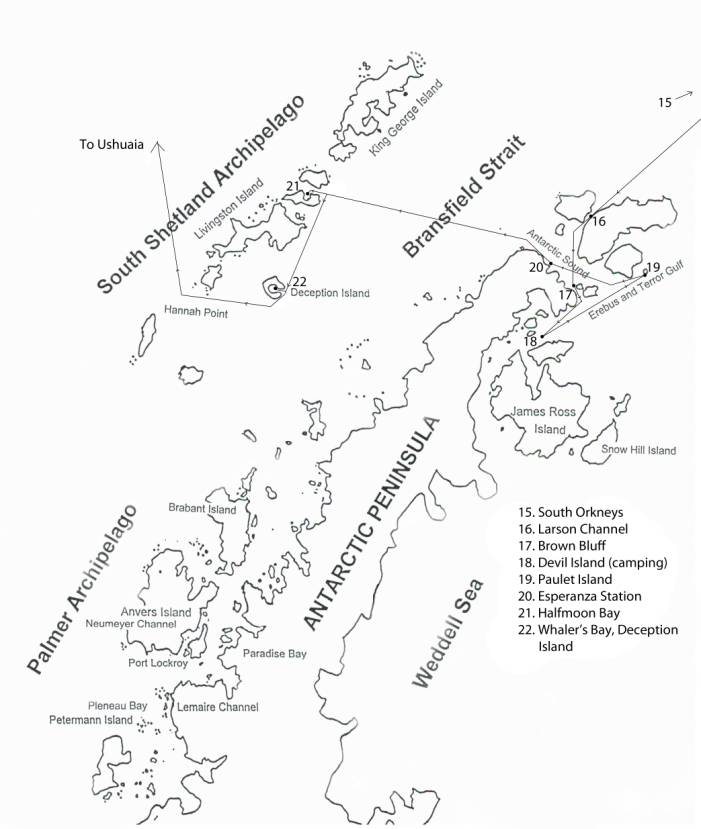
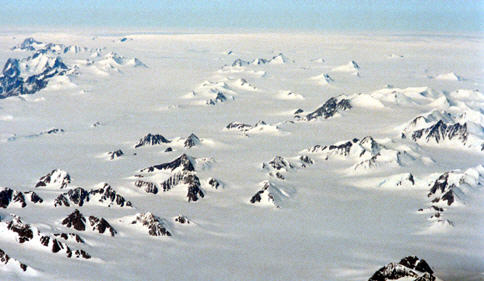
Map showing our travels around the Antarctic Peninsula. We have arrived at the continent of Antarctica. Brown Bluff lies 9 miles south of Hope Bay, on the eastern side of Tabarin Peninsula. The 745 m (2,225 ft) bluff is an exposed section of a glacial volcano, embedded with lava bombs. Snow petrels and Pintados nest on the bluff face while Adélie and Gentoo Penguin colonies are present on the beach. Weddell Seals were also found ashore. The scenery at this site is stunning, ranging from a nearby glacier face to nunataks further inland on the Antarctic continent. Nunataks (from the Inuit nunataq) are exposed, often rocky elements of a ridge, mountain or peak not covered with ice or snow within (or at the edge of) an ice field or glacier. The term is typically used in areas where a permanent ice sheet is present. Nunataks present readily identifiable landmark reference points in glaciers or ice caps and are often named. Life forms on nunataks are frequently isolated by the surrounding ice or glacier creating unique habitats.
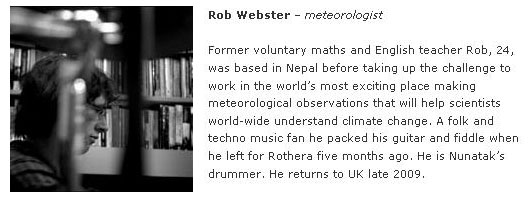
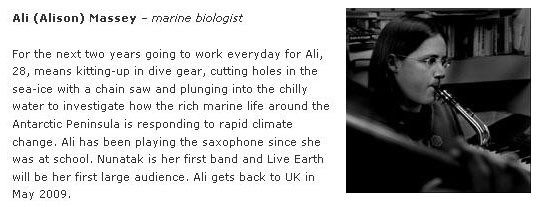
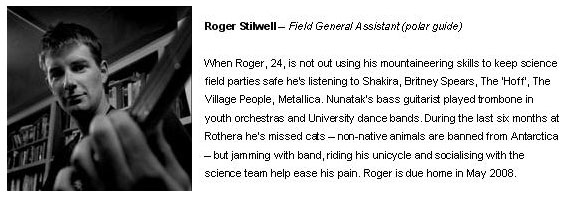
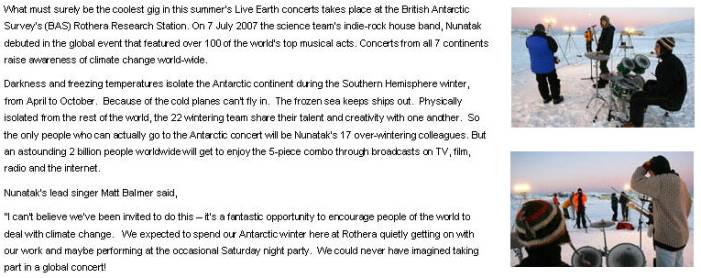
Building your word vocabulary, these are “nunataks”. Well, it was a new word for me anyway. Coincidently, “Nunatak” is also the name of the five-person indie rock band that is part of a science team investigating climate change and evolutional biology on the Antarctic Peninsula. They are the house band of the British Antarctic Survey’s Rothera Research Station.
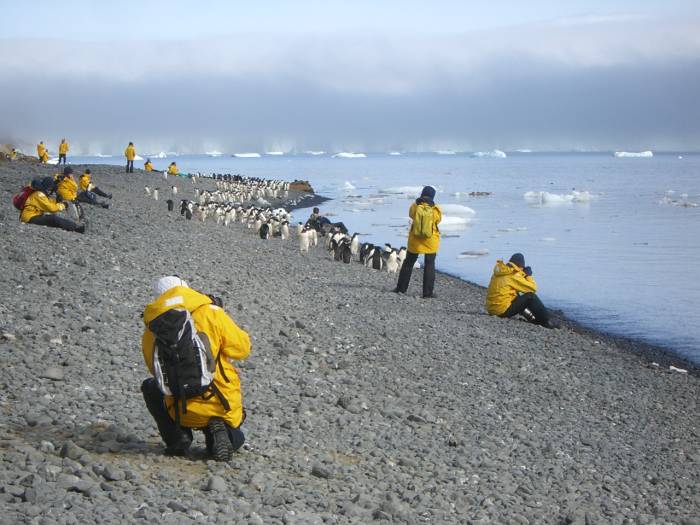
Our day began early as we got up for breakfast, and saw that we were engulfed in a thick fog with less than .10 mi. visibility. We thought we would not be able to make our landing at Brown Bluff. After breakfast it was a different story. The fog lifted to reveal a stunning panorama of glaciers, tall rocky peaks, distant mountains with dozens of glaciers, and stunningly beautiful icebergs in every direction. The sea was like glass, and the sunshine was a wonderful sight. There wasn’t a breath of wind. We had perfect conditions for our landing at Brown Bluff.
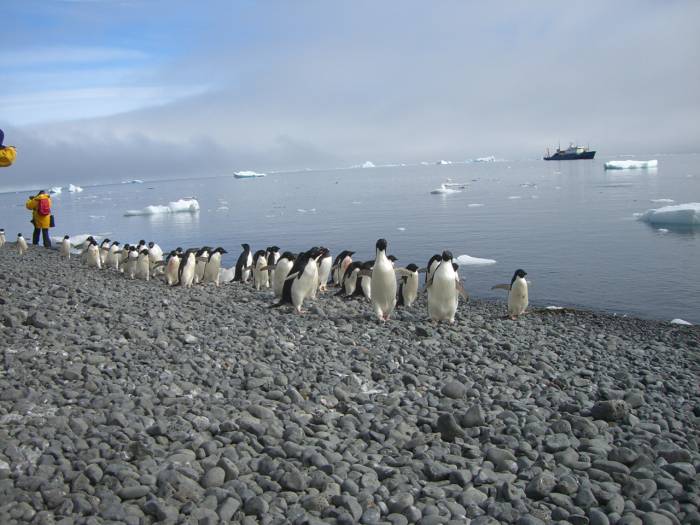
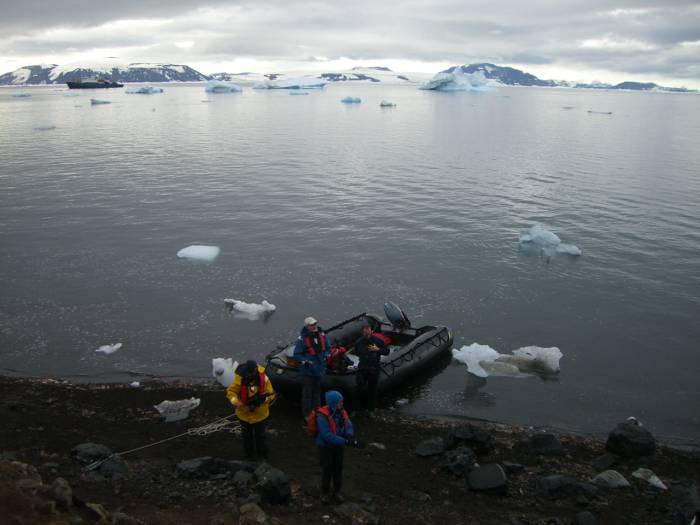
We made our landing at Brown Bluff in the calmest sea we’ve seen in days.
We found it difficult walking on these rocks. Can you imagine how difficult it must
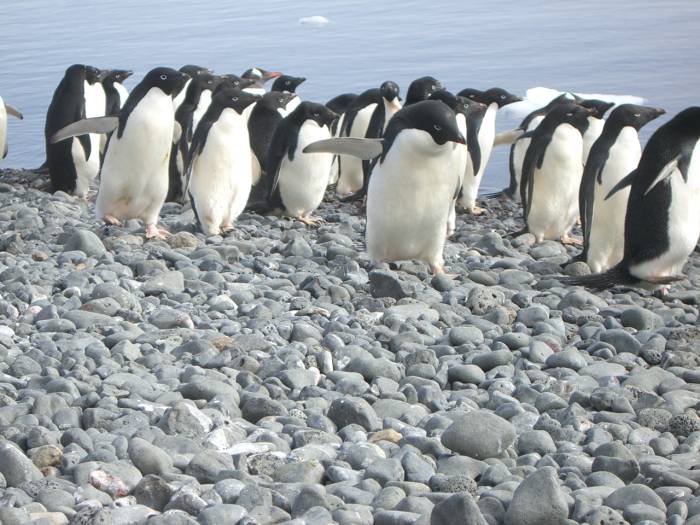
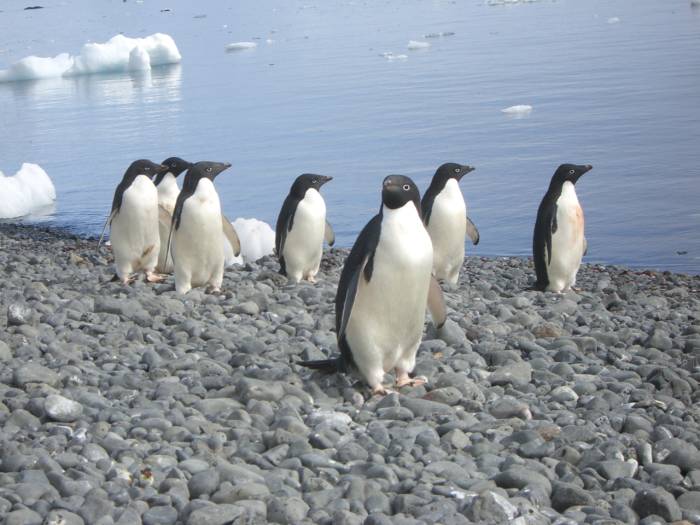
This Adélie penguin said “Take a picture, it will last longer”. So I did!
And so did EVERYONE ELSE! The penguin stopped talking after that, and continued walking.
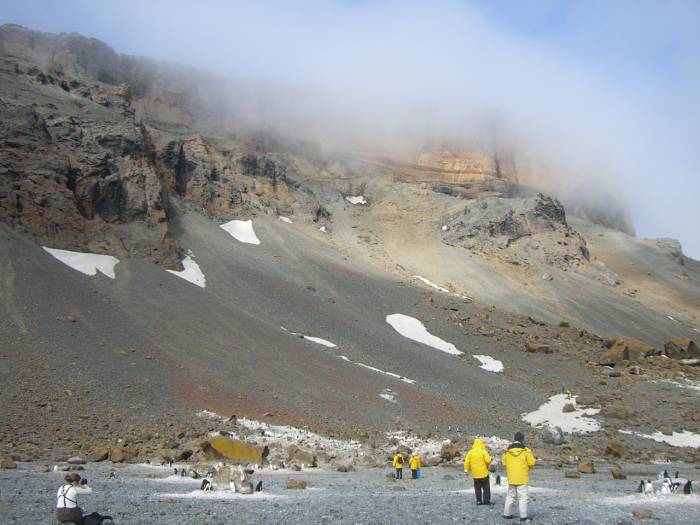
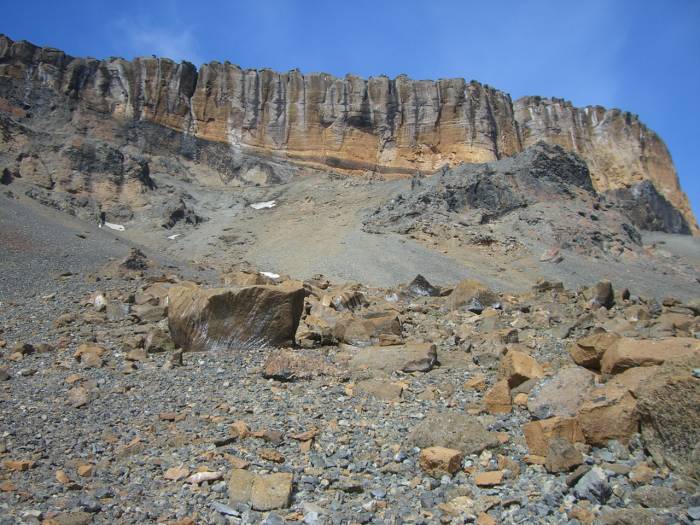
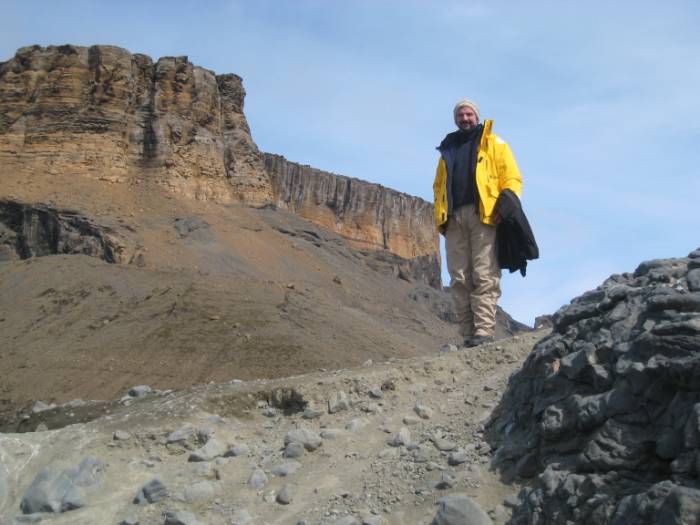
It’s easy to see where Brown Bluff gets its name. Does this remind you of anywhere else?
It reminds me an awful lot of New Mexico, or maybe Jujuy, near Purmamarca.
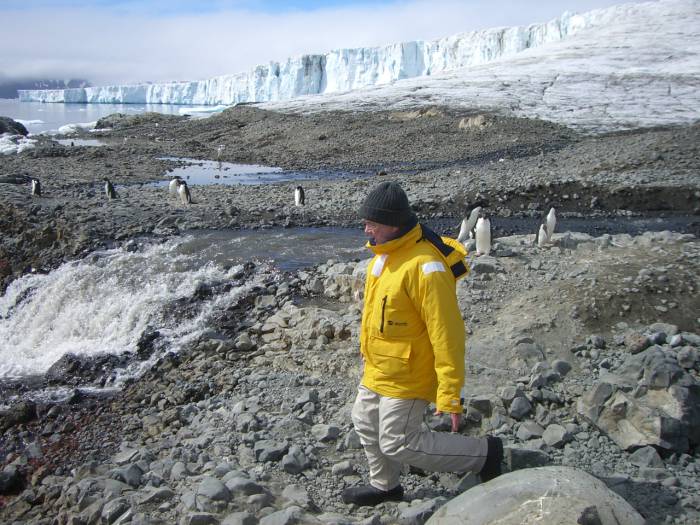
We had done a lot of hiking, and Pete was starting to sweat, so he removed one layer.
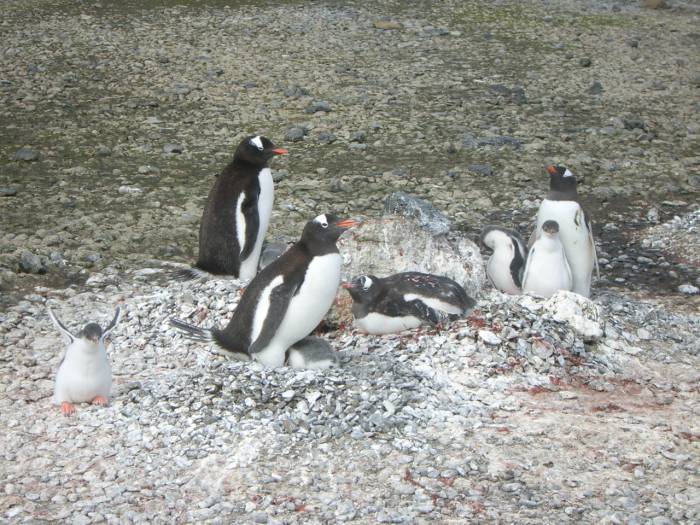
This little family of Gentoo Penguins seemed happy enough. The reddish color of their
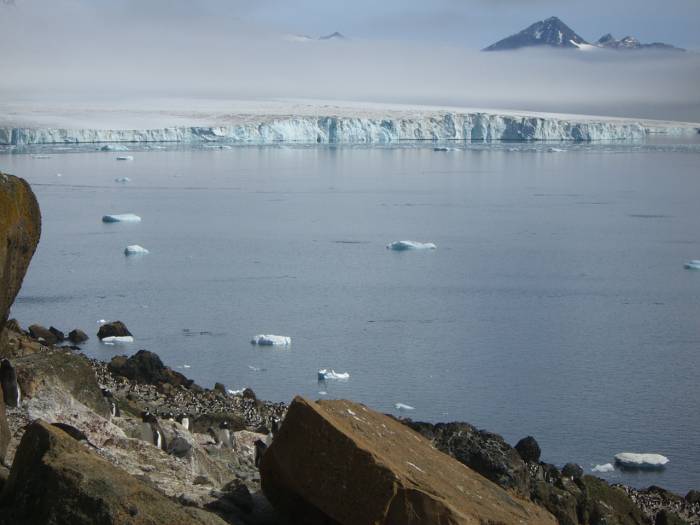
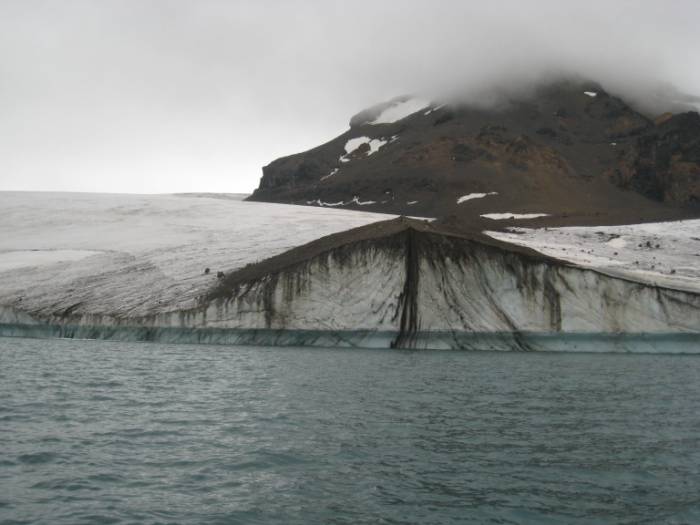
From here we get a great view of one of the glaciers at Brown Bluff.
And here’s a shot of another glacier you’ll find at Brown Bluff. We searched to Brown Bluff is a tuya, which is a type of distinctive, flat-topped, steep-sided volcano formed when lava erupts through a thick glacier or ice sheet. They are somewhat rare worldwide, being confined to regions, which were formerly covered by continental ice sheets and also had active volcanism during the same time period. It is located at the northern tip of the Antarctic Peninsula, Antarctica. It formed in the past 1 million years, which erupted subglacially within an englacial lake. The volcano’s original diameter is thought to have been about 12-15 kilometers, and probably formed by a single vent. Brown Bluff is subdivided into four stages: pillow volcano, tuff cone, slope failure, and hyaloclastite delta and into five structural units. The volcano is named “Brown Bluff” because of its steep slopes and its brown-to-black hyaloclastite. After our landing at Brown Bluff, we returned to the ship for lunch, and headed for Devil Island. At Devil Island we did an extensive Zodiac tour with Phil as our driver. You’ve really got to appreciate Phil.
Phil is an adult with a little kid inside. You know how when you see some little kids playing, and they never seem to run out of energy, and you say, “if only I could bottle that energy and sell it, I’d be a wealthy man”. Well, that’s what Phil is like. Of all the Zodiacs out on this trip, ours, with Phil at the helm, was the only one to go “around” the island. But before we did that, (which was a round about way of getting back to the ship), we had a great adventure with him exploring icebergs and glaciers.
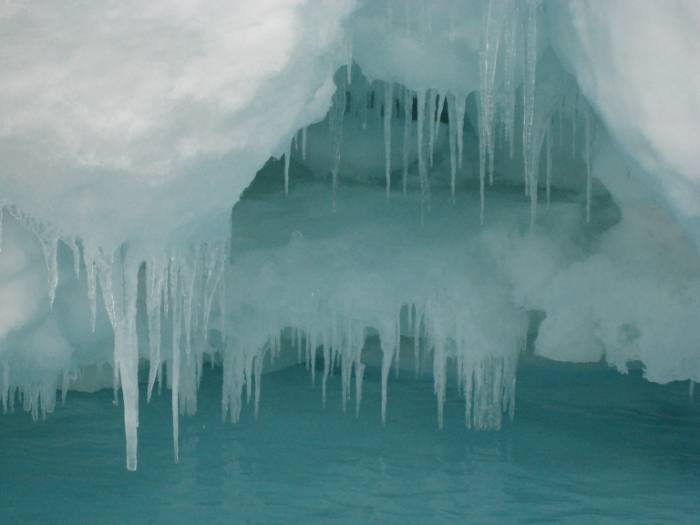
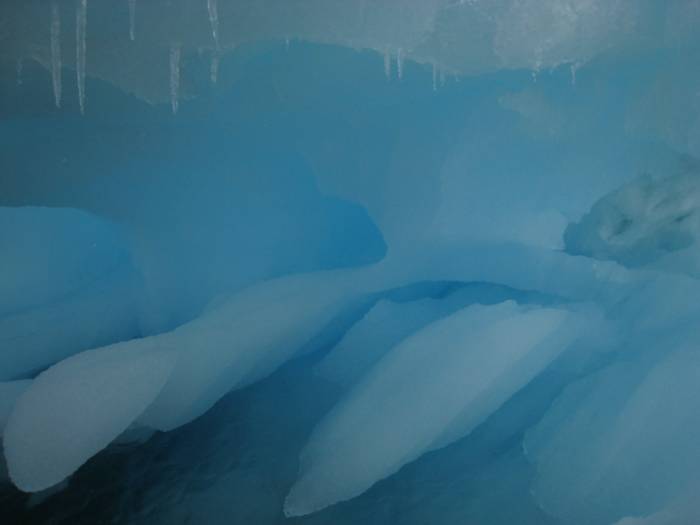
This melting iceberg was creating some impressive ice cycles.
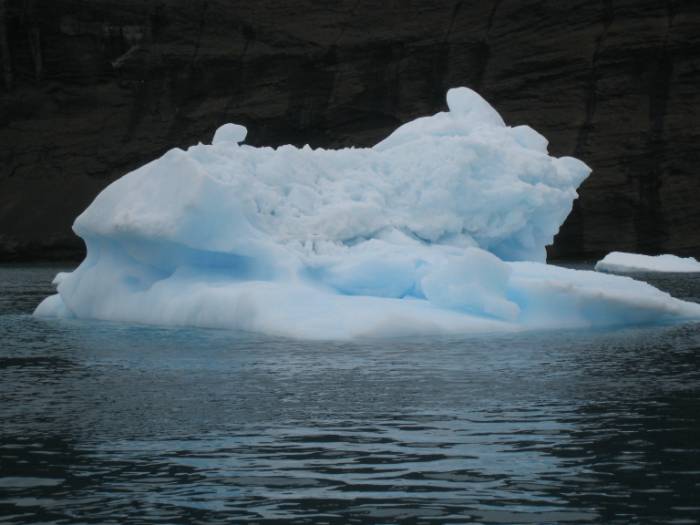
This iceberg was quite colorful, with the cliffs of Devil Island as a backdrop.
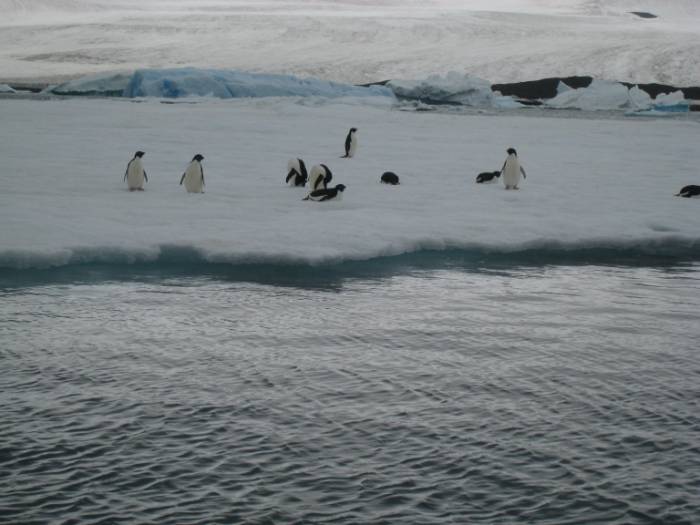
These Adélie Penguins have found a safe place to rest on this sea ice shelf,
The colors were unbelievable. The camera can’t actually capture all the beauty.
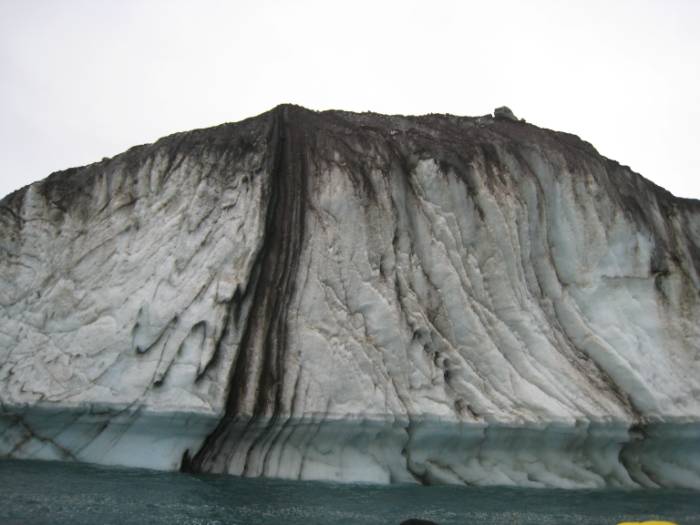
This is a fairly unusual phenomena, the coming together of two glaciers near their
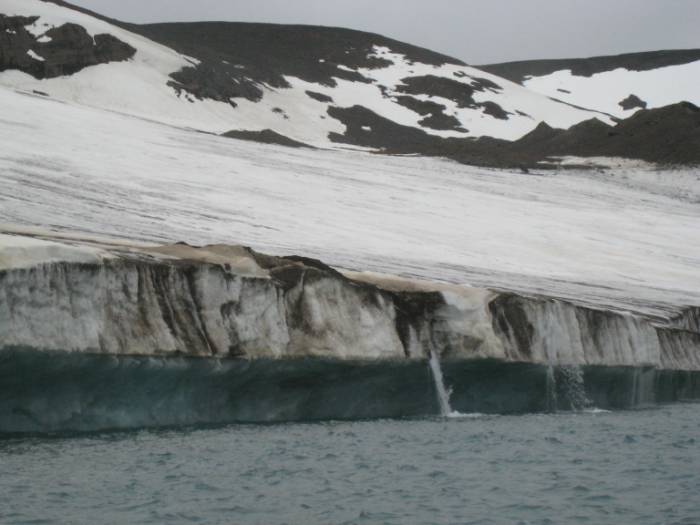
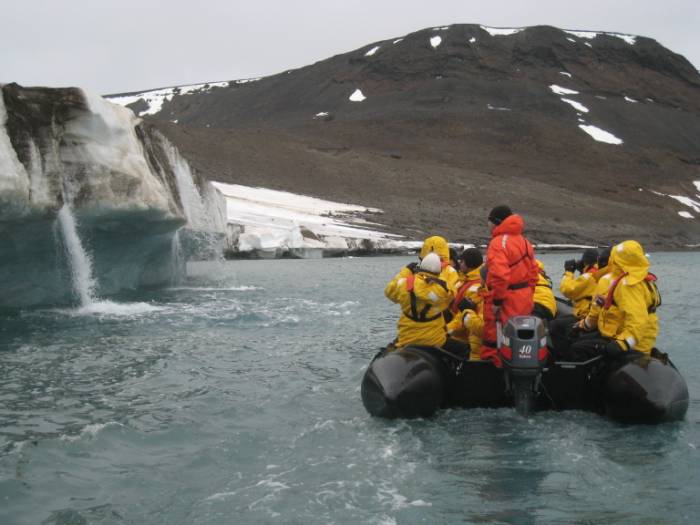
It was a pretty impressive sight up close. Phil took us all along the face of this glacier.
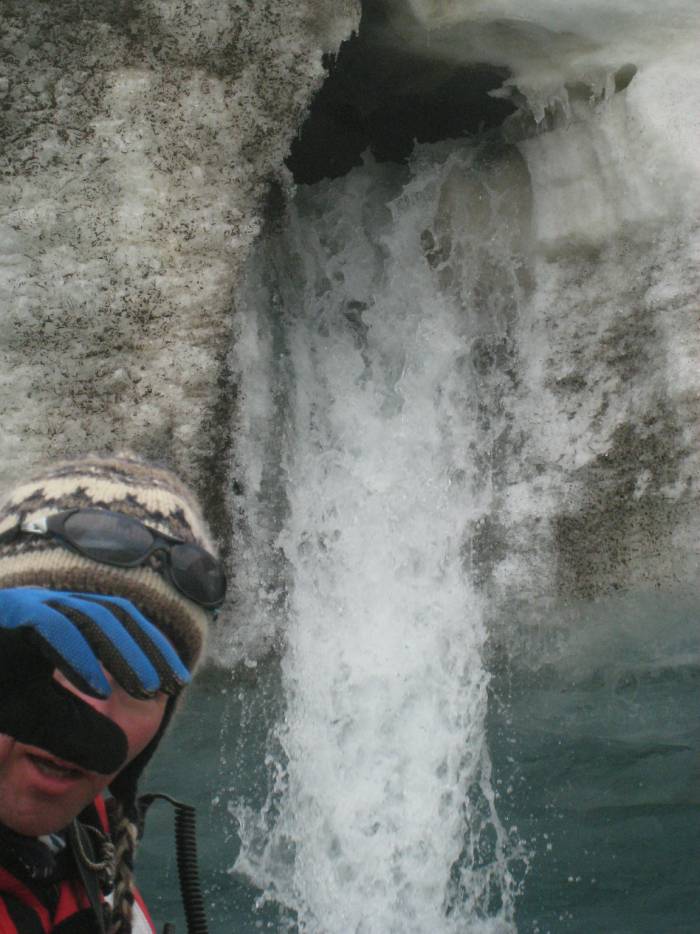
The waterfalls were dumping massive amounts of water into the sea from the glacier.
The Zodiac ahead of us stayed well clear of this waterfall. Max was their driver.
But not Phil. We very nearly came directly under it, as Phil was explaining the dynamics.
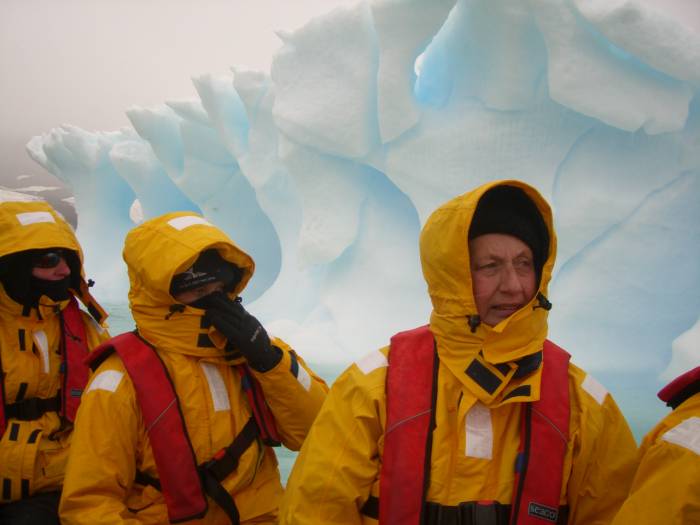
We all had our hoods up with wool hats on, so you can believe me that it was COLD!
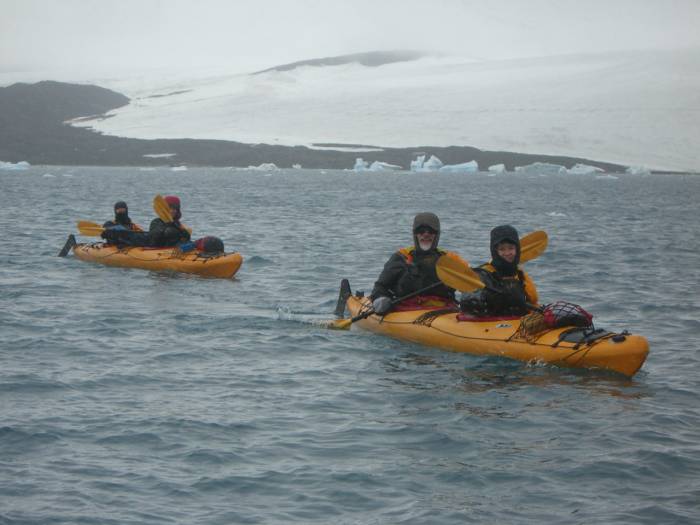
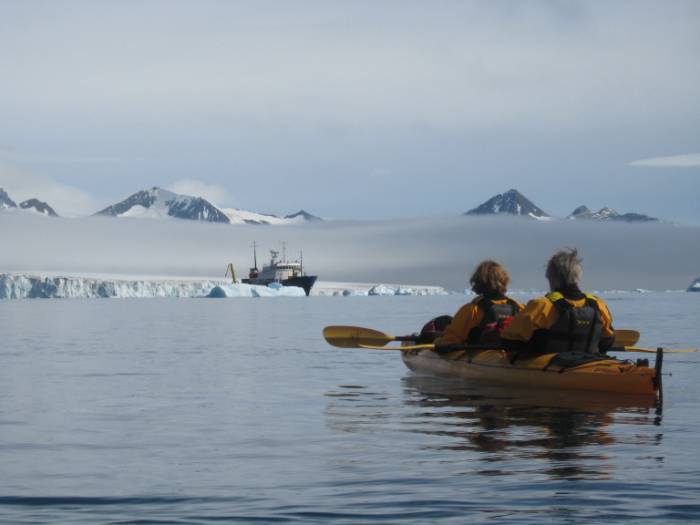
I couldn’t believe it when I saw that the kayakers were out in this miserable weather. It was now time to head back to the ship, and I was ready. Phil asked us if we’d like to take a little detour and go around this small island, on the seaward side, on our way back to the ship. Sure, why not? Well, on the seaward side the water was definitely quite a bit rougher and had lots of chop. Phil kept us close to shore, but that had its own set of problems. It was very shallow, and a couple of times the prop hit some rocks on the bottom. I could just see us, stranded on the far side of this island, perhaps even out of radio contact with the ship, without a propeller, and maybe even getting washed ashore. You know how all sorts of crazy scenarios go through you head when your situation seems a bit precarious. Well, we made it back to the ship, but we were all pretty soaked from all the sea spray coming over the gunnels. The wind had picked up, and in a Zodiac there’s no way to get out of the wind. It was so nice to get back to our cabin and out of our spray soaked clothes. Our next shore excursion was to make a landing on Devil Island itself. Devil Island lies in a small bay, southeast of Vega Island in the Weddell Sea. It was discovered and named by Nordenskjöld’s Swedish expedition (1901-4). The Island is long (1.6 km) and narrow, with two peaks, which appear as horns. Excellent views of Cape Well-Met on neighboring Vega Island can be obtained from this site. Cape Well-Met was the point where two stranded parties from Nordenskjöld’s expedition reunited unexpectedly in 1903. Devil Island is also home to more than 5,000 breeding pairs of Adélie Penguins and is a good site to see Leopard Seals hunting penguin prey. Miraculously, the miserable weather we had during the Zodiac ride had changed considerably, and the sun came out, and made for some very beautiful scenes. We were also going to let the kayakers and the campers do their thing here at Devil Island. These were two activities that you had to sign up for when booking this trip, Kayaking and Camping. They were additional activities, which came at an additional price. Since we did not actually book this particular expedition, but were transferred to it at the very last minute, we were not even aware of these activities until after we were on board for a few days. The groups were already at the maximum number they were prepared to handle, so Pete and I could not join up. The kayakers paddled around the nice calm bay at Devil Island where the captain had put the ship at anchor. It was a very nice protected area that was full of interesting sites for them to see up close.
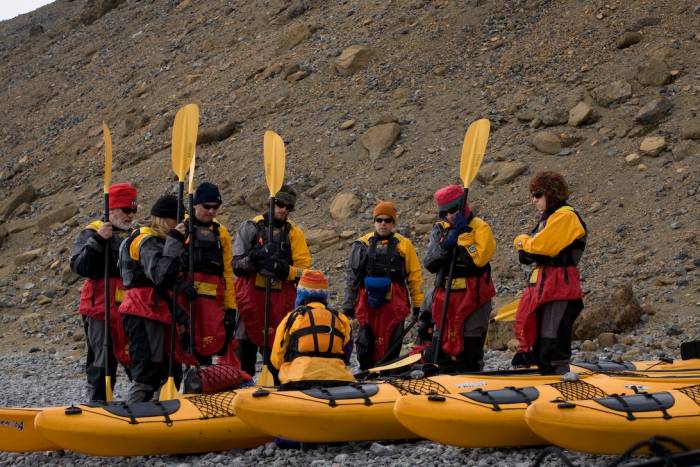
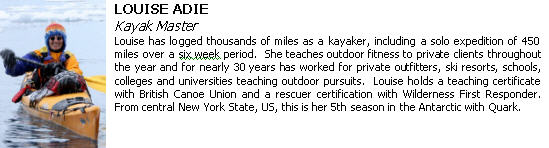
They were all eager to begin exploring, but first Louise gave them a talk on safety.
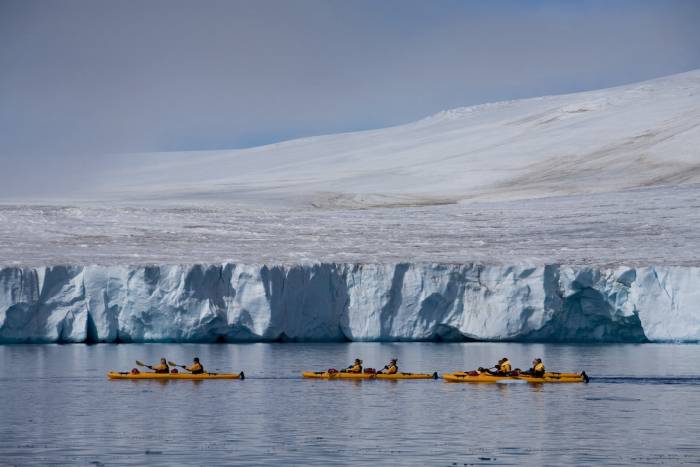
They couldn’t have asked for nicer condition for this day’s exploratory adventure.
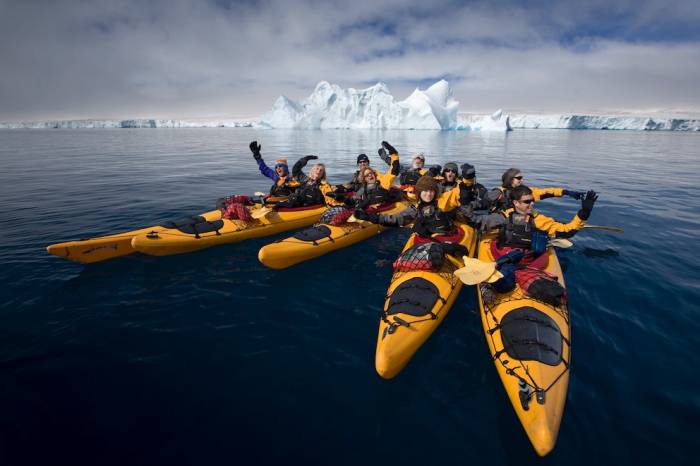
They pose for a group photo taken from one of the Zodiacs.
Our ship appears to be trapped in sea ice, but it is merely an illusion from this angle.
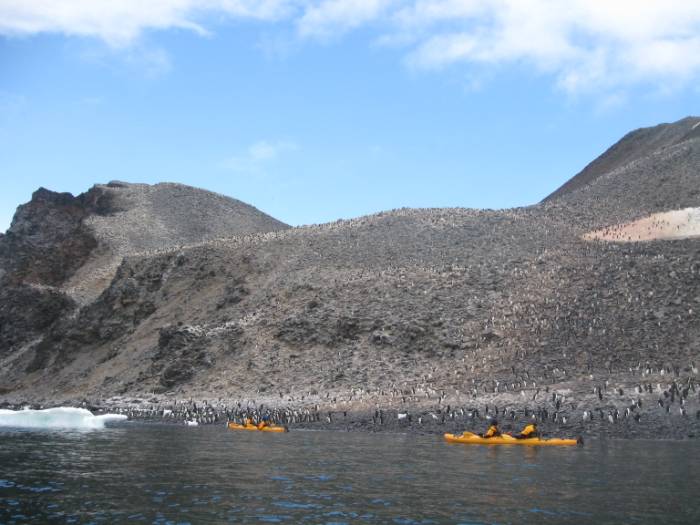
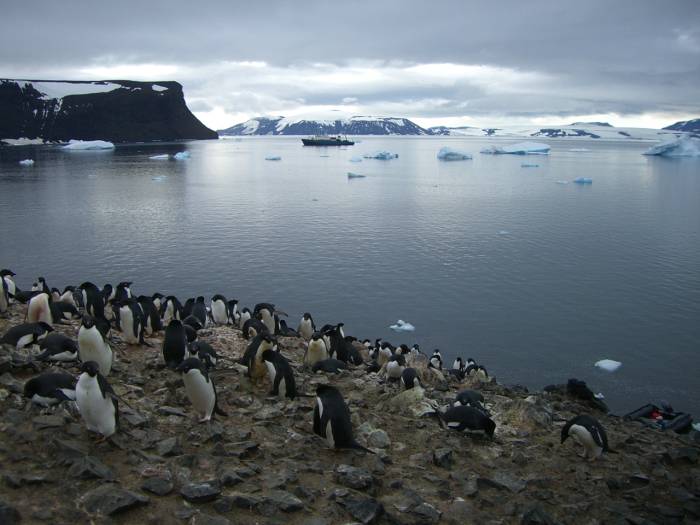
It’s easy to see where the get the figure of 5,000 breeding pairs of Adélie Penguins.
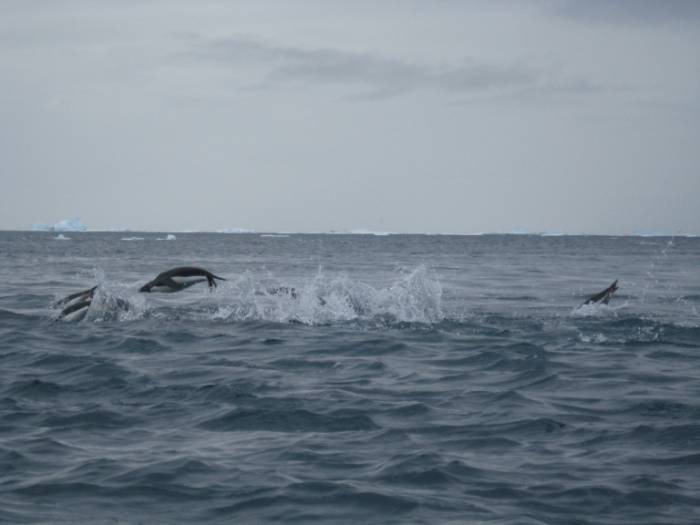
Penguins porpoising through the water, eager to find the krill for their chicks.
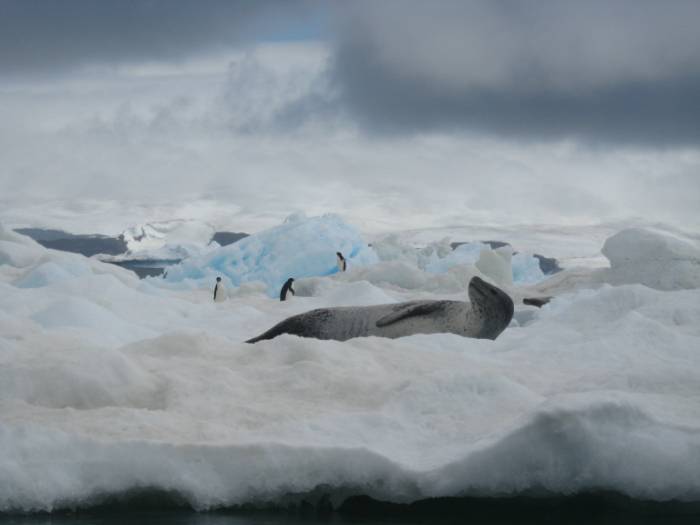
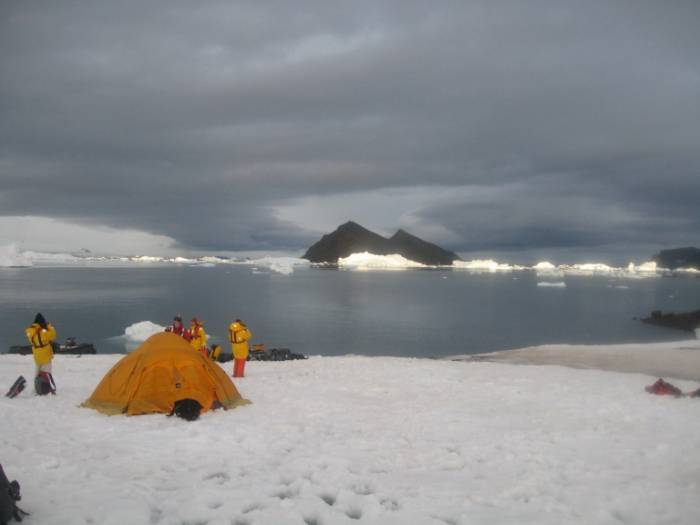
A Leopard Seal, eying the Kayakers, while the penguins keep a safe distance. The campers were going to have their overnight camping experience on one of the glaciers, so they went to set up their tents, etc. well before dusk.
I’m not so sure I’d feel comfortable about being isolated on a glacier for the
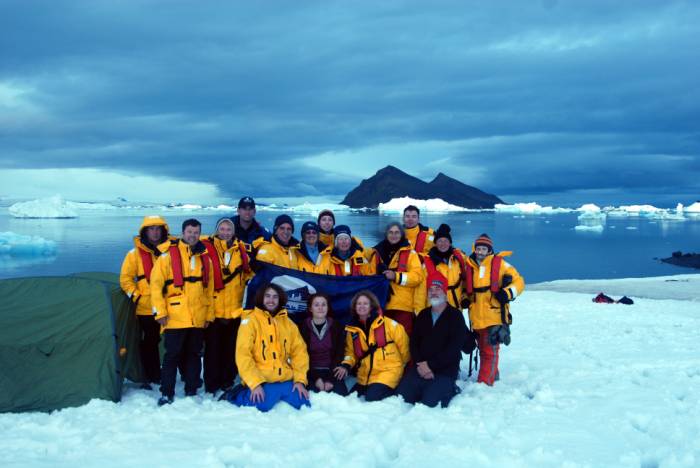
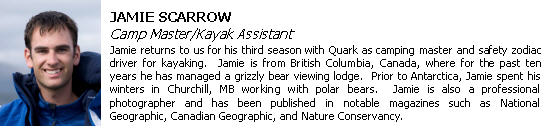
There were 15 campers, with Jamie Scarrow as their Camp Master.
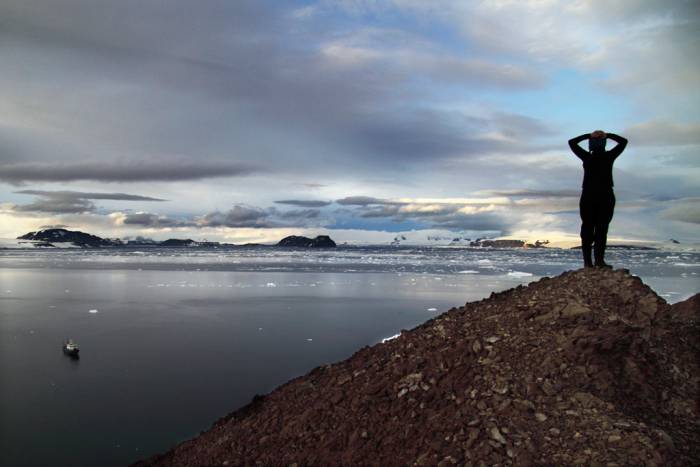
The rest of us would go ashore and just hike up to the top if one of the mountains. I, however, was still so cold and miserable from the freezing Zodiac ride with Phil that I decided to just stay on board and rest up for the next day’s adventures. I later regretted that decision. Fortunately, other members of the expedition were good enough to share their photos with the rest of the members, by placing them on the “passenger” computer in the lounge, and the staff made a CD for each of us to take home with us. These next two shots were from Benine du Toit.
It’s a long way up from the ship, but the view was certainly worth the climb.
Benine has a great eye for photography. This is a breathtaking shot. Seeing these photos, and the ones Pete took on this excursion makes me wish that I had gone along.
The landing on Devil Island was in a dead calm. It doesn’t get any easier.
The Adélie Penguins were out in force to great us, and NO fur seals.
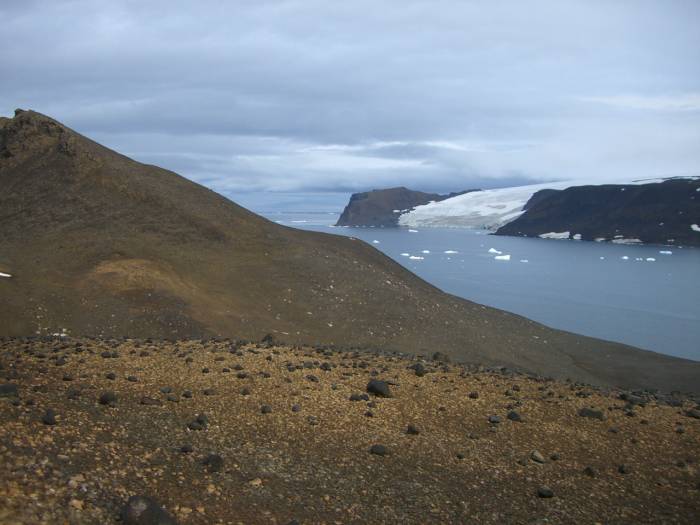
Vegetation was pretty sparse. That glacier on Vega Island looks massive.
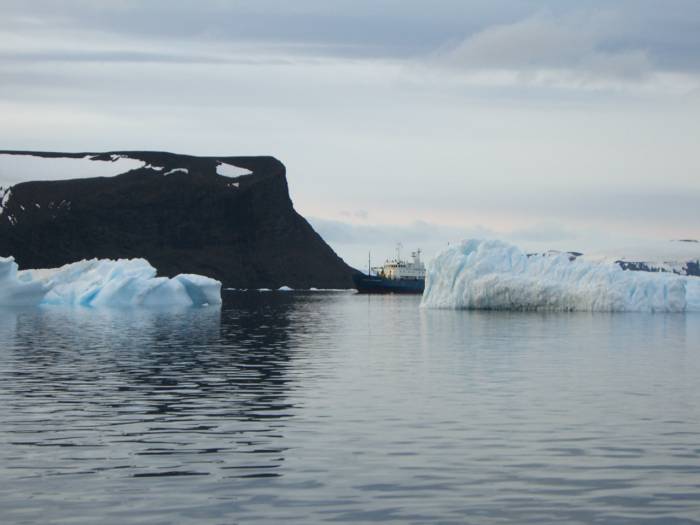
Our ship is dwarfed by the icebergs. And this is actually a quite small one.
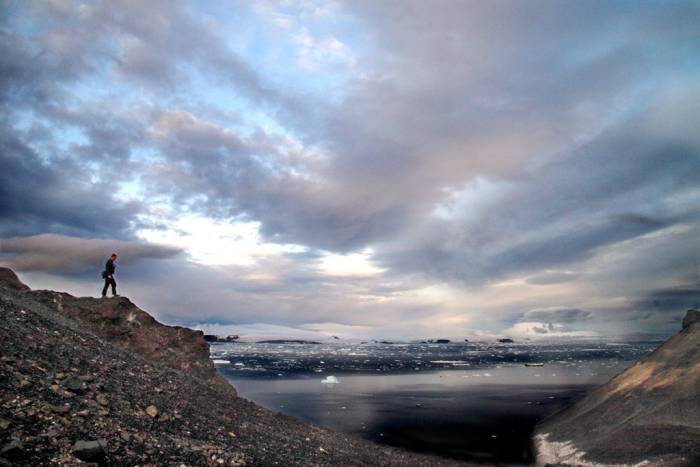
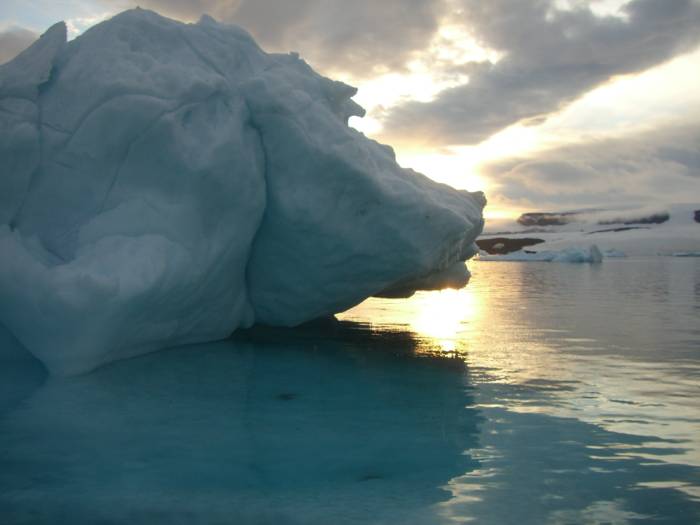
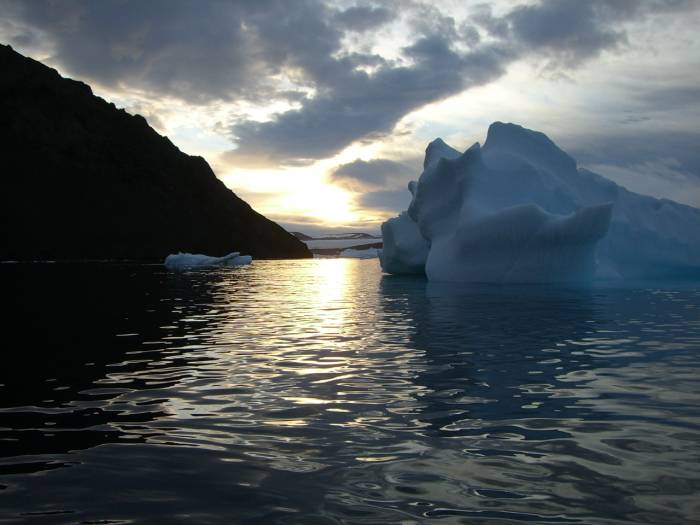
The lighting effects from the sun being low on the horizon made for some
And thus ends another amazing day in Antarctica. Time to head back to the ship I will end Chapter 8 here, and in Chapter 9 will pick up with Day 16, Paulet Island and Esperanza Station. |


|
||||
|