 |
|
|
|
|
|
|
|
|
|
|
||||||||
|
||||||||||||||||||
|
Email us at: |
||||||||||||||||||
 |
||||||||||||||||||
 |
 |
|||||||||||||||||
|
Click the sun to see the |
||||||||||||||||||


|
 |
|
|



|
|
|
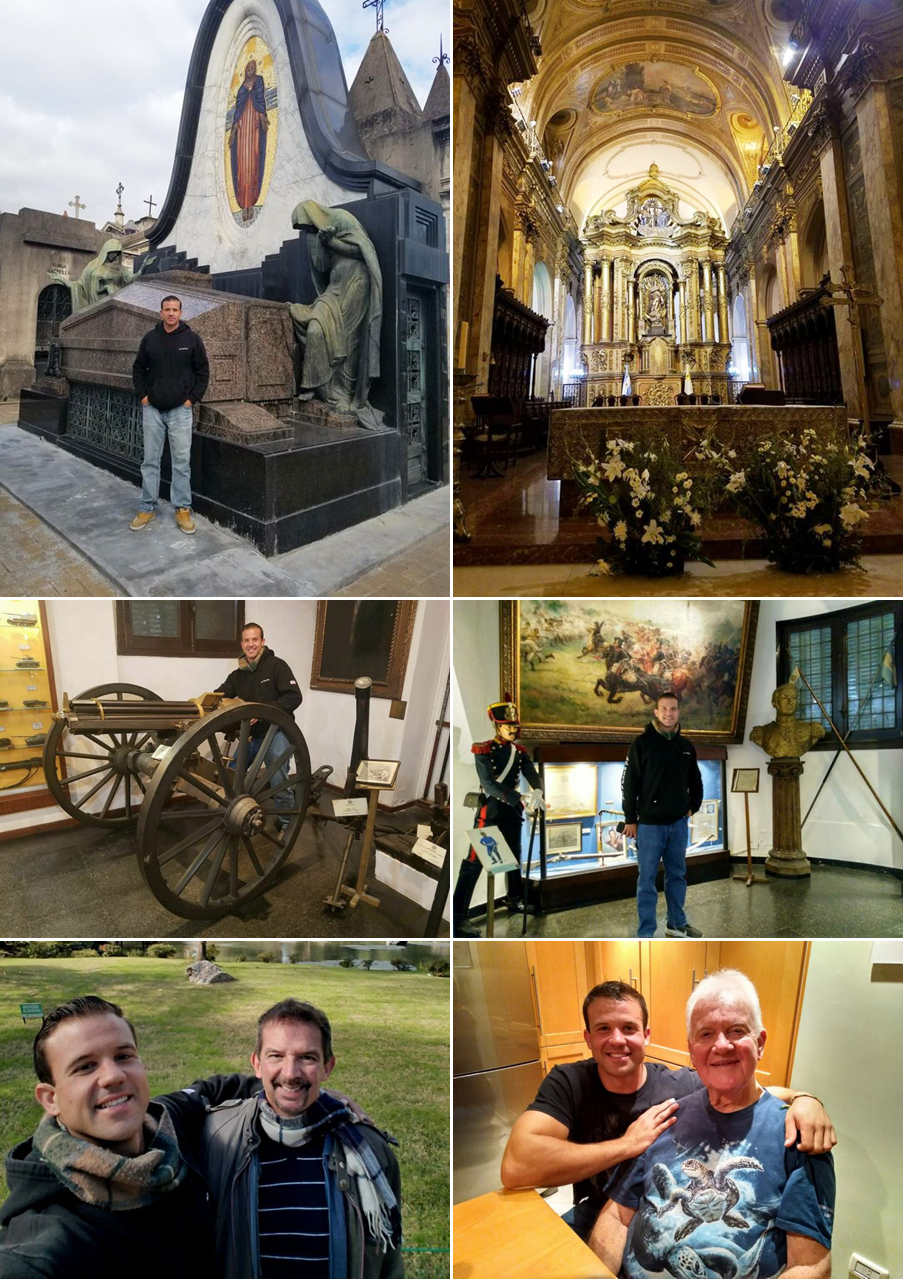
Forgive the delay in getting out Part 5. My grandson visited for 6 days, and this being his first time in Argentina, there was lots to show him. His visit was a fantastic experience for both of us. Jon enjoyed the Recoleta Cemetery, the cathedral on Plaza de Mayo and the Military Museum on Maipu.
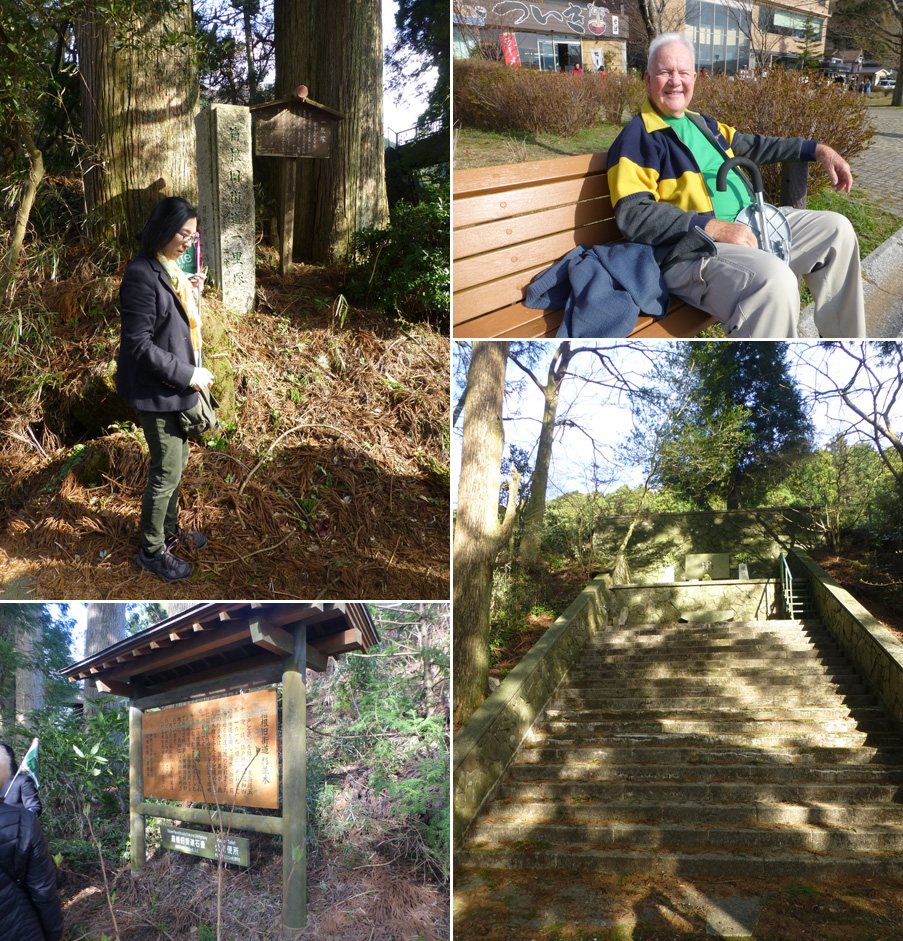
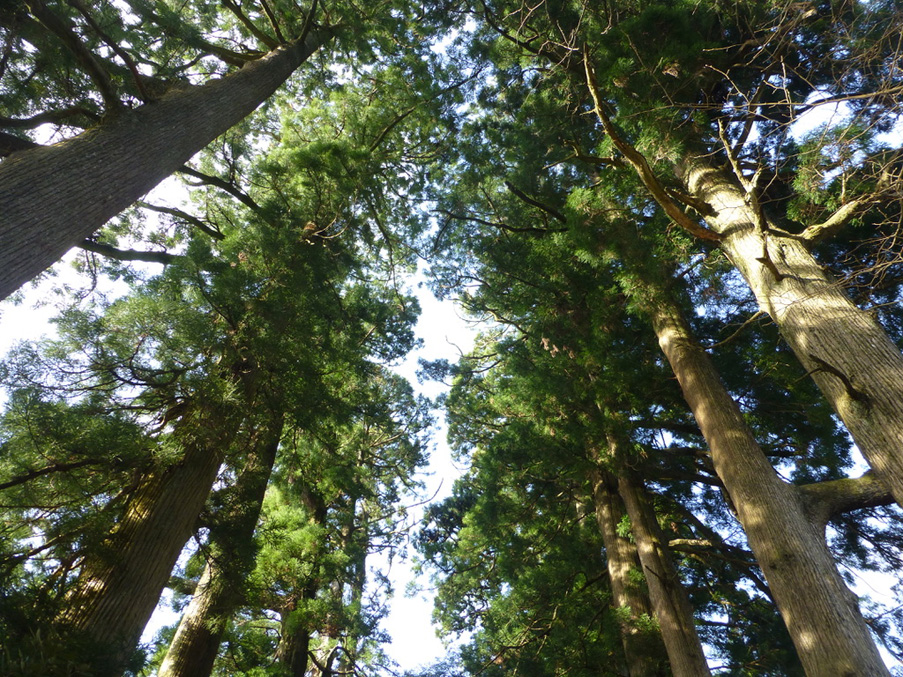
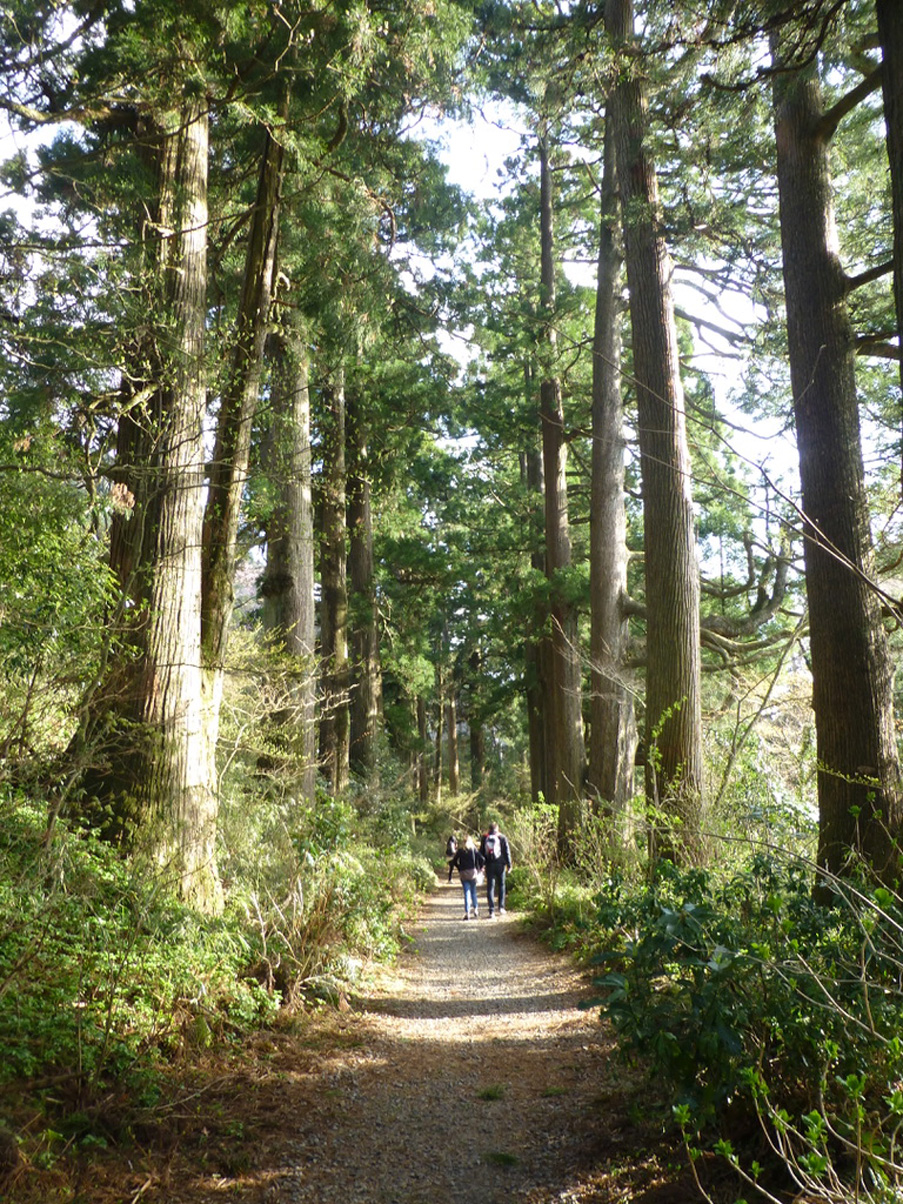
Pete did all the leg work of taking Jon around for the six days he was here. I would have liked to have gone with them, but I would have just slowed them down, and Jon wouldn’t have seen half as much, so it worked out well for both of us. And now to continue with the travelogue, Part 5, Day 5 (April 11, 2018). Back tracking just a bit before leaving the lakes area and enjoying a wonderful noodle lunch, Niko offered to lead a walk on the beautiful forrest trails to those who were up for it. There was going to be some walking, and a bit of climbing, so I elected to remain behind on a comfortable bench and wait for them to come back. Fortunately Pete went, and got some great photos.
Seeing these photos makes me home sick. It is like walking in Muir Woods north of San Francisco, or being in Humboldt County and walking through the giant Sequoia forests there. I really love this kind of natural beauty, and I am so glad that our National Park system is preserving it for future generations to enjoy.
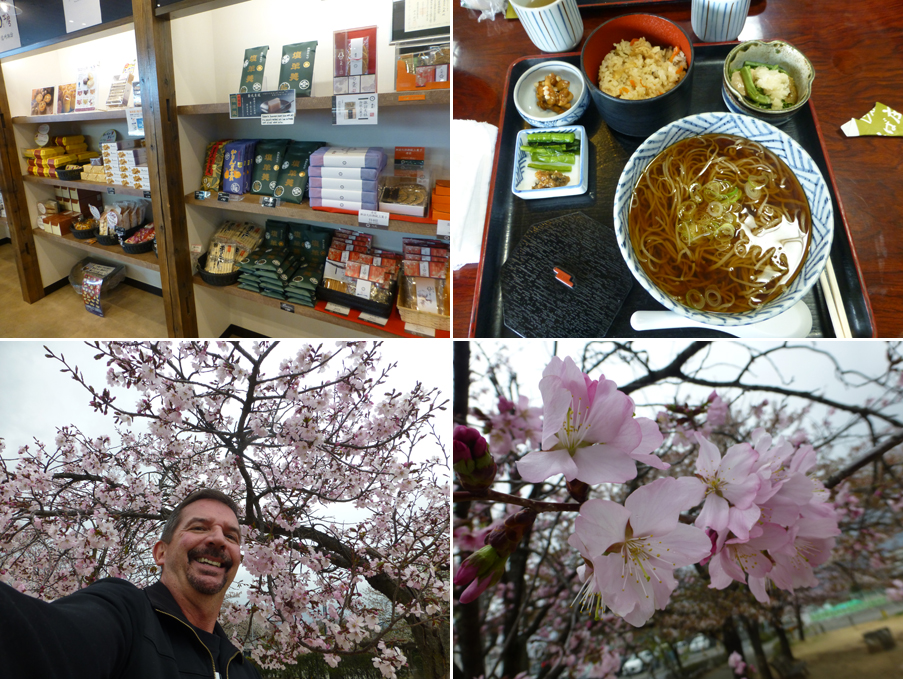
Niko said that this trail, the Nakasendo Trail (a route used since feudal times), was the way to get from Kyoto to Tokyo, and the trip took about a week. The little shop below had some mighty tempting snacks for the road, but we were heading for our noodle lunch as promised by Niko, and since it was fairly brisk outside, the hot noodle soup did a great job of warming us from the inside out. Plus, the lunch was excellent. I love all the little dishes they always add to the presentation. It’s a true delight to your taste buds.
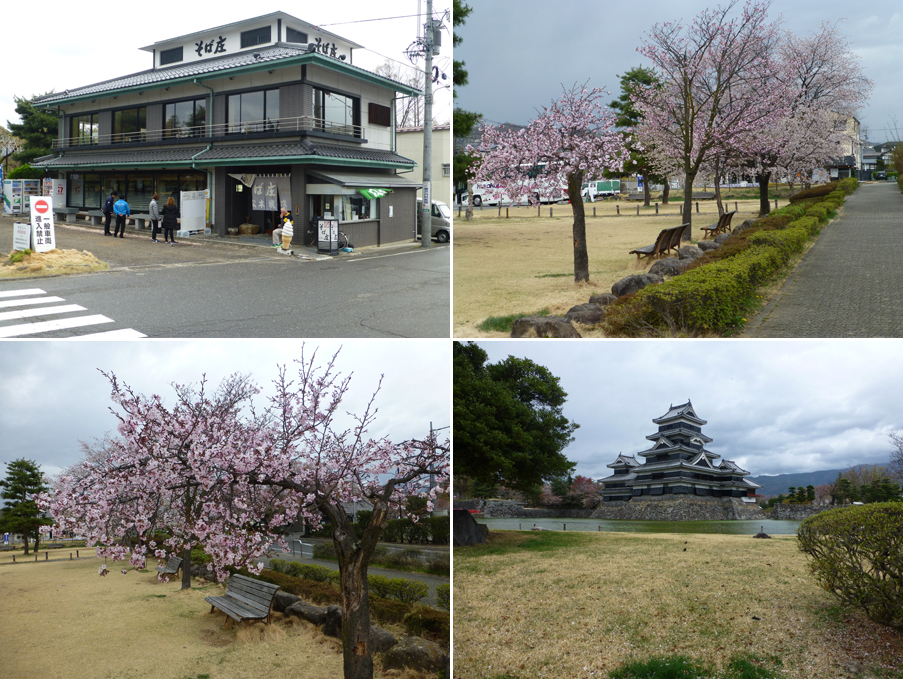
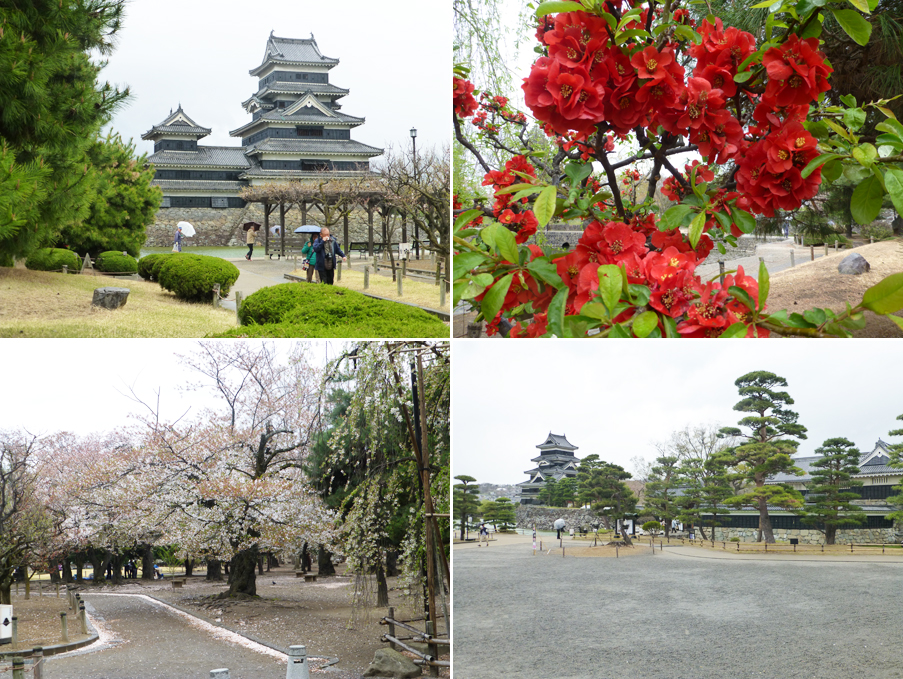
As we approach the Matsumoto Castle, we walk through beautiful stands of cherry trees in full bloom. We had thought that we would miss the cherry blossoms, but actually it depends on location. Here they were still gracing the landscape with beauty. This building at the entrance of the grounds where the Matsumoto Castle is located, had a restaurant and other shops, and perhaps apartments on the second level. Outside there were a couple of guys selling electronic devices, which to me looked like contraband, but I may just be exercising my overactive imagination. After visiting the castle, I came out early and sat on one of the benches next to them, and not knowing a word of Japanese, I was none-the-less intrigued by their actions (you can laugh).
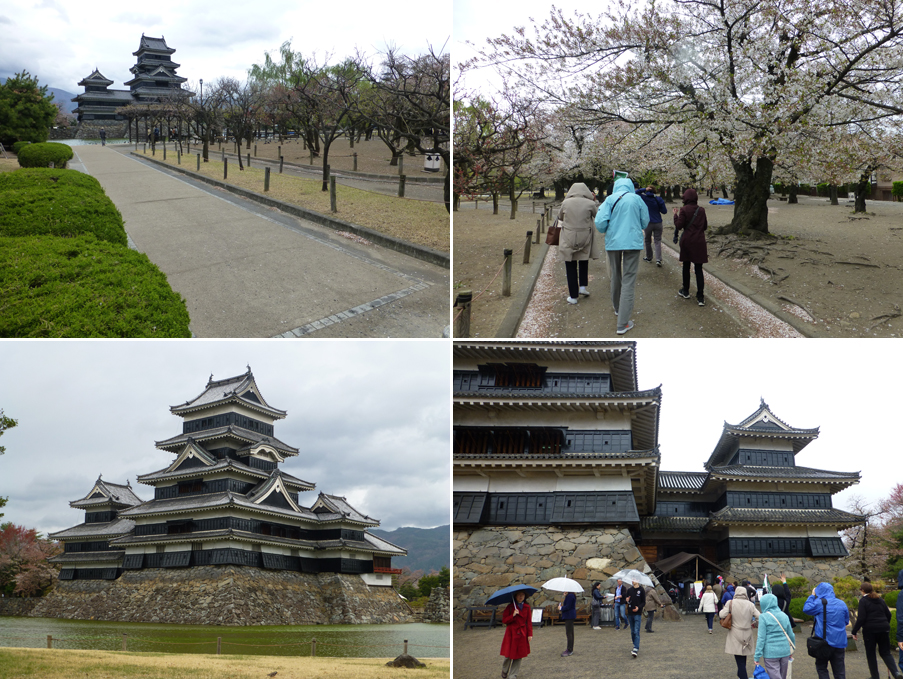
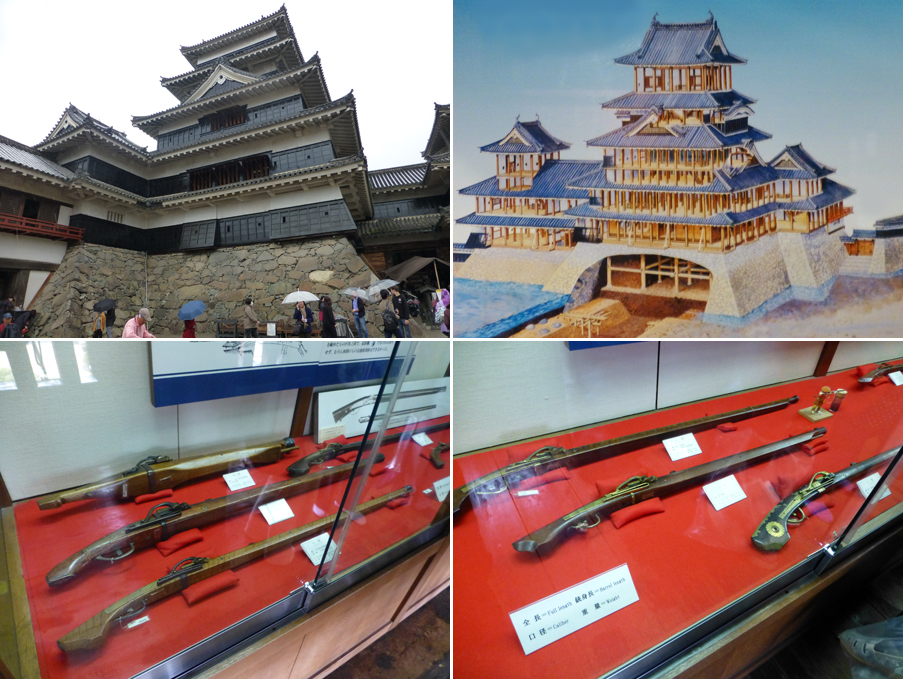
The grounds were beautifully cared for, and the mote made the castle appear to be floating on its surface. The entrance to the castle was on the far side from where we entered the grounds, so we had a long walk around with time to enjoy the beautiful grounds, and see the castle from various angles.
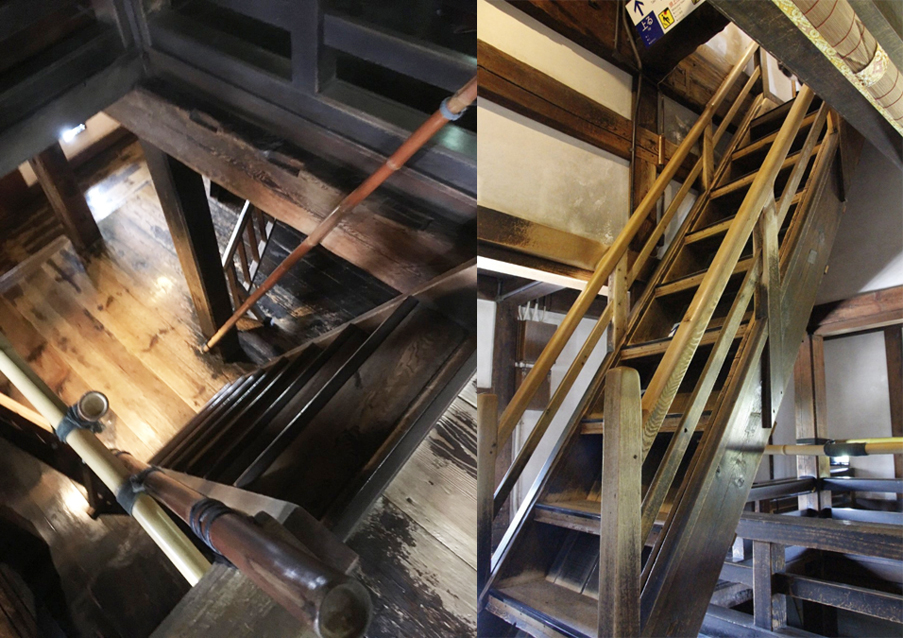
It had started to rain, but only lightly. Neither of us had an umbrella, so we scurried across the large entry space to the castle door, and shelter. The Matsumoto Castle is also known as the “Crow Castle” due to its striking black exterior, and is the oldest existing castle in Japan. The construction of the castle was in stages, but all was completed in 1593-94. The castle was the stronghold of the Matsumoto Domain for 300 years, was founded by the Tokugawa shogunate, and reigned over by 23 Matsumoto lords representing different daimyo families. There are six levels, and I made it to level 2. I didn’t go any higher because the stairs were more like ladders than stairs, and the step height was twice of what a normal stair would be.
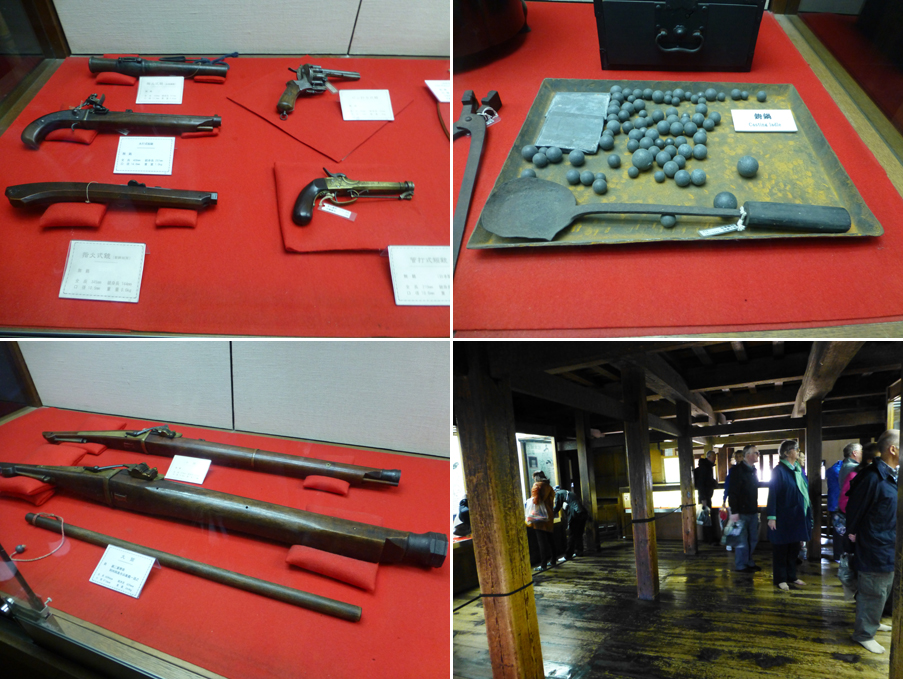
The model below shows the construction of the various towers, the mote and the very strong foundation. The entire second floor of the main tower (the donjon tower) was the armory, and it contains a collection of armor and weapons donated by the late Michishige and Kayoko Akabane from Matsumoto City. I was glad I made it to the 2nd floor, to see this amazing gun collection.
The castle was build fifty years after the matchlock gun was introduced to Japan in 1543, so the fortress was built to protect against these weapons, plus it had specially designed windows which allowed the guns to be fired from inside the castle. Whenever I think of Japan I think of rice, tatami matts, geishas and samurai warriors with long swords, but not the making of lead balls for firing in a matchlock (or what we call flintlock) rifles or pistols. I learn something new every day.
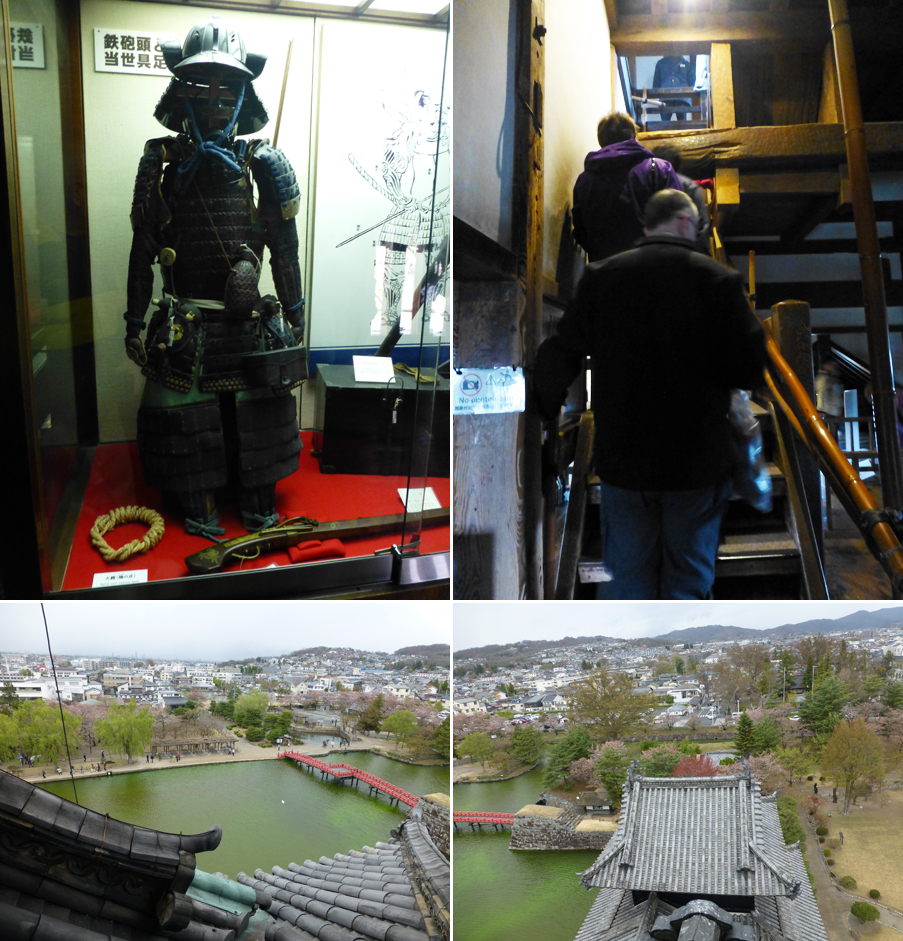
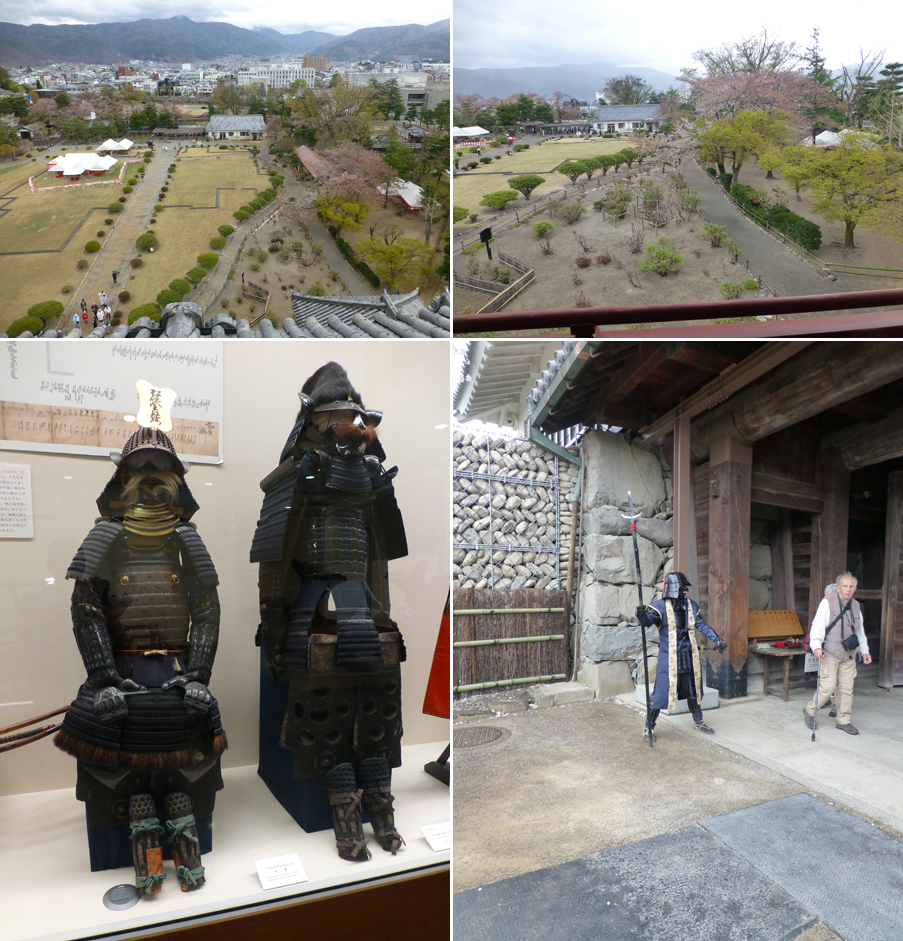
The samurai armor looked pretty ominous. If I saw this guy coming towards me with his sword drawn, I’d be petrified.
Pete went all the way up to the sixth level and got some great photos of Matsumoto City and the surrounding area.
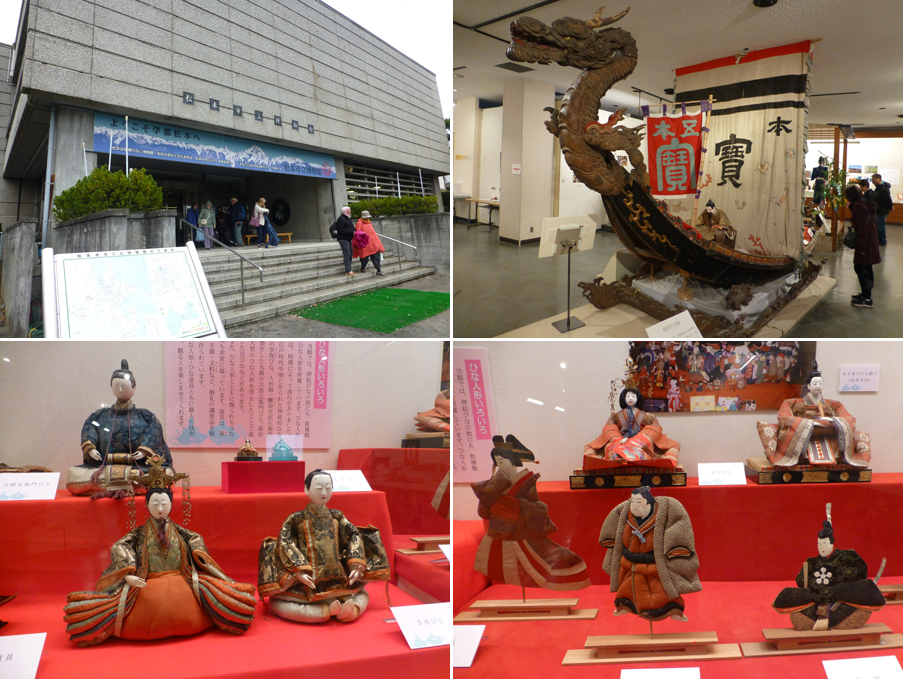
A modern day imitation of a castle guard awaited us as we left the keep, with his spear in hand, and a threatening stance. The museum outside the keep had some interesting things to see. The dragon on the prow of the boat below was ornately carved. I imagined the shogun riding down the river on this magnificent craft.
This display of clothing worn at court shows how elegant it must have been in the days before Western Civilization was introduced to Japan. It somehow seems sad that this pageantry and display of wealth and power has all but disappeared.
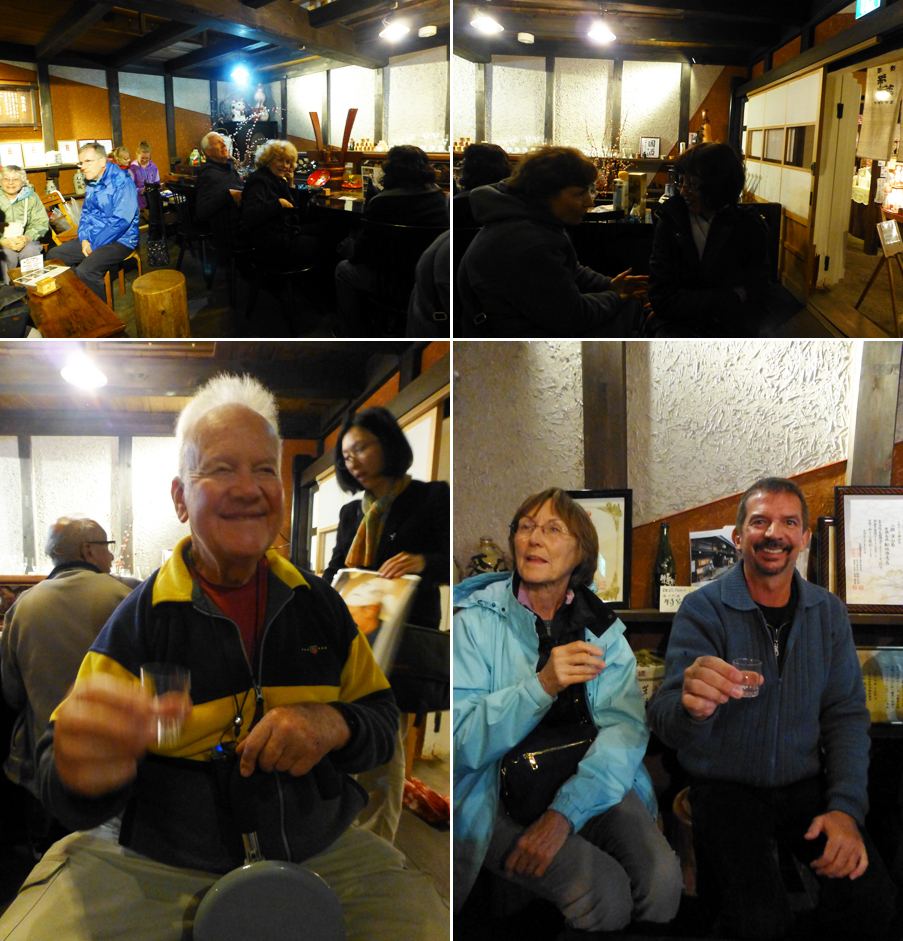
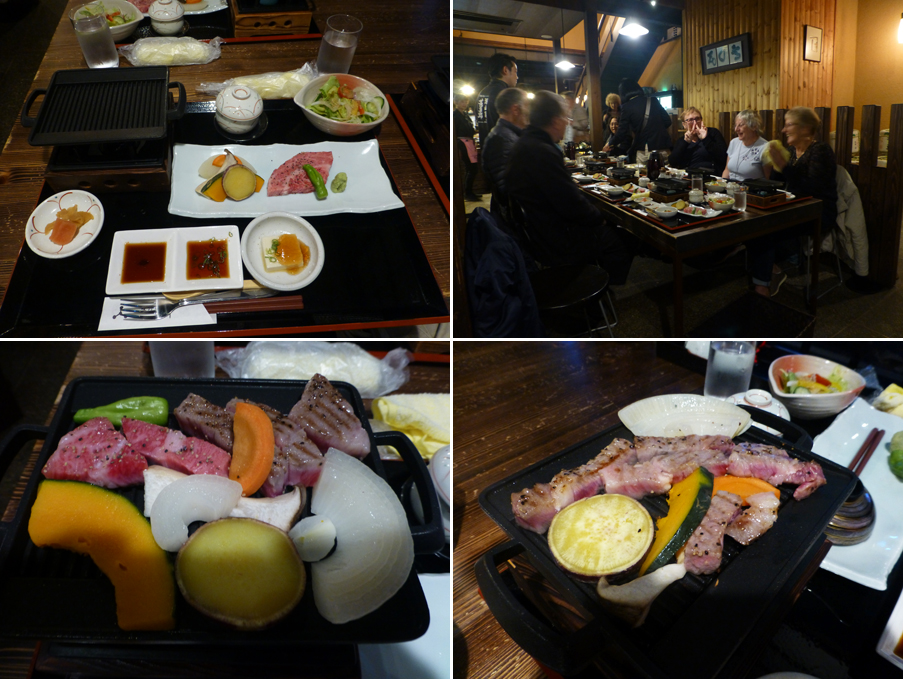
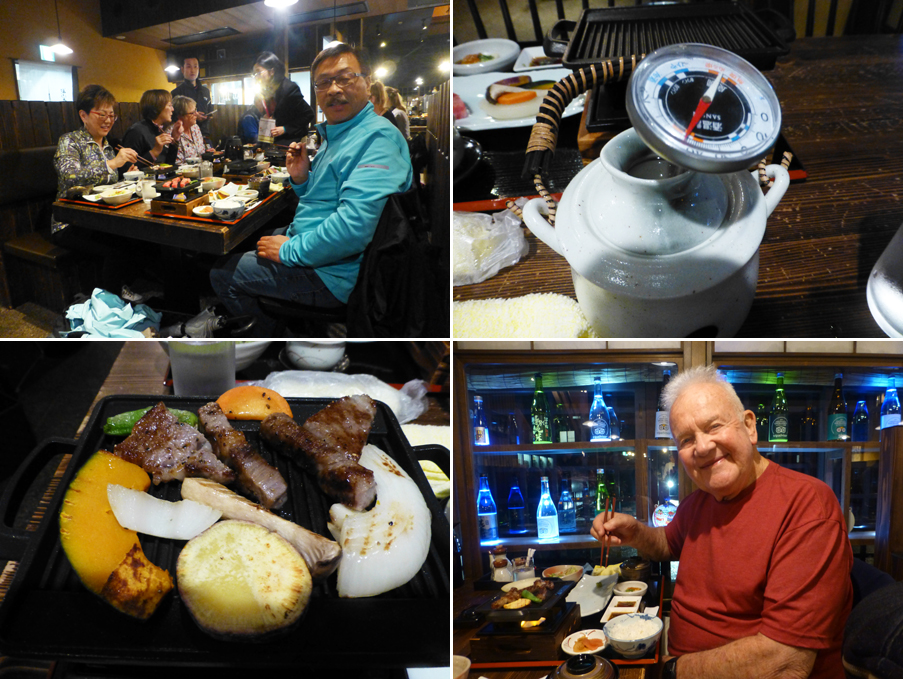
As we say goodbye to Matsumoto Castle, our thoughts are turned towards tonights dinner, which is billed as a special Hida beef dinner, with an added treat of sake tasting. The restaurant is medium sized and a little dark, making photography difficult.
But the sake tasting is a refreshing and welcome change. Pete and I have sushi about once a month at home, and we buy our sake in what suffices as our China Town in Belgrano. Whenever they have it I always get Ozeki Sake, which is actually produced in Hollister, California, about 35 miles south of Mountain View where we used to live. We discover that Hida beef is beef you cook yourself on a small individual hibachi, along with the vegetables they provided.
It’s actually kind of fun cooking your own meal at the table. I like my beef rare, but you can grill it any way you like. Kyoko and George are enjoying the meal, as are we all. This is sake in a double boiler type device, and the thermometer is used to let you know when the sake is hot enough to drink. At home we just nuke our sake in the microwave for 55 seconds.
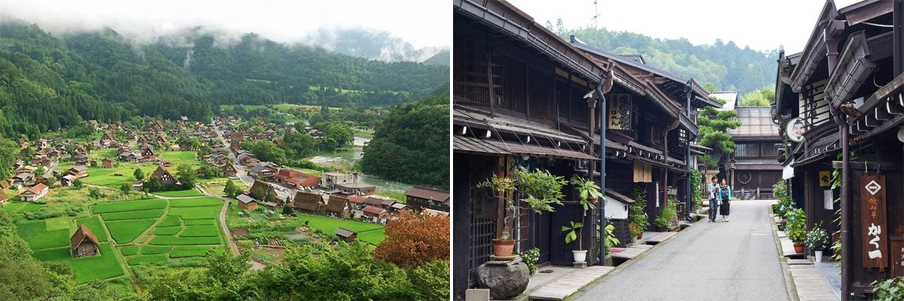
The Hida beef dinner was a big hit with everyone. This brings to a close our day 5. In Part 6 I will begin with the exploration of the historical district of Takayama, a quaint little mountain town.
|
|
||||
|