 |
|
|
|
|
|
|
|
|
|
|
||||||||
|
||||||||||||||||||
|
Email us at: |
||||||||||||||||||
 |
||||||||||||||||||
 |
 |
|||||||||||||||||
|
Click the sun to see the |
||||||||||||||||||


|
 |
|
|



|
|
|
|
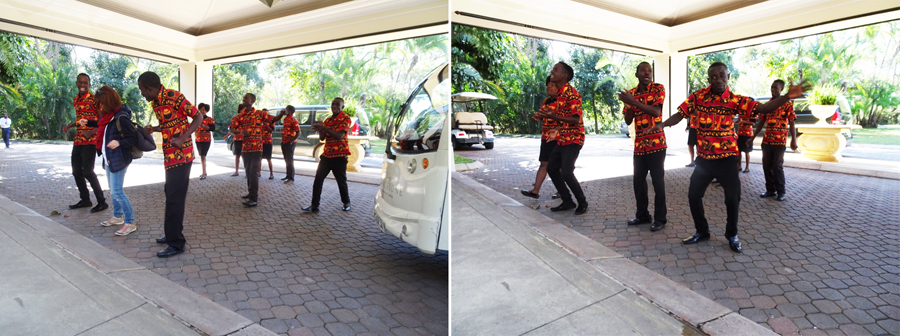
Before we leave Livingstone, a little bit of history about the bridge. It was a crucial link in the route of the railway north. To ensure accuracy in manufacture the bridge was assembled in sections at the Cleveland Bridge Company factory yard in Arlington, England before being shipped to Africa. The main arch of the bridge was joined on 01 April 1905. The two centre girders of the arch were in place by sunset on the 31st of March, but they overlapped to the extent of about 1¼ inches. When work started at sunrise next morning, it was found that the bridge had contracted in the night to the extent of exactly 1¼ inches, the two centre girders had dropped into place and fitted perfectly. The official opening ceremony took place on the 12th of September, 1905. Sir Charles Metcalfe made a welcoming speech and invited the astronomer Professor George Darwin, grandson of Charles Darwin to declare the Victoria Bridge officially open. It is now DAY 10 (21 June) and as we waited in the lobby of the Royal Livingstone for our departing transport, we enjoyed the singing and dancing of the hotel staff as a delightful parting gesture.
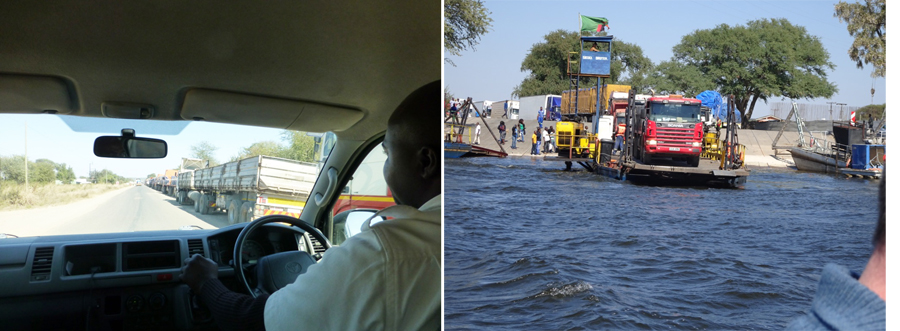
Passing through the various Immigration Posts during boarder crossings became an interesting experience. At the river crossing there were huge trucks parked along the side of the road for half a mile on both sides of the river, as they awaited their turn on the ferry.
We crossed the Chobe River from the Botswana side in an open boat, and were met on the far side by a different Bushtracks Africa guide on the Namibia side who helped us get through the ‘river crossing' Namibia Immigration Post there. We were then driven to a river port where there was some confusion as to which boat was going to take us to our houseboat. The wrong guy put us on his boat, and started heading up the river. He stopped shortly, and was on his cell phone, and we waited for what we did not know.
Then he took us back to the river port and we were transferred to another boat, this time the right one. It turns out that there is more than one houseboat named Chobe Princess on the Chobe River, and the drivers of the tender boats had difficulty with passenger’s names, hence the mixup.
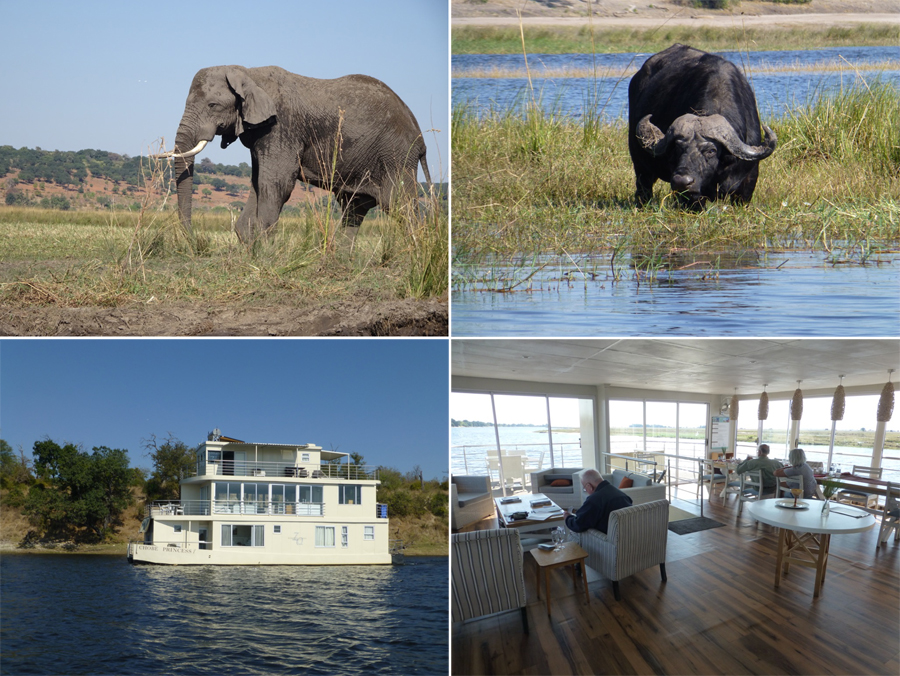
As we were taken to the next Immigration Post for Namibia, we spotted some game animals on the shore. When we reached the location of the Immigration Post we put ashore and walked up a hill to a lone building which was the Immigration Post, and the first thing they did was to measure our temperature by putting a strange instrument on our foreheads for a short time. I guessed that this was there screening for people who have Yellow Fever. Next we went to a window and were given a form to fill out. Unfortunately there was one block on the form that we didn’t have the answer to, and that was who our contact would be while we were in their country. Pete walked back down the hill to ask our boat driver if he could provide us with that information. While he was gone, the Immigration Agent decided that he would go down the hill as well, and get the information directly. He told me to follow him. This was fast becoming a rather frustrating situation. But it ended well enough, and we were on our way again, having cleared yet another immigration experience. The animals seemed oblivious to our human frustrations as they continued there lives free of immigration posts or borders of any kind.
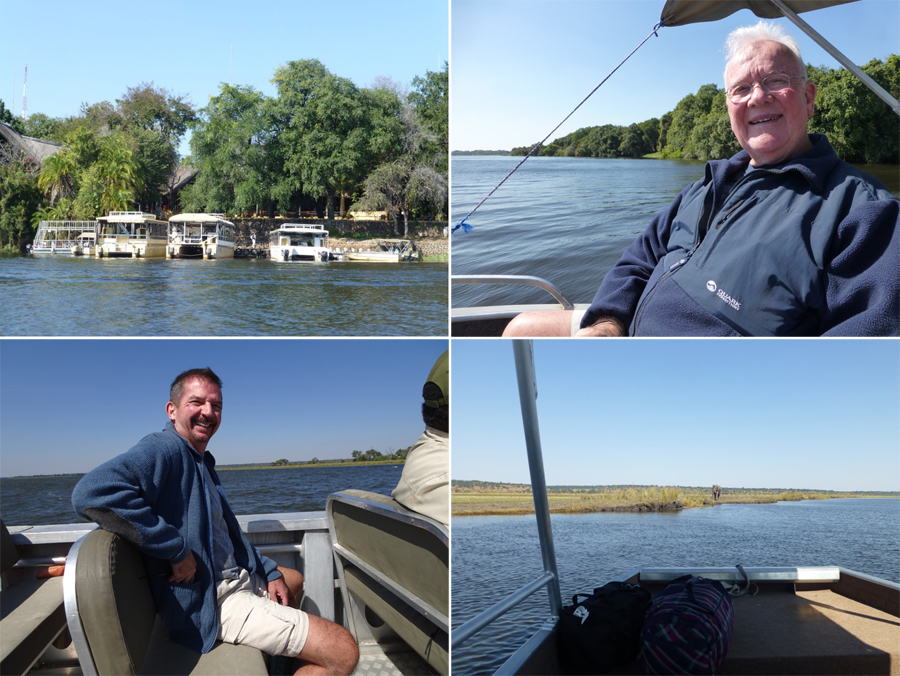
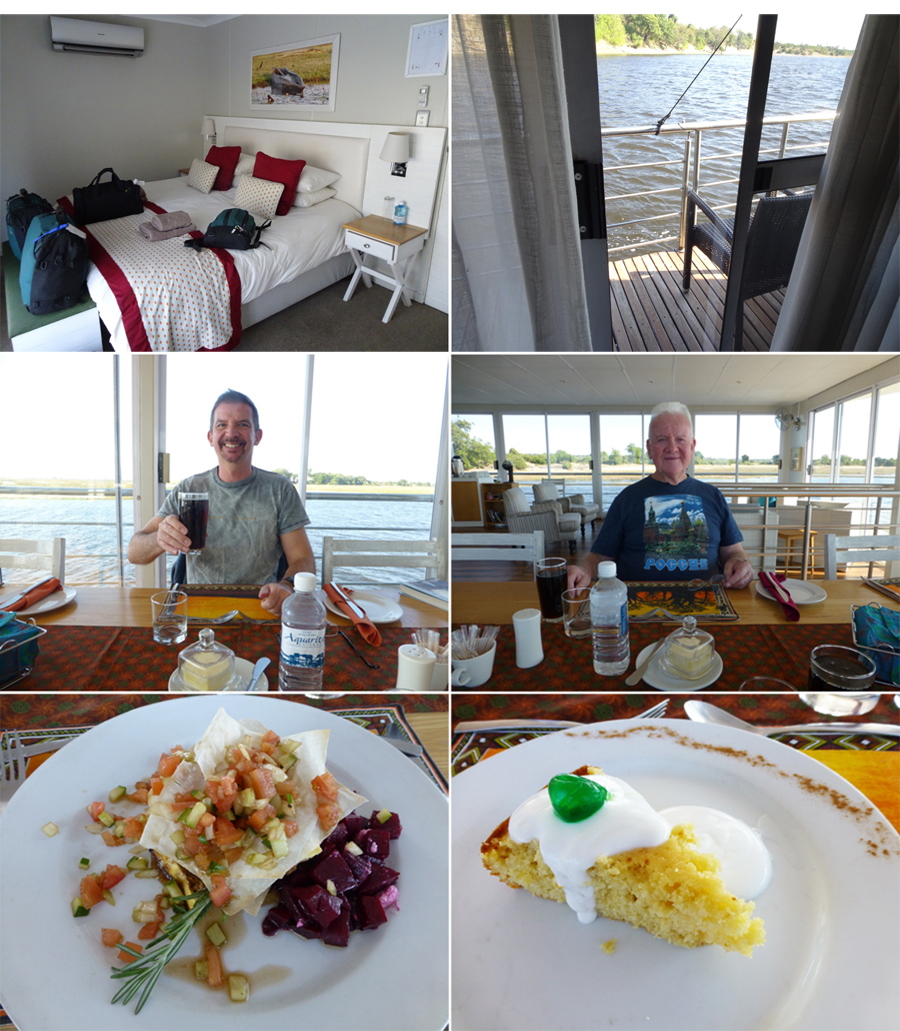
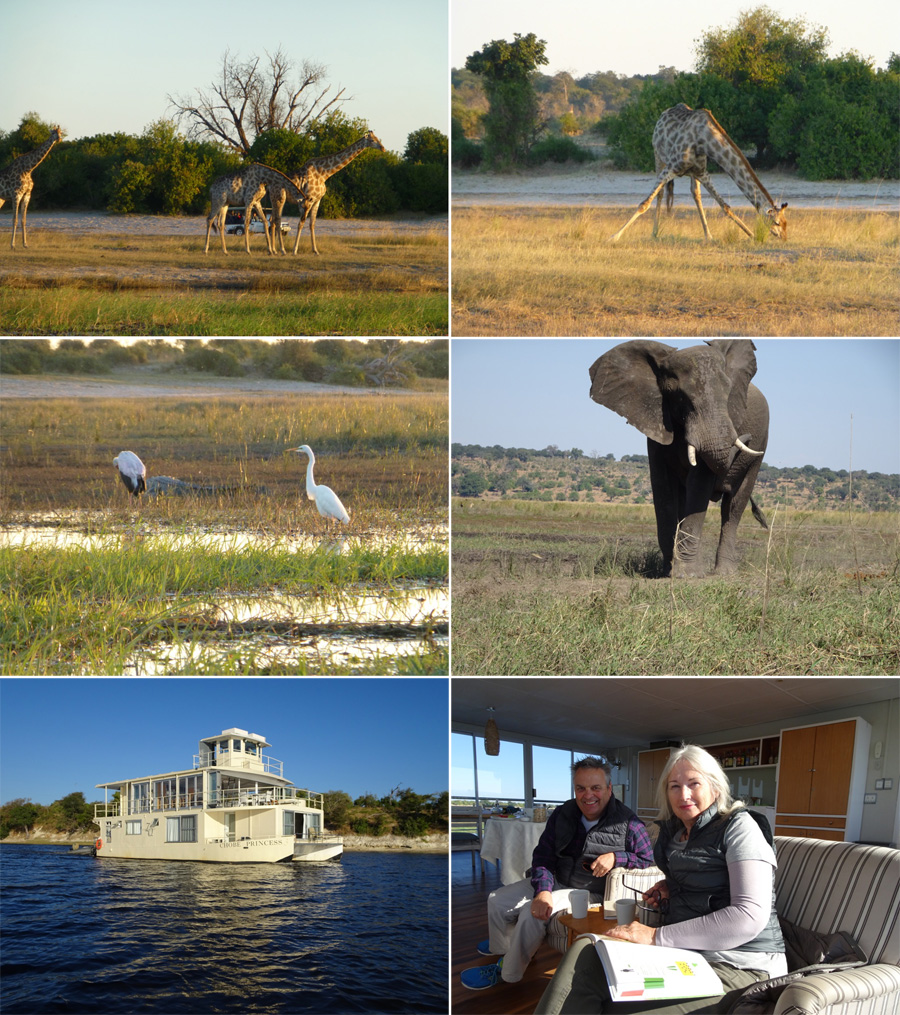
Our boat driver took us the rest of the way to our houseboat, which was quite a ways up the river, and which by the way wasn’t too shabby. We were directed to cabin #1, which was on the bow, with a nice private deck. The lounge and dining area was large and spotlessly clean. I began to feel at home here right away. Our room was spacious and the private deck on the bow was very nice, although it didn’t get much use as we were either in the dining room for meals or on the small tender boat looking for game on the shore or in the water. We hadn’t eaten yet, so they served us a delicious lunch. There would be more guests arriving over the next day or so, but for now, we were only 2 of 4 passengers.
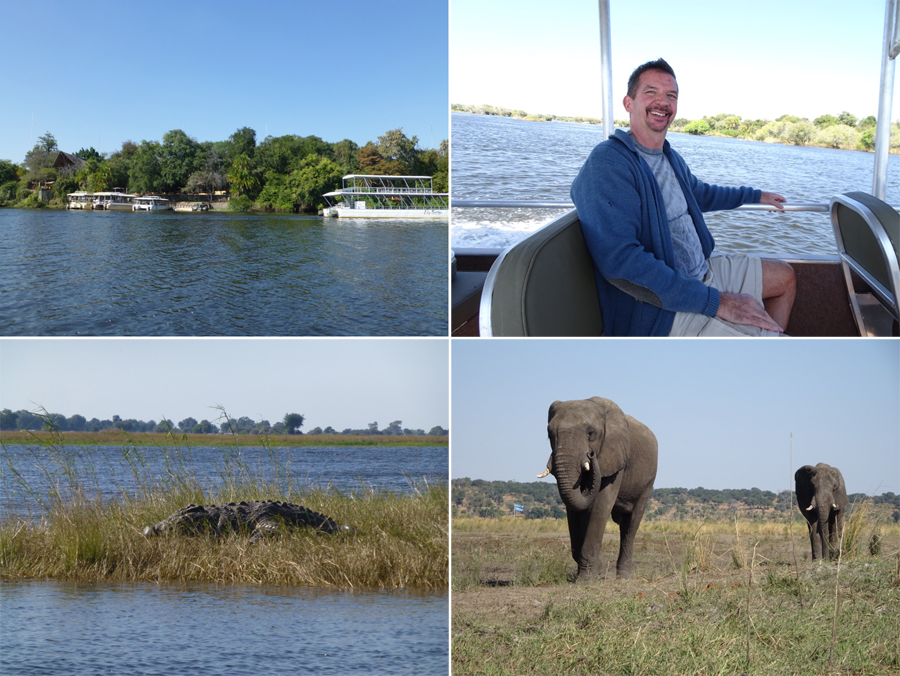
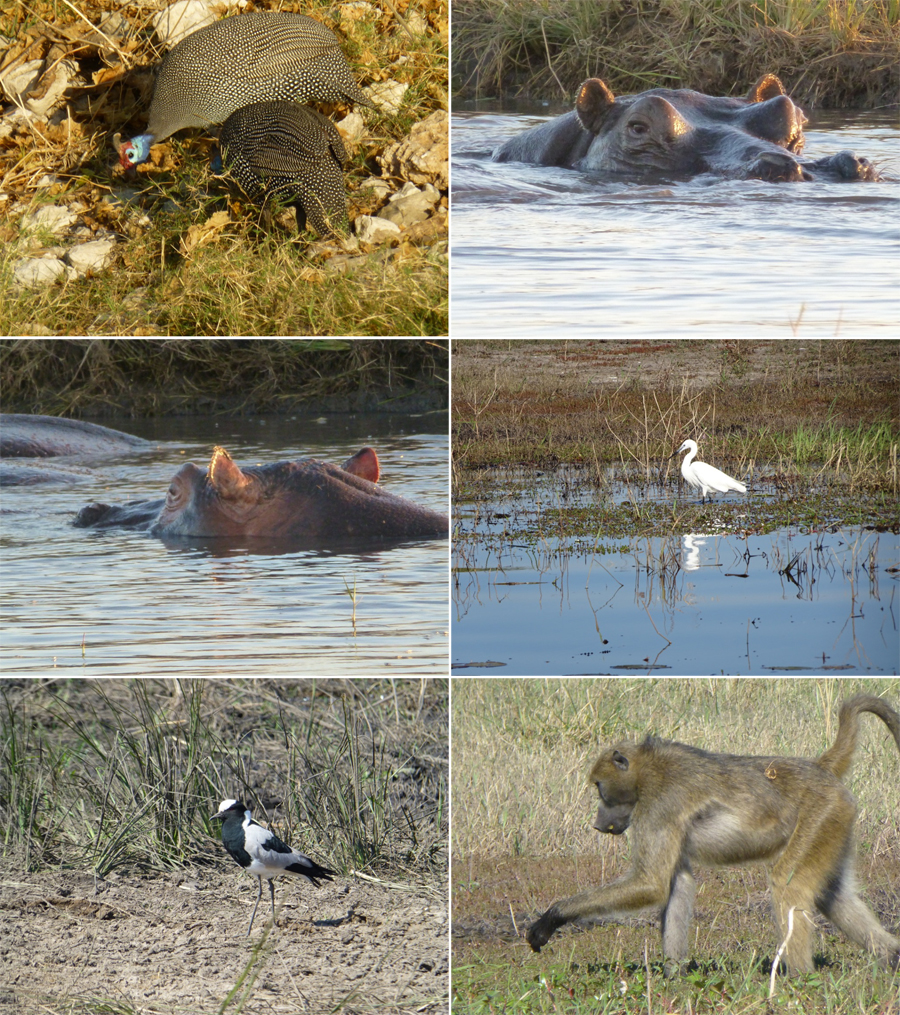
It is now DAY 11 (22 June) and we are on a tender safari in search of game. There was certainly no shortage of game. The African guinea foul with their colorful heads and intricately patterned plumage were busy pecking at the ground like any bird would do. The hippopotamus eyed us suspiciously as a heron was stalking small fish.
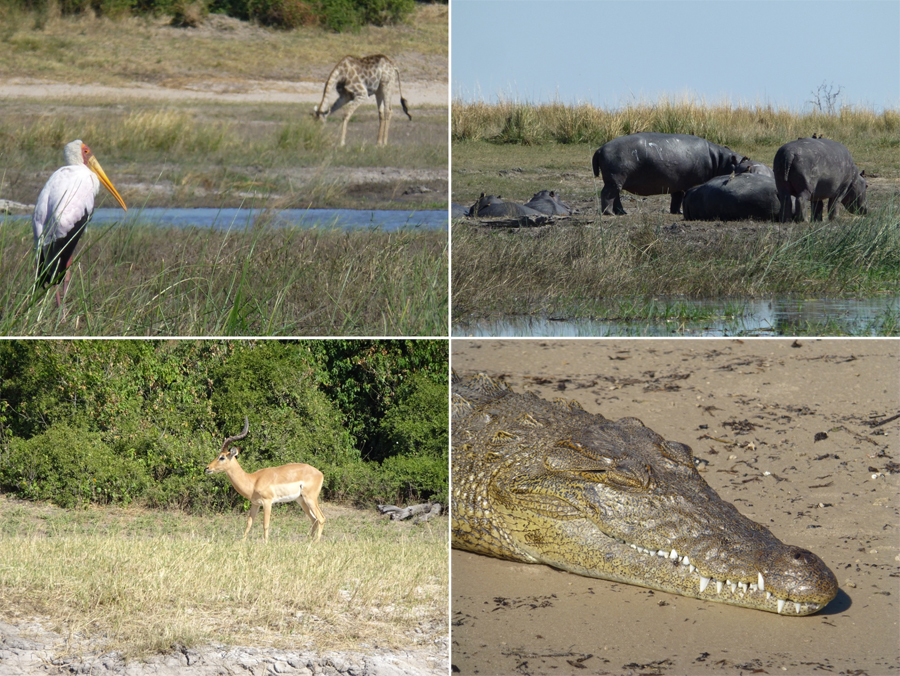
Africa has some beautiful birds. The baboon walked among the grass looking for food. A stork likewise searches for a meal as a young giraffe spreads his front legs wide apart to take a drink. If any animal needs to go on a diet (besides man) it’s got to be the hippopotamus. They are strictly vegetarians, and graze on tender grasses on land. They do not eat in the water. This certainly quells any thoughts I may have had of becoming a vegetarian.
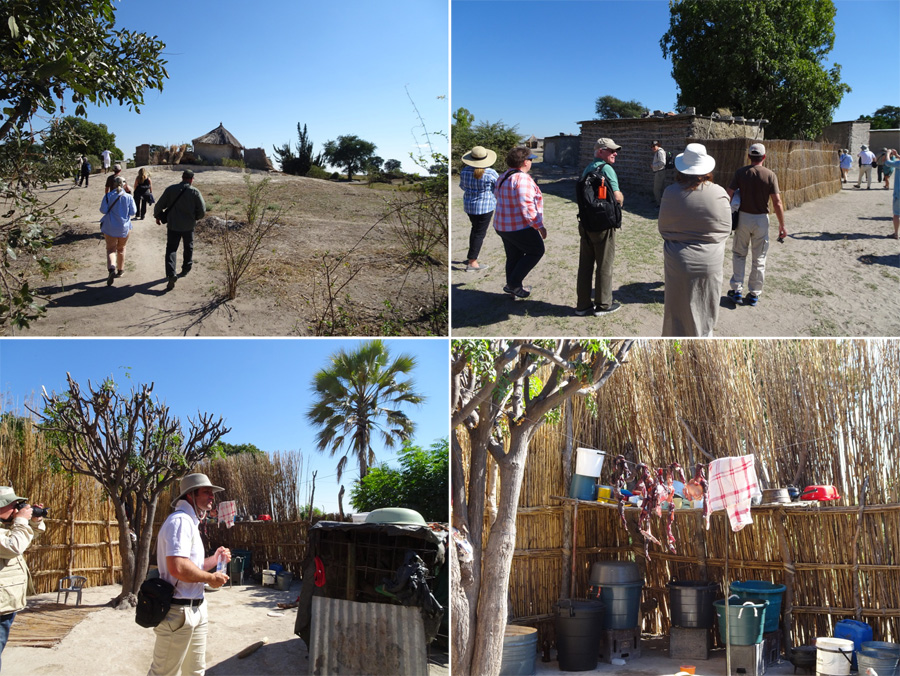
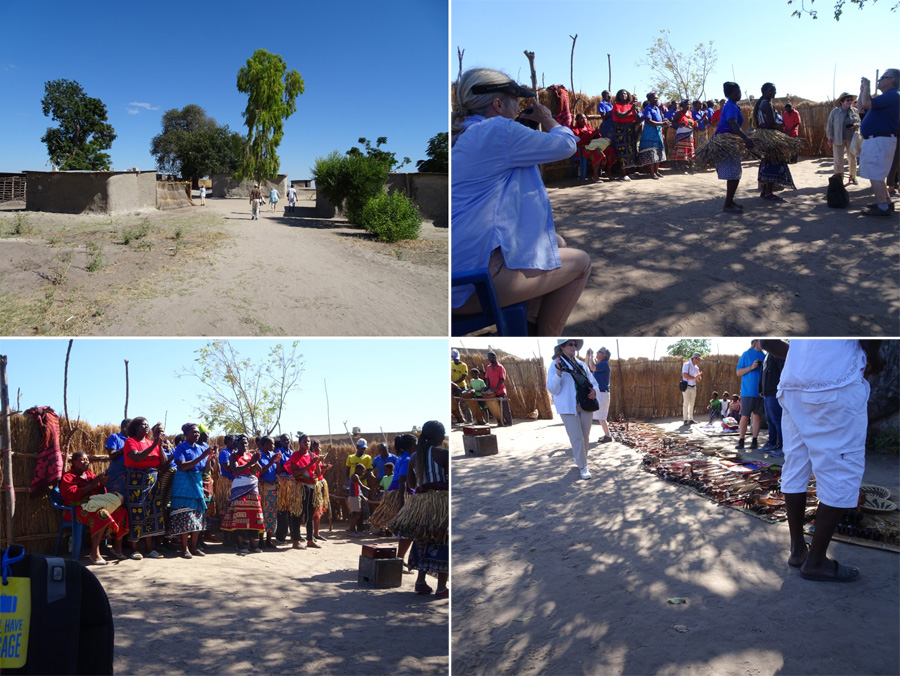
The Impala can be seen almost anywhere, which is good news for lions. The crocodile’s teeth were certainly ominous. Today we visited a native village. This was about as rural as one could get. There were nothing but mud or stick huts.
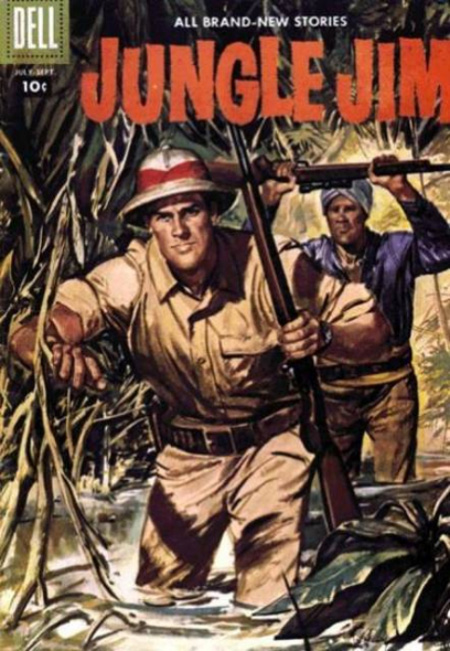
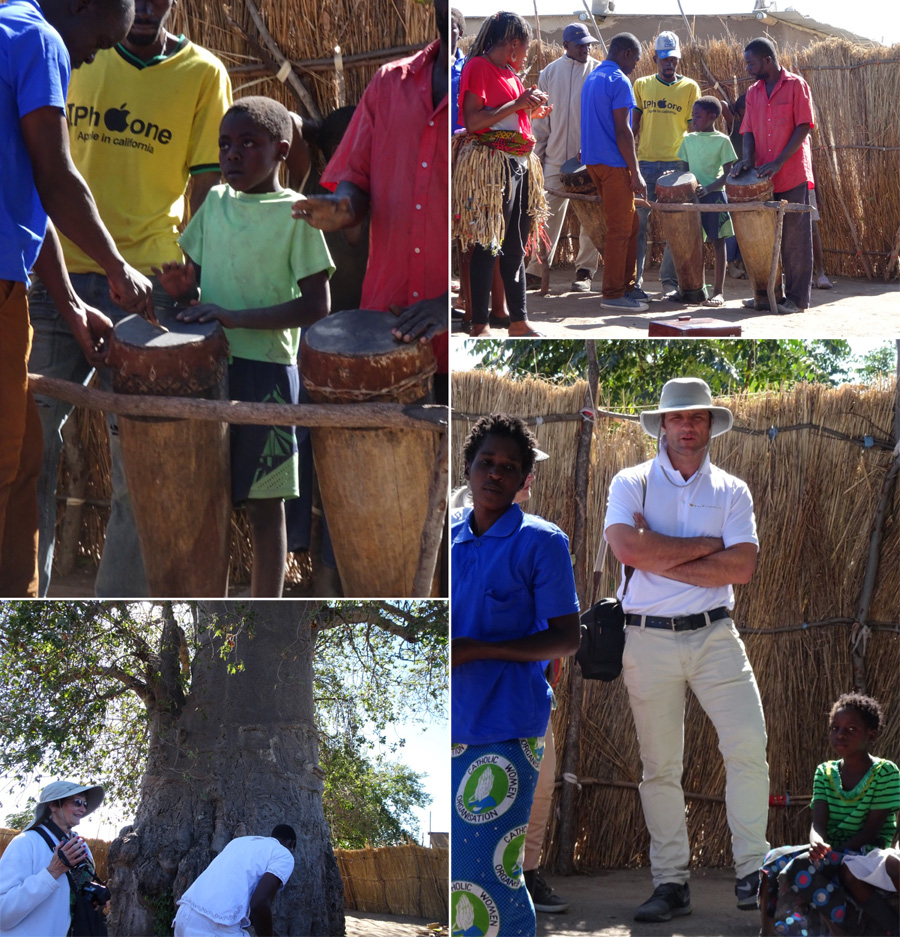
The guide in frame 3 above was from another group. He reminded me of the old Del Comic Book character “Jungle Jim”. The possessions of the inhabitants were very sparse. I couldn’t fathom living a life in a place like this. I think I’d go crazy.
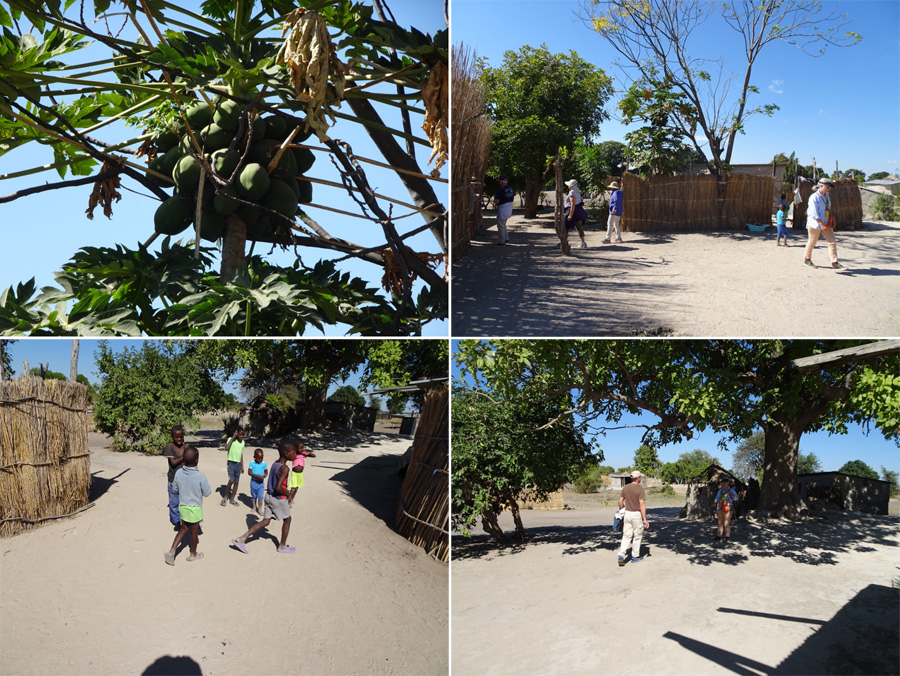
They was a papaya tree, and it was loaded with fruit. At first we only saw a few people and I wondered where everybody was.
There were plenty of children. It was pretty warm so we were seeking the shade of the huge trees. There’s not a whole lot to say about this village. It just felt so isolated, and out of touch with the world in general.
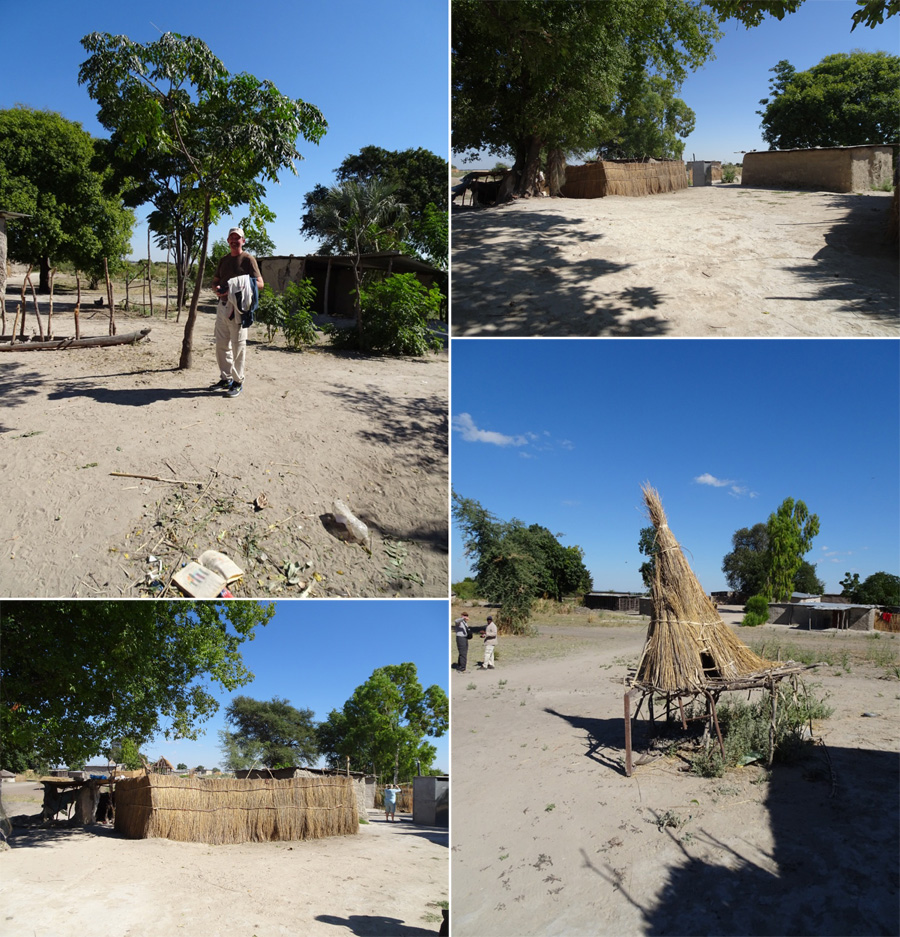
Believe it our not, the cone shaped object in the forth frame is their hen house. We were told that the people who lived here had prepared some entertainment for us, so everyone headed in that direction.
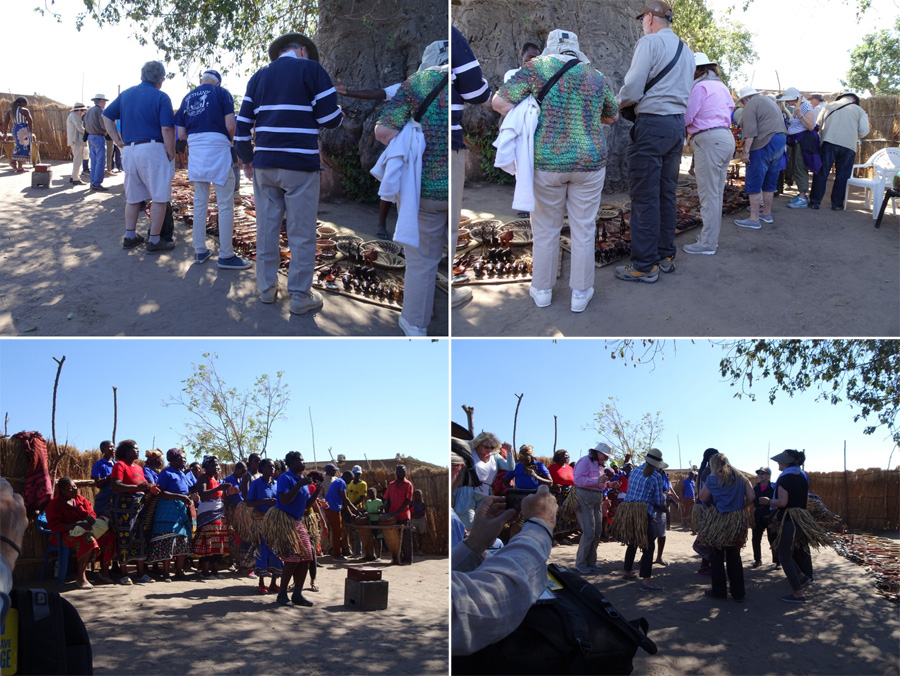
The women had some sort of stick skirts, like a hula skirt, but they made noise when they danced. Also there was a huge display of hand carved wooden objects of anything and everything imaginable. The crafts were arranged in a circle around this very ancient and huge Boabab tree.
The dancers danced and the drummers drummed, and they even enlisted the ladies from the groups of tourists to put on the stick skirts and dance as well. Some of them really got into it, and seemed to be having lots of fun. This young man was being instructed on how to beat the drum. He actually got pretty good at it while we were there.
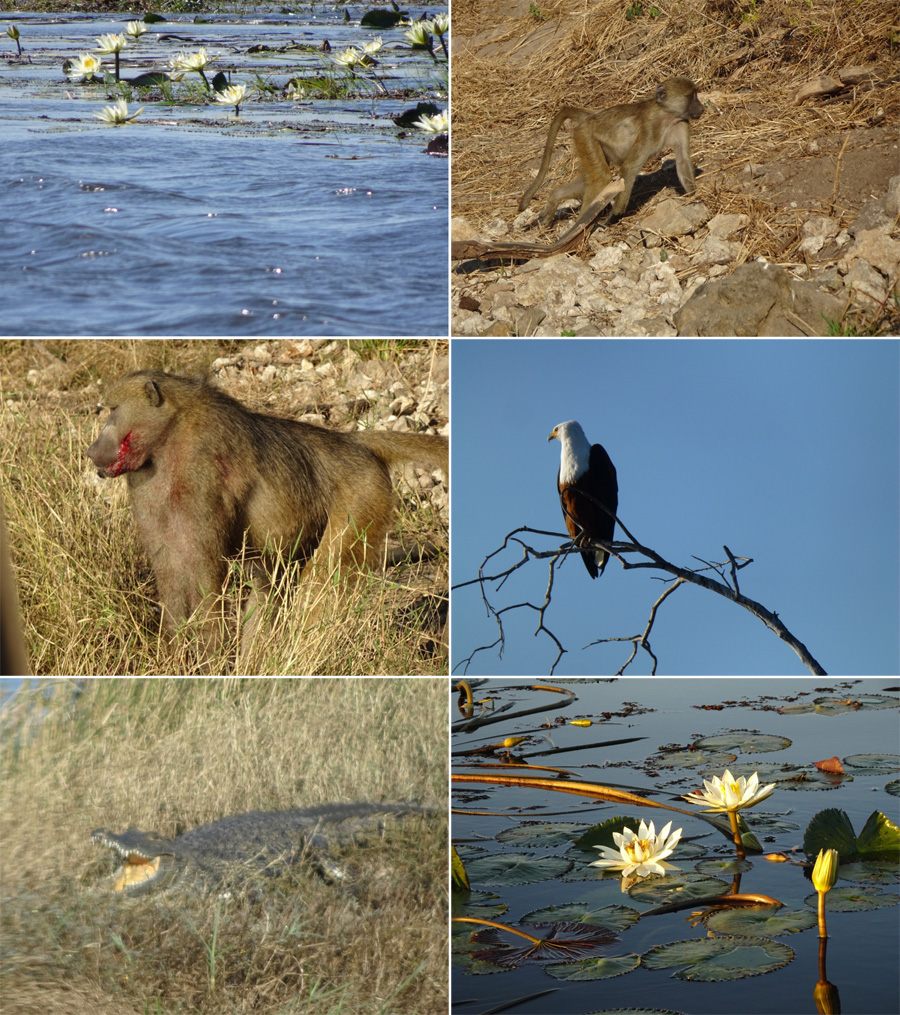
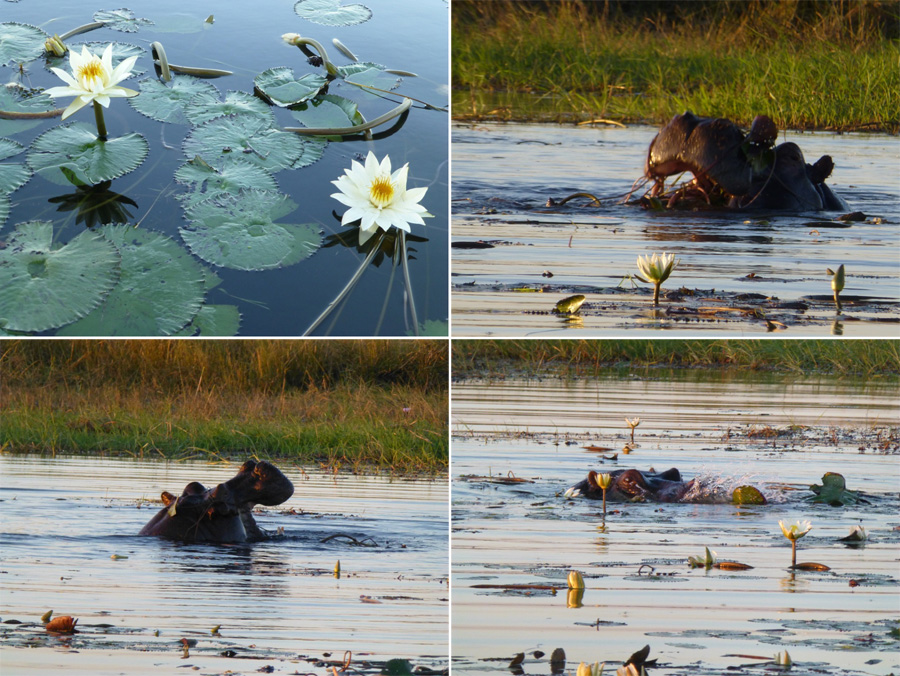
This Boabab tree trunk is massive. I wondered how old it was. “Jungle Jim” stood near the kids and talked with them. I don’t know if they ere speaking English or their native language, as I could not hear their conversations. We departed the village and did some more game viewing along the river. We were not disappointed. The water lilies were beautiful and plentiful. Baboons were active, and one appeared to have met his match in a bloody fight. A beautiful eagle perched high on a tree branch as he scanned he area for prey.
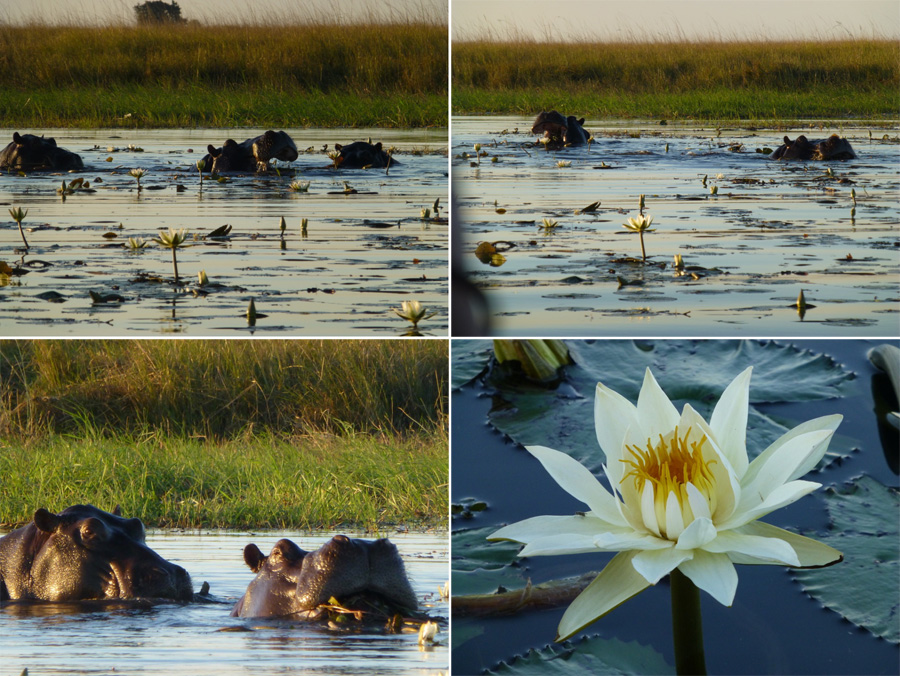
This crocodile just lay in the grass with his mouth held wide open. It was as if he was waiting for some hapless creature to wander by and just walk close enough for him to make a meal of it. I guess by now you know that I liked the water lilies. But the hippopotamus were pretty likable as well. They seem to become rather active as the sun goes down. I think we were actually being stalked by one of them. It would bring its head above the water and take a bearing on us, then submerge and would close the distance and come up again. As he got closer to our boat, the guide started the engine and backed away. We asked if the hippo could do us harm, and he said they have been known to come up under a boat and tip it over. We were glad that he backed away from it.
We were surprised at how many there were. What a strange life they lead. Eat grass all day, submerge themselves in the water for hours, get parasites removed from their bodies by friendly birds. It makes one kind of glad that their brains are not large enough to allow them to experience the concept of boredom.
We never seemed to run out of giraffes no matter where we went. And elephants were pretty much everywhere as well. It was odd to see the giraffe do the splits to get his mouth down to ground level so it could drink. It brings to mind that 1977 movie with John Denver and George Burns, “Oh, God!” where God (George Burns) admits to making a mistake with the avocado by making the seed too big. Here I thought that perhaps he made a mistake with the giraffe as well, by making its neck and legs too long.
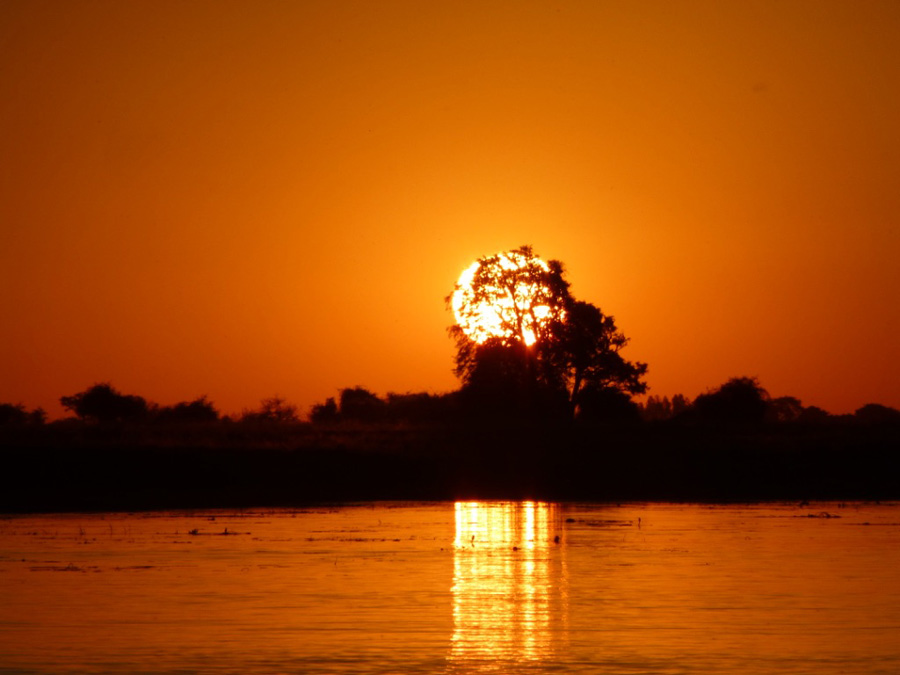
The stork and heron above seen uncomfortable close to that crocodile. One of them could easily become lunch. We arrive back at the Chobe Princess and join our Australian friends in the lounge before dinner. They have one more night on board than we do, as we leave tomorrow for the Kasane Airport in Botswana. As the sun sets over the Chobe river, we think about all we have done so far and it staggers the imagination. This has certainly been an experience way beyond our expectations.
|
|
||||
|