 |
|
|
|
|
|
|
|
|
|
|
||||||||
|
||||||||||||||||||
|
Email us at: |
||||||||||||||||||
 |
||||||||||||||||||
 |
 |
|||||||||||||||||
|
Click the sun to see the |
||||||||||||||||||


|
 |
|
|



|
|
|
|
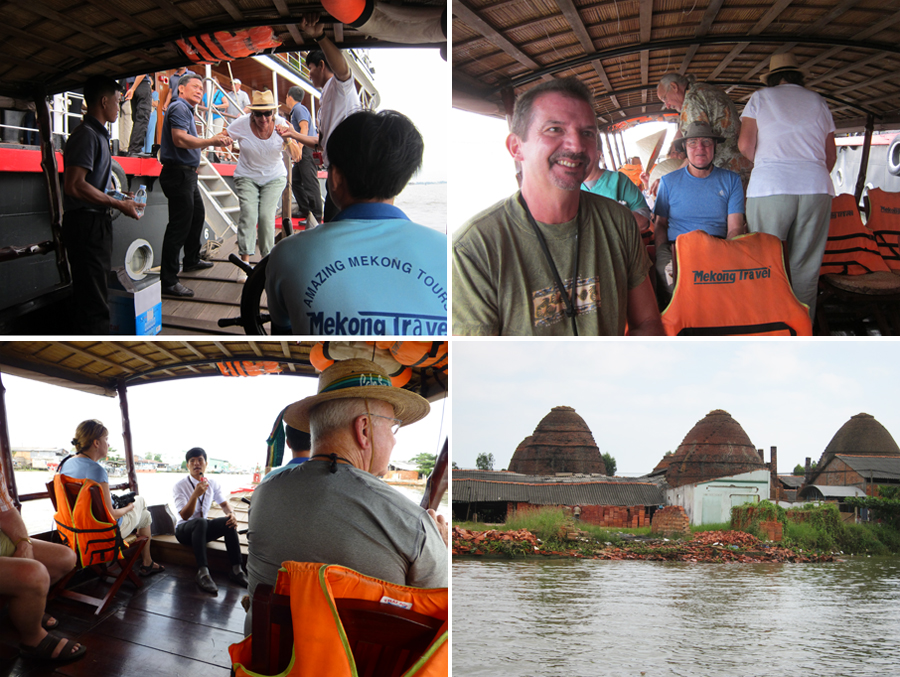
“The Mekong Delta, the triumphant outcome of the Mekong River, is more than an ever-changing network of distributaries, rivulets and tendrils fanning into the South China Sea. It is a sieve to one of Asia’s most important waterways, and the alluvial soil that it captures on its floodplains (some of it coming from high in the Himalayas) nurtures an agriculture that feeds a nation. ’The rice basket of Vietnam,’ this fertile region has been dubbed. But it yields its share of fish and fruit, too: catfish, shrimp, crab, coconut, dragon fruit and bananas to name a fraction. And it all goes on sale at the floating markets: beautifully chaotic scrums of long-hulled wooden boats along the delta’s banks.” “The Vietnamese region of the Mekong Delta takes its name from this tapestry of waterways. It spans 15,000 square miles and encompasses mountain ranges, highlands and 13 provinces. Not one acre of its land goes unfarmed though it is one of the most densely populated areas of Vietnam with 15 million living in these tropical wetlands. Still, most villages are only accessible by river, tributary or canal; life here most certainly revolves around the tides and moods of the Mekong.” “The delta, with its access to open waters and trade, bustled with trading ports as early as the first century. The Khmer Empire from Cambodia to the north created settlements here in the 8th and 9th centuries, but people of the Champa Kingdon—here since the first century—competed for dominance. When the Vietnamese arrived in the 1620s, they erected a Customs House and called it Sai Gon. More Vietnamese followed and drove the Khmer out of the delta. In the 1860s, the Mekong Delta became France’s first colony in Vietnam—as evidenced by the French patrol ships that plied its waters. One hundred years later, tensions in the region led to the war in Vietnam. Forty years on, this tranquil and life-sustaining water world is the epitome of peace, productivity and abundance.” We have just finished our breakfast, and are boarding a sampan for the ride to our first stop, a brick factory.
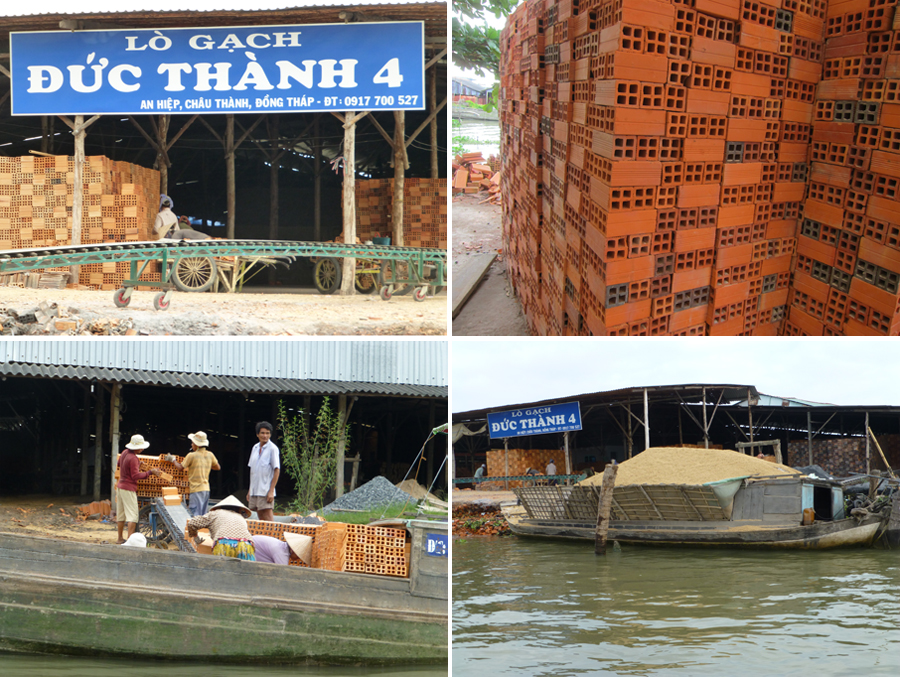
As we approach, we see the domed structures of the kilns where the bricks are fired. They are huge. This brick factory is a beehive of activity. The finished bricks are stacked and ready to be bundled for shipment to construction sites.
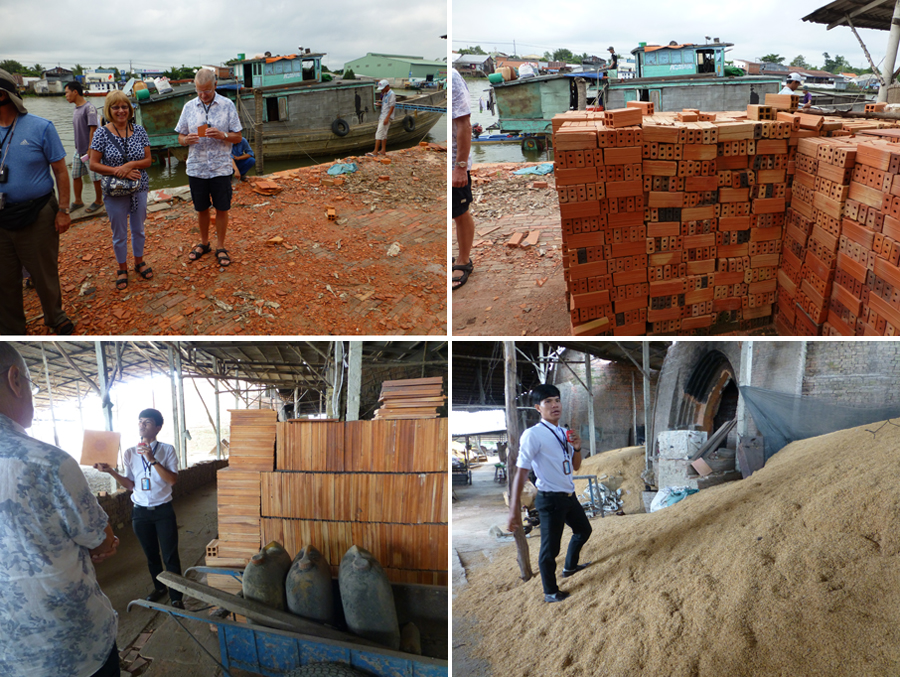
They are loaded onto long-boats by the hundreds. It looks like grueling work. The barge is filled with rice husks, which are used as fuel to fire the kilns. It would seem that no part of the rice plant goes to waste. I had no idea there were so many different types of bricks. Our guide is holding up a floor tile.
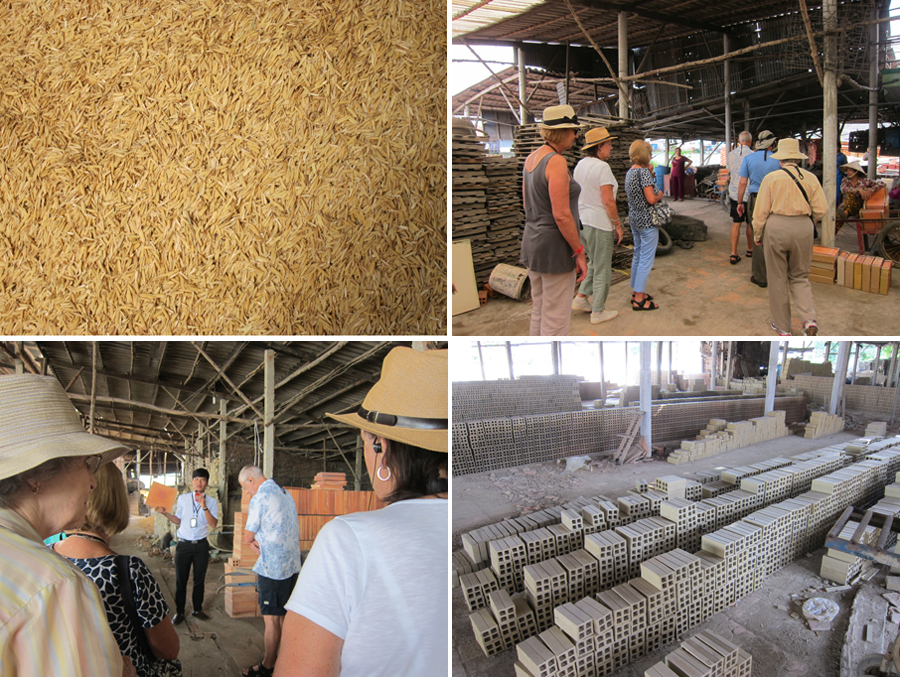
He is standing on the pile of rice husks which workers will throws into the kiln by the shovel full, by hand. Pretty primitive. A closeup of the rice husks. That’s a lot of fiber, and it’s produced by the tons in this miraculous Mekong growing region.
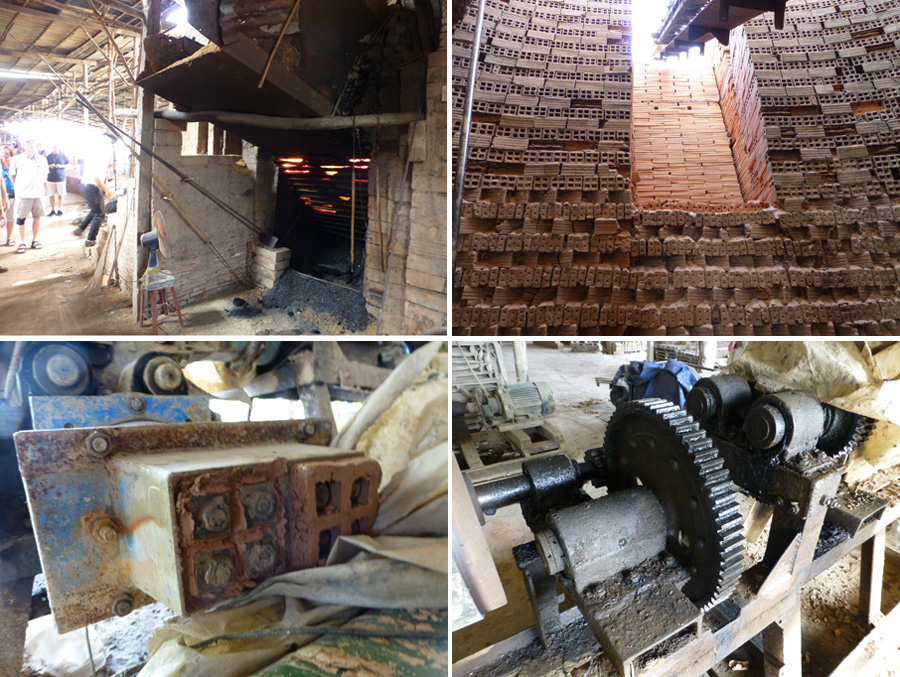
We wander around in this huge brick factory, awed by the process. The grey brick are drying before being placed in a kiln. Here you can see the fire blazing inside a kiln. And in the next frame, a view inside a kiln being stacked with bricks.
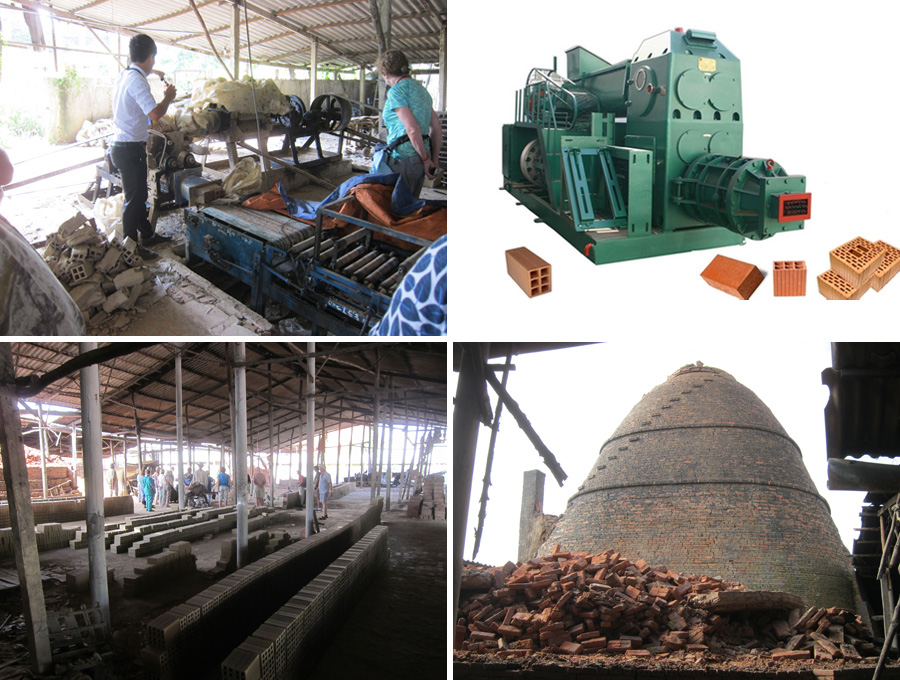
The machine that extrudes the bricks looks ancient, and overly simple in its design. This reminds me of a comparison I made in an earlier chapter, when I showed a Vietnamese woman at her loom, and then showed a photo of a modern textile mill and the modern automatic computer driven machinery that produced hundreds of yards of fabric in less time than it took the woman at her loom to make one foot of fabric. Compare the working machinery in our brick factory to this modern brick making machine. How we have progressed in this ancient art of making bricks, yet the bricks produced by this primitive looking machine are probably just as good as the ones produced by that huge green monster, although the number of bricks produced per minute may be drastically different.
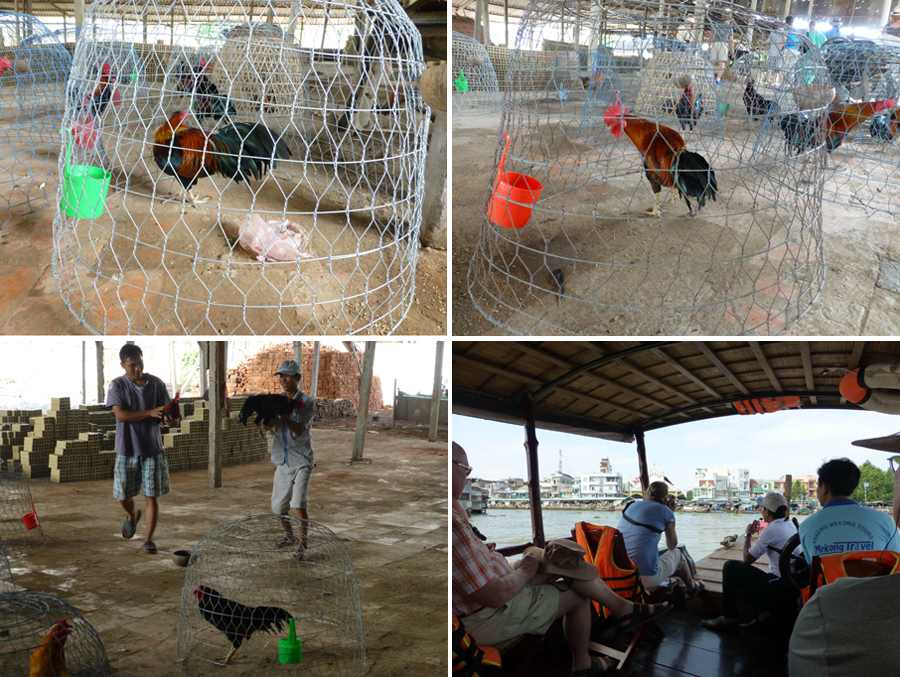
The factory was fairly large and there was a lot to see. Those small protrusions going up the side of the kiln at an angle are actually steps. I don’t know why anyone would need to climb to the top of the kiln, but I suppose they do. Perhaps there is a damper at the top to regulate the heat inside. I also thought it was interesting that the kilns were constructed of the same bricks that they produce. It’s sort of like the chicken and the egg conundrum: which came first, the kiln or the brick? It’s just another one of those amazing mysteries of life that you wouldn’t even think about unless you were actually there. ;o) Apparently working in a brick factory provides the workers with considerable free time on their hands while the bricks are baking in the ovens. They had quit a collection of fighting cocks, and you know how popular cock fighting is in this country.
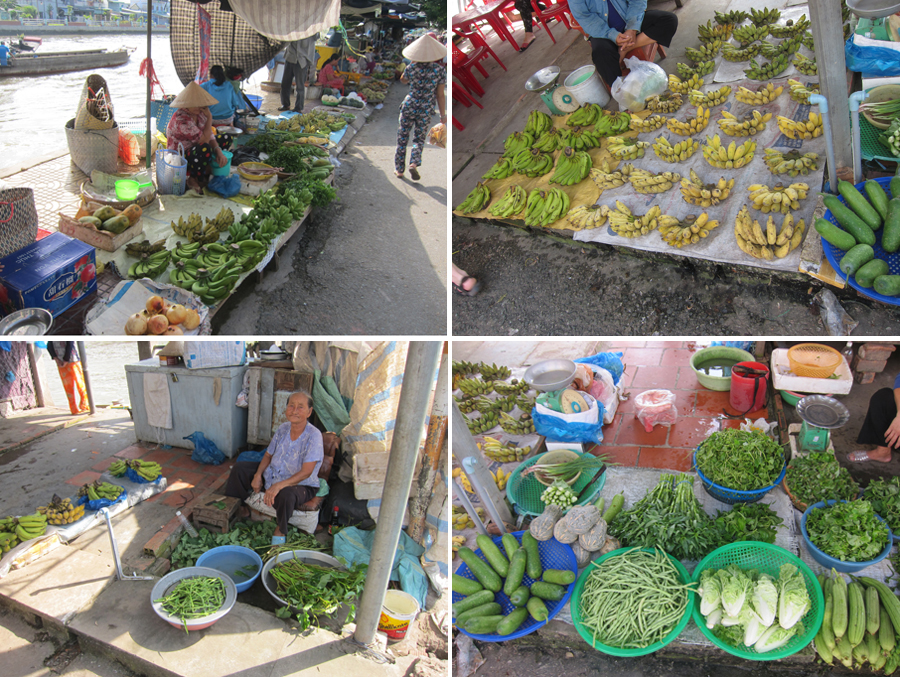
I’m sure that if we stuck around we would be able to place bets on our favorite cock. But alas, I fear that we must depart. Our sampan takes us to visit the Sa Dec Market. It was a maze of the surreal, with variety beyond my imagination . . .
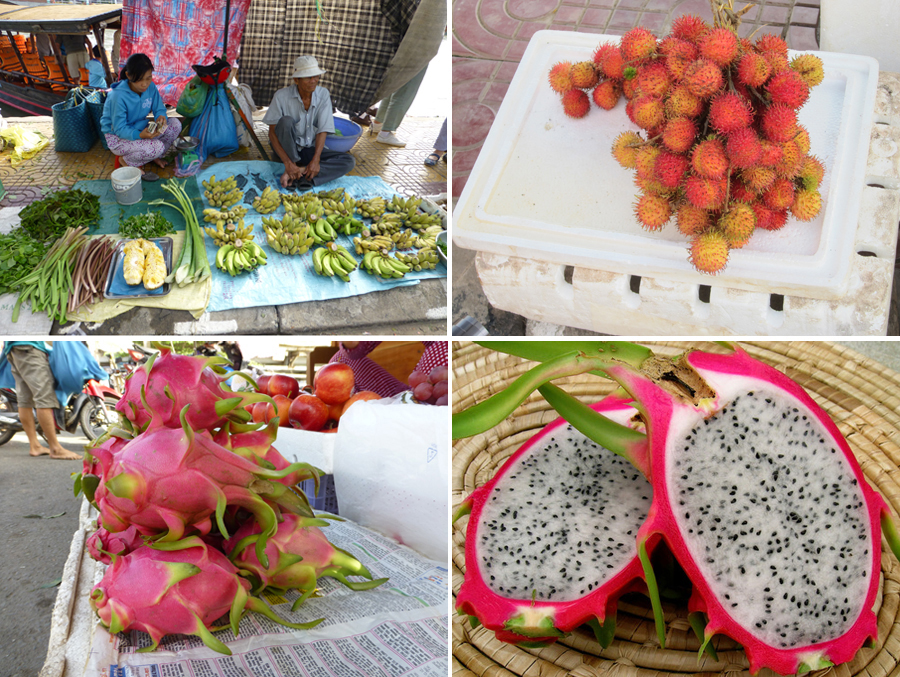
. . . with both recognized and unrecognized vegetables and fruits, like lychee fruit (recognized) and green stalks (unrecognized).
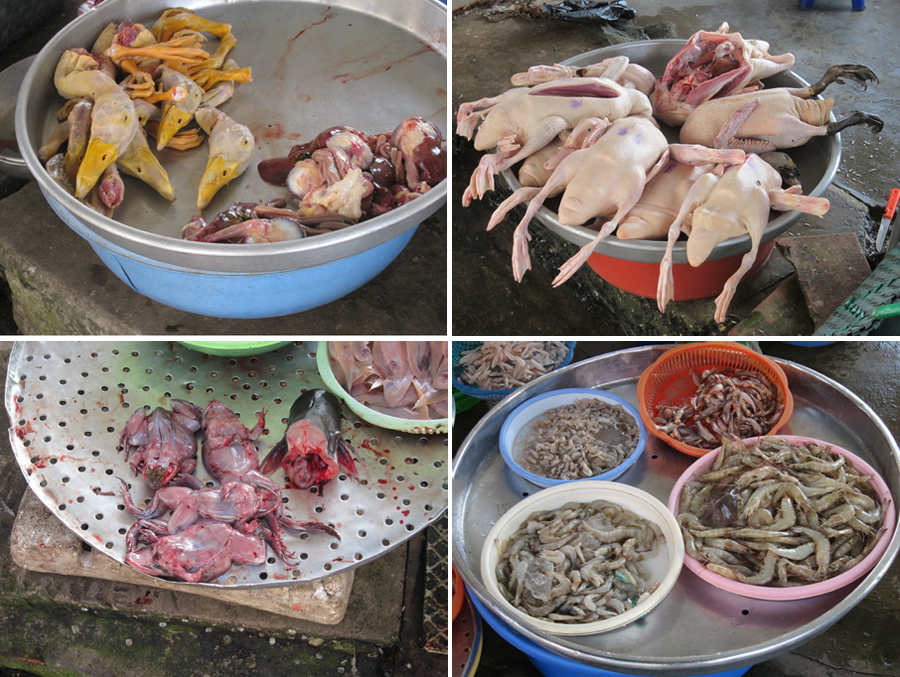
There were dragon fruit in a wide variety of sizes and colors. The black seeds inside added to the strangeness of this fruit. Besides fruits and vegetables, there was a wide range of meats, some of which I was not even able to classify. Duck heads, duck feet or gizzards anyone? Or would you prefer the whole bird?
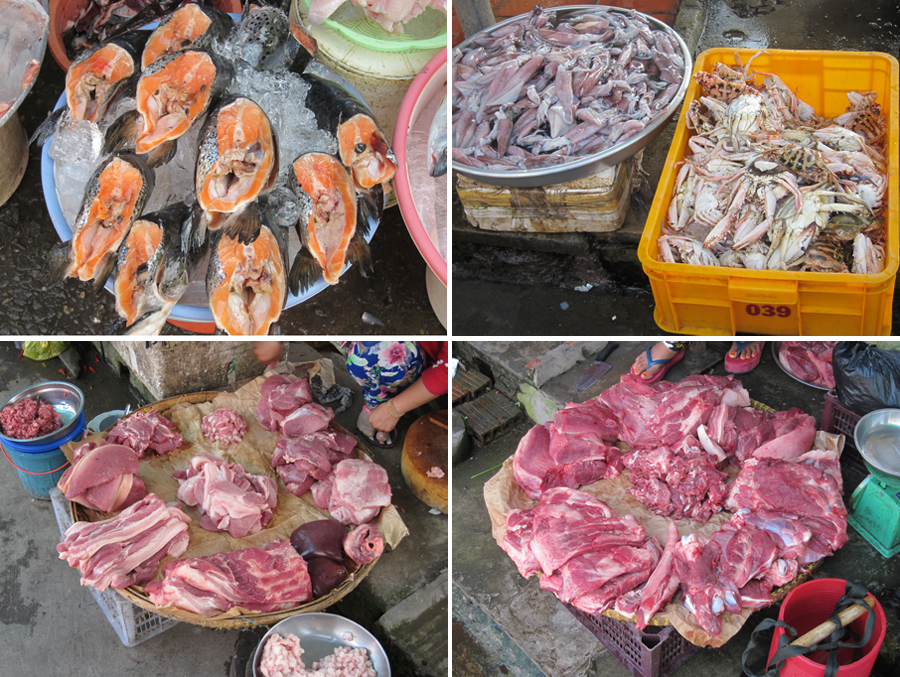
The frogs were skinned, and, to me, unappetizing. Most of these were shrimp of sorts, but I couldn’t tell what the ones in the orange bowl were. You know how when you see a beautiful fillet of salmon Cuddle fish (calamari or squid) seemed edible enough Now this is more like it. Both the pork and the beef looked really fresh, and delicious. Fire up the grill Pete! All I can say is that it’s a good thing they feed us well onboard the ship, because I was sorely tempted to make a purchase.
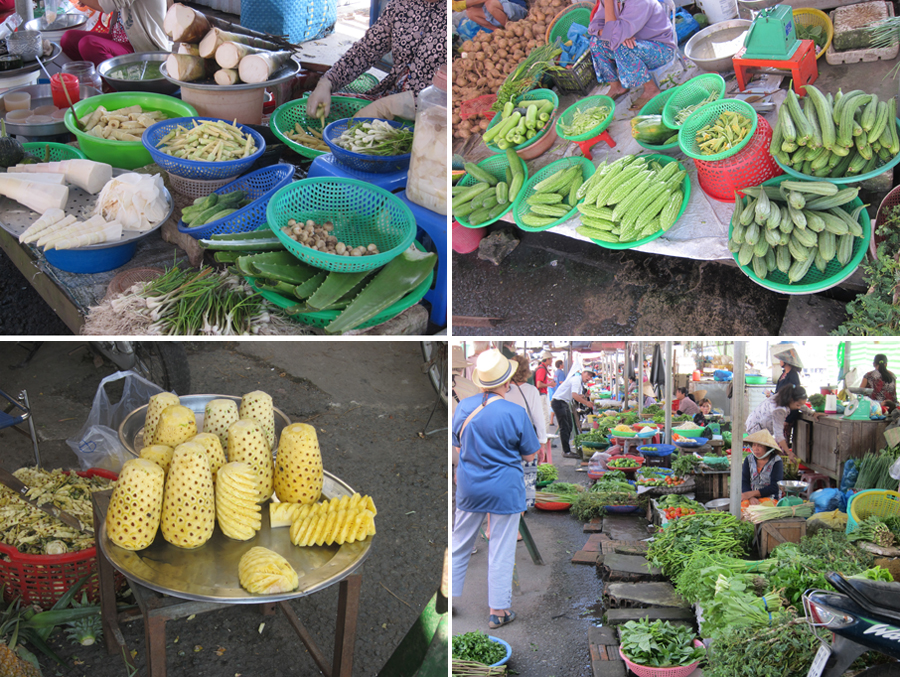
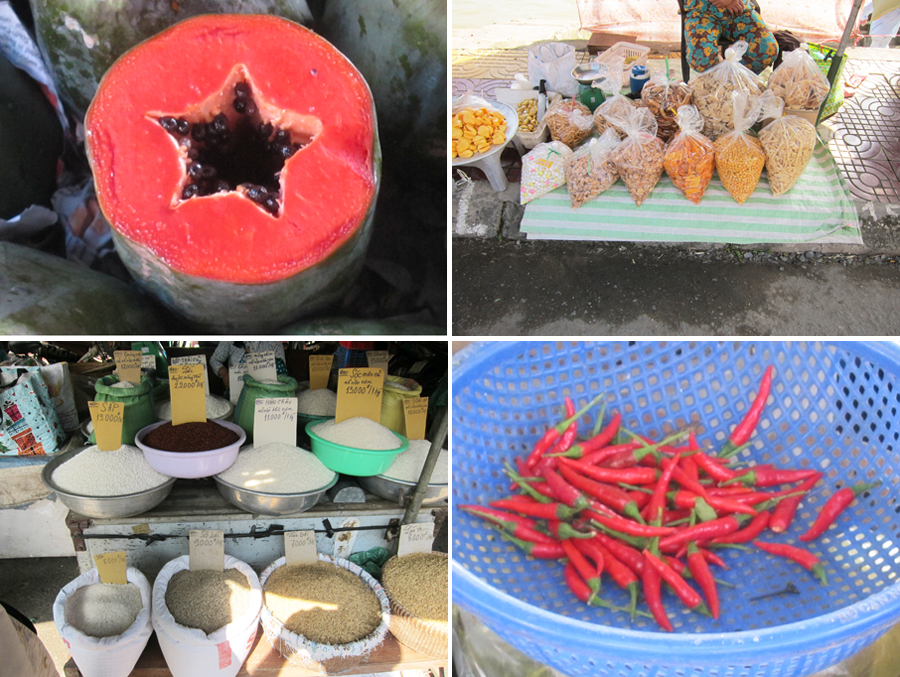
Presentation is everything, and the carved pineapple were especially attractive, and provocatively tempting. Papaya if probably my favorite tropical fruit. Have you There were also bags of dried nuts, fruits, candies and
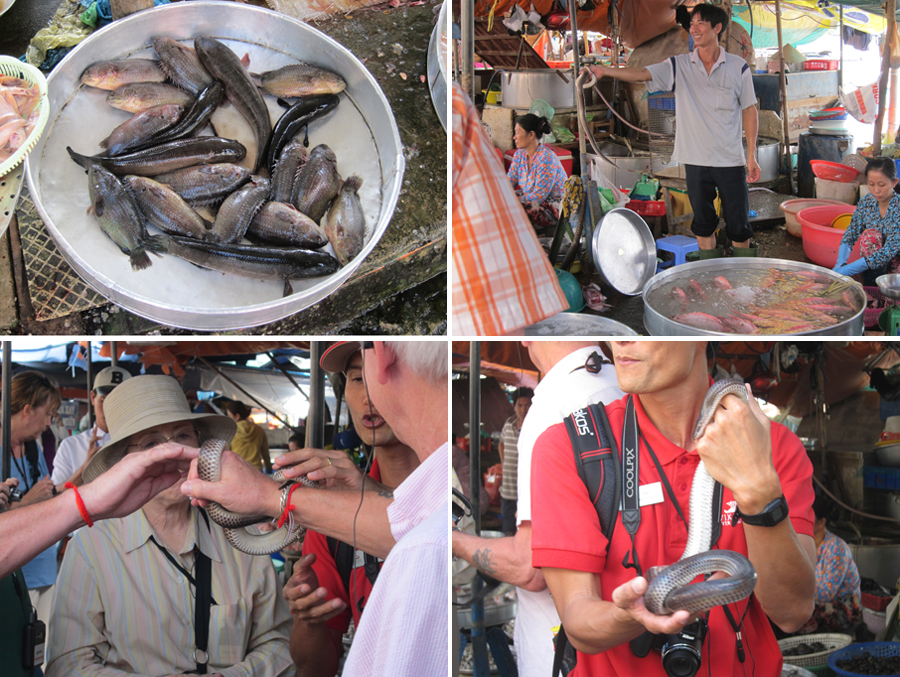
I never knew there were so many varieties of rice. I’m quite familiar with these hot chiles, in Thai dishes. Ever wonder what those fisherman along the banks who
Thankfully it wasn’t me. ;o) Tin shows no fear, so I’m certain it isn’t a cobra.
Well, we are done with the market, and in the next chapter we’ll show you a home with an interesting history. |
|
||||
|