 |
|
|
|
|
|
|
|
|
|
|
||||||||
|
||||||||||||||||||
|
Email us at: |
||||||||||||||||||
 |
||||||||||||||||||
 |
 |
|||||||||||||||||
|
Click the sun to see the |
||||||||||||||||||


|
 |
|
|



|
|
|||||
|
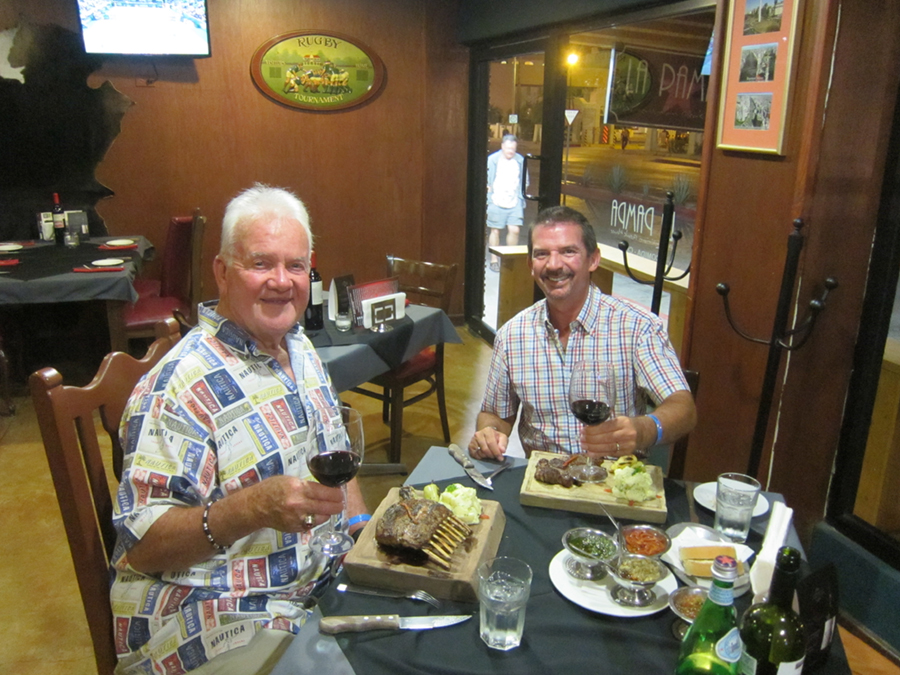
My apologies for the delay in getting this chapter out. It was interrupted by our annual trip to California, with two weeks in Cabo San Lucas. I have an excellent recommendation for anyone who might find themselves in Cabo San Lucas. There is an outstanding Argentine restaurant, "La Pampa”, catty-corner across the street from the Tesoro, on the Marina. Although it has been there for eleven years, this was the first year that Pete and I decided to give it a try. It was also the first year that we spent our second week in town. Our other resort, the Westin Club Regina, has not recovered from the devastation cased by the hurricane, and it won’t reopen until July. Consequently we had grown a little tired of Mexican food, and had a craving for some good Argentine beef. On a scale of 1 to 10, I’d give it a 20. ;o) No kidding, both our meals were outstanding.
At first I ordered the filet, but the waiter returned from the kitchen to inform me that they were out of the filet. This led me to make the decision to go for the rack of lamb, even though it was twice the price of the filet. GOOD DECISION! Yeah, it’s huge, and no, I didn’t eat all of it, but we both took half our dinners back to the room and put them in the refrigerator for tomorrow’s dinner. Both the lamb and Pete’s steak were melt in your mouth tender, and scrumptiously delicious. We were both in heaven. We vowed then and there to make this restaurant a must visit every year from now on.
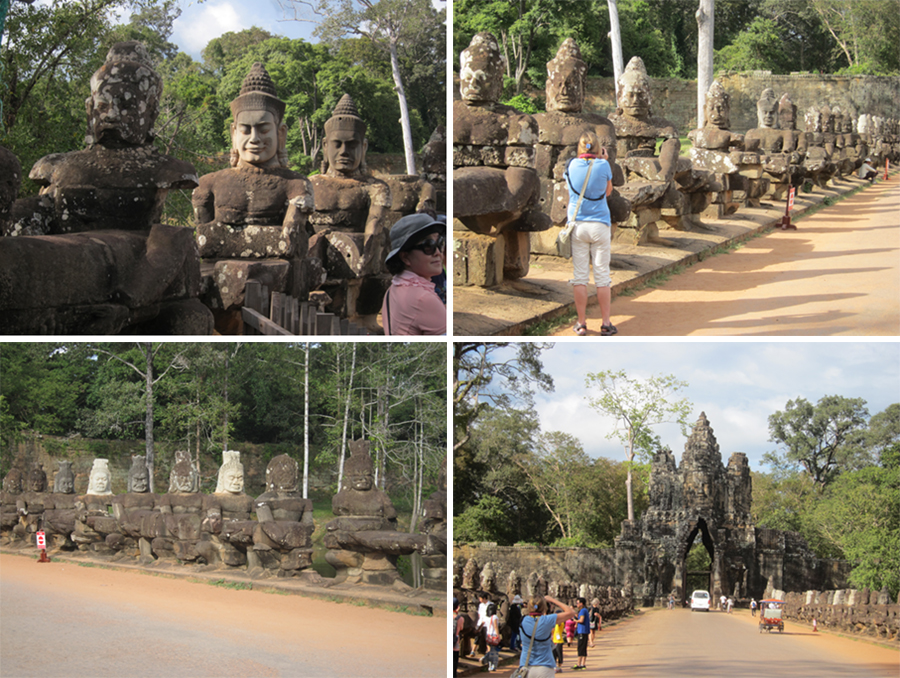
After lunch, we were taken to Angkor Thom, which means literally “Great City”. It is the last and most enduring capital of the Khmer empire. Established in the late twelfth century by King Jayavarman VII, it covers an area of 9 km². We entered the city via a road that was flanked on either side by rows of huge stone statues. They all had the familiar serene look on their faces. I never saw an angry look. This must say something about the Khmer people.
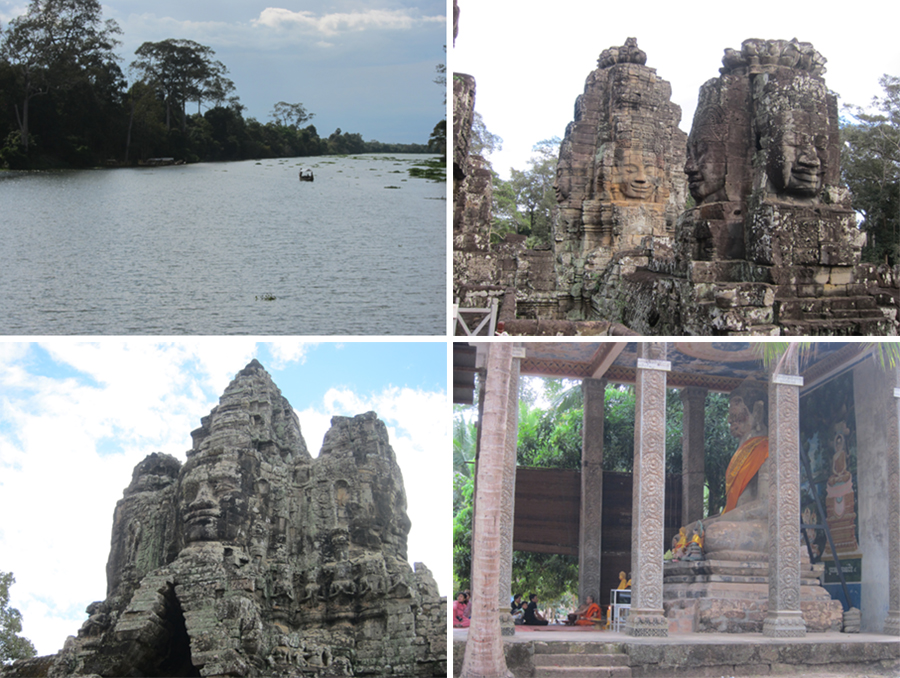
A huge mote surrounded the city. The huge towers had stone faces on four sides. There was a Buddhist monk apparently holding class with a group of students, or perhaps it was a prayer session. Not speaking Cambodian I hadn’t a clue.
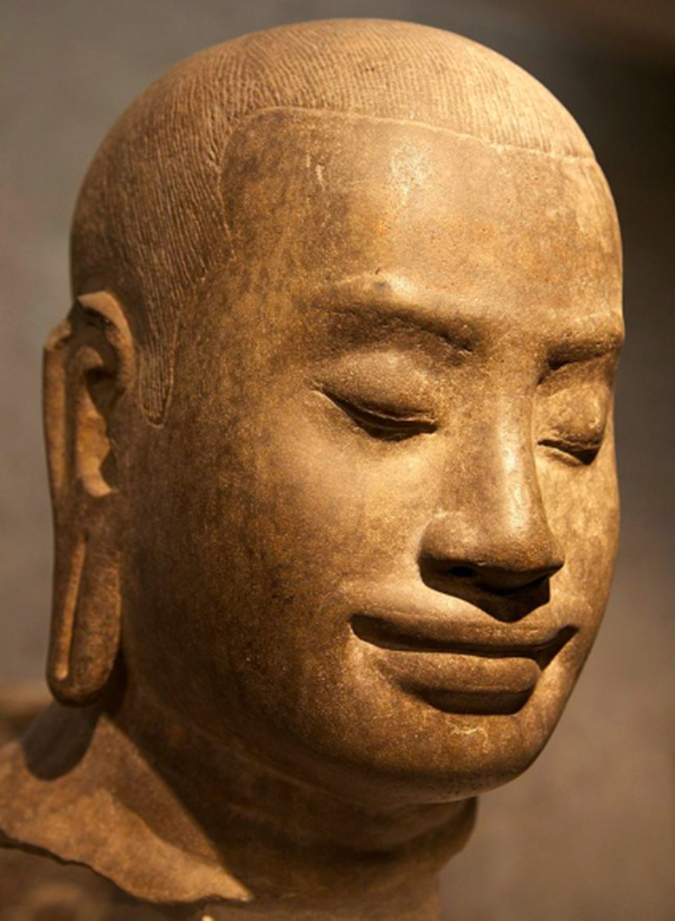
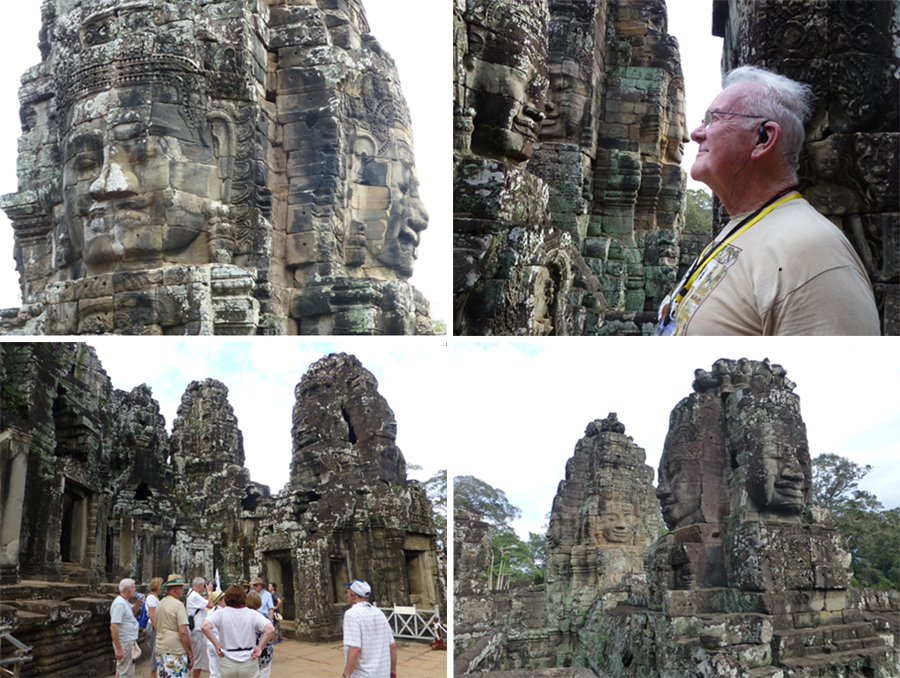
According to scholars, King Jayavarman VII bears a strong resemblance to the face towers of the Bayon. There are 216 giant heads at Angkor Thom. With so many smiling faces, you feel a sense of peace and tranquility as you walk among them.
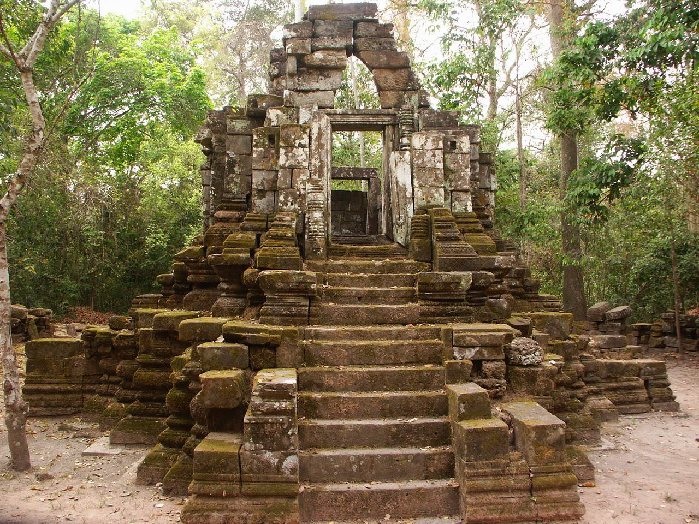
It is believed that Angkor Thom sustained a population of 80,000—150,000 people. The kingdom, however, was in decline following the completion and 1295 dedication of the last temple as seen below, Mangalartha.
We enjoyed walking the paths where 800 years ago a glorious empire had once thrived. The fate of these people reminds me of the Mayan and Aztec empires that once thrived in Central and South America, and who suffered a similar fate.
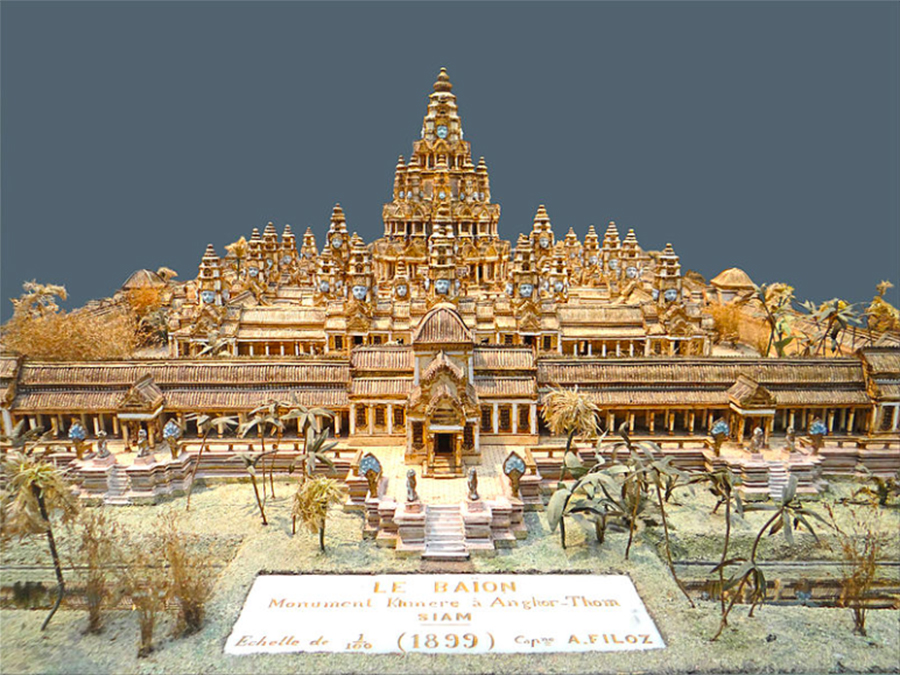
Below is an 1899 artists representation of what the city must have looked like in its heyday in the 1200s.
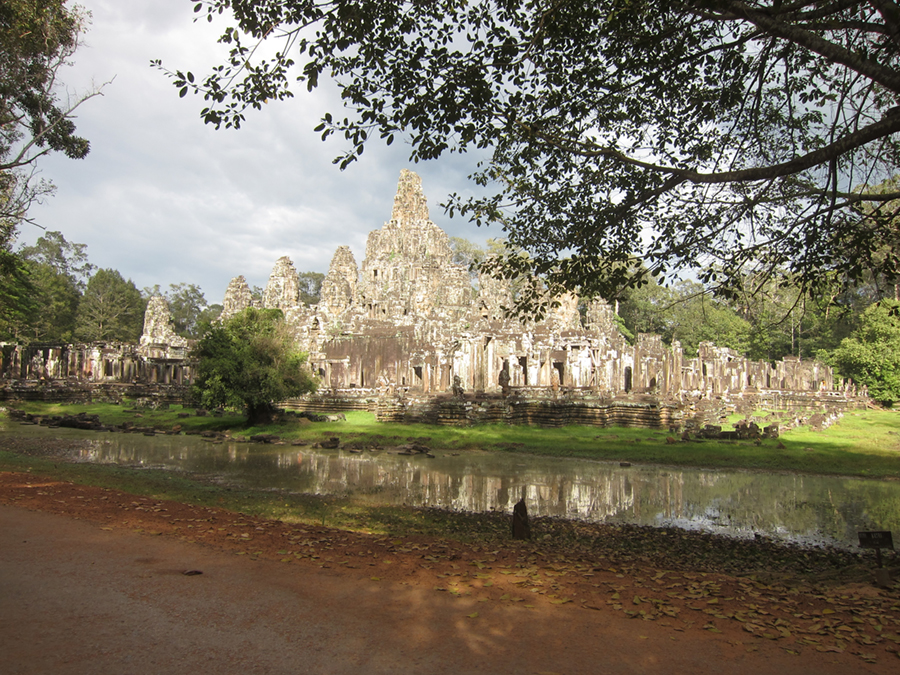
And this is what we see today, still magnificent in its outward appearance, though somewhat decayed by the work of the jungle.
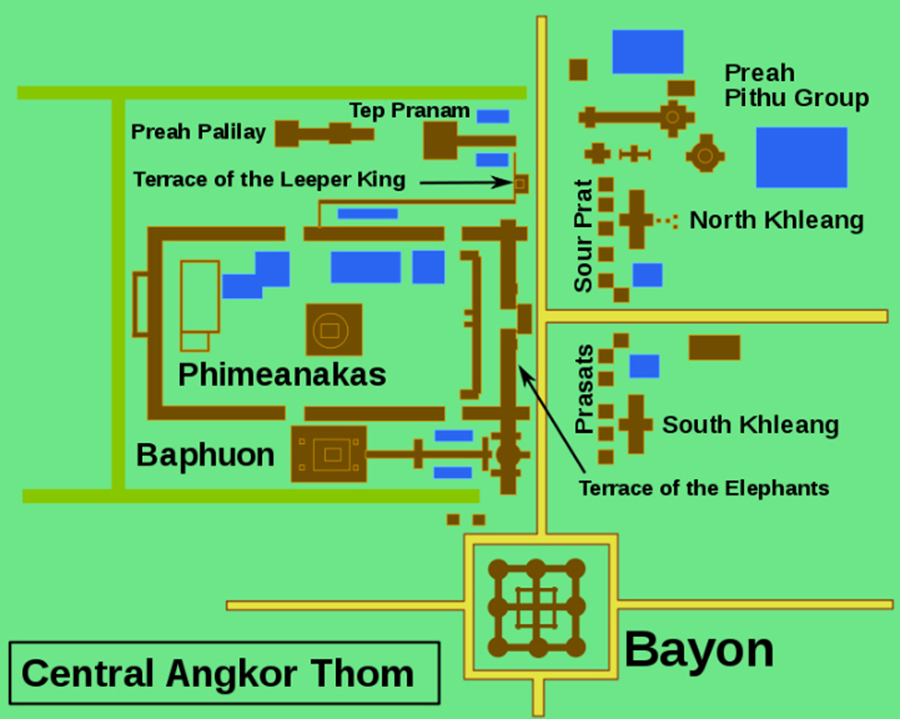
This map of the city shows the location of most of the important sites, of which our guides were diligent at getting us to see all of them. It was a tremendous amount of walking, but the pace was decent, and a sense of constant awe pushed any discomfort aside.
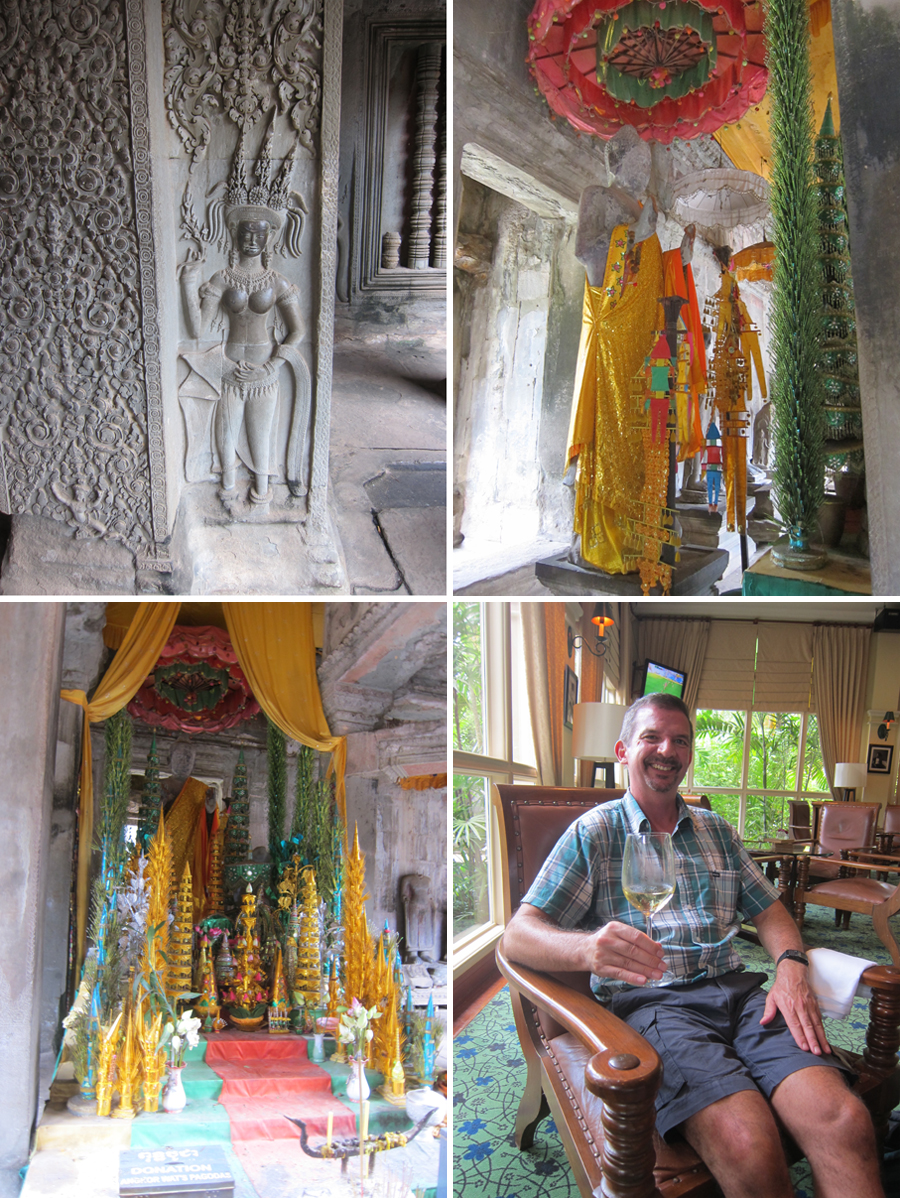
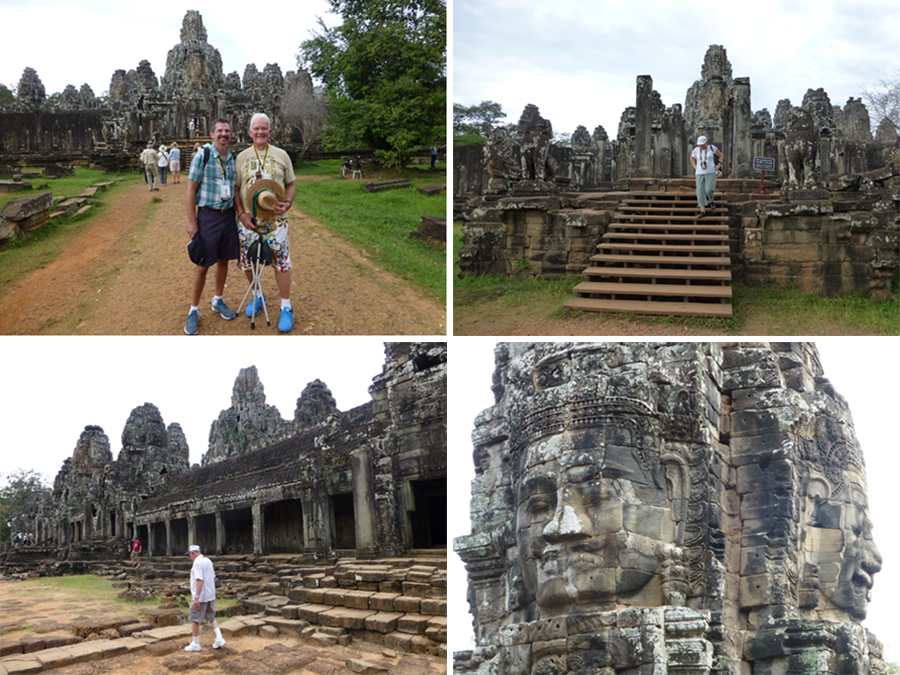
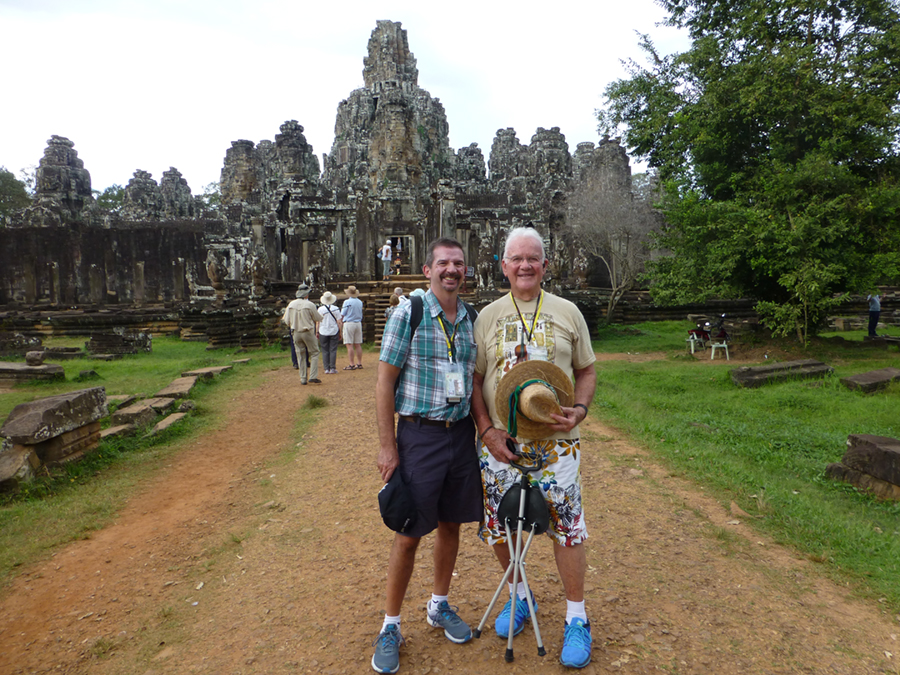
We don’t appear to be too stressed out here. In fact we were quite refreshed, following our lunch at the hotel, and the short motor coach ride to Angkor Thom. I was the envy of a lot of our fellow passengers, with my cane that converted into a very comfortable seat when we had to stand for long periods of time while the guide explains in great detail the sites we are viewing. There was a profusion of very interesting facts flowing into our heads, and unless you had some sort of audio recording device, or you were a court stenographer, you would only be able to retain maybe 25% of the information. Still, that 25% was a lot.
That Cabo San Lucas hat of mine has been more places than Flat Stanley. ;o)
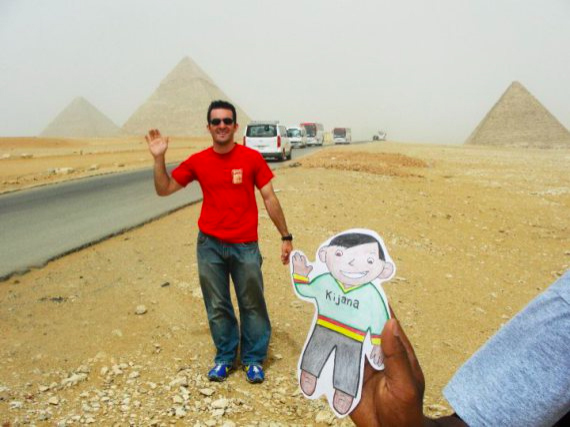
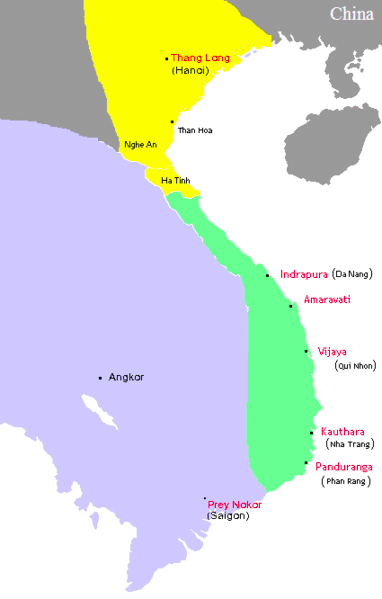
Flat Stanley in Egypt For those who may not know, Flat Stanley is a 1964 children’s book written by Jeff Brown and originally illustrated by Tomi Ungerer. It is the first in a series of books featuring Stanley Lambchop. This information may be useful for those who play Trivial Pursuit. ;o) According to our guides, Angkor Thom was built after Angkor Wat, it being besieged by the Champa. Jayavarman VII was a prodigious builder of temples, and during his building period he also carried on an aggressive military campaign against the Champa, capturing the Cham king in 1190, and bringing him to Angkor. In 1203 he annexed all of Champa, thereby expanding the Khmer Empire to the eastern shores of southern Vietnam. Through other military adventures he extended the borders of the empire in all directions. It was like the expansion of the Roman Empire throughout Europe, only on a smaller scale. Jayavaman VII’s prodigious building campaign also represents the finale of the Khmer empire as no further grand monuments were constructed after his death in 1220. Construction of some monuments, notably Bayon, stopped short of completion, probably coinciding with Jayavarman VII’s death. The stone heads are amazing, and there are so many. Our guide showed us the trick of standing in a spacific spot while someone with a camera moved into position to get your photo, nose-to-nose with one of the stone faces. Of course we tourists must do it.
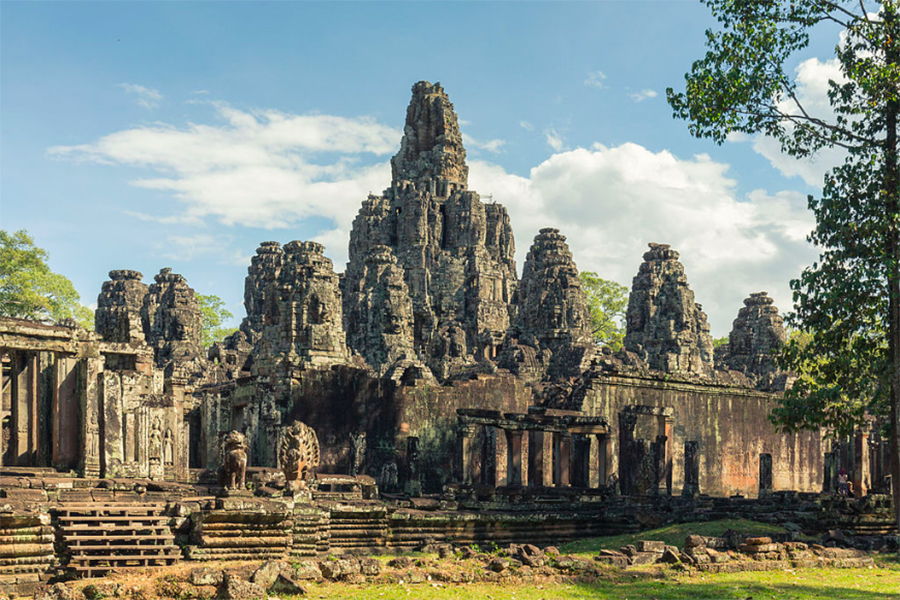
This is Prasat Bayon today. Even in its unfinished state, it is a beautiful temple. To accomplish this, and the many other temples attributed to him, Jayavaman VII must have been a very powerful and charismatic leader of his people.
As I mentioned above, the Khmer were at war with the Champa people. You’ve got to wonder why people of different tribes find it necessary to attack other tribes, even though they are far from your own encampment, or home territory. Then I think about the wars in Afghanistan and Iraq, and still I ask myself WHY! Why do terrorists attack and kill us? The hopeless frustration kindled by these questions is daunting to say the least. The Champa people lived mainly on the eastern shores of
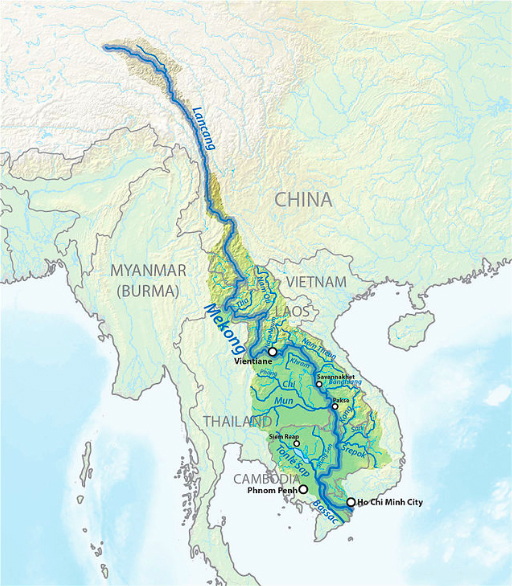
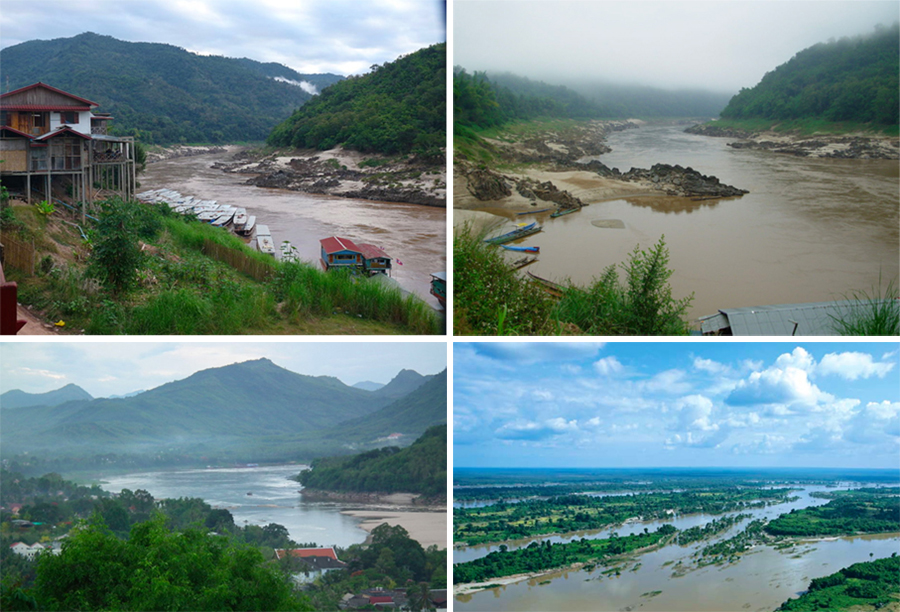
An amazing property of the Mekong River is that it actually flows in both directions. During the wet season between May and October the flow from the north is so tremendous that the shallow Mekong Delta cannot receive the flow fast enough to drain the Lower Basin, and it backs up, causing the excess to flow up the Tonle Sap River to Tonle Sap Lake, creating a huge flood plane with the lake expanding to 100 miles in length. You can actually watch the Lower Basin of the Mekong filling up by watching the currents moving backwards as it cannot drain out through the delta. Rice cultivation and shallow water fisheries retreat with the advancing shoreline of Tonle Sap Lake, then follow it back down again, planting rice in the newly exposed mudflats, fertilized with another year’s minerals and nutrients from the great Mekong drainage above.
Here are some images of the Mekong River at various locations and various seasons of the year
In my next chapter we’ll be leaving Siem Reap via Motor Coach, and heading for Kâmpóng Thum & Kâmpóng Cham. |
|
||||
|