|
|
|
|
|
|
|
|
|
|
|
||||||||
|
||||||||||||||||||
|
Email us at: |
||||||||||||||||||
 |
||||||||||||||||||
 |
 |
|||||||||||||||||
|
Click the sun to see the |
||||||||||||||||||


 |
|||||||||
|
|
|
|
|
|
|
|||
|
|||||||||
|
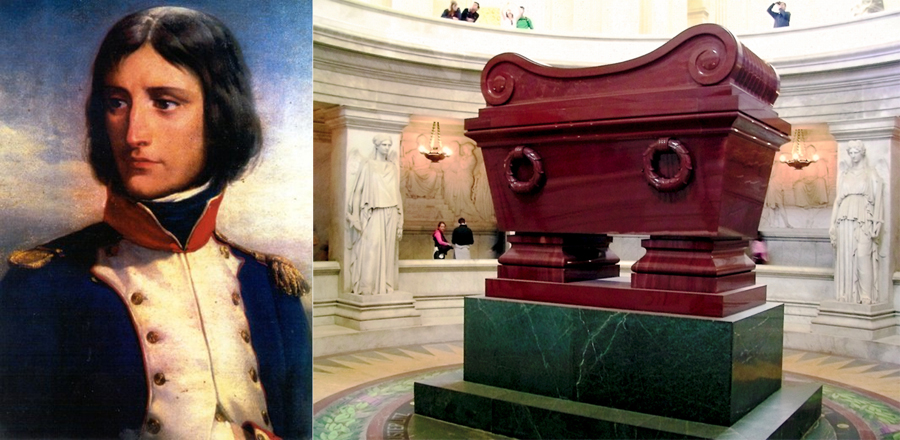
Part 3 Yes, Napoleon was a bit short by the standards of today, but at 1.69 meters (5 ft 7 in) he was at about the average height for his time.
At 23 he was not a bad looking chap. His sarcophagus is of red porphyry, and his remains are protected by six Napoleon died on the 5th of May 1821, on the island of St Helena, where he had been in exile since 1815. In 1840 his remains were exhumed and brought to Paris, where they laid at rest in St Jerome's Chapel, until they were moved again in 1861 when his tomb was completed, and I suppose he shall remain at rest there until the end of time.
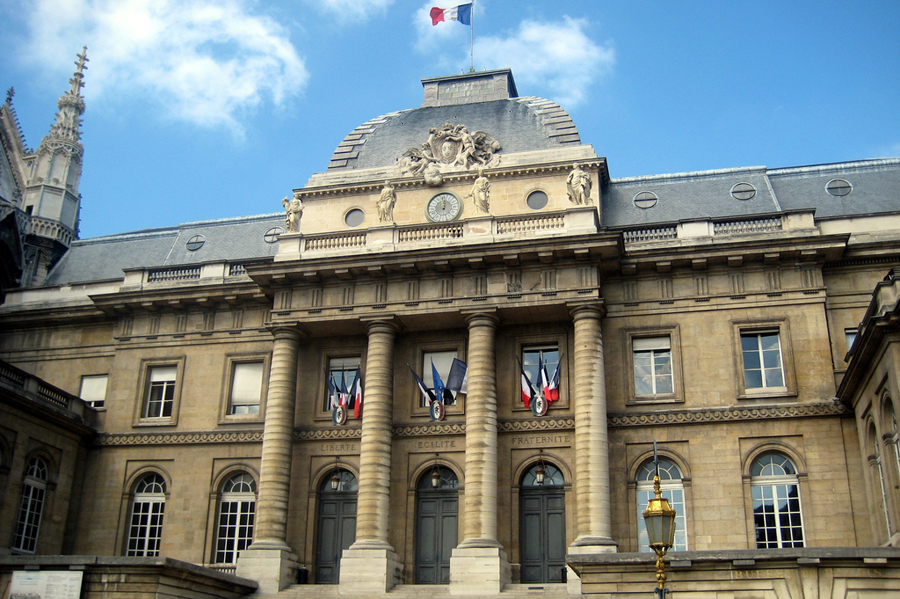
Here we have another look at the Palais de Justice on the Ile de la Cité. The Palais de Justice is the French
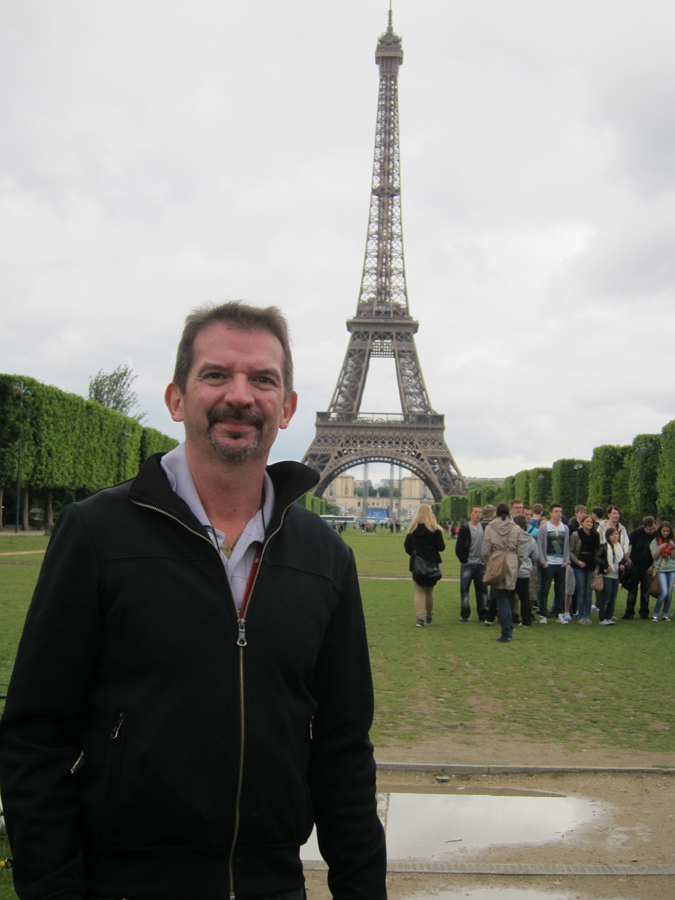
We were dropped off at the Eiffel Tower for 10 minutes, to take photos. The Eiffel Tower was designed and built by Gustave Eiffel for the 1889 World's Fair, commemorating the centennial of the French Revolution. As the entrance gate to the fair, it was meant to be spectacular. With 18,038 pieces of iron and 2.5 million rivets, it surpassed all expectations. When it was completed, it was the tallest building in the world at 986 feet, and it retained that distinction until New York's Chrysler building opened in 1930. Originally, Eiffel held a permit with the city that his tower could stand for 20 years, and everyone assumed the city would dismantle it come 1909. But the structure had proved valuable for communications, so it became a grand fixture in the Paris cityscape. Upon its completion, the tower elicited mixed reactions, celebrated and loathed in equal measure. Universal pride eventually won our: as Hitler moved into Paris, the French cut the lift cables to prevent him from ascending. He may have conquered Paris, locals were fond of saying, but he never conquered the Eiffel Tower.
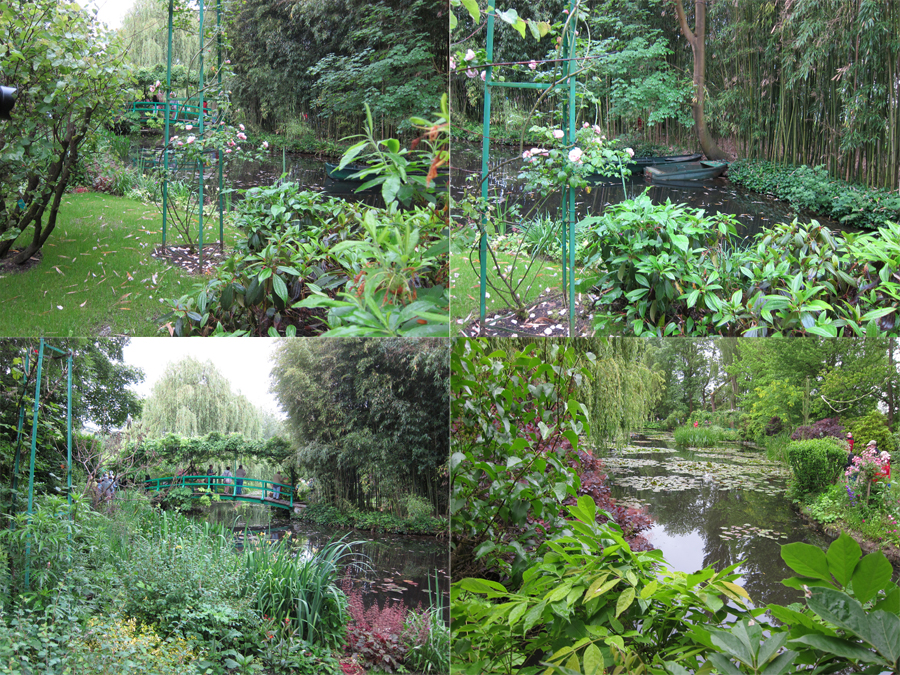
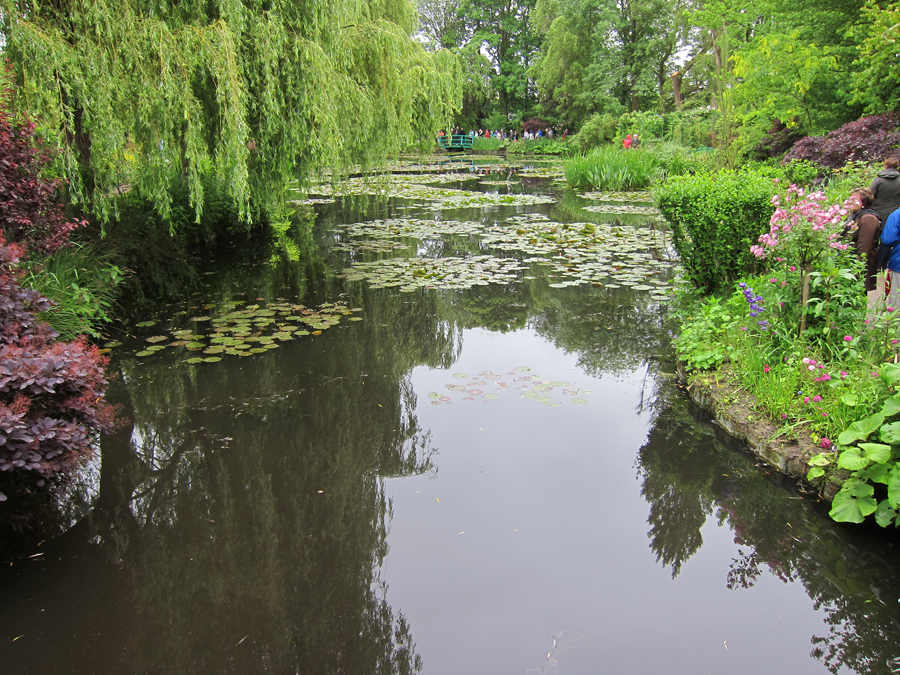
The City Tour has ended, and we are back aboard the boat for lunch. There was an optional tour from 2 to 6 PM to visit the Louvre Museum, but we were not interested in four hours of walking through the museum, so we opted to stay on board and just relax. We are on vacation after all. At 7:30 PM it was anchors aweigh as the Viking Spirit leaves Paris for Vernon. We arrived at Vernon the following morning at 6:30 AM. After Breakfast we had a shore excursion to visit Monet's house and gardens at Giverny. A stroll through the garden tells you exactly where Monet received much of his inspiration.
Giverny became the Claude Monet Foundation in 1980. It was at Giverny where the leader of the Impressionist School lived from 1883 to 1926. Probably his most famous paintings was his Water Lilies, which consists of approximately 250 paintings. During the 1920s, the state of France build a pair of oval rooms at the Musée de L'Orangerie as a permanent home for eight water lily murals by Monet. The exhibit opened to the public on 16 May 1927, a few months after Monet's death. Sixty water lily paintings from around the world were assembled for a special exhibition at the Musée de L'Orangerie in 1999. When Pete and I visited the Musée de L'Orangerie in 1995, we entered the first of the oval rooms, and I walked around musing to myself. Pete sat on one of the benches in awe. Then we entered the second oval room, and my comment to Pete was that it is like toilet paper, it just keeps going on and on. He didn't appreciate the humor I had intended. But really, can you imagine if they got all 250 of those paintings together in one exhibit? I think you get the idea. But in view of the next paragraph, what I wouldn't give to have bought just one of them when the paint was still wet. On 19 June 2007, one of Monet's water lily paintings sold for £18.5 million at Sotheby's auction in London. On 24 June 2008 another of Monet's water lily paintings, Le bassin aux nymphéas, sold for almost £41 million at Christie's in London, almost double the estimate of £18 to £24 million. Kind of makes you want to pick up a brush and start painting, doesn't it? Well, the photos above are so rich in color and full of detail that they are quite large, nearly 1 MB each, so I will have to stop here, and resume in Part 4. |
|||||||||
|
|||||||||