 |
|
|
|
|
|
|
|
|
|
|
||||||||
|
||||||||||||||||||
|
Email us at: |
||||||||||||||||||
 |
||||||||||||||||||
 |
 |
|||||||||||||||||
|
Click the sun to see the |
||||||||||||||||||


|
 |
|
|



|
|
||||||||||||||||||||||
|
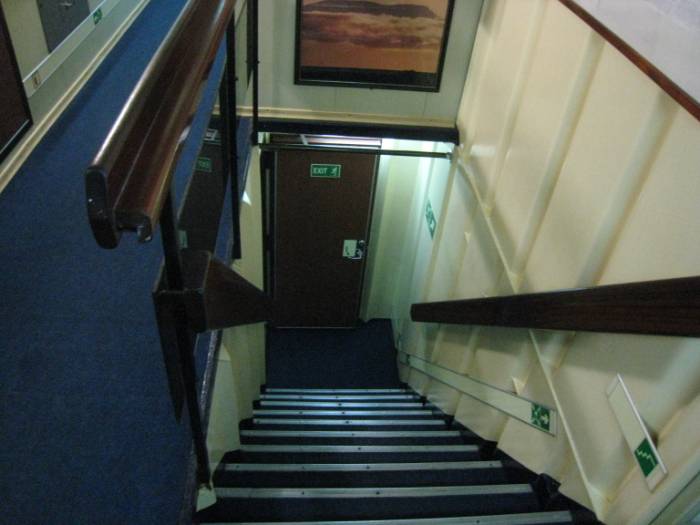
DAY TWO (continued) From Ushuaia we traveled approximately 60 miles down the Beagle Channel before reaching the open ocean. We had good weather, and the seas were fair. We only brushed by the northern limits of Drakes Passage and headed northeast towards Islas Malvinas (the Falkland Islands). It is funny that on all Argentine maps the islands are listed as “Islas Malvinas (Arg)”, even though today I think most of the world would agree that the Falklands belong to the British. Certainly everyone we saw living there had a very distinct British accent. They were every bit as much British as the Queen herself. After our mandatory Life Boat Drill and Medical Briefing we got an introduction to the Expedition and Catering Staff in the bar on Deck 4, which by the way just happened to be the deck our cabin was on. This was a very good thing, because all the stairs onboard were really steep, and carrying a hot cup of coffee or cappuccino back to our cabin would have been more difficult to manage if we had to negotiate the stairs as well. The bar had this great machine that could make 10 different variations of coffee drinks, hot chocolate, or hot water for tea, and they had a very good selection of teas.
The stairs were very steep
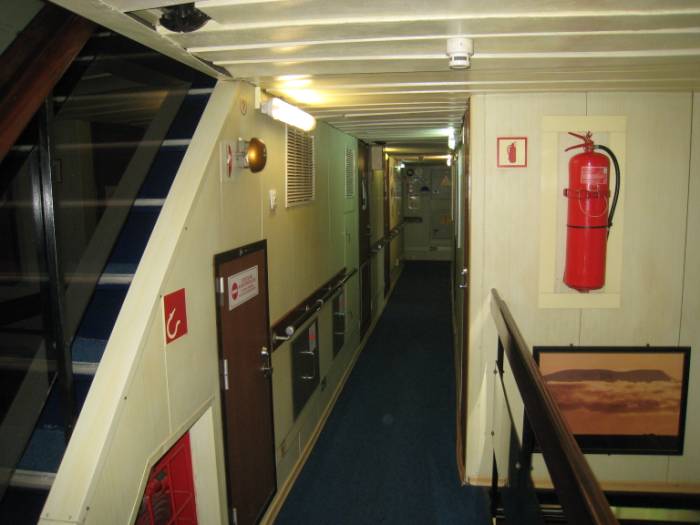
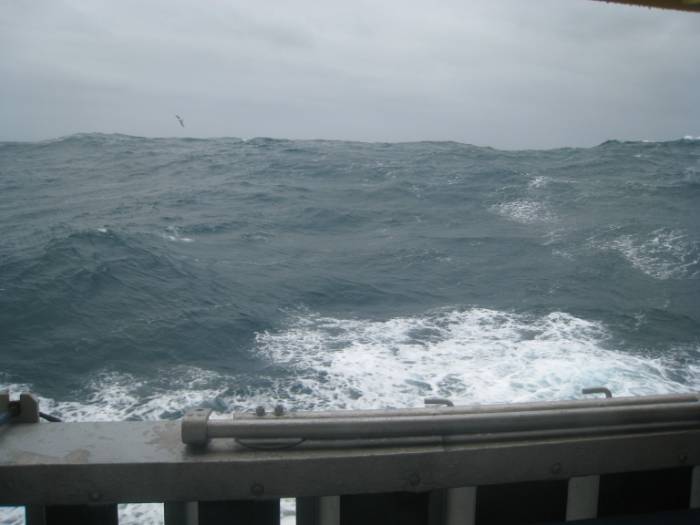
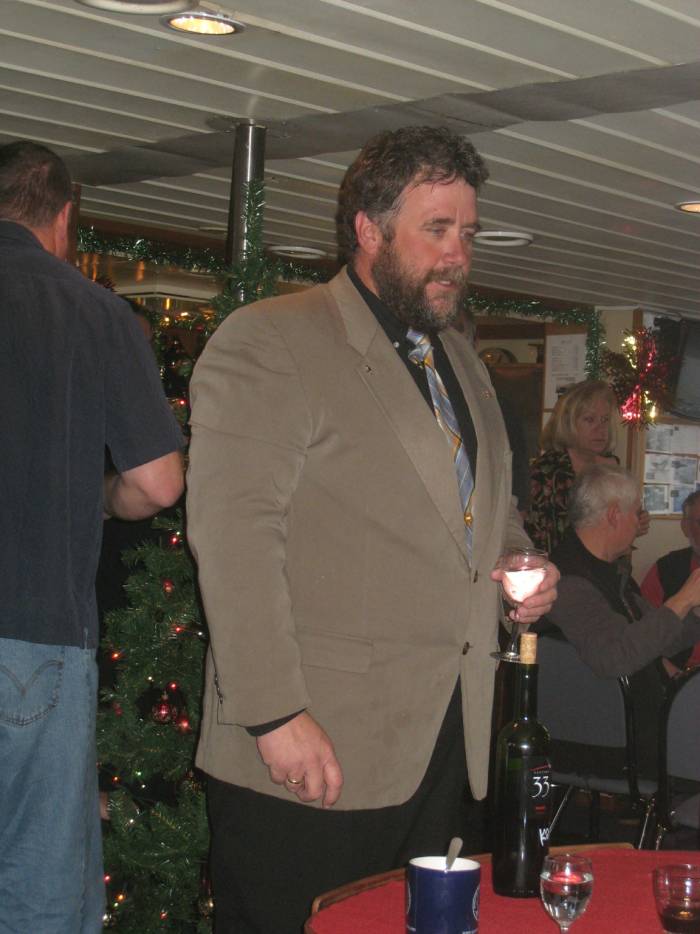
The bar was at the end of this hall, to the right, and our cabin is behind me on the left. In rough seas, the straight shot down the hall was hard enough to negotiate. Remember, this wasn’t a cruise ship. The passageways were narrow, and two people passing had to practically turn sideways. There was a handrail on one side only. If you happened to be on the no handrail side in passing, all bets were off. The Captain’s Welcoming Cocktail Party followed introductions. We enjoyed champagne as we got to know our fellow passengers, staff and crew. They were determined to teach us Russian, so each day’s Schedule of Events has the Russian word or phrase of the day. Today the word was Hello! Zdravstvuitye! If you can say that, you’re hired as a deck hand. If you say it with a proper Russian accent, you are automatically elevated to First Mate. DAY THREE This day was spent at sea. Our daily schedule provided us with a little poetry: I must go down to the seas again, to the lonely sea and sky, and all I ask is a tall ship, and a star to steer her by; And the wheels kick and the wind’s song and the white sails shaking, And a grey mist on the seas face, and a grey dawn breaking. John Masefield, from Sea Fever Well, we got our grey dawn. The clear skies we enjoyed in Ushuaia had turned grey in the night.
The passage from Ushuaia to the Falklands was our first taste of the open ocean. Not to worry though, there were cookies and coffee at 6:30 in the bar lounge for the early birds. Since the bathroom in our cabin could only accommodate one person at a time, I usually got up half an hour earlier than Pete, at 6:00 to get ready for the day, and went for coffee and to read in the lounge, giving Pete a little extra sleep, and when he got up, more room to maneuver without bumping into me. Breakfast was at 8:00 (most mornings).
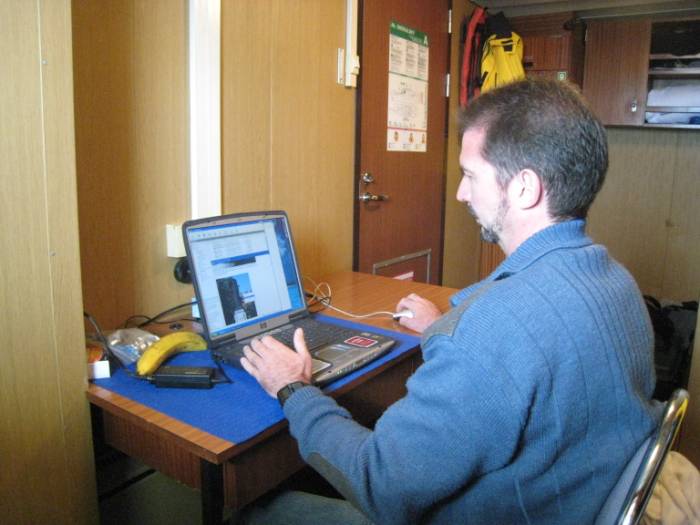
Pete would spend his free time working on our website, inputting photos and journal entries, so it would be ready to upload as soon as we arrived back home. There was a Lecture Room on Deck 2, and we would be spending a lot of time there over the next 18 days. This morning at 9:15 we were to get our first lecture from Tony Mar, the ornithologist onboard. Tony is very knowledgeable about birds. In fact one might say almost too knowledgeable. And the amazing thing is that he is very good at passing this knowledge on to his listeners, at least those who are still able to stay awake. I liked Tony a lot, as he had a good sense of humor, and always had a joke to refocus our attention. This is a sure sign of a good orator.
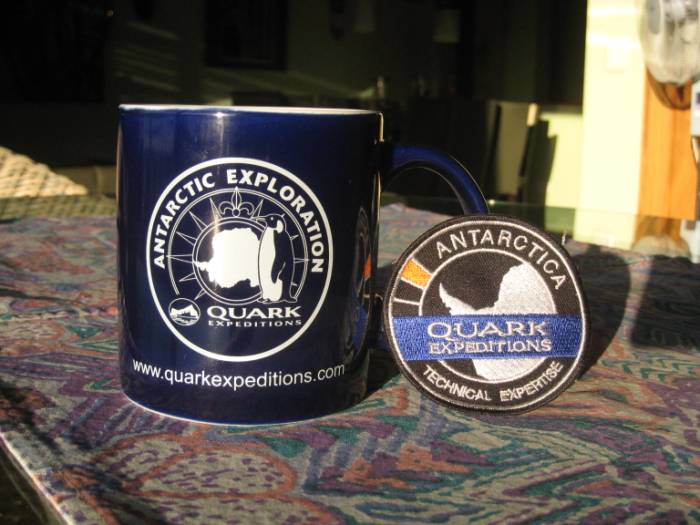
Tony Marr at one of our nightly Recaps. Doesn’t everyone look riveted? Actually we joked about Then of course at 10:00 AM we had to get our credit cards imprinted so we could freely use the bar and the ships store for gifts. The store was open only twice during the voyage. I bought a mug with the Quark logo, and a Quark patch.
What can I say? I’ve got simple tastes. Our ship’s biologist, Shanti Davis, gave a lecture at 11:00 on Baleen Whales of the South Oceans. It's an amazing adaptation by Nature. They just swim with their mouths open through a swarm of krill or squid, and the baleen catches it so when they close their mouth, they can lick it off the baleen with their huge tongue and swallow it. What a system. Lunch was at 12:30
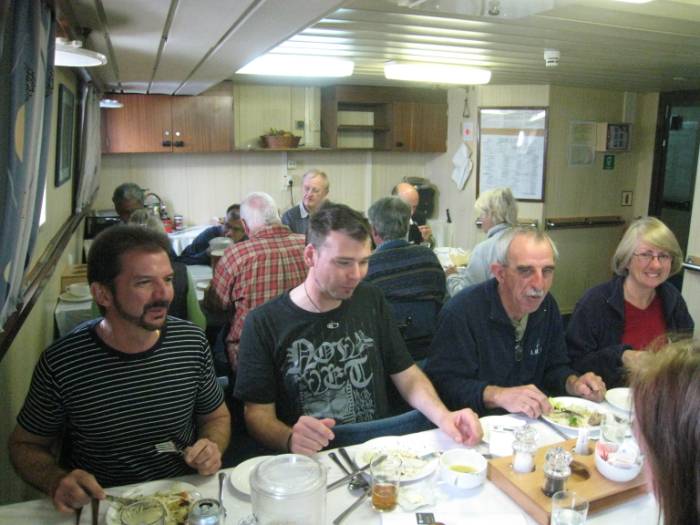
There were actually two dining rooms, one on each side of the ship. Everyone could eat at one sitting, At 15:00 the ships Historian/Geologist, Phil Wickens gave a lecture on Islands of Conflict: A History of the Falkland Islands. Of all the staff I think I liked Phil the most. He was an impressively knowledgeable guy, with a PhD, and every one of his lectures had my full attention. They were usually related to our next landing, so when we arrived we were well prepared for what we were going to see. He also gave talks on historical events and geological events. His range of knowledge was broad and in depth. It actually added a lot of value to the trip.
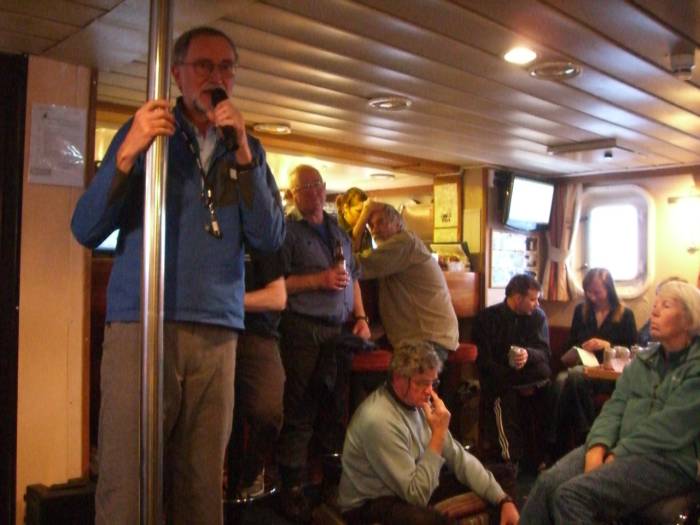
Phil Wickens giving one of his lectures. He had a great British accent as well. Since the next day we would be making our first landing, there was a MANDATORY zodiac briefing. There is a very strict set of rules when entering or leaving the zodiac, and also for just sitting in it. Disobey any of these, and you just might find yourself swimming in a VERY COLD ocean. Every night before dinner we would have a Recap and Briefing in the bar, and Shane would go over the days activities, and then tell us what was on the agenda for the next day.
This is Shane Evoy, our Expedition Leader, a very personable guy, always positive and excellent at his job. He definitely had a lot to do with how smoothly the expedition went. Of course, the real decider was the weather. After dinner there was usually a movie in the Lecture Room, and tonight it was the IMAX documentary, Shackleton’s Antarctic Adventure. It was very good, as were most of the movies shown. Each night they would feature various Antarctic explorers. Today we were given two Russian words: Please pazhalsta, and Thank you spasiba. We were starting to get the hang of it, and would try out our new words on the staff in the dining room at mealtime, or as we would pass crewmembers in the passageways. The sailors spoke Russian, but a few could manage a little English. DAY FOUR Today’s schedule had this quote: I now belong to a higher cult of mortals, for I have seen the albatross Robert Cushman Murphy Our Russian phrase of the day: How are things? Kak dela? Today we make our first landing, at West Point Island, and this was the easiest landing of the entire trip. There was a dock. What could be easier?
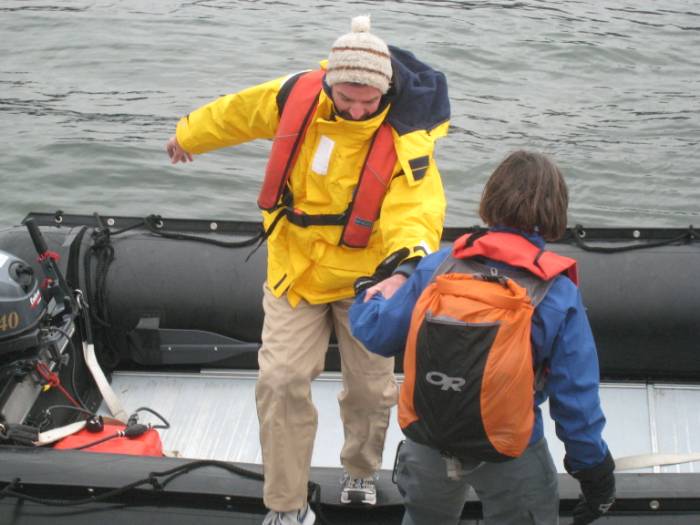
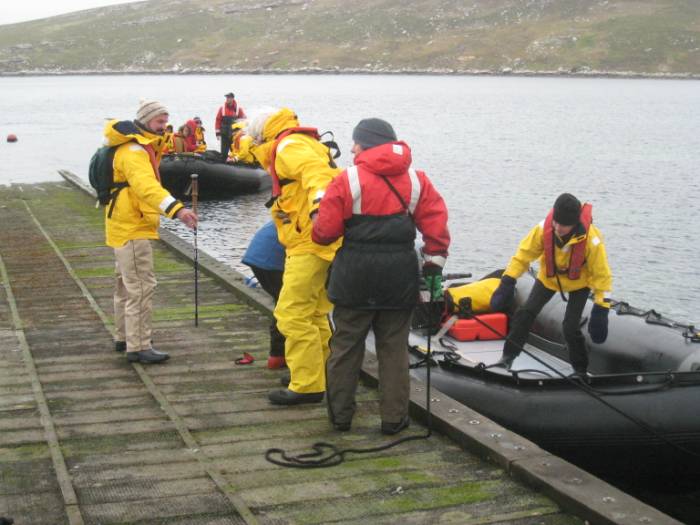
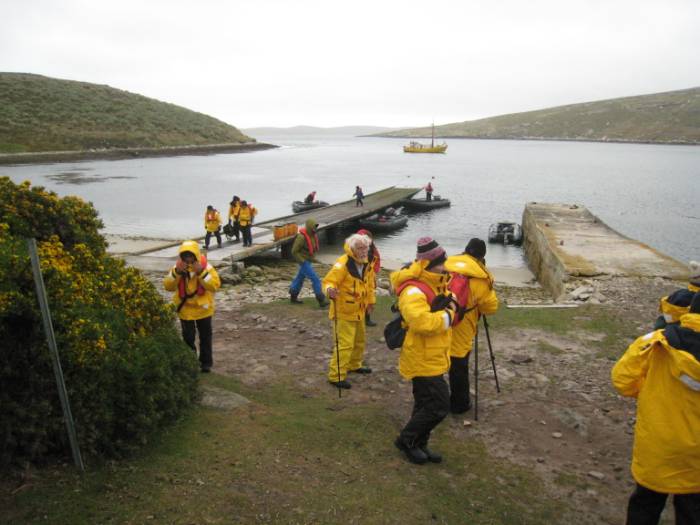
Landing at West Point Island. There was always someone there to steady you.
With no wind, the water was like glass. Often there was a lot o chop and waves on landing.
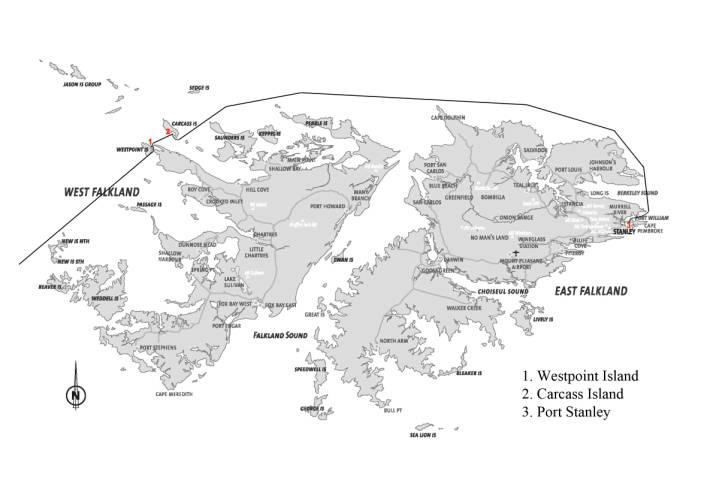
Map of the Falkland Islands, and a plot of our ships course as we made our three landings there.
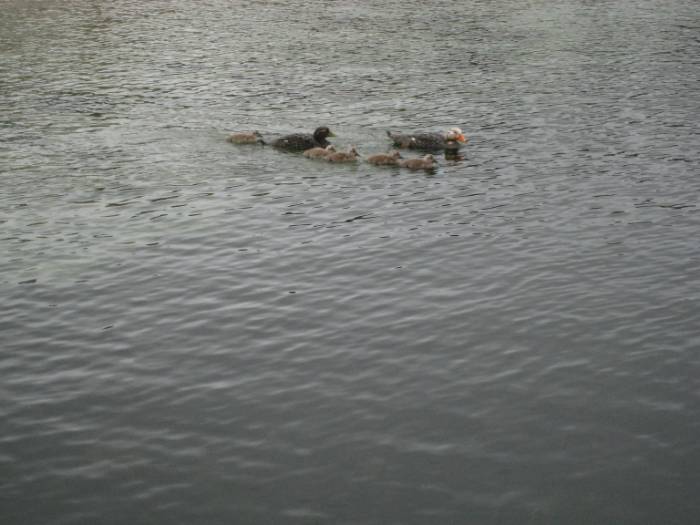
We were greeted by a family of ducks, which just happened by as were landing.
As you can see from the way we are dressed, the air was a bit on the cold side. West Point Island, owned by Roddy and Lilly Napier, lies off the most northwesterly point of mainland West Falklands and is 3100 acres. They are its only residents, except for an abundance of wild life. Roddy is 81, and the day we visited him, he was not feeling so good. Shane has been coming here with Quark Expeditions for several years, so he keeps in touch with Roddy. A few days after we left the island, Shane received word that Roddy had been taken to the hospital in Port Stanley. We all wish him well going forward.
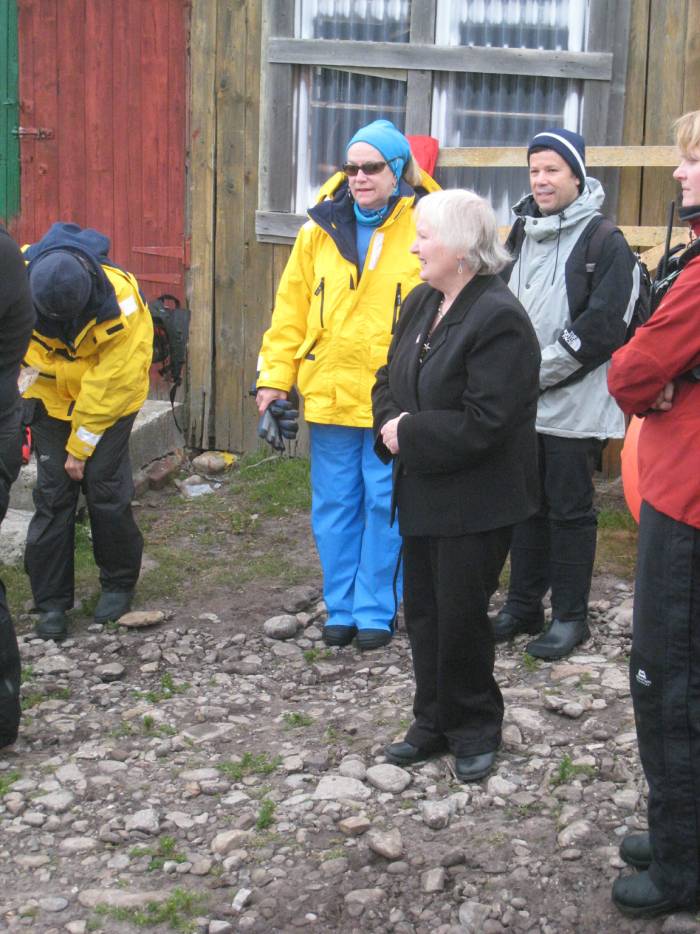
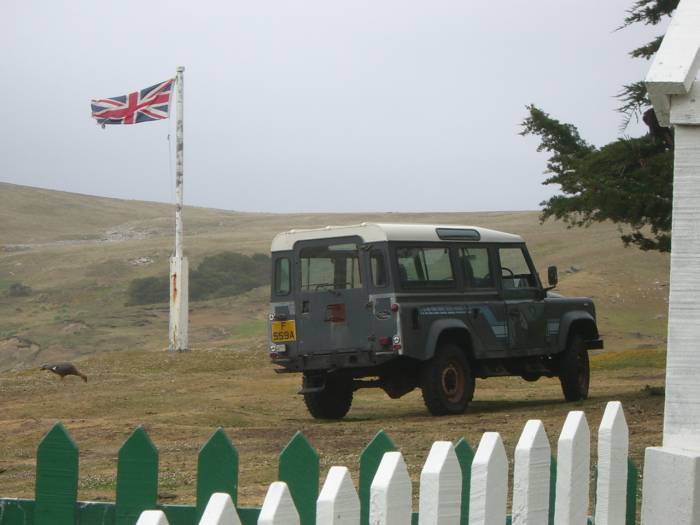
Lilly met us, and offered a ride in her four-wheel land rover to those who did not wish to walk.
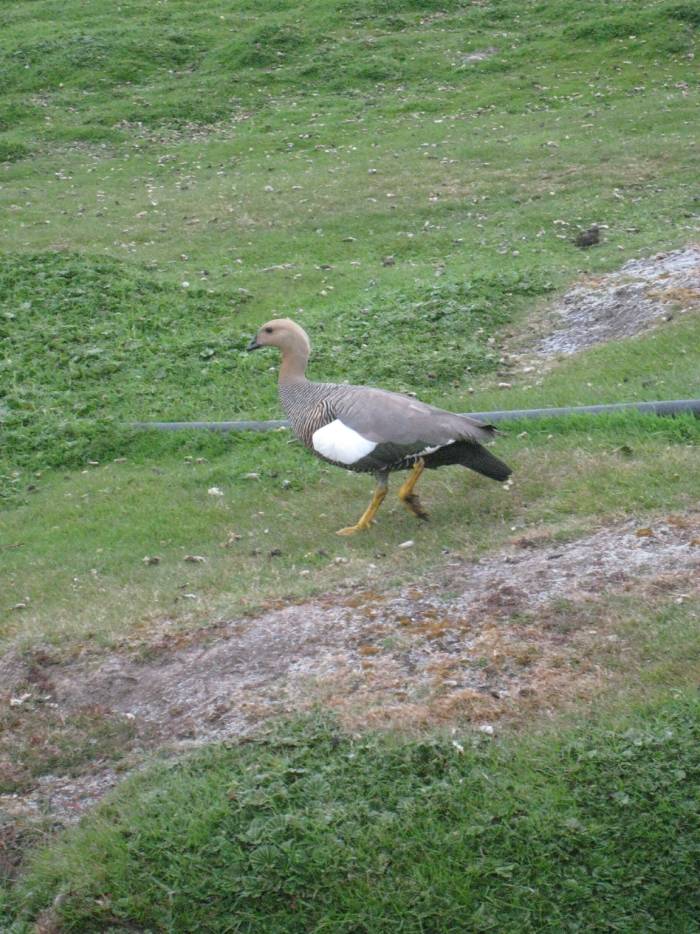
This is an Upland Goose. Judging from their droppings, I’d guess they were quite prevalent on the island. The droppings were literally everywhere you stepped.
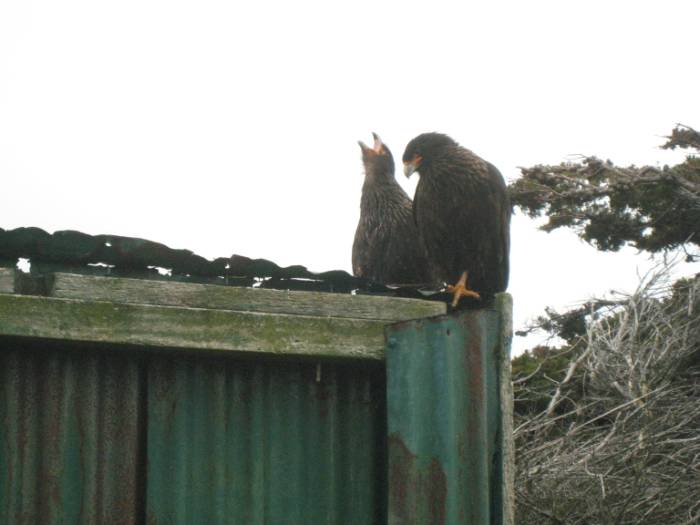
This is a pair of Striated Caracara. They are scavengers and can clean a carcass quickly. The hike was not difficult, but it always seems long when you don’t know where the end of the trail is. We hiked across the island to the cliffs where the Black Browed Albatross were nesting, along with some Rockhopper penguins.
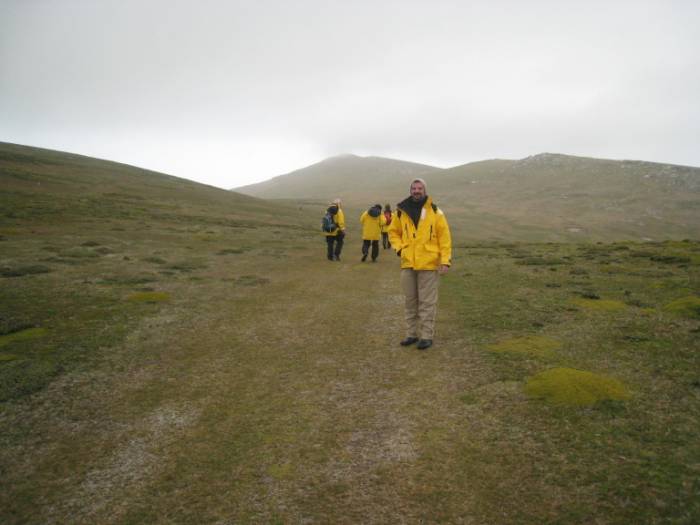
The terrain was easy for hiking. The barrenness is typical of the Falklands.
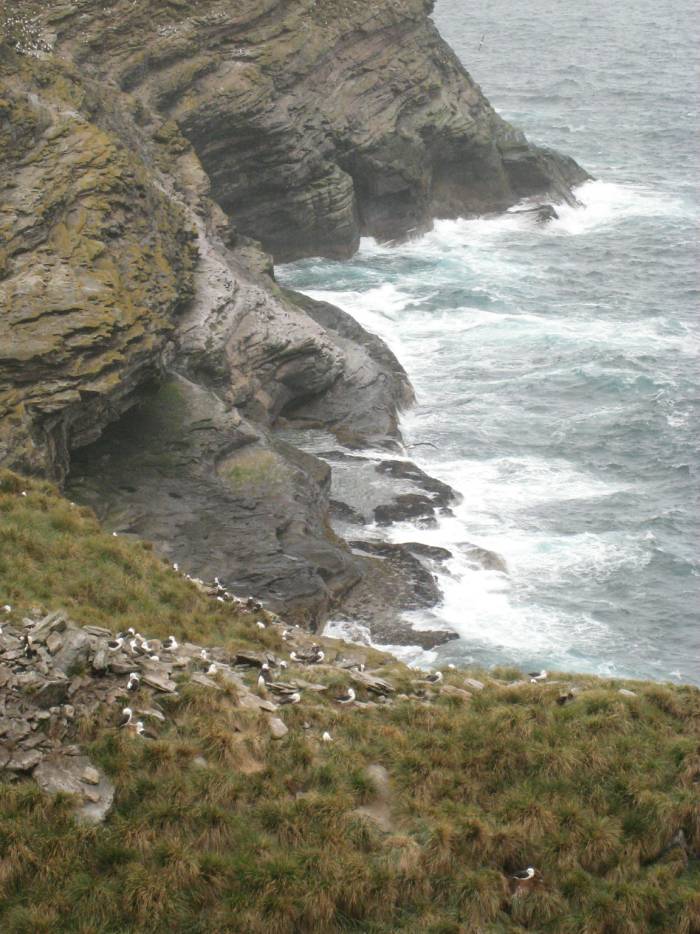
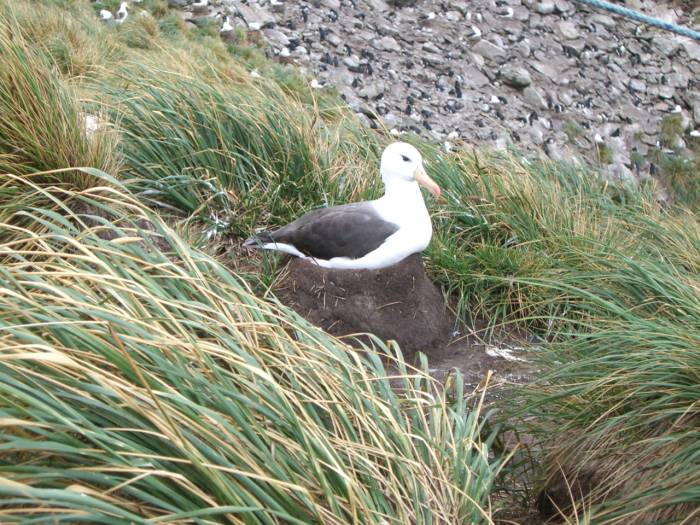
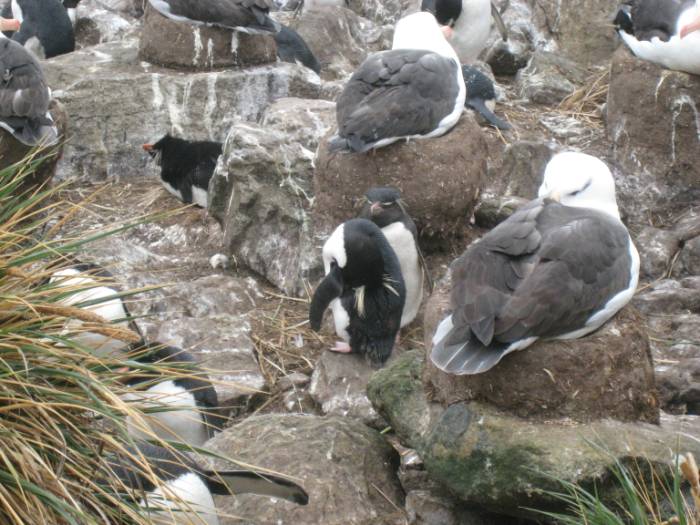
This is our destination. These cliffs are the highest cliffs on the Falklands. The Black Browed Albatross mate for life, and they have a life expectancy of 60 years. The same pair return each year to the same nest, which is made from mud and their saliva, so it becomes like concrete, and it is appaarently not affected by the weather over the years. But to me, the truly astonishing thing was to see the Rockhopper penguins nesting among the Black Browed Albatross. The Rockhopper penguins are flightless, so they had to literally hop all the way to the top of this huge cliff from the sea below. Take another look at the picture above.
If you look very close at the background, you can see the Rockhopper penguins making their
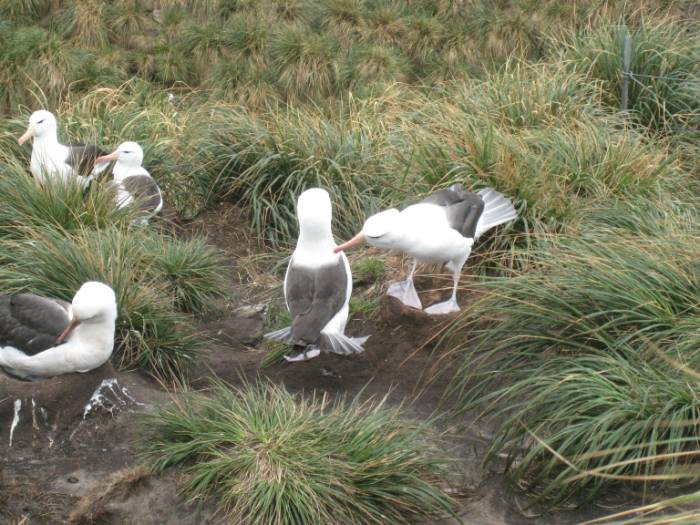
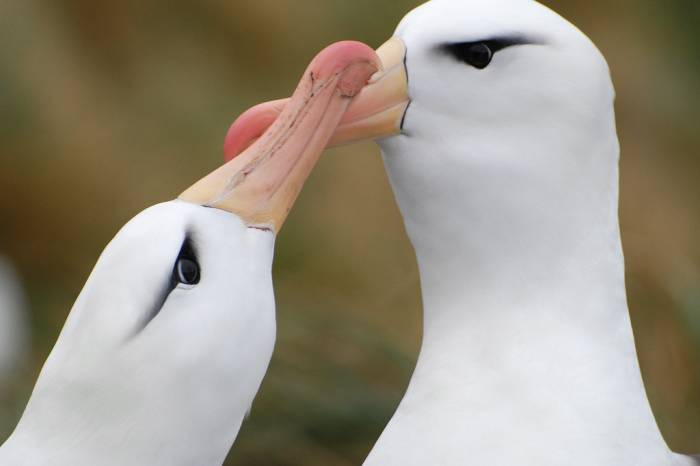
This pair has not yet mated, and they are doing the courting before copulation. We watched them for over an hour. The one on the left is sitting on an egg.
The clacking of bills was an integral part of the mating ritual.
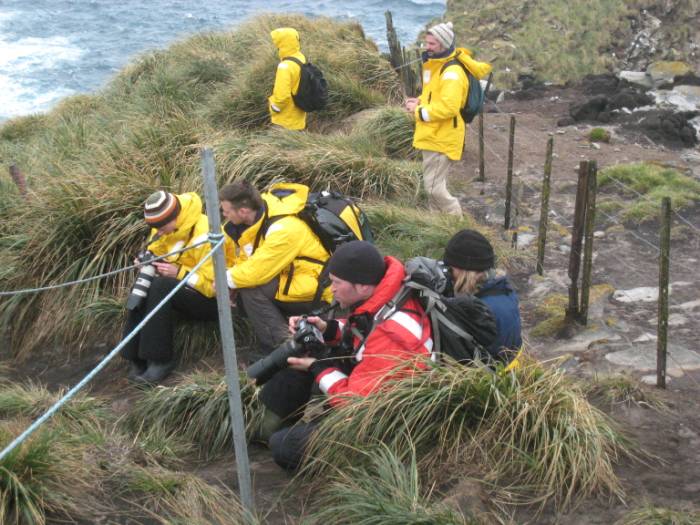
There was some really expensive photographic equipment in our group. That’s Phil Wickens in the red jacket.
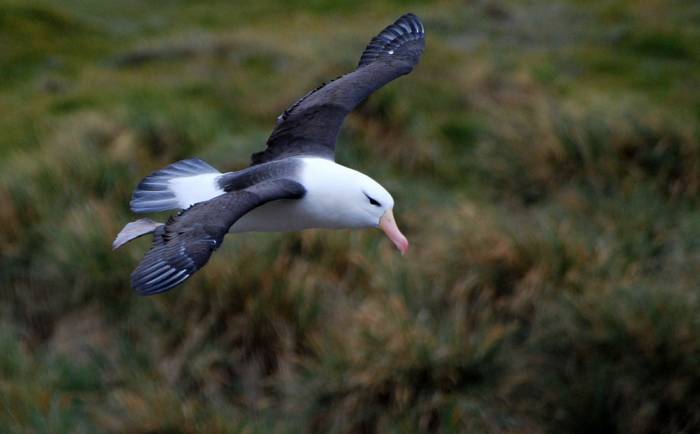
The albatross were magnificent in flight. Phil Wickens got this great shot.
The albatross were as oblivious to us as they were to the Rockhopper penguins.
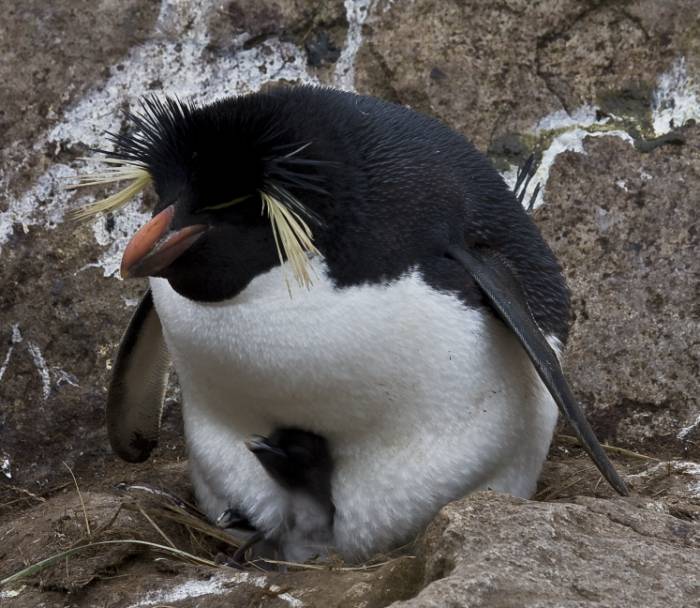
Shanti This little baby Rockhopper was trying to keep warm under his mamas belly.
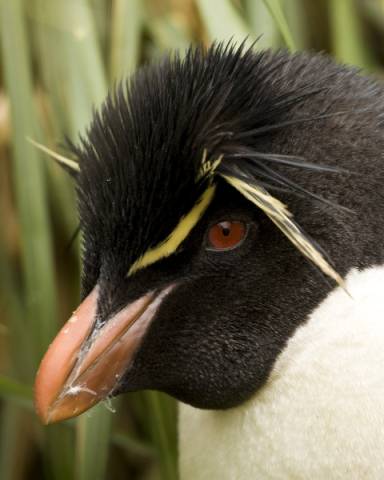
Jamie They always looked like it’s a bad hair day. On our way back to the dock we stopped by Roddy and Lilly’s home for some tea and cookies.
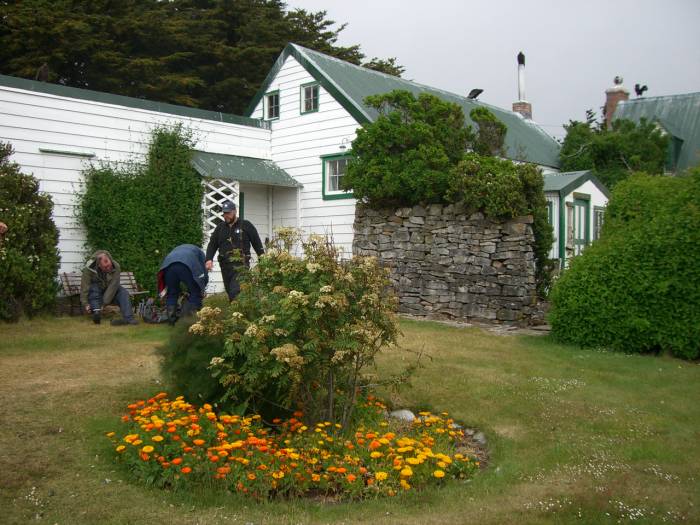
Their home had a typical British look to it, and of course the perfectly cared for garden. They were quite hospitable, and seemed to relish visitors. With their home being the only building on the island, there is no opportunity for social interaction other than the ships that land passengers there to observe the wildlife on their island.
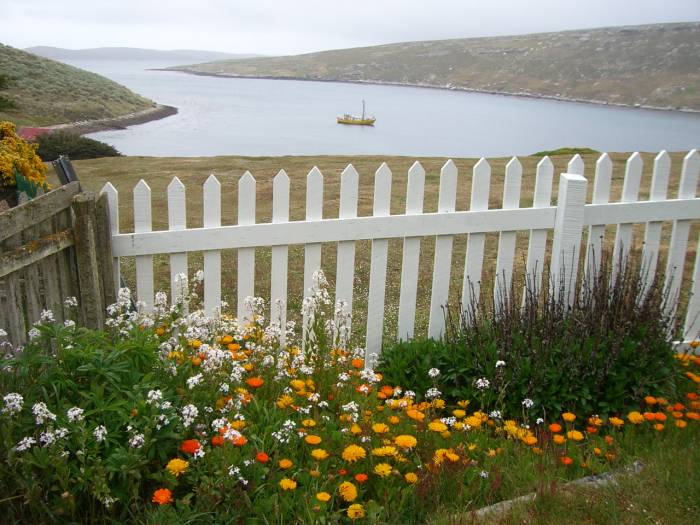
Their home was surrounded by a white picket fence, and was well situated, with a fantastic view of the bay. I think Lilly was the one with the green thumb.
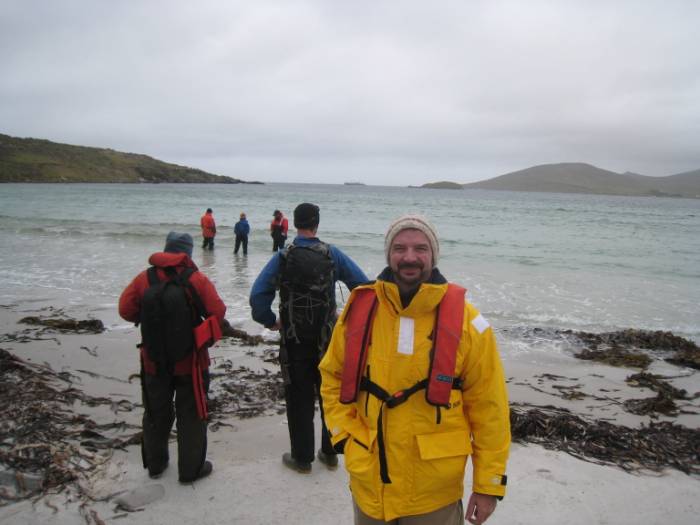
They proudly flew the Union Jack. It must take a special kind of person to live their We headed back to the ship for lunch while the captain sailed us over to Carcass Island for our second landing of the day. This landing was on the beach, but the waves were light so we did not get wet. Only the staff waded out into the water, so they could pull the Zodiac as far into shore as possible, and we stepped off into less than a foot of water.
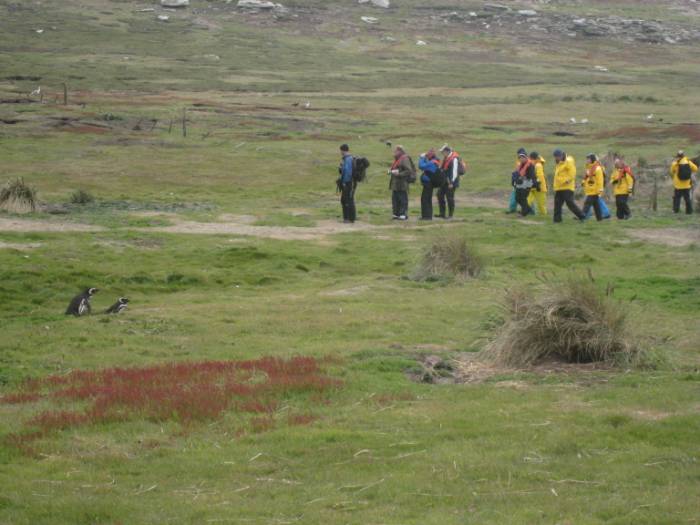
On Carcass Island the landing was on the beach. Rob and Lorraine McGill own Carcass Island. Their operation is a little larger than that of Roddy and Lilly, so it appears that there may be a few farm hands that live on the island, at least part of the year. Our hike was fairly long, but quite enjoyable, as there was so much wildlife to see along the way, mostly birds.
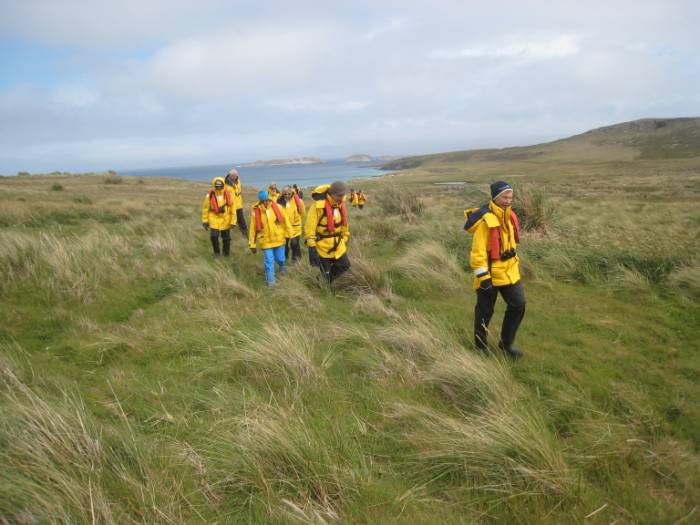
It looks like a lot of clothing, but believe me, it was quite comfortable.
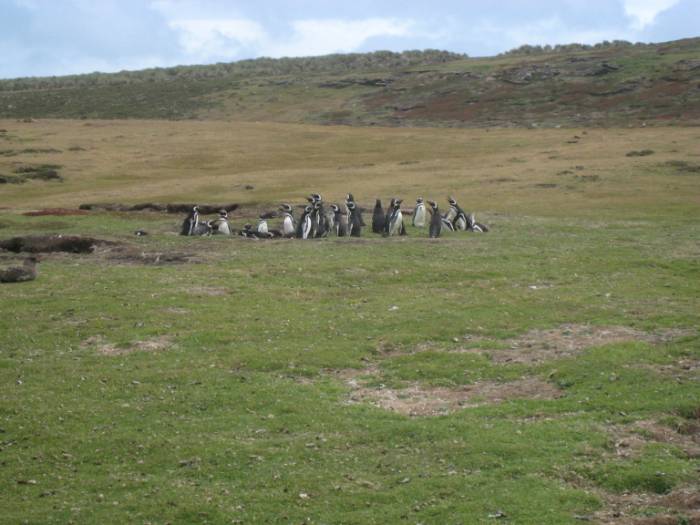
We invaded the nesting ground of some Chinstrap penguins. They dig burrows for their nests. The Chinstrap penguins are strange little birds. If you peer into a burrow, you will see the Chinstrap peering back out at you. She will cock her head to one side. Shane told us that if we cock our heads in the opposite direction, it would change to that side. If you change to the opposite side, it will follow you. After a while you lose track of who is leading whom. It was pretty humorous, but you had to be there.
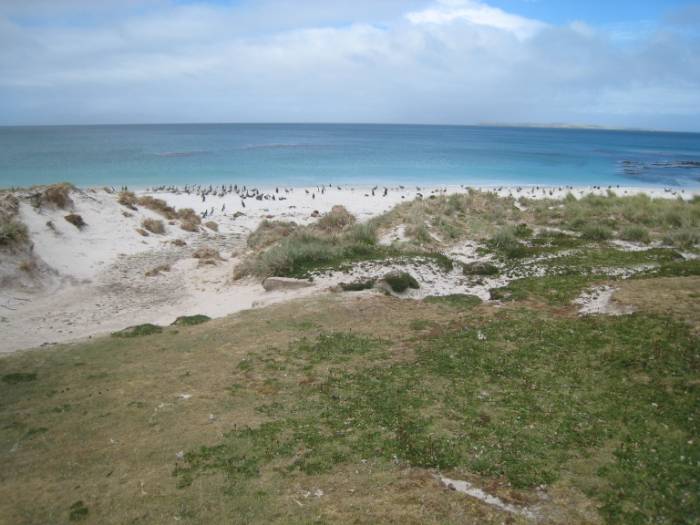
All the guys were out doing whatever guys do, while mama was keeping the chicks warm. The water was so emerald green and the sand was so white, that it was very reminiscent of the islands we’ve visited in the Caribbean.
The chicks need to be kept fed, so the parents take turns going out to sea for krill to feed them.
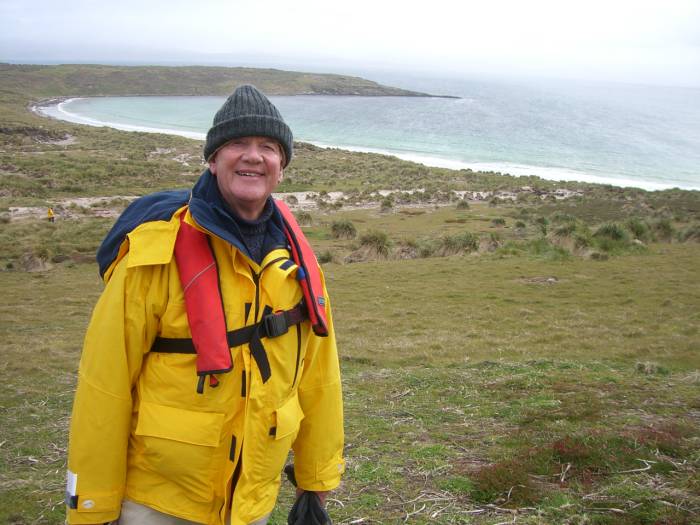
We are wearing our life jackets on this hike, because the Zodiacs
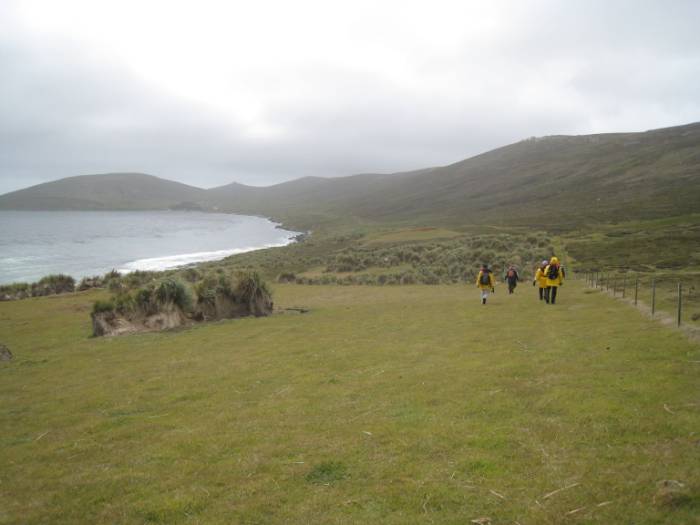
You can just barely see the settlement on the far side of this bay. We got our exercise.
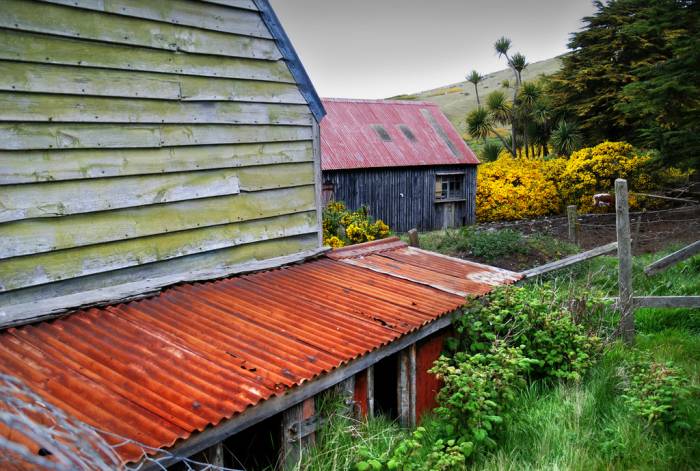
Roger This was the colorful scene that greeted us at the settlement.
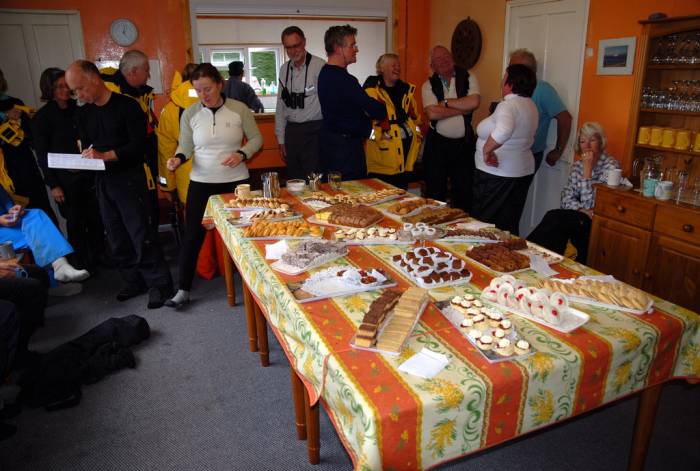
Roger Inside the house a fantastic array of cakes and cookies awaited us . . .
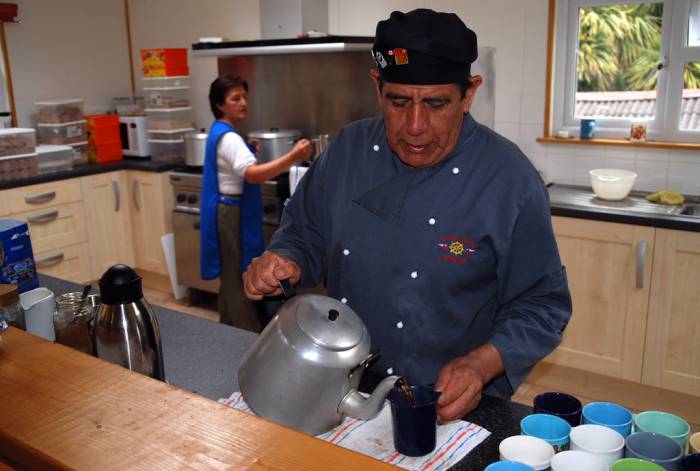
Roger . . . and a hot cup of coffee or tea to warm our insides, and take the chill off. We left this comfortable home environment and returned to the ship. We would sail through the night to get to Port Stanley, the colorful and historic capital of the Falklands, but I will save that for Chapter 3, since this chapter has gotten rather long. The people on the ship are a wonderful group to travel with. Everyone has an interesting story to tell. They come from many parts of the world. I think six were from France, seven from South Africa, eight from the U.S.A., three from Canada, one from Australia, four from the Netherlands and three from Argentina, two of which would be Pete and I. So as you can see, it was a pretty diverse group of people. I know this doesn’t add up to 46 passengers (there are 14 names not accounted for), but some people didn’t want their names on the passenger contact list because I think they did not have an e-mail address. And thus concludes Chapter 2. |

|
||||
|